NFPA 45 Section 1.3 Application: Labs and Operations Covered by the Code
Quick Answer
NFPA 45 Section 1.3 defines what laboratory and process operations fall under the code and how broad the scope can be across commercial, industrial, and research environments. It clarifies the types of operations, hazardous material uses, and conditions that trigger NFPA 45 compliance requirements.
Why Section 1.3 Matters for Compliance
Commercial and industrial sites often assume NFPA 45 applies only to large, standalone research buildings. NFPA 45 Section 1.3 challenges that assumption by defining the application based on the nature of the operations, not just the size of the facility. For owners and safety teams, that means the most effective compliance planning starts with confirming which areas and processes qualify as part of the NFPA 45 application laboratories covered.
In practice, facilities struggle with three common scope gaps: (1) mixed use suites where laboratory work occurs alongside storage or office functions, (2) maintenance and pilot operations that reuse lab-scale chemicals, and (3) contractor tasks that create temporary laboratory conditions. These issues routinely lead to incomplete hazard controls, late equipment retrofits, or inspection findings that require corrective action after occupancy changes.
What NFPA 45 Section 1.3 Actually Covers
NFPA 45 Section 1.3 sets the code application by describing the laboratory and related operations that the code addresses. While the full section text should be reviewed for exact language, the compliance intent centers on operations where hazardous materials and laboratory processes create fire and explosion hazards that require specific safeguards.
For compliance teams, the key takeaway is that scope is driven by the presence and use of hazardous materials in lab-like operations, including:
- Chemical handling and storage practices associated with laboratory work
- Laboratory equipment and processes that can release heat, vapors, or reactive products
- Operations that may not look like a traditional lab room but behave like one under normal operating conditions
Facilities should not treat Section 1.3 as a one time checklist item. The applicability assessment needs to be revisited when experiments scale up, new chemicals are introduced, ventilation strategies change, or work is relocated within the building.
How Facilities Determine “Laboratories Covered” in Real Life
To determine whether a commercial space falls under NFPA 45 application laboratories covered, teams should align operational reality with code intent. A strong method starts with a process map, then matches each activity to the facility’s documented chemical and equipment use patterns.
Facilities dealing with lab hazards may also find it useful to review clean agent fire suppression for labs as part of broader protection planning.
Step 1: Build an operations inventory
List each operation performed in the space and capture how it behaves during normal operation and expected upset conditions. Include:
- Chemical classes in use (for example flammables, oxidizers, corrosives)
- Typical quantities and frequency of use
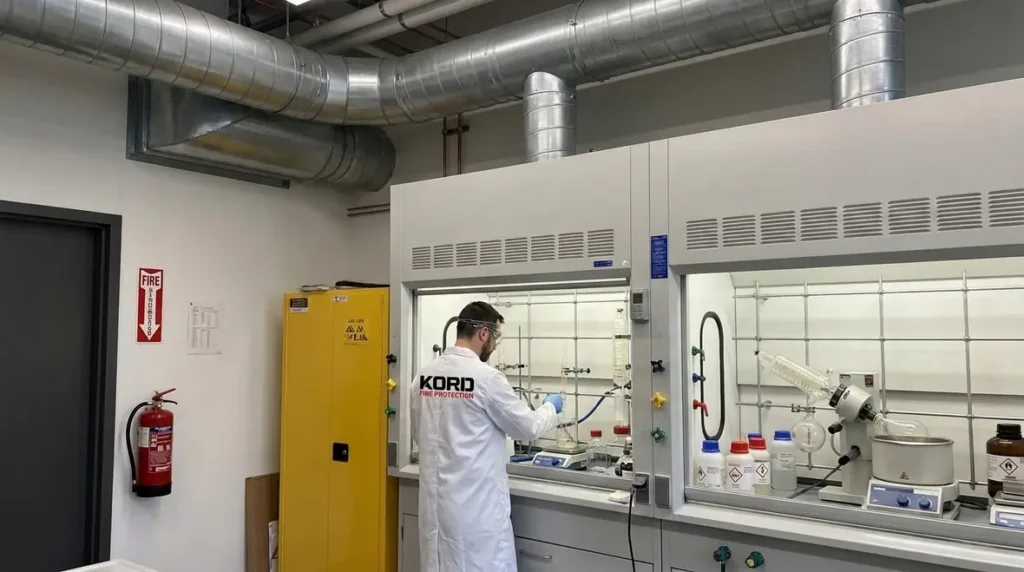
- Equipment that may concentrate hazards (rotary evaporators, reflux systems, distillation, heating mantles)
- Any shared spaces such as wash stations, chemical prep areas, and waste accumulation zones
Step 2: Compare operating conditions, not room labels
Room signage does not control application. A “training room” that runs small scale chemical reactions on a schedule can still function as a lab operation under Section 1.3. Conversely, a space labeled “lab” but used only for administrative tasks may not require the same level of hazardous safeguards.
Step 3: Identify contractor and maintenance activities
Many scope oversights happen during renovations and ongoing maintenance. Examples include:
- Temporary chemical staging during equipment replacement
- Periodic cleaning procedures that use flammable solvents
- Unplanned experimental work conducted outside the planned program
These activities can create the same hazard profile as ongoing laboratory operations and should be included in the Section 1.3 assessment.
Common Compliance Challenges When NFPA 45 Scope Expands
Once operations are determined to fall within NFPA 45, facilities often experience recurring challenges. These are not theoretical issues. They show up in inspections, commissioning reviews, and maintenance audits.
Challenge 1: Ventilation and containment controls left “as built”
Laboratory ventilation strategies can degrade due to filter loading, damper drift, or changes in process demand. When laboratory operations change, the ventilation balance can shift. Scope decisions under Section 1.3 can therefore trigger follow up testing requirements to confirm containment and exhaust performance.
Challenge 2: Fire protection systems not aligned to the actual hazard locations
Even when a facility has suppression and detection systems, the hazard layout can shift. Hazardous materials may move to new cabinets, prep areas, or waste points. Without updating hazard mapping, inspection findings can result in delayed corrective actions.
Challenge 3: Waste handling and storage become “secondary laboratories”
Accumulation areas frequently function like laboratory operations because they concentrate reactive and flammable materials. Safety teams often underestimate how quickly quantities build or how mixed waste categories increase hazard complexity. This creates a compliance risk when the facility expands laboratory work into previously non laboratory areas.
Kord Fire Protection supports commercial facilities by conducting practical compliance reviews that connect scope decisions to real equipment condition, inspection readiness, and maintenance execution. That approach reduces the risk of partial compliance that fails under operational scrutiny.
What to Inspect and Maintain After Section 1.3 Applicability Is Confirmed
After a facility confirms that certain areas are within the NFPA 45 application laboratories covered scope, the next compliance step focuses on ensuring the protective features remain effective over time. Maintenance and inspection planning should reflect normal operations and the most credible failure points.
Equipment and system areas that typically require heightened attention
- Detection and alarm components for hazardous conditions, including regular verification of response readiness
- Exhaust system performance and integrity of ducted containment pathways
- Chemical storage controls such as compatibility practices and cabinet limitations
- Emergency shutoff and operational control interfaces where applicable to laboratory processes
- Housekeeping and waste management controls that affect ignition potential and hazard segregation
Maintenance planning that survives real audits
Facilities should document maintenance intervals, assign responsibility, and verify that testing procedures match the equipment as installed. For commercial operations, the biggest failure point is inconsistent schedules during staffing changes or contractor transitions.
To streamline compliance readiness, Kord Fire Protection provides recurring inspection and maintenance support aligned with how commercial and industrial buildings operate day to day. That includes coordination that helps facilities prepare for inspections without disrupting critical laboratory schedules.
For additional related guidance, teams can also review clean agent suppression system and room integrity testing, especially when room changes or penetrations may affect protection performance.
When NFPA 45 Scope Should Be Reassessed
Section 1.3 scope is not static. A facility should reassess applicability whenever changes alter hazard profile or operational conditions. Typical triggers include:
- New chemical introduction or expanded use of existing chemicals
- Scale up of processes from pilot to production activity
- Relocation of operations into a new suite, even within the same building
- Ventilation system modifications, lab redesigns, or occupancy changes
- Changes in waste categories or accumulation methods
This reassessment should result in documented updates to hazard mapping, protection strategy, and inspection plans. When done early, it prevents emergency retrofits and reduces the likelihood of repeat findings.
Frequently Asked Questions
Call to Action
Confirming NFPA 45 application laboratories covered under Section 1.3 is the starting point, not the finish line. Kord Fire Protection helps commercial facilities translate scope into practical inspection and maintenance plans, reducing scope gaps that lead to costly corrections. Contact Kord Fire Protection to schedule a compliance review and build a defensible, operationally realistic maintenance and testing approach.

Join Our Newsletter!
Get the latest fire safety tips delivered straight to your inbox From our Newsletter.