
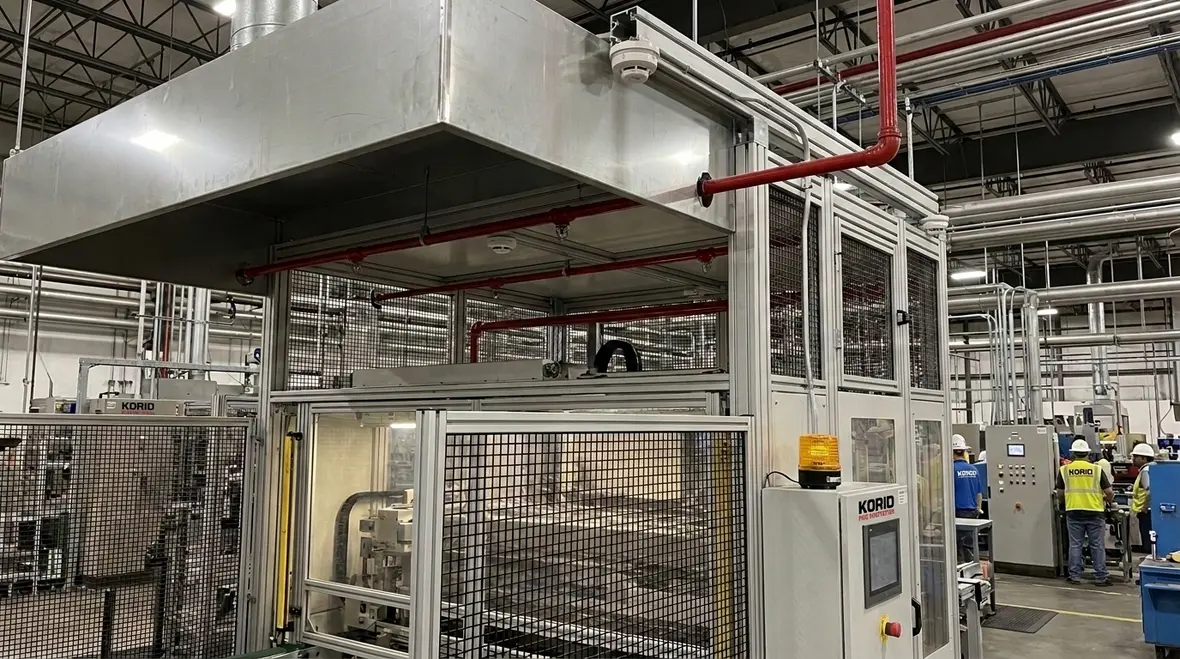
NFPA 34 Section 9.6: Automatic Protection for Enclosed and Large Processes
Quick Answer
NFPA 34 Section 9.6 addresses automatic fire protection for enclosed spaces and large process systems where fire growth can be fast and detection or suppression delays create unacceptable risk. Compliance focuses on selecting the right protection concept, maintaining it, and verifying performance through inspections and testing.
For facilities that need a related service path beyond code interpretation, fire pump testing protocols for reliable industrial uptime offers a practical look at how disciplined inspection, testing, and maintenance programs support dependable protection in working commercial environments.
What NFPA 34 Section 9.6 Targets in Real Facilities
NFPA 34 enclosed large process automatic fire protection is not a generic requirement to “add sprinklers.” Section 9.6 focuses on process hazards where fire size, enclosure effects, and operational loads can overwhelm heat management and delay discovery. Typical covered scenarios include enclosed process areas, large process equipment, ducts or conveyance systems, and operations that create substantial fuel or ignition sources inside a confinement environment.
For commercial, industrial, and retail occupancies, the compliance challenge usually comes down to engineering clarity and sustained reliability. Facilities often install systems during construction but later face changes in piping runs, process loading, ventilation patterns, storage configurations, or maintenance practices. Those changes can invalidate assumptions used to justify the original protection arrangement unless ongoing management and inspection keep pace.
How Section 9.6 Approaches “Automatic Protection” for Enclosures and Large Processes
Section 9.6 centers on automatic detection and automatic suppression or other approved protective action, aligned with the process hazard and enclosure characteristics. The intent is to ensure that a credible fire event is identified quickly enough and suppressed or controlled effectively enough to prevent escalation.
Automatic detection must match enclosure behavior
In enclosed spaces, fire development is influenced by heat retention, limited airflow, and stratification. That means detectors must be placed and selected to perform under the expected thermal and smoke conditions. Common failure points include detector obstruction from process equipment, improper spacing, contamination of detector elements, or programming delays when integrated with building controls.
Suppression design must match the process and the expected fire pattern
Automatic suppression in large and enclosed processes needs to address water distribution, agent reach, coverage, and activation timing. Oversimplified layouts can lead to uneven discharge, insufficient reach into complex geometry, or poor compatibility between hazard type and suppression medium. In many facilities, the process area evolves over time, creating new obstacles or dead spaces that were not present at original design.
Design and Installation Review: What Inspectors Look For
Compliance diligence starts before installation. A robust review process reduces later rework during inspections and acceptance testing. Facilities should treat Section 9.6 requirements as both a design and operations program.
Verify the hazard assumptions and the enclosure boundaries
Inspectors and AHJs often expect facility documentation to clearly define protected hazards, process equipment boundaries, ventilation conditions, and enclosure characteristics. If an area is treated as “enclosed” for protection purposes, the facility must maintain the enclosure integrity, including doors, dampers, and openings that can affect smoke and heat movement.
Confirm detection and suppression layout performance
- Coverage and placement: Detector placement must reflect obstructions, airflow patterns, and the likely fire location. Suppression discharge patterns must reach the intended target areas.
- Activation logic: Where systems include preaction, deluge, cross zoning, or other logic, the controls must operate as intended under real conditions, not just on paper.
- Interfaces: Interfaces with building fire alarm, process shutdown controls, and ventilation controls must be documented and verified.
Plan for change management
Large process environments frequently change. Temporary work, re-piping, new ducting, added mezzanines, and relocation of controls can all impact detector reach and suppression effectiveness. A compliance program should require review of any process change that can alter enclosure characteristics or fire growth behavior.
Inspection, Testing, and Maintenance: Where Compliance Typically Breaks
NFPA 34’s automatic protection requirements only hold value if the systems remain reliable throughout their service life. The practical compliance work tends to concentrate on inspection routines, functional testing, and rapid correction of deterioration.
Common inspection findings in enclosed process areas
- Detector impairment: Dust loading, coating, physical damage, or blocked line of sight can reduce sensitivity.
- Blocked or altered discharge paths: Maintenance activity can leave temporary barriers, tarps, or new fixtures that interfere with discharge patterns.
- Valve and control issues: Corrosion, mechanical sticking, supervisory switch problems, and air or actuator pressure instability can delay or prevent required operation.
- Concealed damage: Concealed piping runs and in-process penetrations can develop leaks or impairment that only becomes visible during maintenance.
Testing that proves performance, not just functionality
A credible testing approach confirms activation sequence integrity, appropriate timing, and correct control responses. For enclosed and large processes, testing also needs to validate that the system still performs after operational adjustments. This often includes verifying water supply performance, alarm and supervisory signals, and any interlocks with ventilation and process shutdown.
Ongoing documentation and labeling
Facility teams should maintain current as built drawings, device lists, and control descriptions. Clear labels for zones, detectors, and suppression components help prevent maintenance crews from inadvertently altering configurations or bypassing devices.
Commercial Compliance Strategies That Reduce Risk and Downtime
Many facilities struggle with balancing production schedules and compliance maintenance. A strong strategy treats NFPA 34 enclosed large process automatic fire protection as an operational system, not a periodic event.
Build a maintenance program around the protection concept
Protection components should receive service based on their role. Detection devices need sensitivity preservation and physical cleanliness. Valves and actuators need cycle verification and preventative maintenance. Suppression distribution systems need internal condition checks and confirmation that discharge pathways remain unobstructed.
Use a single service partner for continuity
Repeated contractors can create inconsistent documentation and uneven maintenance quality. Kord Fire Protection supports commercial facilities with inspection, testing, and maintenance workflows designed to keep the system aligned with process realities. When crews understand the enclosure layout and control logic, they reduce the likelihood of overlooked changes and improve response time during corrective actions.
For additional background on how commercial fire protection programs are managed and documented, Kord Fire Protection can also support broader compliance planning through resources like Kord Fire Protection.
If you want more context on structured inspection routines and documentation discipline, Kord also has a helpful breakdown on testing and inspecting alarm and detection devices, which fits naturally with the reliability concerns Section 9.6 raises in enclosed process areas.
Frequently Asked Questions
Next Step: Keep Section 9.6 Protection Reliable
NFPA 34 automatic fire protection for enclosed and large processes works only when maintained as a performance system. Schedule a compliance focused inspection and testing review with Kord Fire Protection to verify detector condition, control logic, suppression reliability, and enclosure integrity. Identify impairments early, correct them efficiently, and keep your facility aligned with current operational realities.

Join Our Newsletter!
Get the latest fire safety tips delivered straight to your inbox From our Newsletter.



