
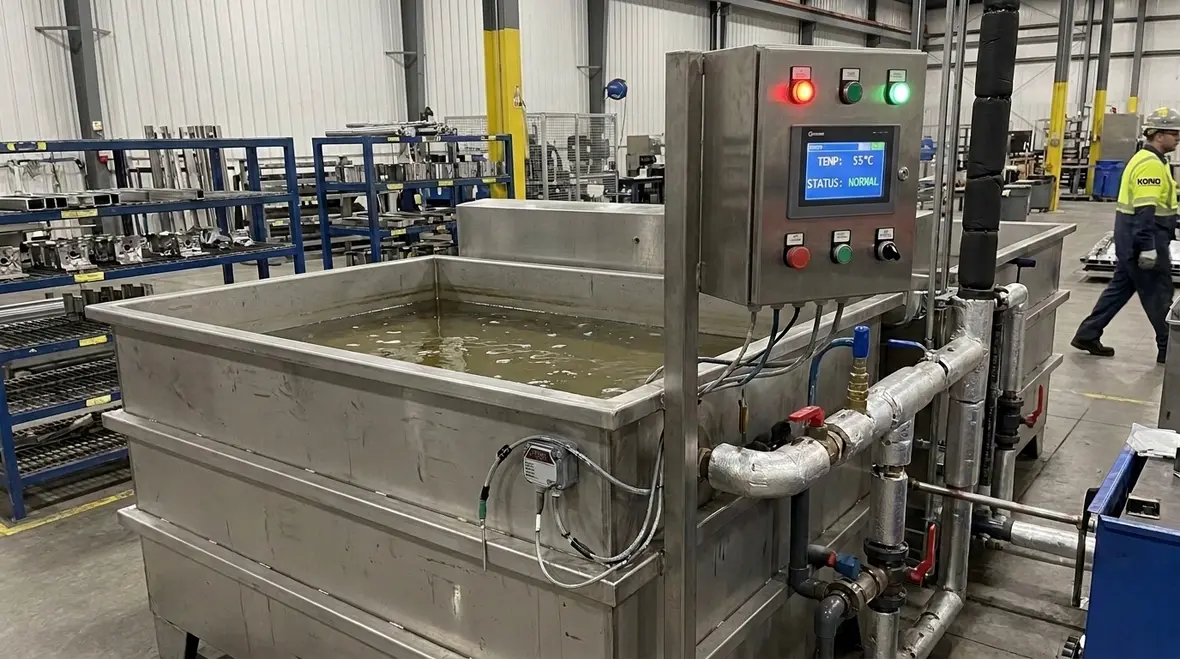
NFPA 34 Section 5.10: Controlling Liquid Temperature in Process Tanks
Quick Answer: NFPA 34 Section 5.10 requires facilities to manage process liquid temperatures in tanks to prevent unsafe conditions such as overheating, vapor generation, and ignition risk. Effective NFPA 34 liquid temperature control dipping tanks programs rely on engineered control systems, alarms, and documented maintenance.
Facilities tightening inspection readiness around process hazards often benefit from a broader documentation strategy. For a practical companion read, review fire safety system documentation for compliance and see how records, testing history, and maintenance logs support smoother reviews.
What NFPA 34 Section 5.10 is trying to prevent
NFPA 34 Section 5.10 focuses on one core hazard pathway: temperature rise can increase flammable vapor production, weaken containment controls, and shorten the time available to react to abnormal operating conditions. In commercial, industrial, and retail settings, process tanks often sit near ignition sources such as pumps, agitation motors, heating equipment, drains, transfers, and nearby electrical equipment. When liquid temperature climbs beyond intended operating limits, the tank atmosphere can shift toward a flammability range, even if the liquid itself appears stable.
For facilities that perform dipping, coating, cleaning, quenching, or similar chemical processes, NFPA 34 liquid temperature control dipping tanks expectations extend beyond “keeping it cool.” Compliance requires reliable monitoring, temperature limiting strategies, and operational controls that hold temperature within defined safe bounds under normal and upset conditions.
Where liquid temperature control applies in dipping and process tank operations
NFPA 34 Section 5.10 applies to process tanks that heat, maintain, or otherwise influence the temperature of liquids used in production. Common examples include:
- Dipping tanks for parts finishing, plating support, or surface preparation
- Cleaning tanks that require controlled heating to improve reaction rates
- Quench and conditioning tanks that demand strict temperature ranges
- Recirculating or batch tanks with intermittent heating and agitation
In practice, the compliance challenge often appears at handoff points. Operators may control setpoints at the control panel, but temperature can spike during startup, during solvent or chemical additions, after pump changes, or when heating elements cycle out of normal balance. Section 5.10 drives facilities to design for these realities rather than relying on operator attention alone.
How temperature control systems typically meet Section 5.10
NFPA 34 Section 5.10 is implemented through a layered approach that combines measurement, control, and protective limits. Facilities should expect requirements to be satisfied by engineered means rather than procedural shortcuts.
1) Temperature sensing that supports accurate limits
Effective programs use correctly located temperature sensors sized for the liquid type and operating range. Poor sensor placement can create a measurement lag or a reading that tracks the inlet stream instead of the bulk tank temperature. Common failure points include loose thermowells, fouled probes, scale buildup on sensors, and wiring damage from chemical exposure or vibration.
Commercial facilities should treat sensor validation as a maintenance item. Periodic verification ensures the system controls and alarms correspond to actual tank conditions.
2) Automatic control of heating or temperature maintenance
Most dipping and process tank systems include thermostatic control, proportional control, or PLC based regulation that modulates heating power, valve position, or recirculation rates. The purpose is to keep temperature within an established safe operating window under varying loads.
For NFPA 34 liquid temperature control dipping tanks, the control system must behave predictably during normal cycling and should fail to a safe condition when components drift out of calibration. Equipment that can overshoot excessively during transitions can create a fire scenario even if the “average” temperature stays acceptable.
3) High temperature limiting and alarms
Beyond routine control, compliant systems typically incorporate protective limits that trigger alarms and, where required by the hazard scenario and design intent, force heating to reduce or stop when a high temperature condition occurs. Alarm setpoints must align with the facility’s defined safe temperature basis. Delayed or nuisance alarms often lead to operator overrides, which undermines the safety intent.
To support enforcement readiness, facilities should document alarm logic, setpoint rationale, and test frequency, including evidence that the limit function has been exercised and verified.
4) Interlocks tied to safe operating states
Where heating is present, interlocks often require pump operation, flow verification, or specific operating modes before heat is permitted. Interlocks reduce the chance of local overheating caused by stagnant liquid, blocked recirculation, or failed circulation.
A frequent operational risk involves starting heat during low flow conditions. When circulation is interrupted, thermal hot spots can develop quickly, increasing vapor generation near the heating source.
Common noncompliance and failure modes inspectors look for
Many findings tie back to how temperature controls degrade over time or how procedures do not match system behavior. Typical problem areas include:
- Inaccurate setpoints due to unverified calibration drift or changes to operating targets without revising safety limits
- Missing or ineffective alarm response where alarm annunciation exists but response procedures are vague or not followed
- Disabled high limit protection for maintenance that is not restored or is bypassed during routine operation
- Sensor fouling and poor maintenance leading to false low readings and uncontrolled overheating
- Overheating during additions where adding warm or reactive materials causes transient excursions not accounted for in setpoint strategy
- Inadequate documentation for tests, inspections, and functional checks tied to Section 5.10
Commercial facilities often underestimate the impact of chemistry changes. As process liquids degrade or accumulate residues, heat transfer characteristics shift. That means the same control settings can produce different temperature rise behavior. Compliance requires ongoing attention, not a one time commissioning event.
Inspection, testing, and maintenance practices that support compliance
To stay aligned with NFPA 34 expectations, facilities should implement a maintenance and inspection workflow that confirms the temperature control system can prevent unsafe temperature conditions throughout its service life. A practical program typically includes:
Documented functional checks
At a defined frequency, verify that temperature alarms and high temperature limiting actions activate as intended. The objective is evidence that safety functions still perform, not just that equipment is “powered on.” Functional checks should be coordinated to avoid interrupting production beyond acceptable limits.
Calibration and verification of measurement devices
Temperature sensors and controller inputs should receive documented calibration verification. Verification methods should reflect actual tank conditions and account for sensor location. When sensors include thermowells, inspection should address physical integrity and chemical compatibility.
Verification of interlocks and heat inhibition logic
Facilities should confirm that interlocks prevent heat application when circulation or permitted operating states are not met. Any changes to pumps, piping, control logic, or PLC programming should trigger a revalidation activity.
Visual inspections for degradation
Maintenance should include checks of heater elements or heat exchanger surfaces where accessible, wiring integrity, control panel components, and condition of relays, contactors, and controllers. Chemical exposure frequently accelerates component aging.
For ongoing compliance support, Kord Fire Protection assists commercial operations with inspection planning, documentation readiness, and maintenance support that aligns fire safety requirements with operational realities. To learn more about a practical approach to fire protection readiness, see this fire inspection preparation checklist.
Operational best practices for day to day control of tank temperature
NFPA 34 Section 5.10 compliance becomes stronger when procedures reflect how upset conditions occur in real production. Facilities should train operators and supervisors on behaviors that reduce temperature excursions and improve response quality.
- Startup discipline: confirm required circulation and interlock conditions before heating is enabled
- Setpoint governance: control setpoint changes via documented authorization and revise safety limits when process targets change
- Addition procedures: manage warm additions and chemical dosing to avoid transient overheating beyond the alarm strategy
- Alarm response: specify immediate actions such as stopping additions, reducing heat input, confirming circulation, and escalating to supervision
- Shift turnover: record recent temperature events, near misses, sensor issues, and maintenance actions impacting temperature control
These practices align the engineered controls with actual human and operational behavior, which reduces the likelihood of unsafe temperature states during production variability.
Frequently Asked Questions
Call to action
Ensure your dipping and process tank temperature control program supports NFPA 34 Section 5.10 with documented functional testing, calibration verification, and maintained protective limits. Kord Fire Protection helps commercial facilities keep temperature control systems inspection ready and operationally reliable. Contact Kord Fire Protection to evaluate your current setup, identify high risk failure points, and build a maintenance and testing plan that aligns with your production realities.

Join Our Newsletter!
Get the latest fire safety tips delivered straight to your inbox From our Newsletter.



