
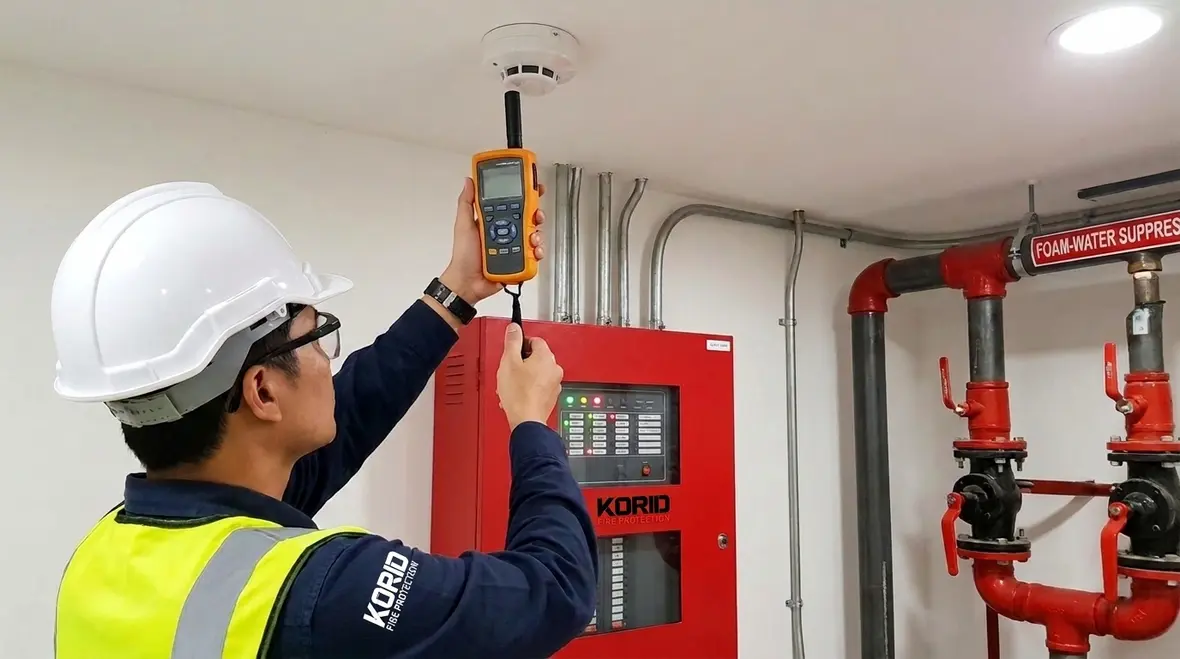
NFPA 16 Section 9.2: Testing and Inspecting Alarm and Detection Devices
Quick Answer
NFPA 16 Section 9.2 requires systematic testing and inspection of alarm and detection devices to confirm they perform as designed under supervisory, alarm, and release conditions. Facilities must verify correct wiring, functionality, placement, environmental suitability, and documented results for ongoing compliance.
For facilities reviewing broader foam fire suppression inspection requirements and service, Section 9.2 fits naturally into the larger job of proving alarms, detection, and control actions all work together when the system is called into action.
What NFPA 16 Section 9.2 Requires in Practice
NFPA 16 Section 9.2 focuses on whether alarm and detection devices will reliably initiate alarms and, where applicable, trigger the water flow control needed for foam water fire suppression systems. For commercial facilities, this means inspection cannot be limited to a visual check. It must validate operational behavior through controlled tests, verification of signaling, and confirmation of device compatibility with the system design.
Because detection and alarm components often span multiple circuits, zones, and power sources, compliance challenges commonly appear in commissioning handoffs, late construction changes, and inconsistent maintenance intervals. A professional approach supports repeatable outcomes, reduces nuisance alarms, and preserves life safety and property protection goals.
Which Alarm and Detection Devices Fall Under Section 9.2
Section 9.2 applies to the alarm and detection devices used to detect fire conditions and to provide alarms and supervisory signals to the control and alarm pathway. In foam-water protection systems, these components typically include a combination of the following:
- Alarm initiating devices (for example, heat or smoke initiating devices where part of the engineered detection strategy)
- Supervisory and alarm control interfaces that translate device operation into audible and visual alarm outputs
- Monitoring points tied to valves, power supplies, flow switches, and system status indicators
- Audible and visual notification devices required to alert occupants and support emergency response
- Supervisory signaling devices that report abnormal system conditions before loss of protection
Even when the suppression system uses foam concentrates, the alarm and detection layer still must demonstrate that detection, signaling, and control transitions work together. Testing inspection alarm detection foam-water systems ensures the control logic responds correctly to initiating events, not just that individual components “look fine.”
How Testing Should Be Conducted: Operational Verification, Not Guesswork
NFPA 16 Section 9.2 is about functional confirmation. Facilities should plan tests that verify device behavior end to end, including signal origination, control panel response, and alarm notification outcomes. A robust testing approach usually includes:
1) Pre test verification and readiness checks
- Confirm the as built device layout matches the approved system documentation.
- Verify device addresses, circuits, polarity, and labeling accuracy.
- Check power supply status and backup capacity where required.
- Ensure work permits, fire watch procedures, and notification plans align with site operations.
2) Controlled device activation
Testing typically uses approved field methods designed for the device type. The objective is consistent initiation that mimics real operating conditions without damaging sensors or causing unplanned suppression events.
- Initiate at the device or test interface in accordance with manufacturer instructions and system design.
- Observe and record the exact control panel indications, alarm states, and annunciator mapping.
- Confirm that the expected transitions occur without unintended bypass, latch issues, or missing feedback signals.
3) Alarm notification verification
Alarm notification must operate reliably. Common failure patterns include silent circuits, incorrect device selection for the installed environment, or wiring changes that disconnect only one part of the notification sequence. Testing should validate:
- Audibility and visibility at representative locations.
- Synchronization behavior where strobe patterns or control logic expects specific operation.
- Correct zone and building floor mapping for responders.
4) Post test restoration and documentation
After every test, the system must return to a normal, supervised condition. Documentation must capture the date, affected zones, device identification, test method, observed results, and any corrective actions. This recordkeeping is central to compliance readiness during inspections and insurance or jurisdictional reviews.
Common Compliance and Maintenance Pitfalls for Alarm and Detection Devices
Commercial, industrial, and retail facilities frequently encounter the same operational failure points. Understanding these risks helps teams prevent repeat service calls and avoid extended downtime for critical protection systems.
Staged construction changes that bypass final verification
New electrical routing, renovated tenant spaces, or equipment swaps can alter wiring paths without updating documentation. Even when suppression hardware remains unchanged, alarm and detection circuits may shift. Testing inspection alarm detection foam-water systems must re confirm supervision status and alarm mapping after each meaningful change.
Nuisance alarms caused by environmental exposure
Dust, humidity, vibration, and temperature cycling degrade detection performance and can increase false alarms. Devices installed in harsh environments often require stricter cleaning and condition checks, along with verification that any protective features remain intact.
Supervisory signal drift and “it shows trouble but does not act correctly” issues
Some systems indicate trouble conditions without delivering the expected supervisory or alarm response. This can occur when interfaces or monitoring points do not match the control logic. Testing should validate both “trouble reporting” and “alarm response” outcomes.
Device end of line resistor mismatches and wiring polarity errors
Correct resistor values and polarity often determine whether circuits remain properly supervised. After maintenance or replacement, a resistor or terminal misplacement can pass a visual inspection while still breaking supervised integrity. End to end testing catches these hidden defects.
How to Align Section 9.2 Testing with Foam Water System Operations
Foam water suppression adds operational complexity because the system relies on coordinated detection, control, and water delivery performance. Alarm and detection testing should support the engineered sequence so that when the system initiates, alarms and notifications support safe evacuation and responder control.
To align testing inspection alarm detection foam-water workflows with real operations, facilities should:
- Confirm detection timing and alarm signaling meet the system sequence described in engineering documents.
- Verify that any associated release control pathways remain correct and supervised.
- Coordinate tests with plant operations so that alarms do not disrupt critical processes beyond approved tolerances.
- Track results by zone and device so maintenance teams can target recurring issues.
For a broader overview of system requirements and how components connect across the standard, refer to NFPA 16 Standard guidance from Kord Fire Protection.
Frequently Asked Questions
Call to Action
Ensure your facility stays inspection ready by scheduling NFPA 16 Section 9.2 testing and inspection for alarm and detection devices with a commercial-focused service provider. Kord Fire Protection helps maintain end to end functional verification, clean and inspect device condition, and document results for compliance. Contact Kord Fire Protection to review your current schedules, confirm device mapping, and close recurring failure points before they become audit findings.

Join Our Newsletter!
Get the latest fire safety tips delivered straight to your inbox From our Newsletter.



