Fire Pump Testing Protocols for Reliable Industrial Uptime
Fire Pump Testing Protocols: The Industrial Shield That Actually Works
In industrial facilities, dependable water flow can mean the difference between a contained incident and a headline. That is why fire pump testing protocols must follow a clear, step by step plan. Kord Fire Protection technicians approach these tasks with disciplined checklists, careful documentation, and a mindset that treats every test like it could be needed tomorrow. And yes, they also make sure the process is done safely, because nobody wants a “team building exercise” with a flooded control room. In the next sections, the article breaks down advanced test steps, acceptance checks, and routine verification methods that keep pumps ready, even when the last inspection feels like a lifetime ago.
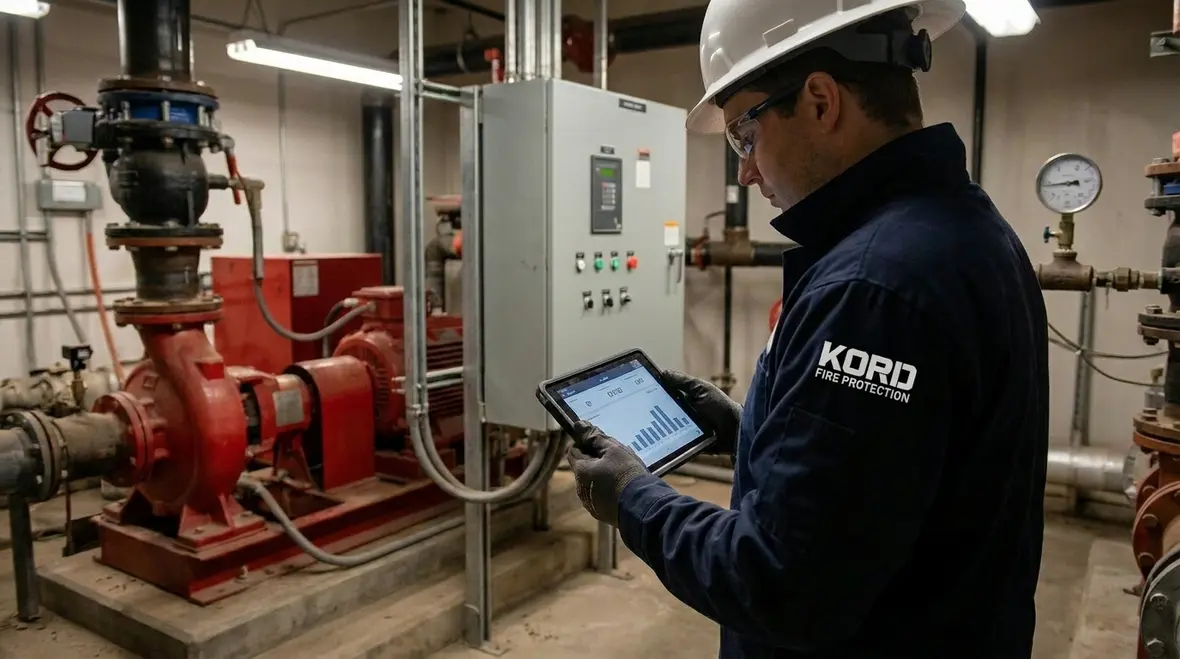
Why advanced fire pump testing matters for uptime
Industrial equipment operates in real conditions, not training videos. Heat cycles, pump wear, valve drift, and power quality issues can quietly change system performance over time. Therefore, advanced fire pump testing protocols focus on measuring how the pump behaves under load, how controls respond, and how the full system performs as a unit.
Instead of only confirming that a pump turns on, technicians verify flow, pressure, suction behavior, and controller response. They also check that alarm and supervisory signals act correctly. In other words, the goal is not “it ran.” The goal is “it performed like it should, when it had to.”
That distinction matters in manufacturing plants, distribution centers, processing sites, and high demand industrial campuses where any weak point can ripple into downtime. A pump that starts but cannot sustain expected pressure under real demand is not reassuring, it is misleading. Reliable uptime depends on knowing the whole assembly can do the job, not just make noise convincingly.
Testing for performance, not appearances
A polished pump room and a green indicator light might look comforting, but neither one proves hydraulic performance. Advanced verification helps uncover issues before they become expensive surprises, including unstable suction, drifting setpoints, weak batteries, clogged strainers, and signal problems that only show themselves during a properly structured test sequence.
How Kord Fire Protection technicians plan the test sequence
Kord Fire Protection technicians start with a disciplined plan, because skipping steps leads to confusion and repeat work. First, they review the latest drawings, pump curves, maintenance records, and controller settings. Then they confirm water supply conditions, yard hydrants, strainer status, and valve positions.
Next, they decide the order of tests to minimize risk and downtime. For example, they often verify alarms and control operation before running full flow tests. After that, they conduct hydraulic checks and confirm that instrumentation reads correctly. Finally, they compile results into a clear report that ties each test to required acceptance criteria.
To keep the facility calm during testing, they coordinate timing and notifications with site leadership. And if someone asks, “How long will this take?” technicians respond with the confidence of a pilot checking fuel: “Long enough to do it right, short enough to avoid delays.”
That planning mindset lines up with Kord Fire Protection’s broader fire pump services and support for weekly, monthly, and annual testing programs, as well as documented maintenance workflows for commercial and industrial properties.
If your team wants more background on structured pump evaluations, Kord’s Fire Pump Testing and Certification Process Explained and Routine Fire Pump Inspections and Their Importance are useful companion reads. You can also pick up new things exclusively about all things fire pumps from our partner at fire pumps.

Measure performance under real flow and pressure
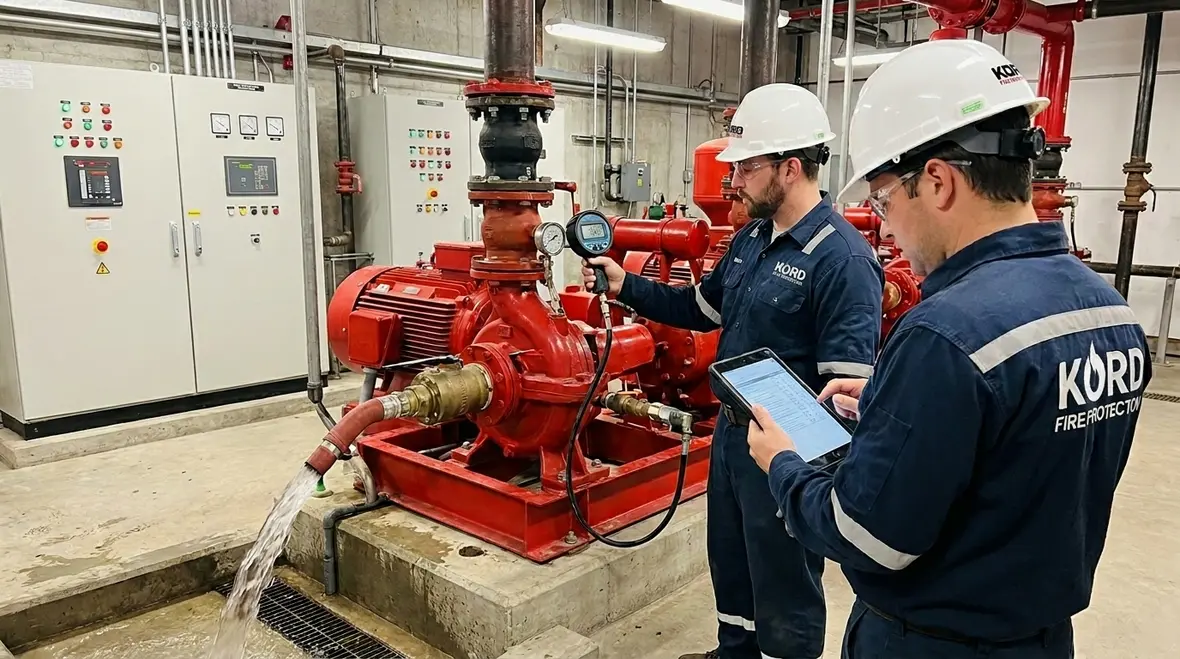
Advanced testing needs more than a basic start and stop. Technicians use reliable gauges and flow measurement methods to confirm performance across operating points. They typically verify start pressure, running pressure, discharge pressure, and flow at set conditions. Then they compare the results to expected performance on pump curves and system demand assumptions.
During these checks, they watch for suction issues such as cavitation risk, strainer clogging, and unstable water supply. Additionally, they check for pressure drop across valves and piping. If readings drift, technicians trace the cause through the system, not just the pump.
They also confirm that controllers hold the setpoint and handle transitions cleanly. Consequently, the facility gets proof that the pump will deliver the right pressure and flow profile, not just an “engine noise with hope” situation.
What technicians compare during performance checks
- Observed start and churn behavior
- Measured pressure at key operating points
- Flow readings against expected pump curve output
- Suction stability and supply consistency
- Valve position effects and discharge losses
- Controller response during transitions and sustained operation
Reliability checks for electric and diesel drivers
Industrial facilities often run mixed technologies, so advanced protocols cover both electric and diesel driven setups. For electric pumps, technicians verify motor current, voltage levels, phase balance, and controller behavior during start. They also confirm that auxiliary components work, such as jockey pump operation and relevant interlocks.
For diesel systems, they pay close attention to startup sequence, transfer timing, battery condition, and engine health indicators. They verify that the engine reaches required speed reliably and that controls manage overspeed and shutdown protections correctly. Furthermore, they observe cooldown behavior and make sure the unit returns to a stable state.
When drivers respond consistently, the facility gains confidence that the system will operate when utilities or power conditions change. Because fire events do not wait for troubleshooting.

What controller and alarm verification should include
Modern pump systems depend on controls and notifications as much as they rely on water flow. Therefore, advanced fire pump testing protocols include controller and alarm verification. Kord Fire Protection technicians confirm that starting logic, sequencing, and protection functions behave correctly.
This includes testing alarms and supervisory signals for common events, such as loss of pressure, pump running status, and controller fault conditions. Technicians also verify that status signals reach the panel and that the monitoring system receives the right points.
To keep accuracy high, they compare actual signal behavior to the programmed logic. If the system logs faults, technicians confirm the fault codes match the intended triggers. In short, they test the “brain” so it does not guess during an emergency, like a GPS rerouting during a blackout.
Signals that deserve extra attention
- Pump running status
- Controller trouble or fault conditions
- Phase loss or power abnormality indications
- Diesel driver alerts and shutdown protections
- Remote monitoring and supervisory point reporting
Document results with clear, auditable records
Advanced testing succeeds only when the results are usable. After each fire pump testing protocol activity, technicians record readings, dates, personnel, instrument details, and any deviations. They also note environmental conditions that could affect performance, such as water temperature and suction conditions.
Then they include measured data that aligns with required acceptance criteria and compare results to baseline performance. If something fails a threshold, they document the probable cause and the corrective action plan. As a result, the facility gets an audit ready trail that supports compliance and future planning.
To make review easy, they present findings in a structured format that helps managers see risks at a glance. They keep the language clear, because the goal is not to impress someone with jargon. The goal is to show what happened and what comes next.
Using dual records to streamline compliance reviews
The facility benefits when it keeps two record types that work together. First, technicians maintain test worksheets with measured values and instrument details. Second, they maintain a summary log that links each test to required outcomes and corrective actions.
Field Test Record
- Measured pressure, flow, and driver data
- Instrument IDs and calibration status
- Exceptions, adjustments, and observations
Compliance Summary
- Pass fail and acceptance comparisons
- Alarm and supervisory verification status
- Corrective action plan and next dates
This approach reduces back and forth during audits. It also helps leaders track trends over time, which is how small issues grow into big ones when nobody watches. And nobody wants that plot twist.
FAQ: fire pump testing protocols explained fast
Choose disciplined advanced fire pump testing protocols now
If the facility wants less risk and fewer surprises, it should upgrade from basic checks to advanced verification with measured performance, control validation, and clear reporting. Kord Fire Protection technicians bring structured test sequencing, careful documentation, and a calm, professional process that fits real industrial schedules.
For facilities that need a direct service path, Kord Fire Protection’s Fire Pump Systems service page outlines inspection, maintenance, testing, and support options for electric and diesel pump assemblies. It is a practical next step if your site is preparing for annual testing, addressing performance concerns, or building a more dependable inspection schedule.
Now is the time to confirm the pump system’s reliability before the next inspection cycle turns into a scramble. Request a site review and testing plan today, and keep the system ready for the moment it must perform.

Join Our Newsletter!
Get the latest fire safety tips delivered straight to your inbox From our Newsletter.