
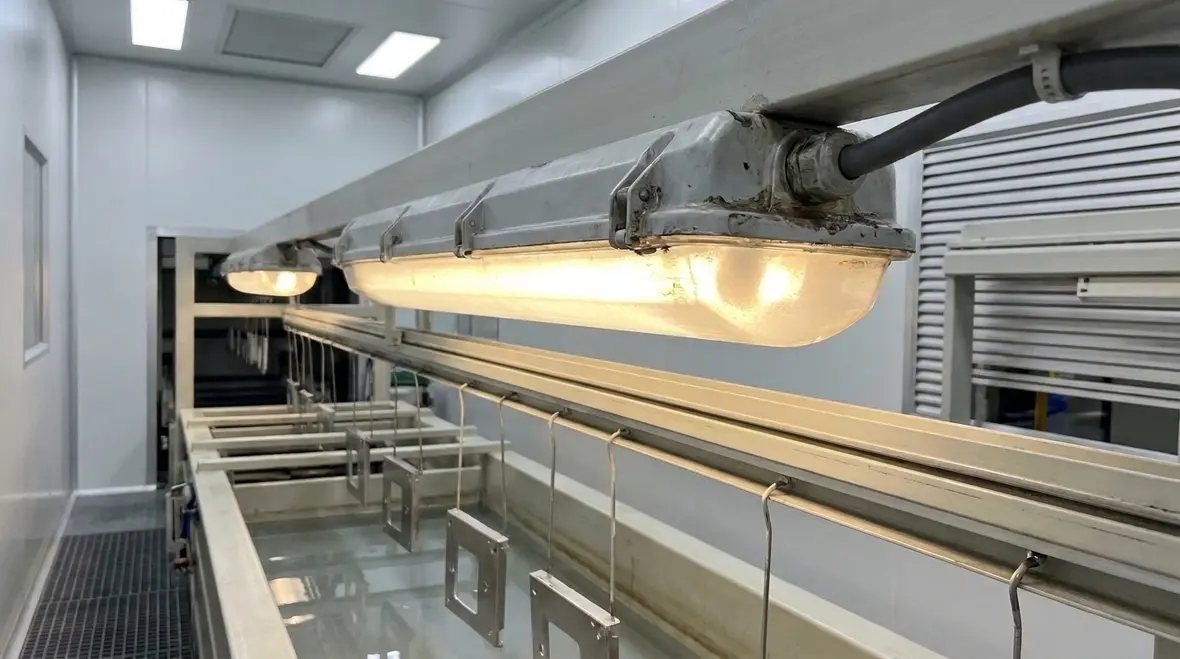
NFPA 34 Section 6.7: Luminaire Requirements for Dipping and Coating Areas
Quick Answer: NFPA 34 Section 6.7 sets strict limits on how luminaires can be installed, protected, and maintained in dipping and coating areas where flammable vapors may be present. Compliance depends on proper luminaire suitability, sealing, location, and ongoing inspection to prevent ignition sources.
NFPA 34 luminaire requirements dipping coating areas exist to reduce ignition risk from hot surfaces, arcing, damaged wiring, and failed seals in environments that can generate flammable atmospheres. This technical guidance helps commercial facilities, industrial plants, and retail coating operations implement lighting that remains safe during normal production and abnormal conditions such as leaks, overspray buildup, and solvent migration.
If you are mapping overall code scope before drilling into lighting details, it helps to review NFPA 34 Section 1.3 on processes and installations covered so the luminaire strategy fits the actual installation boundaries from the start.
What NFPA 34 Section 6.7 is trying to prevent in dipping and coating
In dipping and coating operations, combustible vapors can accumulate near tanks, dip lines, spray areas, curing zones, and drying sections. Luminaires can become ignition sources through several pathways:
- Hot surfaces: lamps, ballasts, or enclosures can reach temperatures capable of igniting flammable vapor mixtures.
- Electrical failure: damaged wiring, loose connections, or internal component failure can produce sparks or arcs.
- Environmental intrusion: solvent mist, dust, overspray, and corrosive vapors can degrade seals, gaskets, and cable entries.
- Mechanical damage: impact from carts, hoists, washdown, or maintenance activity can compromise protective housings.
- Contamination and buildup: residue on luminaire lenses and vents can trap heat or interfere with thermal design.
Section 6.7 focuses on ensuring that the lighting system matches the hazard environment and remains reliable over time. For facilities that operate multiple shifts and maintain high uptime expectations, the practical challenge becomes sustaining that reliability through inspection and maintenance.
Where do luminaire rules apply: tanks, dip lines, and adjacent locations?
NFPA 34 luminaire requirements dipping coating areas typically apply where flammable vapors are present or likely to be present due to solvent handling, dip immersion, coating application, and volatilization. In practice, compliance mapping often requires close coordination between:
- Process engineers who understand solvent evaporation points and airflow patterns
- Fire safety and electrical safety professionals who translate risk into hazardous location decisions
- Facilities teams who manage access, cleaning methods, and replacement cycles
Common operational boundaries that influence luminaire placement include:
- Within splash and vapor reach: lighting near tank rims, conveyor transitions, and spray zones where vapors and mist concentrate.
- During upset conditions: lighting that may be exposed during overflow, splashing, hose failure, or ventilation degradation.
- Cleaning and maintenance modes: washdown or solvent wiping can temporarily change conditions and expose luminaires to liquid infiltration.
Facilities often miss the “adjacent risk” when a luminaire looks distant from the tank but sits within the vapor envelope created by production airflow. A disciplined site walk paired with document verification helps avoid costly rework and downtime.
Key luminaire selection criteria: suitability, protection, and construction
Section 6.7 emphasizes that luminaires must be designed for the hazardous environment and installed in a manner that maintains their protective features. The compliance outcome depends on more than choosing a labeled fixture. It requires matching the fixture design to the area’s ignition risk and verifying installation integrity.
1) Fixture suitability for the environment
Facilities should ensure luminaires are evaluated and intended for use in areas where flammable vapors may be present. This includes confirming the fixture’s suitability for the specific conditions in the dipping and coating area, including vapor exposure, temperature considerations, and maintenance realities.
2) Enclosure integrity and seal performance
Enclosures must resist intrusion from solvents, overspray, and washdown. If seals fail, luminaires can lose protection, allowing energized parts to become exposed or allowing flammable contaminants to accumulate inside.
Practical failure points include:
- Worn gaskets after repeated washdown cycles
- Breather or vent paths blocked by residue
- Loose cable entries caused by vibration or repeated service access
3) Thermal management and lens contamination
Many luminaires rely on controlled heat dissipation through housings and lens assemblies. In dipping and coating environments, overspray and film residue can alter heat flow. Compliance depends on keeping luminaires clean and ensuring the thermal design remains effective.
For facilities that want a repeatable compliance approach, Kord Fire Protection supports commercial teams by translating NFPA 34 requirements into inspection plans that account for ongoing residue patterns and maintenance schedules. This reduces the “installed but not maintained” risk that frequently drives inspection findings.
Installation and location control: how luminaires should be mounted and protected
Even a properly rated luminaire can fail to comply if installed incorrectly. Section 6.7 and related enforcement practices focus on installation discipline in dipping and coating areas, where physical stress and chemical exposure are continuous.
Mounting practices that prevent damage
- Use protective barriers or guards where carts, racks, or fixtures can impact luminaires.
- Avoid unnecessary low mounting points where splashing and cleaning fluids reach housings.
- Verify cable routing to prevent strain, abrasion, and solvent contact at joints.
Preventing infiltration and maintaining electrical integrity
Installation must preserve luminaire protective features. That includes properly installed fittings at conduits and cable entries, intact gaskets, and correctly torqued connections.
Common commercial facility gaps include:
- Late-stage rework that bypasses planned sealing methods
- Noncompliant replacement lamps or drivers installed without verifying suitability
- Loose covers left in place for “temporary” troubleshooting that never gets closed out
For businesses with multiple sites or contractors, Kord Fire Protection helps standardize installation verification so that each replacement or retrofit remains within the intent of NFPA 34 luminaire requirements dipping coating areas.
Inspection, testing, and maintenance: the compliance part that facilities often underestimate
NFPA 34 luminaire requirements dipping coating areas assume ongoing system integrity. The protective design depends on continued performance of enclosures, seals, and wiring integrity. Maintenance procedures must be written, followed, and verified.
Inspection focus areas during routine walkdowns
- Condition of enclosures: cracks, corrosion, missing covers, and impact damage.
- Seal and gasket integrity: signs of shrinkage, chemical attack, or improper reassembly.
- Lens and vent cleanliness: overspray residue, blocked vents, and discolored or degraded optics.
- Cable entry condition: moisture intrusion signs, damaged conduit seals, and improper fittings.
- Evidence of overheating: discoloration, warping, or abnormal odors from electrical components.
Maintenance procedures that protect the luminaire rating
Best practice maintenance includes using compatible replacement parts, cleaning with methods that do not damage gaskets or lens materials, and updating maintenance intervals when residue patterns change.
Facilities should also establish controls for contractors. New equipment installations frequently create gaps when contractors replace components based on availability rather than compliance intent.
Kord Fire Protection can support these needs with compliance documentation, inspection checklists, and ongoing verification activities aligned with commercial facility operations and production realities.
Internal linking opportunity: For additional guidance on managing safety systems in operational environments, review Kord Fire Protection services.
Common noncompliance patterns and how to fix them before enforcement
Most luminaire violations are not caused by ignorance. They result from the typical commercial lifecycle: installation, turnover, part swaps, cleaning changes, and equipment upgrades. The following patterns commonly trigger enforcement issues or safety concerns.
1) “Looks rated” luminaires with compromised seals
Inspection teams often find that the fixture labeling remains intact, but seals have degraded or been reinstalled incorrectly after bulb or driver replacement.
Fix: verify reassembly practices, train technicians on compatible gasket materials, and require post maintenance integrity checks.
2) Replacement components that do not match the original design intent
LED driver substitutions and aftermarket lamp replacements can change thermal performance and protective characteristics.
Fix: implement an approved parts list tied to fixture model and the hazardous environment requirements.
3) Overspray buildup creating thermal and containment problems
Residue can trap heat or compromise ventilation paths within enclosure designs.
Fix: incorporate luminaire cleaning into the operational cleaning program with documented intervals and verification.
4) Improper location assumptions
Facilities sometimes rely on distance alone, ignoring airflow patterns and vapor migration.
Fix: perform a coordinated site hazard review that aligns process activity with luminaire placement and inspection coverage.
To reduce rework and disruption, Kord Fire Protection helps commercial and industrial operators identify likely risk areas early and build a maintenance and inspection program that supports consistent compliance.
Frequently Asked Questions
Conclusion and call to action
NFPA 34 luminaire requirements dipping coating areas require more than selecting the right fixture. Facilities must control location risk, preserve enclosure integrity, and maintain luminaires under real production and cleaning conditions. Kord Fire Protection supports commercial and industrial teams with practical compliance verification, inspection planning, and maintenance alignment to reduce ignition risk and enforcement exposure. Contact Kord Fire Protection to assess your dipping and coating lighting setup and strengthen your ongoing safety program.
If your facility is evaluating alternate compliance paths alongside equipment protection, see NFPA 34 Section 1.5 equivalency for coating and dipping for related planning considerations.

Join Our Newsletter!
Get the latest fire safety tips delivered straight to your inbox From our Newsletter.



