
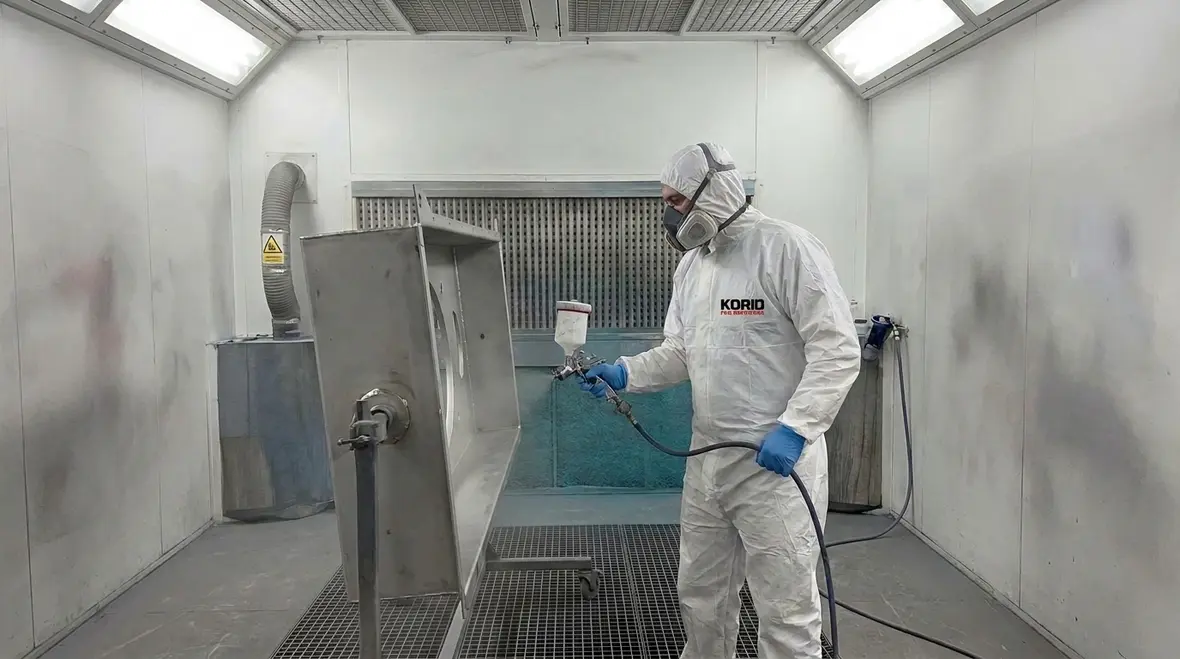
NFPA 33 Section 10.7: Clothing Requirements for Personnel in Spray Areas
Quick Answer
NFPA 33 Section 10.7 requires spray area personnel to wear protective clothing that limits ignition risk and exposure to sprayed materials. The clothing must be suitable for the hazards present, maintained in good condition, and selected to prevent static, frictional ignition, and contamination buildup.
Facilities trying to tighten controls around spray operations often also review broader spray booth fire suppression planning so clothing requirements, suppression strategy, and daily operations stay aligned.
Why NFPA 33 Clothing Requirements Matter in Spray Operations
Spray areas combine flammable or combustible liquids, atomized particles, and ignition capable conditions. NFPA 33 clothing requirements spray area personnel must follow are designed to reduce two major failure modes: ignition from clothing performance (for example, static charge generation or friction) and unsafe exposure caused by inadequate coverage or contaminated garments. In commercial and industrial facilities, this becomes a practical compliance challenge because clothing is shared, laundered on inconsistent schedules, and frequently replaced after wear or contamination.
Facilities also need operational alignment. Protective clothing cannot be treated as a “one time training item.” It must be verified during onboarding, periodically inspected, and managed like any other safety critical system with documented controls, storage practices, and maintenance procedures.
What NFPA 33 Section 10.7 Requires for Spray Area Clothing
NFPA 33 Section 10.7 focuses on ensuring that personnel clothing will not create an undue ignition hazard in spray operations. While the exact selection of garments depends on the specific spray process and the hazards present, the governing intent remains consistent: clothing should reduce the likelihood that ignition sources form on or around the worker.
1) Clothing must be appropriate for the hazard present
Personnel clothing selection considers the sprayed material properties, such as flammability and the likelihood of vapor generation, plus process details like ventilation effectiveness and proximity to spray equipment. In practice, many facilities treat NFPA 33 clothing requirements spray area personnel as a hazard based clothing program rather than a single universal uniform.
2) Garments must fit properly and prevent unsafe openings
Loose cuffs, gaps at collars, and improperly fitted garments can allow exposed skin or allow contaminants to reach ignition sensitive zones. Facilities commonly require controlled garment fit, secure closures, and consistent wear practices, especially for tasks such as setup, spray application, cleanup, filter changes, and equipment maintenance.
3) Clothing condition must remain serviceable
NFPA 33 expectations translate into a practical maintenance standard: clothing must not be torn, excessively worn, oil saturated beyond safe limits, or contaminated in a way that increases ignition risk. A common real world failure point is “continuing to wear” garments after repeated exposure or after laundering that does not restore safe performance. A robust inspection workflow prevents this drift.
How Facilities Implement Compliance Without Gaps
Compliance succeeds or fails based on implementation details. Many organizations have the correct written policy but fall short in day to day verification: crew members might improvise, change clothing outside controlled areas, or use non approved substitutes during short staffing.
Operational controls that commercial facilities use
- Defined authorized clothing types mapped to processes and materials. Substitutions require approval.
- Point of use garment staging near spray areas to prevent mix ups and to encourage immediate correct use.
- Inspection at changeover such as shift start, after maintenance activity, or when the product material changes.
- Cleaning and contamination control with documented laundering or disposal rules.
- Training that covers wear mechanics including correct donning, closure verification, and removal procedures.
Maintenance and inspection workflow that reduces risk
To keep NFPA 33 clothing requirements spray area personnel aligned with reality, many facilities conduct a practical verification routine. Supervisors inspect garments for condition and coverage, verify correct use during tasks that present higher ignition likelihood, and remove from service any garment showing damage or persistent contamination. This approach supports consistent compliance across shifts and contractors.
Kord Fire Protection supports commercial sites with documentation driven compliance support for spray area risk management, helping operators maintain current procedures and verification practices that align with evolving facility realities.
Common Failure Points During Spray Area Clothing Programs
Even well intentioned programs can degrade over time. The following issues frequently appear during assessments and walkthroughs.
1) Contaminated or oil saturated garments
Garments can hold residual material or cleaning chemistry. If clothing retains contamination that increases ignition risk, the protective intent is lost. Facilities often require strict removal and controlled laundering or disposal after exposure.
2) Improper laundering practices
Some textiles or protective treatments only perform correctly within manufacturer defined laundering limits. Facilities that use generic cleaning methods or inconsistent wash cycles risk reduced protective performance. The compliance outcome depends on maintaining the intended clothing characteristics.
3) “Temporary” substitutes during staffing changes
Contractors and new hires can introduce non compliant garments when supervisors do not enforce the authorized clothing list. A controlled onboarding process plus enforcement at the point of entry to the spray area prevents this.
4) Damaged clothing that remains in circulation
Small tears or worn seams can compromise coverage. Programs need an obvious, enforced removal process that prevents garments from returning to the staging area for reuse.
What to Expect During a Compliance Review
A strong review connects clothing requirements to the full spray area safety system. Inspectors typically assess clothing program elements as part of the broader hazard control plan.
Verification items that matter
- Written clothing criteria aligned with the spray processes in use.
- Training records demonstrating personnel understand correct wear and removal practices.
- Inspection frequency including documented checks for garment condition and coverage.
- Recordkeeping for laundering, replacement, and disposal decisions.
- Contractor controls ensuring vendors use the same approved clothing requirements.
If a facility also maintains spray area documentation for other fire and process controls, the clothing program should reference those controls so the overall safety plan remains consistent across departments. For additional context on facility fire safety program alignment, see Kord Fire Protection’s resources on fire protection services.
Frequently Asked Questions
Conclusion and Call to Action
NFPA 33 Section 10.7 places responsibility on facilities to ensure spray area clothing reduces ignition risk and supports safe exposure control. If your program relies on informal enforcement or inconsistent garment management, compliance gaps tend to emerge quickly. Kord Fire Protection can help commercial facilities validate clothing program procedures, inspection routines, and documentation practices so your spray operations stay ready for audits, incidents, and ongoing operational change. Request a compliance review today.

Join Our Newsletter!
Get the latest fire safety tips delivered straight to your inbox From our Newsletter.



