
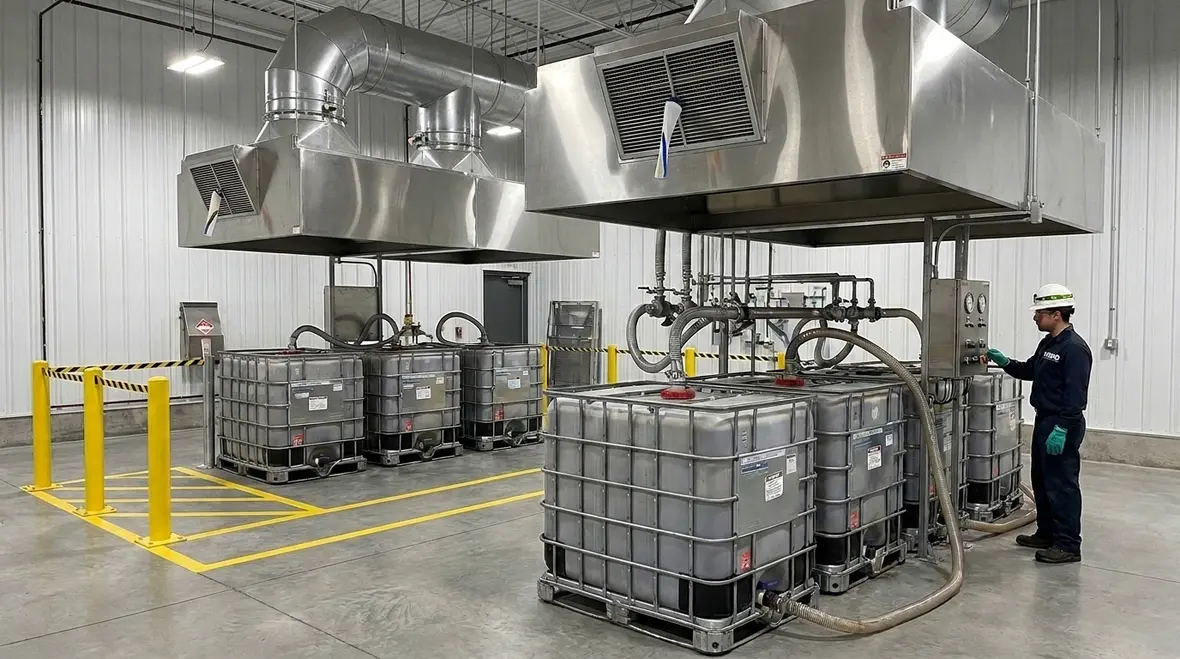
NFPA 34 Section 6.6: Equipment and Containers in Ventilated Areas
Quick Answer
NFPA 34 Section 6.6 sets expectations for how equipment and containers are arranged, protected, and maintained inside ventilated spaces. The rules help control flammable vapor accumulation, support safe air movement, and reduce ignition risk through consistent ventilation and operational discipline.
For a practical look at how inspection, testing, and maintenance supports code readiness across fire protection systems, review ITM fire protection inspection, testing, and maintenance.
Why NFPA 34 Section 6.6 matters in real facilities
Commercial, industrial, and retail occupancies that handle flammable or combustible liquids often rely on ventilated areas to manage vapor hazards. NFPA 34 equipment containers ventilated area rules drive the practical “how” behind safe operations: airflow must be effective, equipment and container placement must not block ventilation paths, and maintenance must preserve system performance over time.
In day to day work, the compliance issues rarely involve the written intent alone. They typically show up during inspections as altered layouts, damaged ductwork, incomplete vapor control processes, missing labels, deteriorated seals, or neglected inspection and maintenance records. Section 6.6 acts as the anchor for those expectations, especially where containers and equipment remain connected to, or operate within, ventilated environments.
Where Section 6.6 applies: ventilated areas, equipment, and containers
NFPA 34 Section 6.6 addresses equipment and containers located in ventilated areas. The core compliance concept is straightforward: ventilation must be able to remove or prevent hazardous vapor buildup, and the arrangement and condition of equipment and containers must support that objective.
Key operational realities facilities manage
- Ventilation effectiveness: Air must reach likely vapor release points and be exhausted before vapors migrate to ignition sources.
- Clear air paths: Equipment and containers must not create dead zones where vapor can accumulate.
- Condition and integrity: Containers, hoses, valves, fittings, and seals can become failure points that defeat containment and upset ventilation assumptions.
- Ongoing control: Even compliant designs fail if maintenance, housekeeping, or operating practices drift.
Facilities often underestimate how quickly changes can erode ventilation performance, such as stored stock added near exhausted points, temporary staging that blocks airflow, or flexible duct damage that goes unnoticed until routine testing.
What “compliant” looks like: arrangement, protection, and airflow continuity
NFPA 34 Section 6.6 focuses on keeping ventilated areas effective. The compliance approach centers on three practical controls: arrangement, protection, and airflow continuity.
1) Arrangement and placement
Equipment and containers must be positioned so they do not block ventilation inlet or exhaust effectiveness. Compliance teams typically evaluate whether placement creates stagnant zones, interferes with exhaust capture, or increases vapor stratification near floors or low points.
- Assess whether airflow patterns still cover expected release points.
- Verify containers are not stored in ways that block grilles, ducts, or exhaust hoods.
- Check whether equipment shielding, enclosures, or stands create air turbulence that prevents vapor removal.
2) Protection against leaks and ignition exposure
Even when ventilation operates properly, leaks and ignition sources can defeat safety goals. Section 6.6 works together with the broader NFPA 34 philosophy that emphasizes controlling vapor release and reducing ignition hazards. That means equipment and containers require attention to fittings, closures, and any interfaces that can loosen under vibration, thermal cycling, or repeated handling.
- Inspect valves, caps, plugs, and connections for secure closure.
- Confirm protective measures prevent direct exposure of vapor to likely ignition sources.
- Ensure any local exhaust or capture devices function as intended around containers.
3) Airflow continuity and system condition
Ventilation systems must maintain performance. When airflow declines, vapor control fails regardless of how good the original design looked. The most common maintenance-related failure points include damaged duct liners, disconnected flex hoses, blocked grilles, deteriorated fans, and control settings that drift over time.
- Confirm fans, dampers, and controls match the design intent.
- Verify duct integrity and that no modifications obstruct flow.
- Maintain filters or strainers where applicable, so they do not become flow restrictors.
Compliance challenges in the field: the inspection gaps that trigger findings
In practice, NFPA 34 equipment containers ventilated area rules are often challenged by “nontechnical” changes that undermine technical performance. The following items repeatedly cause findings during plan review, contractor turnover, or routine authority having jurisdiction visits.
Common failure points
- Blocked exhaust points: Containers or racking placed near grilles reduce capture efficiency.
- Housekeeping drift: Residual spills, rags, or solvent residue increase vapor loading beyond ventilation assumptions.
- Untracked modifications: Added equipment or partitions alter airflow patterns and create dead zones.
- Incomplete inspection and testing: Ventilation testing gaps lead to unknown system degradation.
- Seal and connection deterioration: Hoses and fittings can leak slowly, especially after repeated coupling and decoupling.
Operational procedures that make or break compliance
Ventilated area rules rely on operational discipline. Facilities should standardize procedures for container placement, transfer operations, emergency shutdown sequences, and cleanup. Training should also cover what staff must do if ventilation equipment fails, and how to stop operations safely until the system is restored.
Inspection and maintenance workflow: how to keep ventilated areas audit ready
Strong compliance programs convert NFPA 34 requirements into repeatable work. A practical workflow focuses on verifying that ventilation and container related controls remain consistent with the hazard and design assumptions.
Recommended verification activities
- Document review: Confirm ventilation design basis, operating setpoints, inspection procedures, and maintenance intervals.
- Field walkdown: Check placement of containers and equipment relative to exhaust and inlet locations.
- Physical integrity checks: Look for damaged hoses, compromised gaskets, loose couplings, and corrosion at fittings.
- Functional testing coordination: Ensure ventilation performance testing occurs at required intervals and results are retained.
- Corrective action discipline: Track findings to closure with root cause analysis, not just repairs.
For facilities seeking a structured approach to fire and life safety system readiness, Kord Fire Protection supports ongoing compliance through inspection, testing, and maintenance planning. To strengthen your overall program and ventilation-related readiness, review Kord Fire Protection.
Also coordinate with your internal management of change process. When equipment moves, containers are staged differently, or exhaust systems receive upgrades, that is not “just layout.” It changes how NFPA 34 equipment containers ventilated area rules apply to real airflow capture and vapor control.
Design and plan review tips: preventing rework before it starts
When new projects or remodels affect ventilated spaces, compliance is easier and cheaper when teams build ventilation and container operations together. Section 6.6 should inform early layout decisions, equipment selection, and commissioning acceptance criteria.
Plan review checkpoints
- Show airflow paths and confirm equipment and container placement does not create dead zones.
- Define ventilation operating modes during normal transfer operations and during startup or shutdown.
- Specify performance criteria for exhaust capture and the testing method used to verify them.
- Include maintenance access clearances so ductwork and fans can be inspected and repaired.
Commissioning and turnover requirements
Commissioning should include verifying system operation, control sequencing, and that installation reflects the design drawings. Turnover should include training for operations staff, not only maintenance staff, because day to day placement and transfer practices directly affect compliance outcomes.
Facilities that want a broader look at industrial hazard planning can also explore manufacturing fire suppression planning with Kord Fire Protection.
Frequently Asked Questions
Conclusion and Call to Action
NFPA 34 Section 6.6 hinges on real-world ventilation performance and the safe arrangement and condition of equipment and containers. Facilities that treat ventilation like a living system, with disciplined inspections and documented maintenance, reduce the risk of vapor buildup and inspection findings. Kord Fire Protection helps commercial teams maintain audit-ready readiness through testing, inspections, and maintenance planning. Contact Kord Fire Protection to review your ventilated area program and close compliance gaps before they become operational disruptions.

Join Our Newsletter!
Get the latest fire safety tips delivered straight to your inbox From our Newsletter.



