
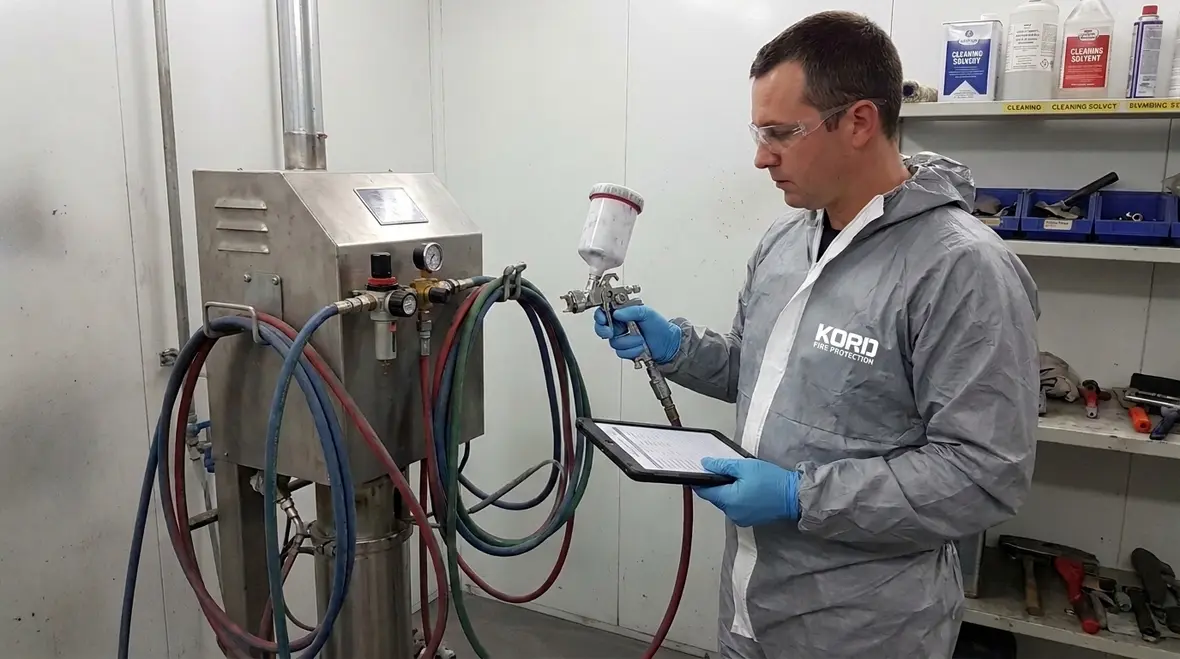
NFPA 33 Section 10.5: Written Maintenance Procedures for Spray Equipment
Quick Answer
NFPA 33 Section 10.5 requires facilities to maintain spray equipment using written procedures that define inspection, cleaning, and repair steps. These controls reduce ignition and chemical hazards caused by clogged nozzles, damaged hoses, leaking valves, and malfunctioning controls. The procedures must match the equipment and chemicals used.
Why NFPA 33 maintenance procedures spray equipment requirements matter in commercial operations
NFPA 33 focuses on fire and explosion prevention in spray application processes involving combustible residues, flammable liquids, and aerosols. Section 10.5 addresses a practical reality: spray equipment does not fail “suddenly.” It degrades gradually through wear, contamination, and mechanical drift. When facilities lack written maintenance procedures, teams tend to rely on informal habits, which increases the risk of skipped steps and inconsistent inspection outcomes.
For commercial, industrial, and retail facilities, the compliance challenge often involves coordinating maintenance across shifts, vendors, and changing product formulations. NFPA 33 maintenance procedures spray equipment must remain current with the spray technology in use, including pumps, atomizers, hoses, hoses assemblies, valves, regulators, spray guns, and transfer lines.
Facilities working through broader spray operation compliance may also benefit from reviewing NFPA 33 Section 1.2 fire and explosion prevention in spray operations for related guidance on ignition source management, maintenance coordination, and day to day operational discipline. ([kordfire.com](https://kordfire.com/nfpa-33-section-1-2-purpose-fire-and-explosion-prevention-in-spray-operations/?utm_source=openai))
What NFPA 33 Section 10.5 expects in written maintenance procedures
Section 10.5 requires written maintenance procedures for spray equipment. In practice, “written” means procedures that operators and maintenance technicians can follow without ambiguity. The intent is traceability and repeatability, not just generic checklists.
Core elements facilities should document
- Equipment scope: Identify each spray equipment component covered by the procedure, including gun or applicator assemblies, pumps, controls, regulators, hoses, and fittings.
- Maintenance frequency: Define inspection and maintenance intervals based on duty cycle, chemical exposure, and manufacturer recommendations.
- Acceptance criteria: Specify what “passes” the inspection. Examples include hose integrity status, correct pressure readings, and acceptable spray pattern quality.
- Cleaning and decontamination methods: Describe safe cleaning steps that account for the chemical hazards, waste handling, and residues left in wetted parts.
- Repair and replacement triggers: State when technicians must repair, rebuild, or replace parts rather than attempt field adjustments.
- Recordkeeping: Define how the facility documents completed maintenance, findings, and corrective actions.
How procedures align to real failure points
Spray equipment failures often originate in areas that are easy to overlook during routine work. Written procedures should address those mechanisms directly:
- Clogging and degraded atomization: Residues and partial blockages alter spray pattern, increase overspray, and can create ignition sources through abnormal operating conditions.
- Hose and coupling deterioration: Chemical attack, abrasion, and pressure cycling can weaken hoses and fittings. A compromised hose can leak flammable vapors or liquid.
- Valve and regulator drift: Wear can cause pressure instability, leading to unsafe operating ranges and inefficient spray application.
- Worn seals and packing: Seal failure can produce leaks near ignition capable surfaces.
- Electrical and control system impairment: Malfunctioning controls, damaged wiring, or incorrect grounding can increase hazard potential.
Inspection and cleaning: the operational heart of compliance
To be effective, written procedures must translate inspection and cleaning into repeatable steps. NFPA 33 maintenance procedures spray equipment should specify both what technicians check and how they verify safe operation after service.
Inspection steps that reduce risk
Procedures typically include visual and functional checks performed during setup, shift changes, and planned maintenance. High value inspection points include:
- Condition of spray guns and atomizers, including wear on nozzles and mixing components
- Integrity of hoses and couplings, including evidence of cracking, softening, swelling, or chemical embrittlement
- Proper fastening and sealing of fittings to prevent seepage under operating pressure
- Verification of pressure settings and regulators consistent with the process design
- Evidence of leaks at valves, packing, and quick disconnects
Cleaning procedures must control residues and waste
Cleaning is not just “remove product.” It requires controlling residues, managing compatible cleaning agents, and preventing accumulation of combustible films in internal passages and external surfaces. Written procedures should define:
- Which cleaning method applies for each spray system and chemical class
- How the facility clears internal wetted parts, including pump cavities and spray head passages
- Safe depressurization steps before disassembly
- How technicians verify that cleaning is complete, such as visual clarity of flushing output and absence of odor or residues per site standards
- How cleaning waste is collected, labeled, and disposed of in accordance with local and site hazardous waste requirements
Repairs, adjustments, and replacement: preventing “temporary fixes”
NFPA 33 maintenance procedures spray equipment should include rules for when repairs are allowed and when parts must be replaced. Many incidents occur after repeated service events when technicians choose expedient repairs instead of restoring the equipment to its intended operating condition.
Establish strict repair triggers
- Leak or seepage: Replace seals or affected components rather than continuing operation.
- Damaged spray pattern components: Replace nozzles, atomizers, or mixing elements when wear changes spray quality beyond acceptable limits.
- Hose damage: Do not patch or kink hoses. Remove from service and replace with approved components.
- Control faults: Repair or replace controls that drift out of calibration ranges. Return-to-service should require verification.
- Contamination events: If incorrect product or incompatible cleaning agents were introduced, procedures must include decontamination and verification steps before resuming spray operations.
Document return to service testing
Written procedures should specify post maintenance verification. Common verification items include restored pressure and flow performance, stable operation of valves and regulators, absence of leaks, and confirmation of spray pattern and coverage using a controlled test method that matches the production process.
Records, training, and cross functional control for commercial facilities
Compliance depends on execution, not just documentation. Facilities typically face audit and inspection gaps because procedures exist but teams cannot follow them consistently across shifts or contractors.
What auditors and insurers look for operationally
- Maintenance logs: Evidence that inspections and cleaning occurred as scheduled.
- Corrective action documentation: Proof that failed items were addressed before equipment resumed service.
- Version control: Procedures reflect current equipment, chemicals, and operating parameters.
- Training records: Technicians and operators understand the steps and the hazard rationale.
- Management oversight: Reviews of recurring defects and maintenance effectiveness.
How Kord Fire Protection supports NFPA 33 compliance
Kord Fire Protection helps commercial facilities standardize NFPA 33 maintenance procedures spray equipment by supporting procedure development, compliance-ready documentation, and ongoing maintenance alignment across operations. This includes helping facilities close common gaps found during internal audits and third party reviews, such as incomplete inspection criteria, missing return to service testing steps, and lack of consistent recordkeeping controls.
For additional context on fire prevention planning and operational readiness, facilities can review related guidance here: Building Fire Safety Emergency Planning for Commercial Facilities. ([kordfire.com](https://kordfire.com/building-fire-safety-emergency-planning-for-commercial-facilities/?utm_source=openai))
Frequently Asked Questions
Get NFPA 33 maintenance procedures spray equipment ready for your operation
Facilities should validate that their written procedures cover the exact spray equipment in service, specify clear inspection and repair triggers, and document return to service testing. Kord Fire Protection can assist with compliance-ready procedure structure and maintenance alignment so teams can execute consistently. Contact Kord Fire Protection to assess current controls, close documentation gaps, and strengthen ongoing NFPA 33 readiness.

Join Our Newsletter!
Get the latest fire safety tips delivered straight to your inbox From our Newsletter.



