
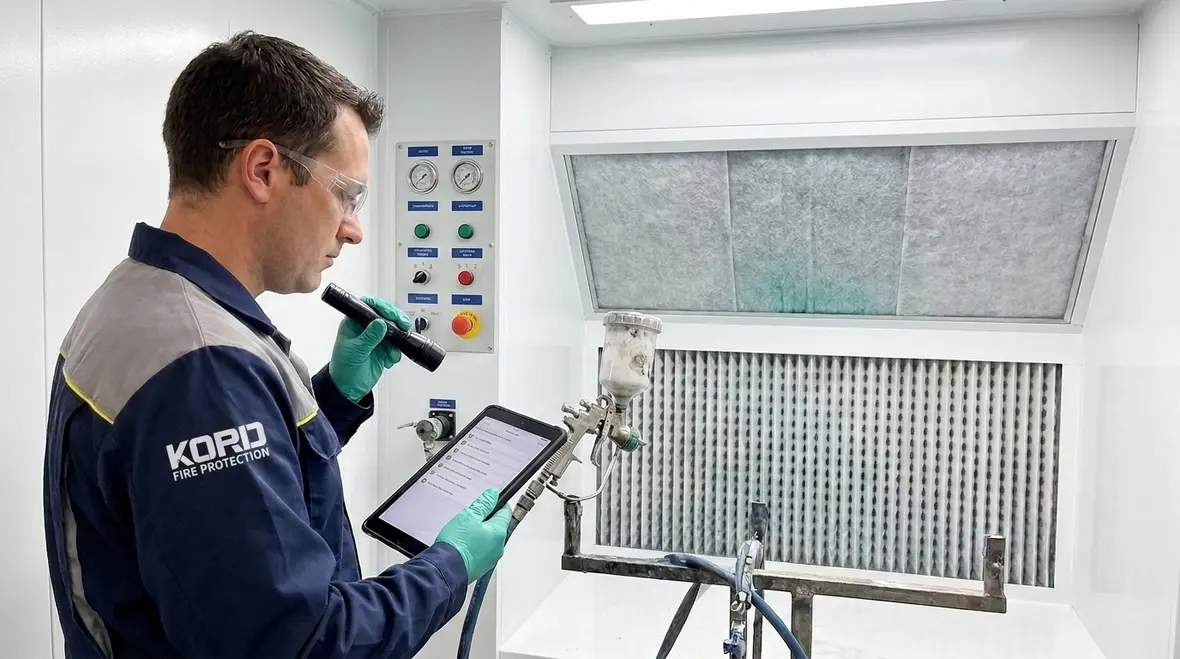
NFPA 33 Section 10.2: Inspection, Testing, and Maintenance Schedules for Spray Equipment
Quick Answer: NFPA 33 Section 10.2 requires documented inspection, testing, and maintenance schedules for spray equipment to ensure it performs safely and reliably. Facilities must define task frequencies, verify hazardous condition controls, and maintain records that support ongoing compliance.
Facilities that also manage spray booth hazards and suppression planning can benefit from reviewing spray booth fire suppression for safer paint operations as a natural companion to Section 10.2 scheduling and documentation.
What does NFPA 33 Section 10.2 require?
NFPA 33 Section 10.2 focuses on keeping spray operations safe through systematic inspection, testing, and maintenance. For facilities, the practical outcome is a repeatable program that verifies spray equipment is maintained in safe operating condition, especially where flammable atmospheres can be created by spraying, overspray, and solvent vapors. This includes ensuring that components related to ignition control, safe operation, and proper system performance remain functional over time.
In commercial operations, compliance often fails not due to a lack of written policies, but due to schedule drift, incomplete records, or maintenance that does not match the hazard and operating conditions. A well managed program for NFPA 33 inspection testing maintenance spray equipment aligns tasks to manufacturer requirements and the facility risk profile, then verifies performance at the right intervals.
How facilities build compliant inspection and maintenance schedules
Section 10.2 drives the need for schedules that are both traceable and operationally realistic. A compliant schedule typically includes at least three layers of work:
- Inspection tasks that detect deterioration, damage, contamination, misalignment, or component degradation.
- Testing tasks that verify function against performance criteria, including control system behavior and protective device operation.
- Maintenance tasks that correct deficiencies and restore equipment to safe condition, including cleaning, replacement, and adjustment where permitted.
Facilities often overlook the operational details that determine frequency. Examples include spray intensity, solvent type, uptime expectations, environmental exposure (humidity, dust, corrosive overspray), and how frequently nozzles, hoses, and electrical components cycle through start stop operation. These variables can accelerate wear and create failure modes that inspections will not catch unless intervals and checklists match the application.
Kord Fire Protection supports commercial facilities in turning Section 10.2 into implementable schedules that technicians can follow consistently. That means mapping tasks to the specific spray system configuration, documenting findings in an audit ready format, and coordinating ongoing service so records reflect actual operational practice.
What to inspect and test on spray equipment (common failure points)
Spray equipment includes more than spray guns and hoses. Section 10.2 schedules must address the components that, when degraded or improperly functioning, increase ignition risk or compromise safe operation.
1) Electrical and control components
Many spray operations rely on equipment grounding, bonding continuity, and control circuits to reduce ignition sources. Common failure points include:
- Loose or corroded electrical connections causing unreliable control behavior.
- Bonding and grounding degradation leading to static control issues.
- Control device drift where protective interlocks do not respond as designed.
Testing and inspection should confirm that electrical and control components operate correctly and remain in safe condition. Schedules should specify the method and acceptance criteria used by qualified personnel.
2) Spray nozzles, atomizers, and fluid path integrity
Wear and buildup can change spray patterns, increase overspray, and create conditions that elevate ignition risk. Typical issues include:
- Clogging or partial blockage from dried coating or contaminants.
- Nozzle damage that changes atomization and increases mist output.
- Seals and gaskets that harden, leak, or fail under chemical exposure.
Inspection should include visible condition checks and performance verification where applicable. Maintenance should include cleaning methods compatible with the coating chemicals and solvent systems used.
3) Hoses, fittings, and leak prevention
Leaks are a frequent operational risk because they can release flammable vapors into the spray area. Failure points include damaged hose jackets, loosened fittings, and degraded couplings. Schedules should require leak checks at defined intervals and after maintenance activities.
4) Purging, airflow, and system interlocks
Where the system uses purge cycles or relies on interlocks to manage safe states, inspection and testing must verify those sequences perform correctly. Common issues include failed valves, sticky actuators, and sensor drift that prevents the system from reaching a safe operating condition before spraying begins.
How often should inspection, testing, and maintenance occur?
NFPA 33 Section 10.2 does not rely on a single universal interval for all facilities because usage conditions vary. Instead, it requires schedules that reflect the hazard and operating environment, and that confirm the equipment remains safe over time.
In practice, the schedule frequency should be driven by:
- Manufacturer instructions for the specific spray equipment and components.
- Operating conditions including solvent chemistry, spray rates, and duty cycle.
- Facility environment such as corrosive exposure, humidity, and particulate contamination.
- History of defects and observed wear patterns.
Commercial facilities in retail, industrial coating, and manufacturing environments commonly adopt a baseline cadence for routine inspection, plus periodic testing and maintenance at intervals aligned to manufacturer guidance and risk. When early signs of degradation appear, schedules should tighten until the equipment stabilizes and the root cause is corrected.
Kord Fire Protection helps facilities avoid the compliance trap of “set and forget” schedules by reviewing maintenance findings and adjusting task frequency where operational evidence supports change. That approach improves reliability and keeps inspection testing maintenance spray equipment aligned with actual risk.
Documentation and records: the audit ready standard
Section 10.2 expectations typically include maintaining documentation that demonstrates the schedule is followed and that corrective actions occur when needed. Records should clearly show:
- Date of inspection, testing, and maintenance activities.
- Equipment identification, location, and system configuration references.
- Results, measured values where applicable, and observable condition notes.
- Repairs performed, parts replaced, and any adjustments made.
- Any deficiencies found, risk implications, and follow up actions to address them.
A common operational failure is incomplete or inconsistent recordkeeping after maintenance. Facilities often document the work order but not the test outcome that demonstrates safe performance, or they capture values without stating whether the equipment met acceptance criteria. For strong compliance posture, records should connect the action taken to the safety function verified.
If your facility also maintains related fire and protection systems, aligning documentation habits improves readiness and reduces administrative burden. For additional guidance on fire protection program planning, review inspection, testing, and maintenance fire protection guidance and Kord Fire Protection service capabilities.
Scheduling strategy for commercial facilities: preventing downtime and compliance gaps
Commercial environments often require spray equipment uptime for production and sales support. A compliant inspection testing maintenance strategy should therefore minimize disruption while preserving safety verification.
Effective scheduling methods include:
- Pre planned maintenance windows that coordinate with production schedules and solvent changeovers.
- Post maintenance verification so the equipment is tested after repairs or parts replacement, not only at the next routine interval.
- Checklist standardization that reduces variability between technicians and shifts.
- Deficiency driven escalation where repeated findings trigger schedule refinement.
When facilities outsource testing and maintenance, Kord Fire Protection can provide consistency across multiple locations, helping maintain uniform compliance controls. This is especially valuable where retail and industrial teams manage multiple spray systems and require consistent documentation for internal audits and third party assessments.
Frequently Asked Questions
Call to Action
Facilities that manage spray operations should treat NFPA 33 inspection testing maintenance spray equipment schedules as a living compliance program, not a static checklist. Kord Fire Protection helps commercial teams implement practical inspection, testing, and maintenance schedules, standardize documentation, and address recurring deficiencies before they become safety risks. Contact Kord Fire Protection to review your current schedule and strengthen audit readiness across your spray systems.

Join Our Newsletter!
Get the latest fire safety tips delivered straight to your inbox From our Newsletter.



