
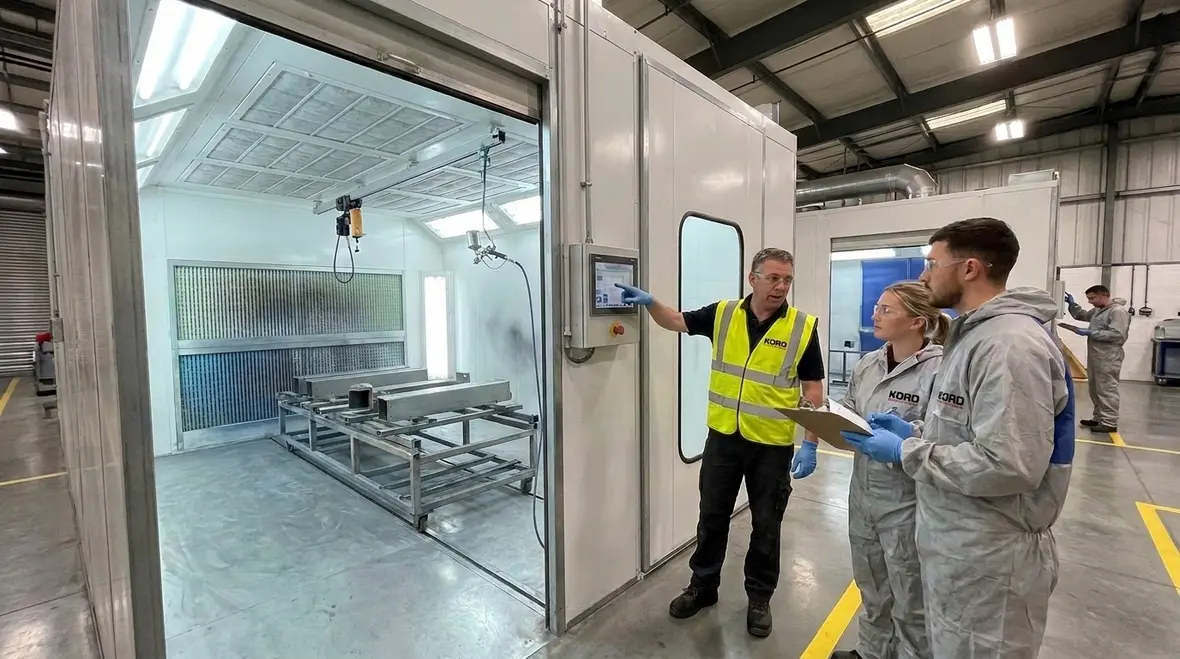
NFPA 33 Section 19.1: Training Requirements for Spray Operation Personnel
Quick Answer: NFPA 33 Section 19.1 requires employers to train spray operation personnel so they can perform tasks safely, understand hazards, and follow operating and emergency procedures. Effective training includes initial instruction, documented refresher training, and competency verification aligned with the facility’s processes.
If your facility is tightening documentation around spray area safety, review Kord Fire Protection’s fire protection services in Southern California near the start of your planning process. It fits naturally here because training only works when inspections, maintenance, and corrective actions actually keep pace with the real conditions crews face on shift.
What NFPA 33 Section 19.1 requires in practical terms
NFPA 33 spray operation personnel training requirements focus on ensuring workers understand spray fire hazards, safe operating limits, equipment controls, and response actions. In commercial, industrial, and retail settings, the biggest compliance gap is not the existence of a generic training plan, but whether training matches the actual spray equipment, coatings, ventilation setup, and inspection results on site.
This article explains what Section 19.1 expects, how facilities demonstrate compliance during audits, and how to reduce common failure points that lead to corrective actions. It also shows where Kord Fire Protection supports ongoing maintenance, testing coordination, and documented compliance.
Who must be trained and what job functions are covered?
NFPA 33 targets personnel who handle or operate spray applications, including roles that influence ignition sources and control effectiveness. Training obligations typically extend beyond the sprayer. Facilities should consider coverage for anyone who can affect process safety, such as:
- Spray operators and line leads
- Mixing, loading, and transfer personnel
- Maintenance staff who adjust or troubleshoot spray systems
- Supervisors responsible for safe operation, start up, shutdown, and changeovers
- Contractor personnel permitted to operate spray areas
Because NFPA 33 addresses spray operations as a system, the training must align with the facility’s actual process. Facilities frequently misalign training by using a single slide deck for multiple booths, different coatings, or altered ventilation and filtration performance.
What training must include for real-world spray operations
To satisfy NFPA 33 Section 19.1, training must enable personnel to perform tasks safely and consistently. In practice, the content should cover hazards, equipment mechanisms, and how controls prevent ignition and fire propagation.
1) Process hazards and ignition control
Training should clearly explain how flammable and combustible atmospheres can form, why those atmospheres are hazardous, and how spray operations create ignition risk. Personnel should understand practical ignition control concepts, including:
- Sources of ignition relevant to spray areas
- Electrostatic discharge risks and bonding and grounding basics
- Control of air movement and ventilation effectiveness
- Safe handling requirements during normal operation and during upset conditions
2) Equipment operation and safe operating limits
Training must reflect the equipment installed and used. Personnel should be able to operate the spray system within safe limits and recognize conditions that require shutdown. Typical operational competencies include:
- Starting and stopping procedures for spray equipment and associated controls
- Understanding interlocks, alarms, and the meaning of control statuses
- How spray patterns, flow rates, and technique can affect overspray and hazard potential
- Proper use of PPE aligned with coating hazards and facility policy
3) Ventilation, filtration, and airflow verification
Ventilation performance often drives outcomes. Training should connect the role of ventilation to safe operation and explain what personnel must do when ventilation systems do not perform as intended. Personnel should know:
- Where ventilation controls are located and how to verify operational status
- What to report if fans, dampers, or airflow indicators appear abnormal
- How changes in production, booth loading, or filter condition can affect system effectiveness
Commercial facilities commonly face compliance issues when filter maintenance is inconsistent or when staff do not recognize airflow failure signs. Documented training that references actual facility indicators helps close this gap.
4) Emergency procedures and safe response
NFPA 33 training should ensure personnel can respond without increasing risk. Personnel should understand the actions required during:
- Fume or ignition events
- Ventilation system alarm conditions
- Spray equipment malfunction that creates abnormal conditions
- Evacuation and notification steps aligned with the site emergency plan
How facilities document compliance: training records, refreshers, and verification
Training compliance becomes defensible when documentation connects the training record to the facility’s operations and equipment. For NFPA 33 spray operation personnel training requirements, a best practice approach includes:
Maintain training records that prove coverage
Facilities should retain records that specify at least:
- Employee name and role
- Date of initial training and dates of subsequent training or refreshers
- Training topics covered aligned to actual processes
- Trainer identity and qualification
- Competency confirmation method (test, supervised demonstration, or verified checklist)
Use change based refreshers, not only calendar refreshers
Training should be refreshed when conditions change. Examples include:
- New coatings, solvents, or material classifications
- Modifications to spray equipment, control systems, or ventilation hardware
- Changes in production layout or booth configuration
- Failure events, near misses, or audit findings
These events typically expose weaknesses in the training program, especially when new products have different hazard characteristics or when updated equipment introduces new interlocks and operating logic.
Verify competency at the job level
Best-in-class facilities confirm that trainees can do the job safely, not just repeat policy. Competency verification can include supervised start up and shutdown, proper response to alarms, and correct bonding and grounding practices where applicable.
Common compliance pitfalls in commercial spray areas
Even when a facility has written procedures, auditors and insurers often focus on operational reality. The following are frequent causes of nonconformance related to training under Section 19.1:
- Generic training that does not reflect installed equipment. Personnel may be trained on one booth type while using another during production.
- Ventilation and maintenance not tied to training. Workers may not understand what “normal” looks like for airflow indicators or what action to take during filter-related changes.
- Incomplete emergency response expectations. Personnel sometimes know evacuation routes but not the correct shutdown or control steps tied to spray operations.
- Contractor coverage gaps. Temporary staffing is common in retail and industrial environments, and onboarding often lacks spray area specific instruction.
- Weak competency verification. Training records show attendance but do not show that employees can perform start up, alarm response, or safe shutdown.
These issues are easier to eliminate when training is driven by inspection outcomes and maintenance realities, including the condition of control equipment and the effectiveness of prevention systems.
To strengthen ongoing compliance, Kord Fire Protection supports commercial facilities with coordinated testing, maintenance planning, and documentation practices that align life safety and fire prevention performance with operational expectations.
Link training to inspections and ongoing maintenance
NFPA 33 training outcomes depend on the performance of the systems personnel operate and monitor. A strong compliance program connects training content to inspection findings and maintenance schedules. This approach reduces the gap between written requirements and what crews experience during shifts.
Use a coordinated compliance workflow
Commercial facilities benefit from a repeatable workflow:
- Confirm installed equipment configuration and process hazards.
- Train personnel based on the exact process they operate.
- Perform routine inspections and maintenance on spray area controls and related protective features.
- Update training when inspections show recurring issues or when equipment changes occur.
- Verify competency and document corrective actions when gaps are found.
For related reading, explore Kord Fire Protection’s NFPA 1 Section 43.5 miscellaneous spray operations guide if you want a practical look at spray operation safety from another angle. For additional practical guidance on fire system documentation and compliance support, Kord Fire Protection also provides resources that help align operational practices with inspection and maintenance expectations.
Frequently Asked Questions
Get your spray operation training program audit-ready
Facilities should align NFPA 33 spray operation personnel training requirements with the exact equipment, ventilation indicators, and emergency procedures used on each shift. Kord Fire Protection helps commercial teams close the loop by coordinating testing and maintenance documentation so your training remains effective and defensible. Contact Kord Fire Protection to review your spray area training records, identify gaps, and build a practical compliance plan tied to ongoing inspections.

Join Our Newsletter!
Get the latest fire safety tips delivered straight to your inbox From our Newsletter.



