
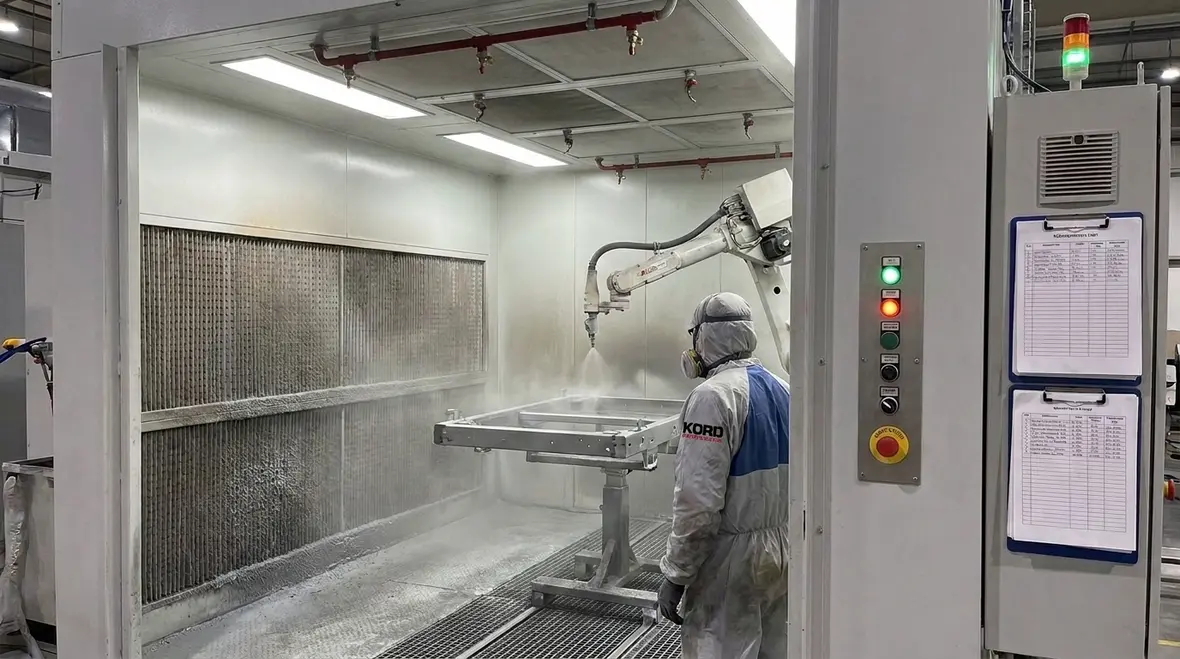
NFPA 33 Section 9.6: Specific Process Protection for Spray Operations
Quick Answer: NFPA 33 Section 9.6 requires protection measures tailored to spray processes to prevent ignition hazards from flammable residues, spray equipment, and release of combustible liquids. Compliance depends on selecting and maintaining appropriate detection, control, and extinguishing or isolation systems.
For facilities building a broader compliance program, inspection, testing, and maintenance services can help keep spray process protection aligned with operating conditions and documentation needs.
What NFPA 33 Section 9.6 requires for spray operations
NFPA 33 specific process protection spray operations focuses on the hazards created during application of flammable or combustible liquids, including mist, overspray, vapor generation, and residue accumulation. Section 9.6 does not treat spray areas as a single uniform risk. It drives design decisions around how the spray process is performed, what ignitable mixtures can form, and how a facility prevents or limits the consequences of an ignition event.
In commercial and industrial environments, common enforcement emphasis includes verifying that protective features match the process and that installed systems remain reliable through inspection, maintenance, and performance testing. Retail locations using spray finishing, floor coating, or maintenance aerosols also experience recurring compliance problems because operational changes often occur without updating protective arrangements.
Core hazard drivers in spray operations
Before selecting process protection, the code intent requires hazards to be controlled at their source. The most frequently encountered technical drivers include:
- Ignition sources: electrical equipment, mechanical sparks, hot surfaces, static discharge, and improper wiring or grounding.
- Combustible residues: overspray buildup on walls, floors, ceilings, ductwork, and filter media.
- Vapor and mist formation: continuous spray, high atomization, poor ventilation, or extended cure times.
- System response timing: delays in shutdown, isolation, or suppression can increase heat release and fire growth.
- Process variation: product changes, viscosity changes, intermittent spraying, or revised production schedules.
Facilities that treat ventilation and housekeeping as “general safety” measures often struggle when inspectors evaluate them against process-specific requirements. NFPA 33 expects the protection strategy to remain aligned with how spraying actually occurs.
Process protection approaches commonly referenced under Section 9.6
Section 9.6 centers on specific process protection methods that are typically implemented as engineered safeguards around spray equipment. The typical building blocks include process shutdown, hazard detection, isolation of fuel and energy sources, and suppression where appropriate.
1) Detection and controlled shutdown
Many spray lines use detection that triggers immediate control actions such as stopping spray output, shutting down fans or pumps where required, and isolating electrical supplies. The goal is to stop the fuel contribution and reduce formation of ignitable mixtures.
Key compliance detail points include:
- Interlock logic: verify that detection signals correctly command the intended shutdown sequence.
- Failure mode behavior: ensure that loss of signal, loss of power, or sensor fault results in a safe state defined by the process hazard analysis.
- Placement and coverage: confirm sensors and detection points account for spray patterns, air movement, and typical overspray trajectories.
2) Isolation and containment of spray hazards
Where spray operations occur inside booths or enclosures, containment and ventilation management often form part of the protection strategy. Proper operation depends on maintaining airflow performance, pressure relationships, and duct integrity.
Common failure points that lead to noncompliance include:
- Deteriorated ductwork or seals: leaks can spread residues to adjacent areas.
- Incorrect airflow setpoints: production adjustments override design airflow without corrective approvals.
- Improper filter selection or maintenance: degraded filter media can increase bypass and residue loading.
3) Suppression or mitigation features for spray areas
For certain configurations and risk levels, installed suppression or mitigation systems can be part of the protection intent. The critical compliance element is not only the system type, but also its reliability in the real environment of spray mist, overspray residue, and frequent operational cycling.
Commercial sites often require proof of:
- System activation reliability: detection to release logic operates consistently during process conditions.
- Agent distribution integrity: nozzles, valves, and piping remain unobstructed by overspray residue.
- Post event readiness: the facility can restore the system without shortcuts that degrade performance.
Because spray environments are harsh, the real-world maintenance schedule must account for residue loading. Systems that pass an initial acceptance test can underperform later if preventive maintenance does not include inspection of internal components that are exposed to coating overspray.
Inspection and maintenance requirements that prevent common violations
Enforcement risk usually increases where spray processes run continuously, shift changes add operational variability, or maintenance is treated as “routine cleaning” rather than system verification. A strong compliance program ties inspection tasks to the actual protection elements installed under NFPA 33 specific process protection spray operations.
What inspectors look for in the field
- Documentation alignment: the protection strategy and operating sequence match the current process, chemical list, and spray method.
- Component condition: visible residue buildup on nozzles, sensors, panels, and detection devices.
- Functional testing evidence: records show periodic verification of interlocks, shutdown sequences, and detection response.
- Housekeeping performance: overspray accumulation remains within acceptable limits for the protected hazard area.
- Maintenance training: technicians understand what to look for when spray parameters change.
Why “interval-only” maintenance often fails
Many spray operations schedule maintenance by calendar dates without addressing operating severity. A facility running higher solids coatings, increased dwell time, or extended spray sessions can see protection degradation long before the next planned service date.
A better approach is to use a risk-based maintenance plan that includes:
- Condition monitoring: inspect residue accumulation and residue impact on detection and suppression components.
- After change verification: recheck interlocks and airflow performance when chemicals, spray guns, or production schedules change.
- Seasonal and ventilation variability checks: confirm that HVAC and exhaust systems maintain designed performance.
How Kord Fire Protection supports ongoing NFPA 33 compliance
Spray area protection requires more than installation. It requires maintenance discipline, documentation control, and functional verification that accounts for residue exposure and process change. Kord Fire Protection partners with commercial, industrial, and retail facilities to support inspection readiness and reliable performance over time, including testing support, maintenance planning, and corrective action tracking.
For related fire safety planning and system coordination, see Kord Fire Protection services and discuss how your spray process protection strategy aligns with NFPA 33 expectations.
Practical compliance checklist for spray operations under Section 9.6
Use the following checklist to reduce surprises during surveys, insurance reviews, and internal audits:
- Confirm the spray enclosure or booth configuration matches the hazard assumptions used in the protection design.
- Verify detection and shutdown sequences activate as intended during simulated or controlled checks.
- Inspect suppression or mitigation components for residue buildup and confirm discharge path integrity.
- Document housekeeping intervals tied to spray severity and filter performance.
- Ensure interlocks remain functional after maintenance, component replacement, or production changes.
- Maintain clear records of testing, inspection, corrective actions, and follow up.
Frequently Asked Questions
Conclusion and Call to Action
NFPA 33 Section 9.6 demands a protection strategy that remains accurate after real-world production changes, residue loading, and equipment wear. Facilities should schedule inspection and functional verification with a partner that understands spray environments and can help keep documentation, maintenance, and testing aligned. Contact Kord Fire Protection to review your spray process protection setup and build a practical maintenance and compliance plan that supports ongoing readiness.

Join Our Newsletter!
Get the latest fire safety tips delivered straight to your inbox From our Newsletter.



