NFPA 291 Section 4.4 Available Water Supply Calculation
Quick Answer: NFPA 291 Section 4.4 guides how to determine available water supply in a water main by testing pressure, flow, and residual pressure at hydrants. In practice, this helps confirm whether a site can support fire protection needs. For commercial and industrial properties, the process turns assumptions into measurable facts, which is always more comforting than trusting crossed fingers and optimistic silence.
When a facility needs fire protection support, guessing is not a plan. A proper available water supply calculation gives a clear picture of what the water main can actually deliver, not what someone hopes it can deliver. Under NFPA 291 Section 4.4, the process measures how much water a main can provide while still keeping pressure in the system. That matters for sprinkler design, hydrants, pumps, and overall fire safety planning. Near the beginning of many projects, teams pair this work with broader fire protection services so the water supply data connects naturally to design, testing, inspection, and compliance planning. That is the part where good engineering starts doing the heavy lifting.
What NFPA 291 Section 4.4 Means in Plain Terms
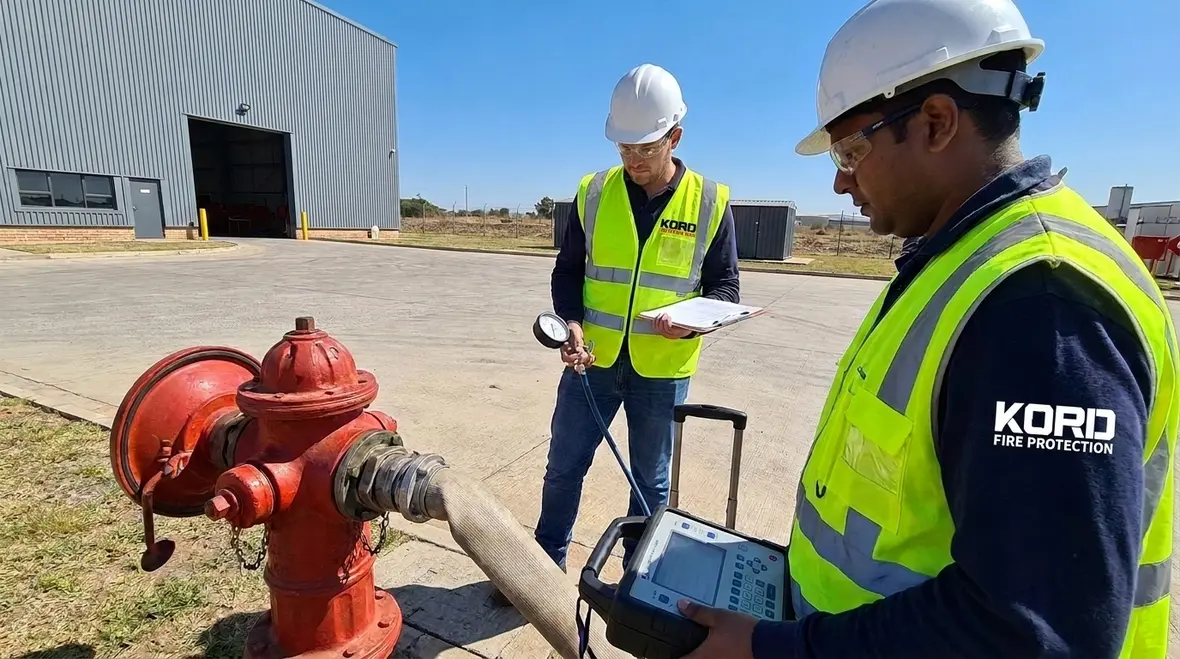
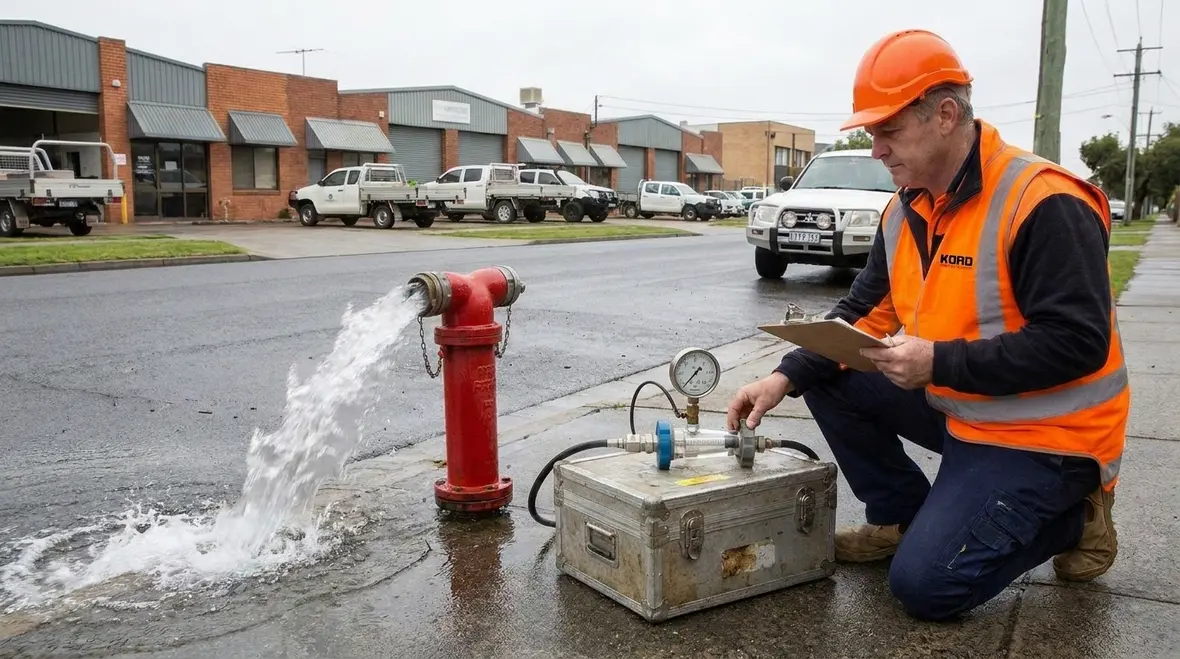
NFPA 291 Section 4.4 explains how to assess a water main so fire protection teams know its usable supply. First, a hydrant flow test is performed. Then, the static pressure and residual pressure are measured while water flows. As a result, the team can estimate the amount of water available at a site without draining the system dry like a plot twist in a disaster movie. Kord Fire’s own hydrant testing resources repeatedly frame these readings around static pressure, residual pressure, and flow because those three values reveal whether the water supply can actually support firefighting demand. ([kordfire.com](https://kordfire.com/fire-hydrant-flow-test-guide-to-water-pressure/?utm_source=openai))
This process matters because the water main must support fire demand during an emergency. If the supply falls short, the design must change. Therefore, the test data becomes the base for smart decisions about sprinkler systems, pumps, and water storage. Kord Fire’s related guidance on water supply system design and reliability analysis makes the same point from another angle: once flow test data shows weak residual pressure or limited capacity, designers may need added pumps, storage, or other system changes instead of wishful thinking dressed up as a specification. ([kordfire.com](https://kordfire.com/fire-hydrant-water-supply-system-design-guide/?utm_source=openai))
How to Determine Available Water Supply in a Water Main
The available water supply calculation starts with a field test. A qualified team opens hydrants in a controlled way and records the pressure before and during flow. Next, they compare the results to estimate how the main behaves under demand. This is not just paperwork with a hard hat. It is the foundation of reliable fire protection design. Kord Fire’s hydrant flow testing articles describe the same sequence: record static pressure, open a flowing hydrant, measure residual pressure, and calculate the delivered flow rate so the performance of the underground main stops being a mystery. ([kordfire.com](https://kordfire.com/fire-hydrant-flow-test-guide-to-water-pressure/?utm_source=openai))
The key steps usually include
- 1. Measure static pressure
This shows the pressure in the main before any water is drawn. It gives the starting point for the calculation. - 2. Measure residual pressure
This shows what pressure remains while water flows. It reveals how the system responds under use. - 3. Record flow rate
This tells the team how much water is moving through the hydrant during the test. - 4. Calculate available supply
The results help estimate how much water the main can support for fire protection needs.
Because each site has different water demand, this calculation should match real site use. A warehouse will not have the same needs as a retail centre, and the water main will not care about wishful thinking. Kord Fire’s water supply design guidance notes that engineers calculate required fire flow based on building size, occupancy, and hazard level, then compare that need against actual hydrant and main performance. ([kordfire.com](https://kordfire.com/fire-hydrant-water-supply-system-design-guide/?utm_source=openai))
Why Accurate Testing Matters for Commercial Sites
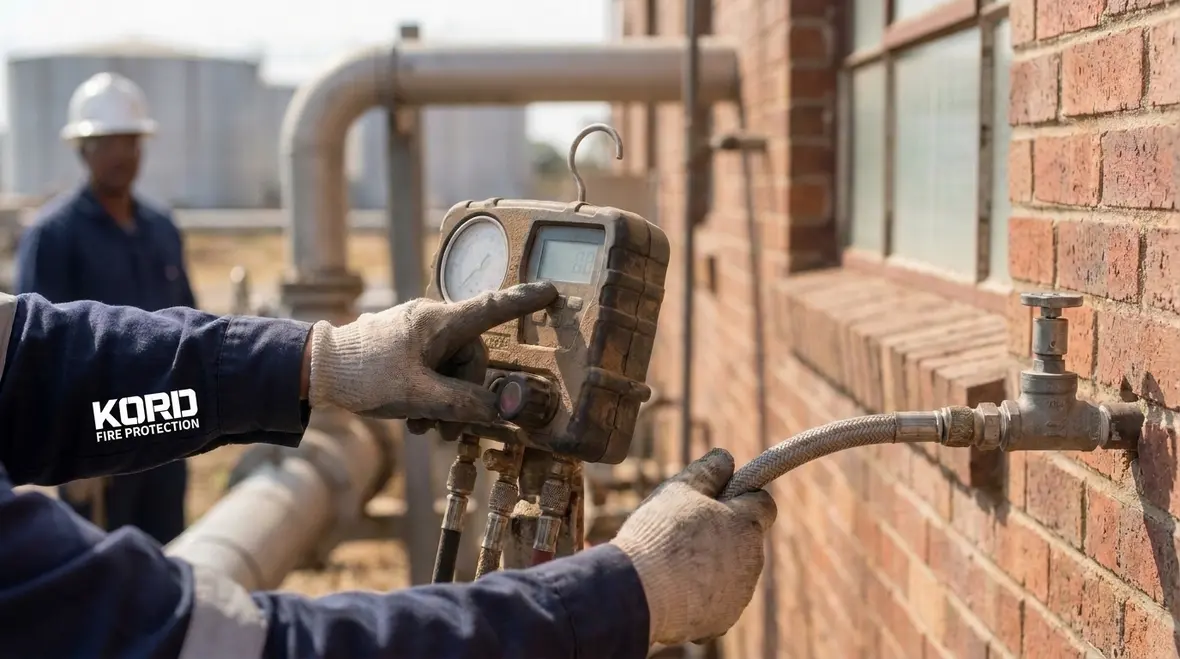
Industrial and commercial facilities often have higher fire loads, larger floor areas, and more complex equipment. Therefore, a weak water supply can create major problems during design and approval. If the available water supply calculation is wrong, the system may be undersized, oversized, or delayed during compliance review. Kord Fire’s commercial hydrant testing content emphasizes that professional testing and reporting help convert unknown conditions into clear numbers that support confident decisions rather than expensive guesswork. ([kordfire.com](https://kordfire.com/exterior-fire-hydrant-flow-testing-for-commercial-sites/?utm_source=openai))
In addition, a poor estimate can lead to costly redesigns. That slows projects, raises budgets, and adds stress that nobody invited. Accurate testing helps avoid those issues early. It also gives facility managers confidence that their fire protection systems match the real supply on site. Kord Fire’s article on water supply reliability says much the same thing in practical terms: flow testing and pressure monitoring reveal how supply behaves under demand, including weak points caused by distance, pipe size, or restrictions. ([kordfire.com](https://kordfire.com/water-supply-reliability-analysis-for-fire-suppression-systems/?utm_source=openai))
What the test reveals
It shows pressure loss, flow limits, and how the water main performs during demand.
What the result supports
It supports sprinkler design, hydrant planning, pump selection, and compliance checks.
Where Kord Fire Protection Fits In
Kord Fire Protection can become a vital partner in this service because the work needs more than a clipboard and a good attitude. It needs technical skill, site knowledge, and a clear understanding of fire system design. Kord Fire’s own commercial hydrant testing page says the service includes professional testing, reporting, and support that help turn unknowns into clear numbers and practical next steps. If you want broader context around testing and field interpretation, Kord also has a helpful fire hydrant flow test guide to water pressure that connects the numbers to real world decisions. ([kordfire.com](https://kordfire.com/exterior-fire-hydrant-flow-testing-for-commercial-sites/?utm_source=openai))
For industrial plants, shopping centres, logistics hubs, hospitals, and office buildings, that support can save time and reduce risk. Moreover, Kord Fire Protection can help connect the water supply data to the next step in the project, whether that means system upgrades, compliance support, or redesign. In other words, they help turn “we think it is enough” into “we know it is enough.” Small detail. Big difference.
How the Data Supports Fire System Design
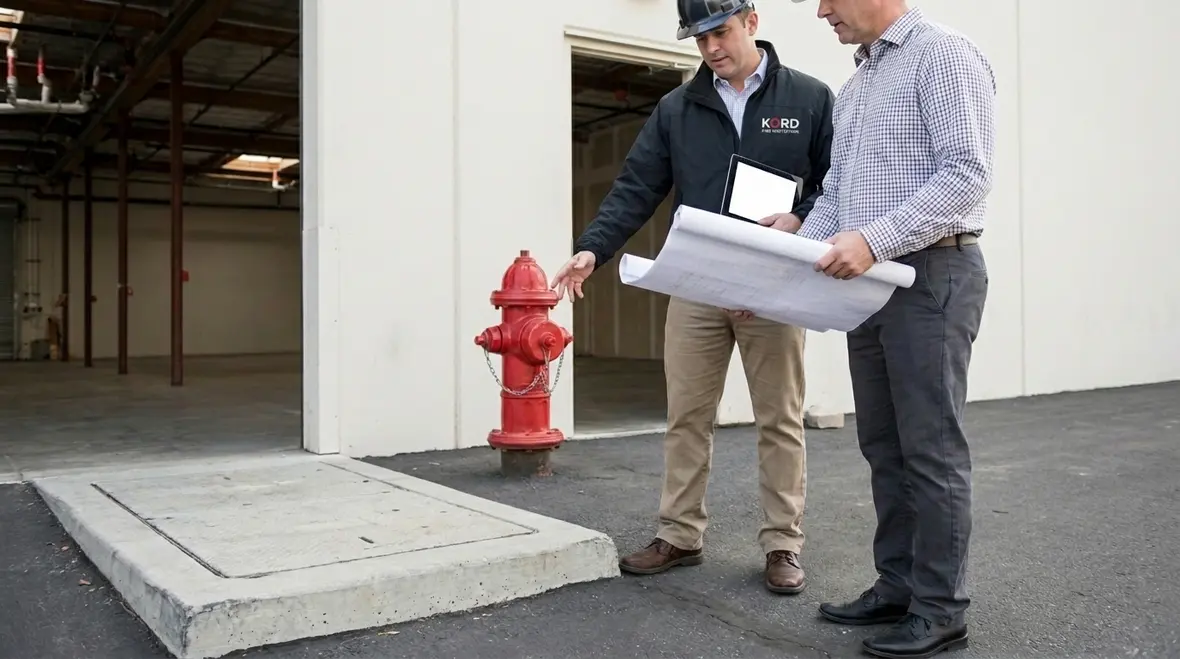
Once the available supply is known, engineers can compare it with the fire demand for the site. If the supply meets the demand, the system can move forward with confidence. If not, the design may need pumps, storage tanks, or revised zoning. Therefore, the test is not an isolated task. It directly shapes the final system. Kord Fire’s system design guidance and water pressure resources both reinforce that strong static pressure alone is not enough if residual pressure falls too low during actual flow. ([kordfire.com](https://kordfire.com/fire-hydrant-water-supply-system-design-guide/?utm_source=openai))
Also, the results help identify weak points in older water mains. That is useful for older commercial properties where upgrades may have happened around the building, but not under the pavement. The pipes, as usual, were not briefed. Kord Fire’s reliability article specifically notes that one nearby supply point may perform well while another fails under flow because of distance, constrictions, or pipe conditions, which is exactly why current field data matters. ([kordfire.com](https://kordfire.com/water-supply-reliability-analysis-for-fire-suppression-systems/?utm_source=openai))
Common Mistakes to Avoid
Some teams rely on old data, which can lead to bad assumptions. However, water systems change over time because of growth, main upgrades, or nearby demand. Others skip proper test conditions, which can distort results. For that reason, each test should use the right method, the right equipment, and the right interpretation. Kord Fire’s local testing pages repeatedly stress using recent flow data and qualified professionals instead of trusting stale records that may no longer reflect field reality. ([kordfire.com](https://kordfire.com/carson-fire-hydrant-flow-testing-services/?utm_source=openai))
Another mistake is treating the calculation like a box ticking exercise. It is not. It is a risk check that protects people, assets, and operations. So, the numbers must be taken seriously from start to finish. If teams need added context on testing standards and hydrant marking, Kord also appears to have a dedicated NFPA 291 resource here: NFPA 291 fire hydrant testing and marking guide. ([kordfire.com](https://kordfire.com/exterior-fire-hydrant-flow-testing-for-commercial-sites/?utm_source=openai))
FAQ
Conclusion
For any industrial, retail, or commercial site, NFPA 291 Section 4.4 provides the path to a reliable available water supply calculation. The standard approach of measuring static pressure, residual pressure, and flow helps teams understand what the water main can truly deliver instead of relying on assumptions. Kord Fire’s hydrant testing and water supply resources consistently support the same practical idea: test the system, read the numbers carefully, and design from facts. ([kordfire.com](https://kordfire.com/fire-hydrant-flow-test-guide-to-water-pressure/?utm_source=openai))
Kord Fire Protection can help make that process clear, accurate, and useful from the first test to the final design decision. For projects that need dependable hydrant flow data, professional interpretation, and a smoother path to next steps, involving the right team early can save time, reduce risk, and keep fire protection on solid ground. That is the kind of calm confidence every site needs, and frankly, every Monday morning meeting could borrow some of it too. ([kordfire.com](https://kordfire.com/exterior-fire-hydrant-flow-testing-for-commercial-sites/?utm_source=openai))

Join Our Newsletter!
Get the latest fire safety tips delivered straight to your inbox From our Newsletter.