
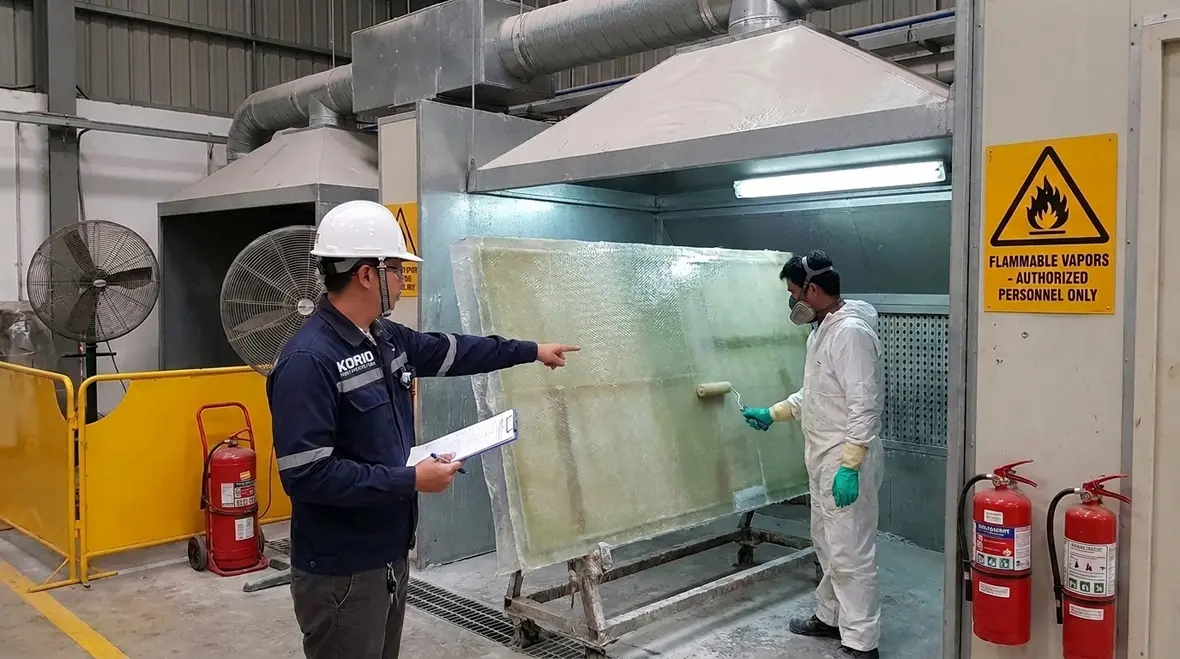
NFPA 33 Section 17.1 Scope: Styrene Cross-Linked Composites (GRP)
Quick Answer: NFPA 33 Section 17.1 defines how styrene cross-linked composites, commonly GRP, fit within the standard’s control of flammable and combustible materials. It focuses on safe selection, installation, and ongoing risk management for systems that may involve styrene containing resins and related processes.
Why NFPA 33 Section 17.1 matters for GRP installations
Commercial facilities that use or maintain reinforced composite systems often discover that “material compliance” is not a one time checkbox. Even when GRP appears inert after curing, the hazardous concern is tied to styrene containing components, surface contamination, repair practices, and how the system is integrated with ventilation, exhaust handling, and ignition control. This is where the NFPA 33 styrene cross-linked composites GRP scope becomes operational, not theoretical.
In practice, auditors and AHJs look beyond the bill of materials. They evaluate whether the facility’s procedures control styrene vapor generation, prevent ignition sources from interacting with hazardous vapors, and manage maintenance activities that can reintroduce unreacted resin, solvents, or contaminated dust.
For a broader look at how inspections, testing, maintenance, and documentation connect across a property, facilities can review the full lifecycle of fire protection servicing as a practical companion to Section 17.1 planning.
What the “scope” typically covers under Section 17.1
NFPA 33 organizes requirements around processes where flammable or combustible liquids and vapors can be present. For styrene cross-linked composites, the compliance focus is usually on the life cycle of styrene containing materials:
- Installation and commissioning: Ensuring the GRP system is installed using controlled practices appropriate for the resin chemistry, ventilation requirements, and ignition hazard controls relevant to the process environment.
- Normal operation: Managing conditions that could cause vapor release, such as elevated temperatures, overspray contamination, or airflow patterns that transport vapors toward ignition capable equipment.
- Repairs and modifications: Controlling work that reintroduces hazardous constituents, including sanding, grinding, patching, or rework that can disturb cured surfaces.
- Maintenance and inspections: Verifying that deterioration, cracking, or delamination is addressed to prevent localized heat and vapor retention issues during future servicing.
Because Section 17.1 relates to the standard’s broader hazard control intent, facilities should treat it as guidance that must be aligned with their hot work permits, electrical classification controls, ventilation design basis, and operating procedures for composite work.
How facilities get tripped up in the real world
1) Maintenance that changes the hazard profile
The most common compliance failure is maintenance activities performed without a process hazard review. Even if the GRP is cured, repair work can generate:
- Residual styrene vapors from imperfect curing or trapped material
- Dust and particulates from abrasive work that can accumulate in ventilation paths or near ignition sources
- Thermal hazards if heaters are used to accelerate curing or dry damaged sections
Facilities typically need documented controls for contractor work, including a procedure for ventilation verification before and during rework, and a method to prevent work from reintroducing vapors into areas with ignition capable equipment.
2) Ventilation and exhaust airflow mismatch
GRP related operations often depend on local exhaust or process ventilation. If airflow is reduced, misdirected, or shut off during composite work, styrene vapors can accumulate. Compliance often fails when:
- Fan operation interlocks are not proven or are bypassed
- Exhaust routes do not match the actual work zone airflow
- Filter loading is ignored, reducing capture efficiency
Seasonal changes, construction, and HVAC balancing can alter the hazard profile. This is why commissioning verification and periodic performance testing matter.
3) Ignition source management inside composite work zones
Even with good ventilation, a facility must control ignition sources. Common problem areas include temporary heaters, portable lighting, improperly grounded tools, and non rated equipment moved into the work zone for “convenience.” NFPA 33 compliance should align with facility ignition control practices, including electrical equipment selection and hot work controls.
Inspection, testing, and maintenance expectations for GRP under NFPA 33
Compliance is strongest when inspection and maintenance procedures explicitly address the styrene containing risk during the composite life cycle. A strong program typically includes the following operational checks.
Field inspection checklist that supports Section 17.1 intent
- Material condition: Look for cracks, delamination, blistering, and evidence of incomplete cure or trapped residue around seams and penetrations.
- Contamination control: Verify cleaning practices that prevent buildup of residues that may volatilize during heat exposure or future sanding.
- Ventilation integrity: Confirm exhaust hoods, duct routing, dampers, and capture points align with actual work zones.
- Access and barriers: Confirm that the work area is controlled to prevent vapor migration to non controlled equipment locations.
- Repair documentation: Ensure repair records document curing conditions, ventilation operation, and post work verification.
Performance testing and verification that auditors expect
Commercial facilities should treat ventilation performance as part of fire safety engineering controls. Kord Fire Protection supports verification through practical, inspection oriented services that typically align with:
- Airflow verification methods for exhaust effectiveness
- Inspection routines to confirm that interlocks and controls cannot be casually overridden
- Periodic reviews that connect operating conditions with the hazards during composite work
For related composite and industrial fire protection planning, teams can also review industrial fire protection system design and the main Kord Fire Protection resource hub.
Common failure points that lead to noncompliance findings
When inspections fail, the root cause is often administrative, not technical. The following issues repeatedly surface in commercial, industrial, and retail settings.
| Failure Point | Why It Becomes a Hazard | How to Correct |
|---|---|---|
| Uncontrolled composite repair work | Reintroduces styrene vapors and disturbs residues | Require a documented work permit process, contractor controls, and ventilation verification |
| Inadequate ventilation during curing or drying | Allows vapor accumulation near ignition sources | Prove ventilation operation before, during, and after work, and verify capture effectiveness |
| Delayed maintenance on exhaust filtration | Reduces capture efficiency and increases vapor migration risk | Implement filter inspection schedules and performance checks |
| No inspection linkage to composite condition | Cracked or delaminated sections can trap residues and complicate future repairs | Integrate GRP condition checks into routine safety and maintenance rounds |
| Ignition capable equipment in work zones | Creates ignition potential for released vapors | Establish strict work zone controls, tool restrictions, and equipment selection requirements |
Building a practical compliance program for GRP work
To make NFPA 33 styrene cross-linked composites GRP scope requirements actionable, facilities should align fire prevention measures with the operational reality of composite installation and maintenance.
- Map the work life cycle: Identify where styrene containing materials may be present, including delivery, mixing, application, curing, repair, and cleanup.
- Define the controlled work zone: Set boundaries for ventilation capture and ignition control, including contractor access rules.
- Standardize ventilation verification: Ensure documented checks confirm the system operates as designed for the work duration and after completion.
- Train and audit: Train maintenance and contractors on what triggers hazard controls, and audit work permits for consistency.
- Schedule inspection and maintenance: Include GRP condition assessments and exhaust system servicing in recurring schedules.
Kord Fire Protection supports facilities with ongoing compliance, testing, and maintenance planning that reduces the gap between NFPA requirements and day to day work execution. Facilities that want a more documentation focused companion can also review fire safety system documentation for compliance.
Frequently Asked Questions
Next step
If your facility uses or maintains styrene cross-linked GRP systems, validate your ventilation verification, work permit controls, and inspection cadence to align with NFPA 33 Section 17.1 intent. Contact Kord Fire Protection to review your current program and develop a practical compliance plan for ongoing testing, maintenance, and contractor work control.

Join Our Newsletter!
Get the latest fire safety tips delivered straight to your inbox From our Newsletter.



