
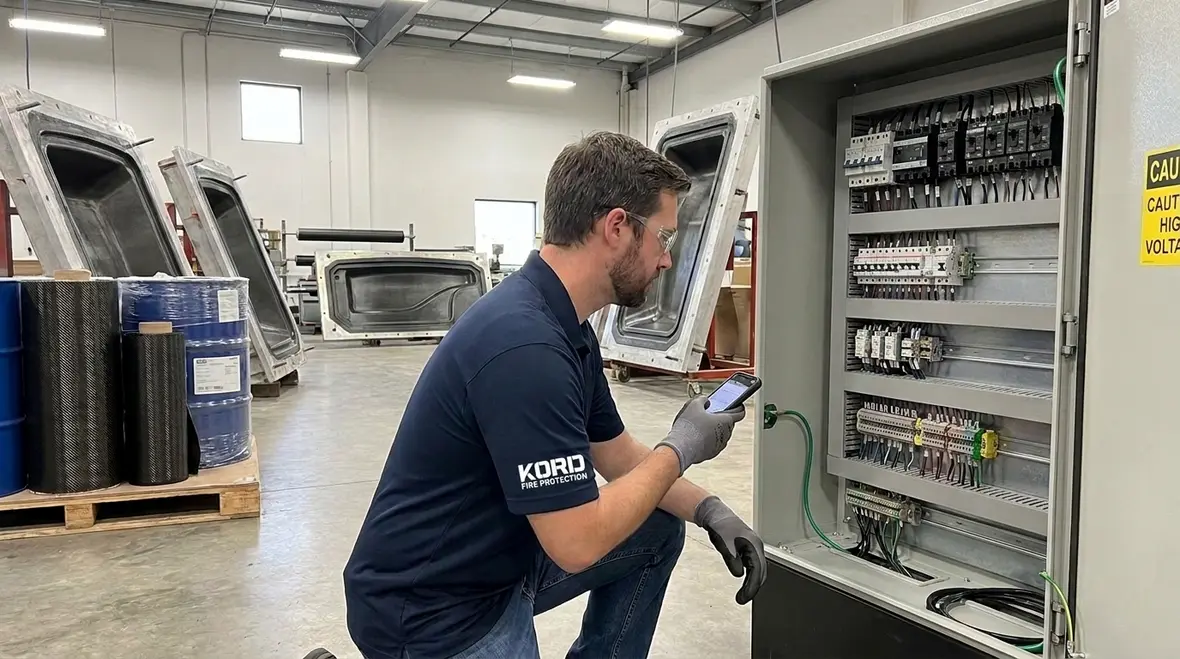
NFPA 33 Section 17.5: Electrical and Other Hazards in Composite Operations
Quick Answer
NFPA 33 Section 17.5 addresses how electrical systems and equipment can create ignition sources in composite manufacturing. The section focuses on equipment selection, wiring practices, grounding and bonding, safe operation, inspection, and control of other hazards that increase fire risk during composite processes.
What NFPA 33 Section 17.5 is designed to prevent in composite manufacturing
In composite manufacturing, NFPA 33 composite manufacturing electrical hazards can originate from ignition-capable electrical equipment, improper wiring, damaged insulation, poor grounding, hot surfaces, and fault conditions that are predictable in harsh production environments. Section 17.5 concentrates on electrical and related hazards that can ignite flammable vapors, mists, or residues created by resin systems, solvents, cleaning operations, and related materials.
Commercial facilities often struggle when their electrical infrastructure was designed for general industrial use rather than for hazardous process conditions. Compliance therefore depends on aligning electrical design and maintenance with the actual operating hazards, including changes in formulations, ventilation performance, and production schedules.
Where Section 17.5 fits into NFPA 33 compliance planning
Section 17.5 functions as a safeguard layer within NFPA 33’s broader risk management approach. Composite operations typically involve flammable components, aerosolized materials, and periodic cleaning that can alter the hazard profile. Electrical controls and distribution systems must therefore remain compatible with those conditions throughout normal operation and foreseeable abnormal scenarios.
Facilities frequently implement a “one-time” electrical review during commissioning but fail to repeat verification when production changes. NFPA 33 compliance should include a lifecycle approach: evaluate conditions, install and operate safe electrical systems, then verify performance through inspection, testing, and documented maintenance.
Facilities reviewing broader ignition-source control often also benefit from Kord Fire Protection’s guidance on electrical and other ignition sources under NFPA 33 Section 6.1, which fits naturally alongside Section 17.5 planning.
Key compliance areas for NFPA 33 composite manufacturing electrical hazards
1) Equipment and wiring practices that reduce ignition risk
NFPA 33 Section 17.5 requires that electrical equipment and wiring methods do not add unacceptable ignition sources to composite processes. In practice, that means controlling how equipment is selected for the environment and how wiring is routed and protected against physical damage, chemical exposure, and condensation.
Common failure points include conduit deterioration, loose terminations, degraded insulation, missing covers on enclosures, and improperly installed junction boxes. These issues often develop gradually as carts, hoses, and production traffic move through the same areas where vapors and residues collect.
2) Grounding and bonding for fault control and static mitigation
Composite operations generate conditions where static charge can accumulate on equipment surfaces and materials. Section 17.5 expects electrical bonding and grounding practices that reduce the likelihood that fault currents and static discharge events will contribute to ignition. Grounding and bonding should be verified as part of routine maintenance, not only during installation.
Ground path failures commonly show up as intermittent faults, nuisance trips, and damage to protective devices. When grounding is weak or resistance is out of tolerance, protective clearing may take longer than intended, allowing temperatures and arcing to rise.
3) Hot surfaces, arcing, and fault conditions from normal and abnormal operation
Electrical systems can introduce hazards beyond sparks, including hot surfaces on motor housings, heaters, lighting fixtures, or contactors that remain energized under abnormal conditions. Section 17.5 focuses on ensuring these hazards remain controlled through appropriate design and protective measures.
Maintenance teams should pay attention to contactor wear, bearing failures in rotating equipment, overheated cable terminations, and obstructed ventilation for electrical cabinets. Cabinets placed too close to process heat sources or coated with resin residue can create thermal conditions that undermine electrical safety.
4) Control of ignition sources during cleaning, changeovers, and maintenance
Cleaning introduces a distinct hazard profile. Solvents, compressed air, and wiping materials can release flammable vapors and leave residues that affect electrical equipment. Section 17.5 emphasizes that ignition sources must remain controlled during cleaning and other routine activities that can temporarily increase vapor concentration.
Operational procedures should specify safe work practices, including how technicians isolate circuits, use approved portable tools, manage temporary wiring, and verify that affected equipment returns to safe operating status after maintenance.
How to inspect, test, and document electrical safety in composite facilities
NFPA 33 electrical compliance fails most often at the verification stage. Facilities need a practical inspection plan that matches the way composite operations actually run. A strong program typically combines visual checks, functional testing, and targeted measurements that confirm electrical systems remain in safe condition.
Inspection checkpoints that commonly catch real-world problems
- Enclosure integrity:
Verify gasketing, covers, and seals remain intact and free of resin buildup that can degrade components.
- Cable management:
Confirm cable protection remains intact, especially in areas exposed to traffic, pinch points, or chemical splash.
- Termination condition:
Inspect lugs and terminations for discoloration, looseness, and signs of arcing.
- Protective device performance:
Confirm breakers, fuses, and disconnects function as intended under fault and overload conditions.
- Grounding and bonding:
Verify continuity and resistance trends to detect degradation before it becomes a hazardous condition.
Facility maintenance routines that keep compliance from slipping
Commercial, industrial, and retail sites that support composite work often operate with mixed staffing and vendor control. To sustain compliance, facilities should define responsibilities across internal electricians, maintenance contractors, and process technicians. Documented procedures should specify what gets checked at each interval and what triggers an immediate corrective action.
If a facility uses external vendors for repairs, the compliance program should require communication of hazardous area impacts, wiring changes, and temporary power methods. Temporary practices frequently become permanent unless documented and reviewed.
For facilities looking to connect electrical verification with broader site protection strategy, Kord Fire Protection also covers protecting electrical infrastructure from fire in a way that supports maintenance planning and operational readiness.
Common composite manufacturing scenarios that elevate electrical hazard risk
Section 17.5 becomes critical when composite processes create conditions that increase the chance of ignition or amplify the consequences of electrical faults. Facilities should treat these scenarios as high attention zones during inspections and audits.
Resin and solvent changeovers
Switching resin systems or cleaning agents can alter volatility and residue behavior. Electrical verification should consider whether ventilation rates, cleaning procedures, and process temperatures changed. Even minor formulation differences can affect the likelihood of flammable vapor presence.
Ventilation performance changes
When exhaust flow drops due to filter loading or duct issues, vapors can accumulate near electrical distribution points and lighting. Electrical safety then depends on maintaining both the electrical system condition and the engineered ventilation controls.
Frequent maintenance around control cabinets
Composite operations often require frequent access to control cabinets for software updates, sensor replacements, and actuator checks. Each access introduces potential risks such as damaged wiring insulation, displaced conduit seals, and incomplete reinstallation of covers.
Portable tools and temporary power
Portable power used during production and maintenance must align with the hazard profile. Temporary wiring and adapters create additional connections and failure points. These activities should follow a controlled permit or work authorization approach and end with verification of safe condition.
Why Kord Fire Protection strengthens ongoing compliance
Many facilities complete initial electrical reviews but struggle to sustain compliance through routine inspections, documentation, and corrective follow up. Kord Fire Protection supports commercial operators with an audit and maintenance approach that aligns with how composite manufacturing evolves over time.
Kord Fire Protection assists facilities by coordinating fire and electrical hazard risk reviews, helping verify that electrical systems remain compatible with composite operations, and supporting ongoing service schedules that reduce the likelihood of unaddressed ignition sources. This structured approach supports readiness for internal audits and third party assessments.
For organizations that need a single point of accountability for compliance work, Kord Fire Protection can help establish repeatable verification steps that keep NFPA 33 composite manufacturing electrical hazards under control.
Frequently Asked Questions
Take action now to protect operations and pass audits
NFPA 33 Section 17.5 places real responsibility on facilities to control electrical and related ignition hazards throughout composite production, cleaning, and maintenance. Review your wiring, enclosures, grounding and bonding, and verification routines against current operating conditions. Then schedule recurring inspections with a qualified partner. Contact Kord Fire Protection to strengthen your compliance program, improve maintenance consistency, and reduce ignition risk in NFPA 33 composite manufacturing electrical hazards.

Join Our Newsletter!
Get the latest fire safety tips delivered straight to your inbox From our Newsletter.



