NFPA 291 Section 4.14 Hydrant Flow Testing Corrections
Quick Answer: After a hydrant flow test, NFPA 291 Section 4.14 expects any system changes or corrections to be addressed so the final data stays accurate and useful. That means reviewing pressure impacts, updating records, and fixing issues fast. For industrial, retail, and commercial sites, Kord Fire Protection can help keep the system compliant and ready.
In industrial and commercial settings, hydrant system corrections matter more than many teams realise. A hydrant flow test can reveal weak pressure, aging valves, or a system that behaves differently than expected. When that happens, the job does not end with the test. It begins there. NFPA 291 Section 4.14 guides the follow up, and hydrant system corrections help turn raw test data into real fire safety performance. Kord Fire Protection can become a vital partner here, because the work often needs technical skill, fast action, and a calm hand. Rather like a good stage manager, they help everything behind the scenes work the way it should.
Near the top of the to do list, it helps to line up support from Kord Fire Protection’s full fire protection services so any repair, inspection follow up, or retesting can move without the usual shuffle between vendors. When a hydrant test uncovers a problem, speed matters, but so does knowing the right people already have the wrench, the paperwork, and the plan.
What NFPA 291 Section 4.14 Means for Post Test Work
NFPA 291 Section 4.14 focuses on what happens after hydrant flow testing. If the test affects the system or exposes problems, the corrections must be made and documented. That sounds simple, yet it carries serious weight for busy facilities. A hydrant test can change flow conditions, reveal damaged components, or show that earlier assumptions were off. Therefore, the follow up must be handled with care.
This section matters because test results drive fire protection decisions. If the data is wrong, then system design, emergency planning, and compliance reviews can all go sideways. And nobody wants that kind of surprise on a Tuesday afternoon. Post test work is where technicians verify whether a low residual pressure reading was a one off event, a sign of obstruction, or evidence that demand now exceeds what the water supply can comfortably provide.
The difference between a result and a response
A flow test result is only a snapshot. The response is the real story. Teams need to review whether valves were fully restored, whether caps and outlets were resealed correctly, and whether anything about the system looked or sounded wrong once water stopped moving. That may not sound glamorous, but neither is explaining to an auditor why last month’s test data no longer matches what the system can actually do.
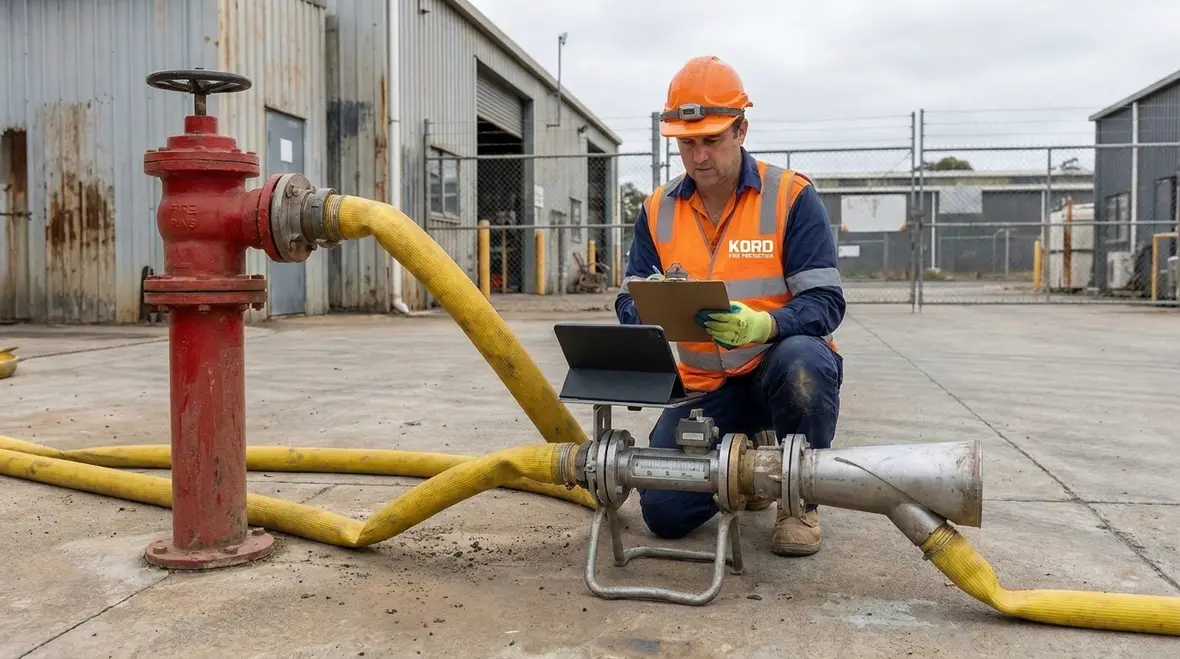
Why Hydrant System Corrections Matter for Compliance
Hydrant system corrections protect more than paperwork. They protect fire readiness. When a test causes a drop in performance or uncovers a fault, the site must respond quickly. Otherwise, the building may carry risk that nobody can see from the office window.
For facilities teams, compliance also depends on proof. Records should show what changed, why it changed, and how the issue got fixed. That includes updated flow results, notes on repairs, and any changes to hydrant performance. In many cases, this work supports fire engineering reviews, insurance checks, and internal safety audits. So, while the process may seem technical, it has very real business value.
This is also where clear internal communication earns its keep. If the operations team thinks the system is fine, the maintenance team thinks repairs are pending, and management thinks someone else signed off on everything, the site ends up with the organisational equivalent of three drummers playing different songs. A well documented correction process keeps everyone on the same beat.
Corrections support better decisions later
Once corrected data is recorded, future design reviews become stronger. Teams can compare trends over time, spot recurring pressure issues, and decide whether a pump upgrade, pipe replacement, or broader network review makes sense. Without that follow up, a site may continue making choices based on numbers that have already gone stale.

What Gets Checked After a Hydrant Flow Test
After testing, the system often needs a careful review. A strong post test process usually covers these points:
- Hydrant valves and fittings for leaks or damage
- Pressure readings to confirm the system still performs as expected
- Pump operation, where relevant
- Pipe condition and visible wear
- Any need for repairs, replacement, or retesting
These checks help confirm that the hydrant network still meets site needs. Moreover, they prevent small faults from becoming expensive problems later. A loose fitting today can become a full blown compliance headache tomorrow, and that is a drama no facility manager needs.
A practical post test checklist
Beyond the obvious visual checks, teams should confirm hydrants were left in the correct operating position, verify that drain down occurred as expected where applicable, and compare the fresh readings against prior tests. If the numbers shift sharply, that is a clue worth following. Sometimes the cause is minor. Sometimes it points to hidden restrictions, water main issues, or component wear that has been quietly auditioning for trouble.
Facilities that already rely on regular testing often benefit from related reading too. Kord Fire Protection’s Fire Hydrant Flow Test Guide to Water Pressure helps explain how static pressure, residual pressure, and flow rates fit together in the first place. For teams reviewing markings and classification details, the NFPA 291 fire hydrant testing and marking guide 2026 is also a natural next step.
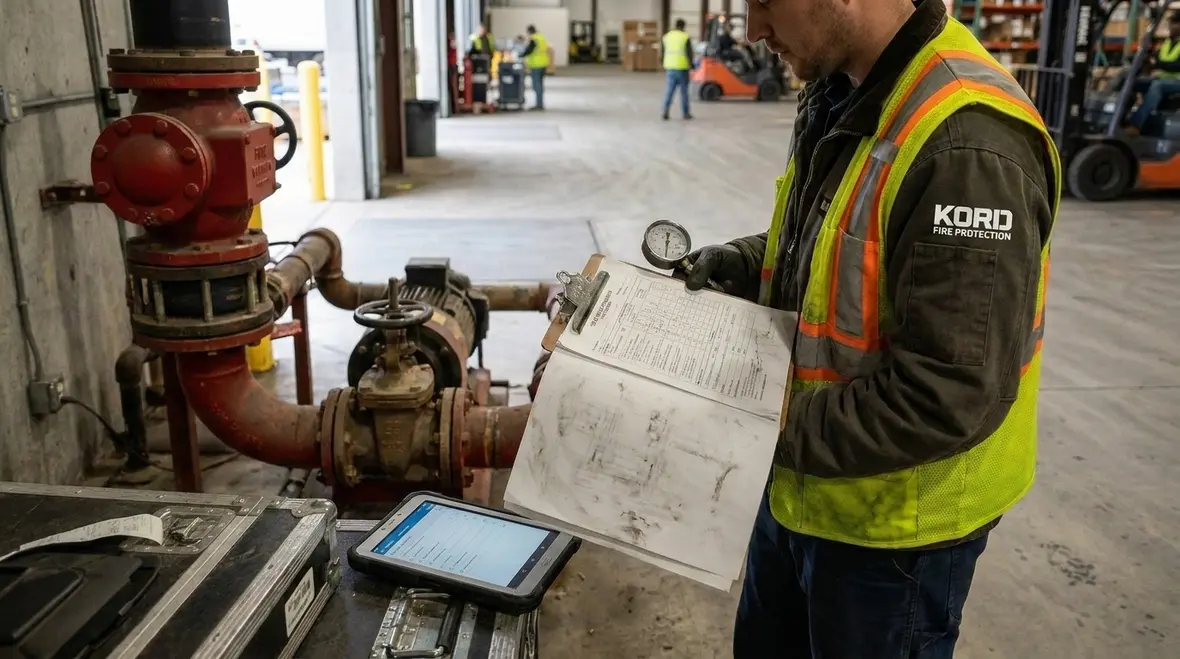
How Kord Fire Protection Supports the Correction Process
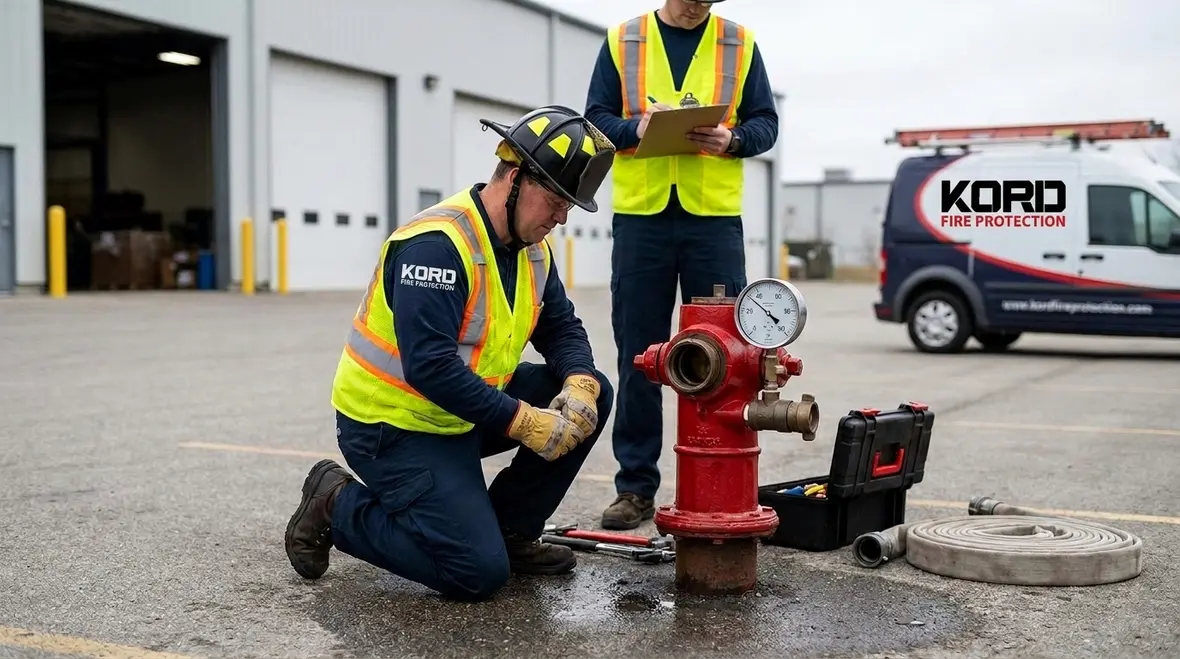
Kord Fire Protection can play a vital role in hydrant system corrections because this work needs more than basic labour. It needs experience, planning, and an eye for detail. A good partner can review test outcomes, identify faults, recommend repairs, and carry out the correction work with minimal disruption to operations.
For industrial, retail, and commercial sites, that support matters. Downtime can affect trading, production, and safety. Therefore, Kord Fire Protection helps keep the process practical and efficient. Their team can assist with system repair, follow up testing, and clear documentation so the site knows exactly where it stands. In other words, they help translate fire safety jargon into action that the business can use.
When the test results show pressure loss, blocked lines, or worn parts, a capable fire protection partner becomes more than a contractor. They become the person on the ship who knows where the leaks are before the captain finishes the sentence. That kind of confidence is hard to fake and even harder to replace once a site has found a team that communicates clearly, works neatly, and does not vanish the moment a report gets technical.
Hydrant System Corrections in a Side by Side View
Below is a simple comparison that shows how the correction process works before and after action is taken.
What changes once corrections are complete
The biggest shift is confidence. Before corrections, teams may be working around uncertainty, making temporary assumptions, or wondering whether the numbers in the report still reflect reality. After corrections, they have clearer performance data, a cleaner paper trail, and a better basis for inspections, planning, and emergency coordination. It is not flashy work, but it is the sort of behind the scenes competence that saves a lot of grief later.
How Facilities Can Keep the Process Smooth
Facilities can make post test work easier with a few smart habits. First, they should keep site plans and previous test records close at hand. Next, they should schedule testing and correction work at times that limit disruption. Also, they should make sure internal teams know who signs off on repairs and retesting.
It also helps to work with a provider who understands both the technical side and the business side. That is where Kord Fire Protection stands out. They can help teams move from test results to action without wasting time. As a result, facilities keep their hydrant systems safer, stronger, and better documented.
A simple internal routine can go a long way: record the issue, assign the fix, confirm completion, retest if needed, and file the final documentation where the next person can actually find it. This sounds obvious until the paperwork disappears into a shared drive with a name like Final Final Real Final 3. Good systems do not just rely on water pressure. They rely on organised people.
FAQ
Keep the System Ready
Hydrant system corrections are not an afterthought. They are the step that turns test data into real protection. For commercial and industrial facilities, that step deserves expert attention. Kord Fire Protection can help sites correct faults, protect compliance, and keep fire systems ready when it counts.
For any team that wants fewer surprises and stronger readiness, now is the time to act. When corrections are handled quickly, documented clearly, and followed through properly, the result is not just a tidier report. It is a safer, steadier system that will not leave your site improvising when certainty matters most.

Join Our Newsletter!
Get the latest fire safety tips delivered straight to your inbox From our Newsletter.