
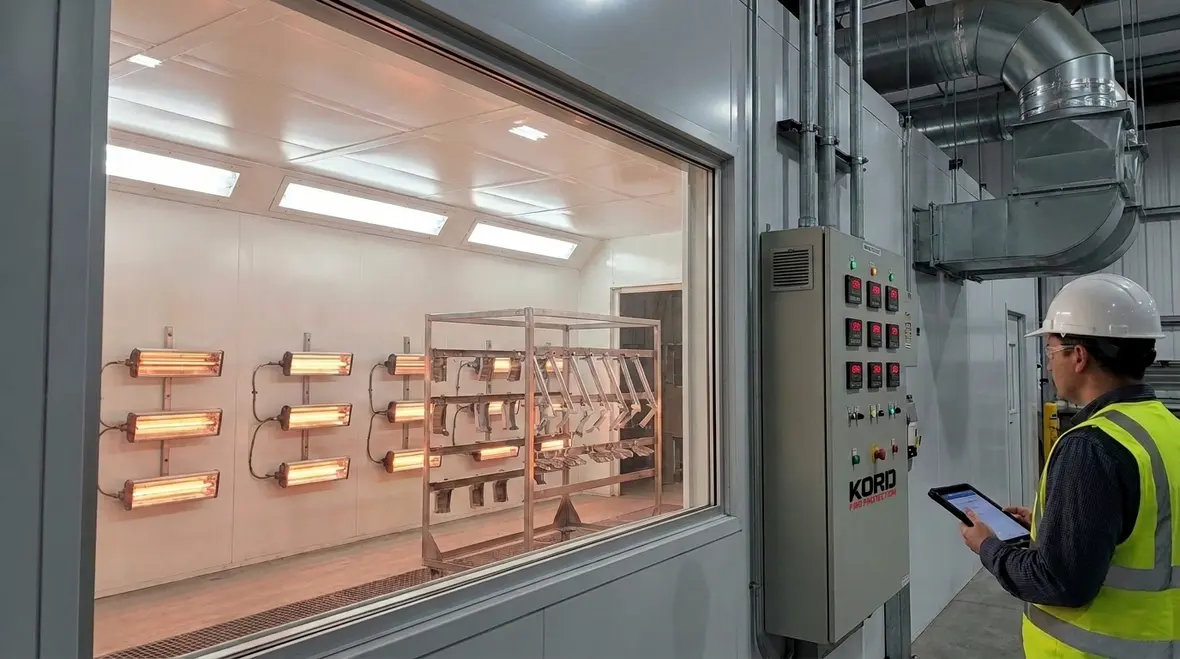
NFPA 33 Section 13.3: Drying at Elevated Temperatures in Spray Booths and Rooms
Quick Answer
NFPA 33 Section 13.3 controls how facilities dry coatings at elevated temperatures in spray booths and spray rooms. It focuses on ignition source control, temperature management, and safe operating practices. Facilities must verify equipment performance and maintain controls to meet NFPA 33 elevated temperature drying spray booth requirements during routine operations.
Facilities reviewing drying safety often also benefit from a closer look at spray booth fire suppression for safer paint operations, especially where ventilation behavior, shutdown logic, and maintenance planning need to work together naturally.
What NFPA 33 Section 13.3 is really trying to prevent
In spray finishing, the primary fire risk during drying comes from the combination of solvent or other flammable volatiles, elevated temperatures, and ignition sources. Even when coatings are “dry to the touch,” solvent release and concentration can persist depending on film thickness, dwell time, air movement, and exhaust effectiveness. NFPA 33 Section 13.3 targets the conditions that can allow those volatiles to ignite inside booths or rooms, including malfunctioning heating equipment, overheating process air, and control failures.
From a practical commercial standpoint, compliance failures most often stem from how drying systems are operated, maintained, and verified. A facility can have compliant hardware on paper but still fall short when temperature controls drift, interlocks bypass due to operational pressure, or exhaust airflow changes without a corresponding adjustment to the drying cycle.
Key requirements for elevated temperature drying in booths and rooms
Section 13.3 addresses drying at elevated temperatures and ties the safe operation of drying processes to control of heat application, ignition sources, and related ventilation performance. While exact wording varies by edition and jurisdictional adoption, the intent remains consistent: drying must not create conditions that can ignite flammable vapors generated by spray application or during solvent evaporation.
1) Control of temperature and heating equipment behavior
Heaters and heating subsystems must be managed so they do not overheat the process space, exhaust ductwork, or coating surfaces to ignition-capable conditions. Common failure points include temperature sensor drift, improper calibration intervals, failed control relays, and heating element degradation that changes heat distribution. Drying systems must also remain safe during normal cycling and during abnormal conditions such as door open states, airflow reductions, or fan faults.
2) Safe coordination with ventilation and exhaust
NFPA 33 drying requirements rely on ventilation that removes flammable vapors and maintains the booth or room environment within safe limits. In practice, compliance requires that elevated temperature drying does not proceed when exhaust performance drops. This coordination typically uses interlocks and monitoring tied to fans, airflow switches, pressure indicators, or other verified airflow measurements. Facilities should treat drying controls and ventilation controls as one integrated system, not separate departments of responsibility.
3) Prevention and management of ignition sources
Elevated temperature drying introduces additional ignition hazards through hot surfaces, burner or heater ignition systems, electrical components, and improper placement of heat sources. Facilities must ensure heating equipment and control assemblies are suitable for the environment and that ignition sources cannot energize or spark into vapor-laden areas. Maintenance practices matter here. Loose electrical connections, contaminated burner compartments, and worn insulation can create localized hot spots.
How compliance is evaluated in audits and inspections
Fire code enforcement teams typically evaluate both installed system features and operational control. To reduce compliance gaps, facilities should expect scrutiny across documentation, functional testing, and day-to-day operation. For facilities targeting NFPA 33 elevated temperature drying spray booth requirements, the inspection story usually comes together only when engineering documentation and maintenance records align with demonstrated operating behavior.
1) Documentation that matches actual operation
Auditors often ask for drying system specifics such as temperature control methods, setpoints, alarms, interlock functions, and operating limits. If the drying schedule has been modified to increase throughput, the written operating procedure and control configuration must reflect the real configuration. “We changed the controller but did not update the paperwork” is a common root cause.
2) Evidence of functional interlocks and safety controls
Interlocks and safeties should be verified to demonstrate they prevent drying when exhaust or airflow is inadequate. Safety controls may include fan run status checks, airflow proven switches, door position conditions, high temperature shutoffs, or controller lockouts. Auditors usually want to see proof that these controls operate as intended, not only that they exist.
3) Maintenance records and calibration verification
Drying temperature control depends on stable sensors and properly maintained control hardware. Facilities should maintain calibration records for temperature sensors and document any replacements or controller software changes. The goal is to maintain predictable drying outcomes and reliable shutoff behavior.
Operational procedures that prevent high risk drying conditions
Even with compliant equipment, operator practices can create hazardous drying conditions. Commercial facilities should implement procedures and training that focus on how drying cycles begin, how ventilation is confirmed, and how abnormal conditions are handled.
Verify ventilation before heat application
Drying cycles should not start until exhaust fans reach stable performance and system interlocks confirm airflow status. Operators should treat exhaust status alarms as process-stopping events. Delays caused by troubleshooting must be handled with safe shutdown and lockout procedures rather than bypassing controls.
Use controlled warm up and stable setpoints
Rapid warm up or excessive setpoint changes can increase solvent evaporation and vapor concentration inside the booth. Facilities should follow approved drying schedules that manage solvent release rates. Temperature ramping and dwell times should align with coating manufacturer guidance and the facility’s exhaust capacity.
Prevent bypasses and unmanaged troubleshooting
Bypassing safety interlocks may restore production temporarily but undermines the core protection strategy. Many inspections uncover historical bypass switches, “temporarily” disconnected sensors, or control panel modifications that remain unverified. Facilities should maintain a controlled change process for drying systems and document repairs immediately.
Common failure points seen in commercial spray finishing
Temperature sensor drift resulting in higher actual drying air temperatures than the displayed setpoint.
Exhaust airflow changes caused by dirty filters, duct buildup, damper misadjustment, or fan performance degradation without compensating controller adjustments.
Interlock failures due to worn switches, improper wiring, or controller software updates that alter logic paths.
Localized hot spots from heater element wear, poor calibration, or damaged heat shields.
Inadequate cleaning and maintenance allowing residue buildup that can affect heater operation and ignition risk.
Why ongoing service matters: Kord Fire Protection’s role
Drying systems in spray booths and spray rooms require more than periodic visual inspections. Commercial facilities need scheduled functional testing, calibration verification, and documentation support to maintain alignment with NFPA 33 expectations. Kord Fire Protection supports facilities by helping ensure drying and ventilation safety systems remain dependable through ongoing inspection, testing, and maintenance programs.
For facilities developing or refreshing compliance strategies, Kord Fire Protection can help connect the equipment design intent to the operational reality. Where a facility needs broader life safety coordination, related guidance on protecting ventilation systems in spray operations can fit naturally into the conversation alongside established support from Kord Fire Protection.
Frequently Asked Questions
Call to Action: Review your spray booth drying workflow today. Confirm interlocks, calibrations, and ventilation coordination match the real production setup, not just the installed configuration. If you want help proving safe operation and closing documentation gaps, contact Kord Fire Protection to schedule a targeted inspection and testing plan for NFPA 33 elevated temperature drying safety compliance.

Join Our Newsletter!
Get the latest fire safety tips delivered straight to your inbox From our Newsletter.



