
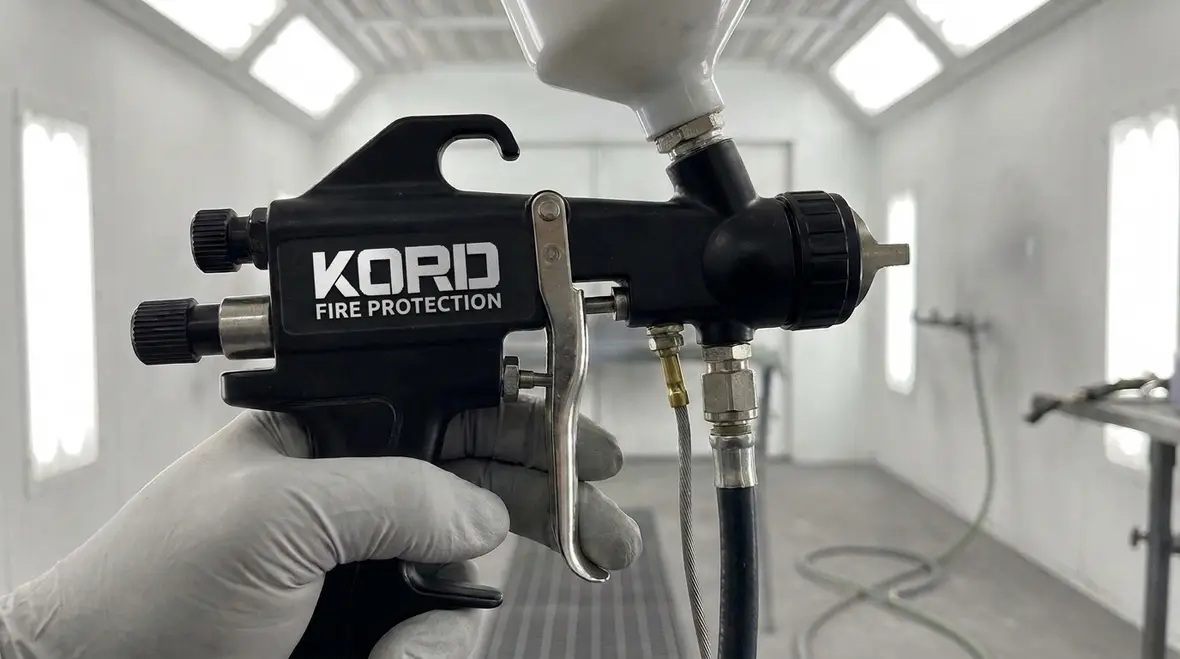
NFPA 33 Section 11.5: Listing and Approval of Electrostatic Spray Equipment
Quick Answer: NFPA 33 Section 11.5 requires electrostatic spray equipment to be listed and approved for its intended use, including proper performance, safety features, and installation conditions. Compliance depends on using recognized product listings, maintaining labeling, and verifying compatibility with the overall spray system design.
For facilities that are reviewing spray operation scope and maintenance expectations at the same time, it helps to also look at NFPA 33 Section 1.3 application for spray operations. It fits naturally here because listing and approval only make sense when the operation itself has been classified correctly. ([kordfire.com](https://kordfire.com/nfpa-33-section-1-3-application-spray-operations-covered-and-excluded/?utm_source=openai))
What NFPA 33 Section 11.5 is trying to prevent
NFPA 33 governs electrostatic spraying safety because electrostatic systems introduce energy delivery and charged particle behavior that can increase ignition risk if equipment is not suitable, not compatible, or not properly maintained. Section 11.5 focuses on one critical control: only use electrostatic spray equipment that has undergone evaluation and is approved for the hazardous environment and operating parameters where it will be installed.
In practice, the most common compliance failures in facilities occur when equipment is sourced or modified outside of the approved scope, when components are swapped without verification, or when inspection and maintenance do not preserve the safety functions that the listing depends on.
NFPA 33 electrostatic spray equipment listing approval: what “listed and approved” means
The core requirement of NFPA 33 electrostatic spray equipment listing approval is that the spray equipment must be evaluated, labeled, and accepted for use. Listing typically indicates product evaluation against recognized standards by a qualified testing and listing organization. “Approval” generally means the authority having jurisdiction evaluates suitability based on the intended installation, operating conditions, and safety configuration.
Facilities should treat listing approval as a system constraint, not a paperwork checkbox. The listing often assumes specific operational behaviors, component integrity, and installation practices that support safe operation during routine spray and expected abnormal conditions.
Where listing approval shows up during plan review and commissioning
Commercial and industrial sites commonly face scrutiny at two points: (1) pre installation review and (2) commissioning after equipment placement. When a plan reviewer or AHJ checks Section 11.5, they typically look for the following operational realities:
1) Equipment scope matches the installed system
Electrostatic spray systems consist of more than a gun. The listing may depend on how components interact, such as power supply outputs, grounding paths, interlocks, and control logic. A mismatch can defeat the safety basis, even if each component seems individually appropriate.
2) Labels and identification remain legible and current
Approved equipment must remain identifiable. Worn labels, missing model identifiers, or reconfigured components without documentation can complicate field verification. In many facilities, the listing is effectively lost from an audit perspective when maintenance practices do not preserve identification.
3) Installation conditions align with the listing instructions
Listing instructions often cover mounting, clearances, electrical separation, hose routing, and bonding requirements. NFPA 33 safety outcomes depend on these details because electrostatic behavior and fault response rely on them.
Inspection and maintenance practices that preserve listing value
Section 11.5 is not only about purchasing compliant equipment. It also depends on keeping the electrostatic spray equipment in a condition that continues to satisfy the listing and approval assumptions. Commercial sites that run spray operations frequently encounter drift and wear that directly affect performance.
Common failure points Kord Fire Protection reviews during compliance walks
- Grounding and bonding degradation: Corrosion, loose connections, and worn straps can break conductive paths needed for safe operation.
- Damaged insulation or housings: Cracks and abrasion can create unexpected leakage pathways or alter insulation integrity.
- Incorrect replacement parts: Substituted power supply components, control modules, or spray nozzles can place the system outside its evaluated configuration.
- Improper hose condition: Hoses can harden, crack, or degrade, which can change fluid and conductive behavior.
- Component contamination: Material buildup can interfere with airflow, isolation, or safe operating clearances.
Operational checks that should align with the listing intent
A strong compliance program includes periodic verification of the features that support safe electrostatic spraying. These checks typically cover equipment identification, physical integrity, grounding continuity, and verification that controls function as required for spray operation and shut down.
For facilities building a repeatable approach to documentation and field verification, Kord Fire Protection supports commercial compliance through inspection, testing, and maintenance coordination. This reduces the common operational gap between the time equipment is installed and the time it is proven to remain safe. Kord Fire’s broader fire protection services in Southern California page is a useful next step if your team is trying to connect code compliance with practical service scheduling. ([kordfire.com](https://kordfire.com/fire-protection-services-southern-california/?utm_source=openai))
How to handle upgrades, repairs, and replacements without violating listing scope
Many facilities improve throughput by upgrading components. The safety risk is that the upgrade could be performed outside the listing basis. To protect against noncompliance and prevent costly remediation during audits, facilities should implement the following controls:
Step 1: Verify documentation before procurement
Confirm the exact equipment model, rated parameters, and compatibility requirements. Maintain manufacturer documentation for the listing scope and installation instructions.
Step 2: Establish replacement part controls
Only use replacement parts identified by the manufacturer for the listed configuration. Where a part must change due to availability, require a documented evaluation for compatibility with the electrostatic spray equipment listing approval basis.
Step 3: Recommission after modifications
After repairs or component swaps, commissioning should verify that grounding remains correct, labels are intact, and controls function according to the approved configuration. This is where many facilities fail because “it sprayed fine” is not the same as “it remains compliant.”
For related fire protection engineering support, consider exploring Kord Fire Protection resources here: Kord Fire Protection. ([kordfire.com](https://kordfire.com/?utm_source=openai))
Compliance challenges in real facilities: commercial, industrial, and retail
Electrostatic spray operations exist in varied environments. The compliance obstacles differ, but the Section 11.5 principle remains the same: listing and approval must match what is installed, operated, and maintained.
Retail and light industrial
Retail paint and coating areas can experience informal maintenance practices, parts swapping, and rapid turnover of equipment. Compliance efforts should prioritize documentation control, label preservation, and grounding verification schedules.
Industrial manufacturing
Industrial sites often have higher throughput and more frequent changeovers. The risk becomes configuration drift across multiple product lines. Facilities should implement configuration management so the listing basis stays consistent across production cells.
Facilities with contractors
When contractors perform repairs, listing and approval can be accidentally bypassed by installing non equivalent parts. A contractor control plan should require parts verification, documentation submission, and a post repair commissioning checklist aligned with NFPA 33 expectations.
Frequently Asked Questions
Conclusion and call to action
NFPA 33 Section 11.5 treats listing and approval as a safety foundation that must carry through procurement, installation, repairs, and ongoing maintenance. If your facility is managing electrostatic spray systems, implement component controls, preserve labeling, and schedule verification of listing dependent safety features. Kord Fire Protection can help you reduce audit friction and operational risk by supporting inspections, testing, and maintenance that align with NFPA 33 expectations. Request a compliance assessment today.

Join Our Newsletter!
Get the latest fire safety tips delivered straight to your inbox From our Newsletter.



