
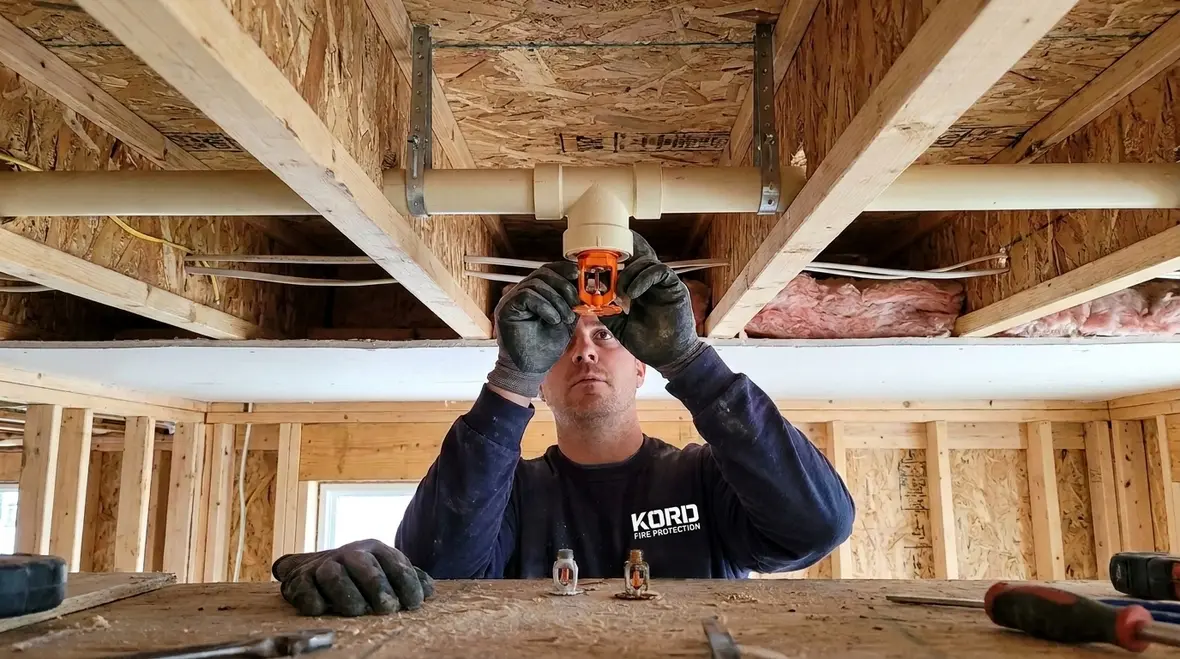
NFPA 13D Section 7.5: Sprinkler Installation Procedures for One- and Two-Family Dwellings
Quick Answer
NFPA 13D Section 7.5 outlines the step-by-step requirements for installing residential sprinklers in one and two-family dwellings, including piping, sprinkler placement, materials, and support. It also emphasizes installation quality controls that reduce operational failures and support inspection and maintenance readiness.
If you want the bigger picture before getting into the field details, Kord’s fire sprinkler overview and system guide helps connect residential installation decisions to broader system performance and long-term reliability.
What NFPA 13D Section 7.5 expects during sprinkler installation
NFPA 13D Section 7.5 sprinkler installation procedures one two family dwellings residential focus on installing sprinkler systems so they perform reliably when exposed to fire conditions and remain maintainable throughout the building life cycle. For contractors and facility owners, the biggest value sits in how the section translates design intent into physical reality: correct sprinkler location, proper piping assembly, correct workmanship, and installation details that prevent nuisance performance issues and inspection failures.
Because inspection and maintenance follow installation, Section 7.5 procedures also aim to reduce hidden defects such as misaligned sprinklers, improper pipe joining, degraded system components, and unreliable flow paths.
For a broader framework on the installation lifecycle for automatic sprinkler systems, review NFPA 13 overview and installation fundamentals.
Pre-installation controls: submittals, layout, and readiness
Even before the first pipe goes in, Section 7.5 installation procedures depend on correct job readiness. The trade execution starts with verifying that the as-built environment matches the design basis, including room geometry, obstructions, ceiling types, and planned coverage. Common commercial and industrial execution failures typically originate here, then surface later as installation corrections or failed inspections.
Coordinate with construction sequencing
Residential sprinkler systems often encounter framing delays, insulation upgrades, and finish ceiling revisions. Installation teams should confirm that ceiling conditions will match the sprinkler type and temperature rating selected. If the ceiling elevation or finish material changes, sprinkler temperature rating and discharge pattern can become noncompliant.
Verify components before installation
Tools, parts, and listings matter. Installation teams must ensure the system uses only approved components and that each fitting, pipe type, and sprinkler model matches the system plan. A typical operational failure point in the field involves mismatched or substitute fittings that alter the hydraulic performance or obstruct sprinkler operation during the final trim out.
For pump and water supply considerations that may also affect dwelling systems, consult the broader practical resource at firepumps.org to connect installation practices to system reliability.
Piping and sprinkler placement: preventing hidden defects
The practical heart of NFPA 13D Section 7.5 installation procedures lies in piping routing, joining methods, and sprinkler placement so that each sprinkler sits correctly and discharges without interference.
Install sprinklers at the correct location and orientation
Sprinklers must be positioned per the design layout with proper orientation and spacing. Misalignment is a common failure mechanism. It can affect discharge pattern, delay activation, or create obstruction conflicts with beams, ceiling trim, or finishes. Installation teams should document placement checks during rough-in so they do not rely on final visual inspection only.
Use listed installation methods for pipe joining
Joint workmanship matters because many installation defects are not obvious until pressure testing, commissioning, or an inspection. Teams should follow listed methods for pipe joining and ensure proper thread engagement, valve handling, and gasket selection when applicable. Field substitutions can also create corrosion or mechanical weakness over time.
Support and restraint quality
Sprinkler systems depend on stable piping. Poor support can create deflection that changes sprinkler clearance to ceilings or causes misalignment during finishing. In commercial, industrial, and retail environments that share design practices, the same principle applies: rigid support and correct hanger placement protect the system from long-term movement, ceiling vibration, and thermal cycling.
Workmanship during rough-in to trim: how installations fail
Section 7.5 installation procedures push installers to produce clean, serviceable work. Problems often appear after insulation, drywall, and painting, when defects become expensive to correct. High-quality workmanship prevents that.
Protect components from contamination and damage
Accumulated dust and debris can interfere with sprinkler cleanliness. Mechanical damage during drywall installation can also compromise the sprinkler or its sealing surface. Installers should implement protection practices such as covering openings and preventing impact to sprinkler elements and threads.
Maintain cleanliness around escutcheons and ceiling interfaces
At ceiling penetrations, installers must preserve correct escutcheon fit and ensure sprinklers do not contact trim pieces or ceiling components improperly. Incorrect clearance can create delayed or incomplete activation characteristics.
Confirm system configuration before final close-up
Before the ceiling is closed, teams should verify that: the piping is routed correctly, branch lines connect correctly, the sprinkler schedule matches the design, and all valves and drains allow intended testing. This step prevents scenario where the system passes a cursory visual check but fails because of configuration errors once testing starts.
Testing, inspection readiness, and maintenance interfaces
NFPA 13D Section 7.5 emphasizes installation details that set up later inspection and maintenance. That is where many projects experience operational problems: the system is installed, but it cannot be effectively tested, inspected, or serviced without major disruption.
Prepare the system for inspection and acceptance
After installation, teams should ensure accessibility to valves and drains, confirm the water supply connection configuration, and verify that inspection-critical components are reachable and identifiable. When systems share facilities or utility spaces with commercial infrastructure, access controls and safety procedures become part of installation quality.
Identify common maintenance failure points
Maintenance failures often trace back to installation decisions: obstructed sprinklers, damaged escutcheons, incorrect clearance at ceiling finishes, and difficult access to test connections. Installation teams can reduce future service disruptions by using consistent labeling, maintaining clear work paths, and preserving accessibility.
Role of ongoing service for compliance durability
Commercial facilities often follow inspection and testing cycles that extend beyond a single project closeout. Kord Fire Protection supports compliance durability by pairing installation-quality expectations with ongoing testing, inspection documentation support, and maintenance planning. This helps owners reduce downtime caused by corrective rework and supports consistent system performance over time.
If your team is building long-term service planning into the project, Kord’s inspection, testing, and maintenance guide fits naturally with the installation quality goals described here.
How commercial service teams apply residential installation lessons
Even when the project scope is one and two-family residential coverage, the execution discipline matters to commercial, industrial, and retail facilities that share contractors, supply chains, and service practices. A disciplined installation approach reduces long-term risk and improves audit readiness.
- Audit-ready documentation: Maintain component traceability and installation checklists tied to Section 7.5 procedures.
- Repeatable workmanship standards: Use consistent verification steps for sprinkler location, alignment, and ceiling interfaces.
- Maintenance access planning: Keep test connections and valves accessible so inspections can occur without destructive work.
- Coordination with finish trades: Prevent coverage and obstruction problems caused by ceiling modifications and trim installation.
For organizations seeking a practical view of how automatic sprinkler systems are installed and managed across project types, Kord Fire Protection aligns service strategy with installation fundamentals described in the NFPA 13 overview.
Frequently Asked Questions
Next step: ensure your installation stays compliant
Use Section 7.5 as the workmanship checklist for sprinkler location, piping execution, and trim out discipline. Then confirm your system is inspection-ready with documented verification and access planning. If your projects need dependable ongoing compliance support, Kord Fire Protection can help coordinate installation quality expectations with inspection, testing, and maintenance so you reduce corrective rework and protect system reliability. Contact Kord Fire Protection to schedule a compliance review and maintenance plan.

Join Our Newsletter!
Get the latest fire safety tips delivered straight to your inbox From our Newsletter.



