
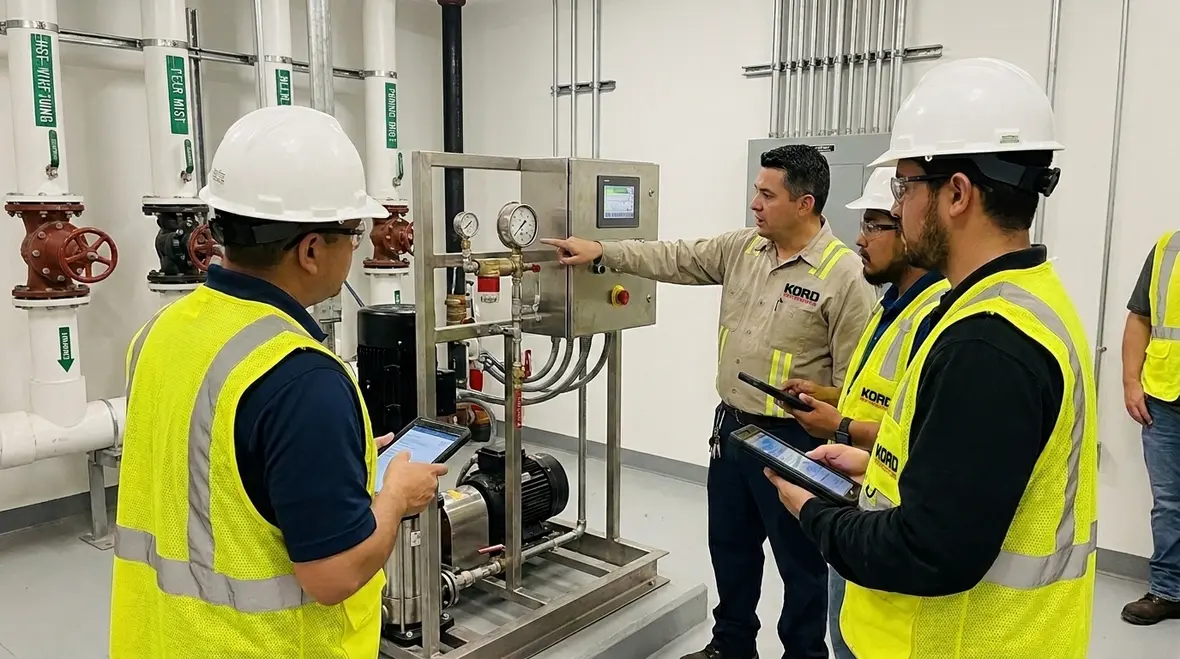
NFPA 25C Section 12.3: Water Mist System Training Requirements for Personnel
Quick Answer: NFPA 25C Section 12.3 requires that personnel responsible for water mist systems receive training so they understand hazards, system operation, inspection and maintenance actions, and proper response during impairment and testing. Training must be documented, kept current, and aligned with assigned duties.
Why NFPA 25C Section 12.3 matters in real facilities
Commercial, industrial, and retail facilities often treat water mist systems as “set and forget” systems. That mindset creates a compliance gap. NFPA 25C Section 12.3 water mist system training requirements personnel because the system’s performance depends on correct operational decisions during testing, inspection, maintenance, alarm investigation, and impairment management.
In practice, training reduces two recurring issues: personnel who do not recognize system states (normal, supervisory, alarm, impaired), and teams that cannot safely support routine operations without creating unnecessary downtime or risking system damage. For commercial owners, these gaps translate into failed inspections, delayed corrective actions, and avoidable service calls.
For facilities looking to tie training to real-world service conditions, a practical next step is reviewing water mist system service support from Kord Fire Protection so training expectations stay connected to inspection findings, maintenance planning, and readiness in the field.
What Section 12.3 training must cover (and who needs it)
Section 12.3 focuses on ensuring that assigned personnel can perform required tasks competently and respond appropriately to system conditions. Training should align with job functions, including inspection, testing support, maintenance coordination, and emergency response awareness.
Core topics typically expected under Section 12.3
- System fundamentals: how water mist components work together, including supply, piping, mist nozzles, detection and control interfaces where applicable, and pressure or flow-related elements.
- Operational understanding: what a normal operating state looks like, what supervisory or alarm conditions mean, and how these states affect facility response.
- Inspection and testing awareness: what routine tasks involve, what “good” and “problem” indications look like, and how to avoid interfering with system performance.
- Impairment awareness: what it means to take components out of service, typical documentation expectations, and how personnel coordinate scheduling and notifications.
- Safety and hazard awareness: safe practices for working around pumps, valves, electrical control cabinets, high pressure components, and water discharge areas.
- Maintenance coordination: how maintenance actions should be requested, confirmed, and verified to prevent repeat failures.
Who should receive training
Training should not be limited to a single individual. The facility should ensure coverage for roles that can impact system readiness. That usually includes facilities management, fire alarm and security contacts who handle alarm routing, maintenance supervisors, and any team members expected to assist with testing readiness or impairment coordination.
How to structure compliant training for water mist systems
NFPA 25C Section 12.3 water mist system training requirements personnel work best when training is structured around “assigned responsibilities.” A one hour generic presentation rarely matches facility reality. A compliant approach ties training to the specific system installed and the facility’s operational flow.
Step 1: Map responsibilities to system interfaces
Facilities often have multiple “touch points” for water mist systems: fire alarm panels, supervisory circuits, pump control, valve monitoring, and maintenance work orders. Training should identify which personnel interact with these touch points and what actions they may take.
Step 2: Train to the system actually in service
Water mist systems vary by design and component arrangement. Training should reflect local installation specifics such as nozzle layout expectations, pump station configuration, valve positions, control cabinet labeling, and how the system indicates status.
Step 3: Use practical job aids during training
Job aids improve retention and reduce field errors. Facilities commonly implement laminated quick guides at control cabinets and maintenance staging areas, plus checklists that mirror service documentation. These guides should reinforce what to verify before and after any impairment or test support activity.
Step 4: Document training and keep it current
Documentation proves compliance and protects operational continuity during staffing changes. Training records should include the date, attendee names and roles, training content or agenda, and confirmation that the training matched the facility’s installed system. Updated training should occur when there are meaningful changes to equipment, controls, or responsibilities.
Common compliance challenges: where training fails in the field
Even well maintained water mist systems can face compliance problems when personnel training does not match operational expectations. The most common failures typically involve misunderstandings during inspection and test readiness, impairment handling, and alarm events.
Challenge 1: Confusing supervisory and alarm conditions
Personnel may respond incorrectly if they cannot interpret system signaling accurately. Training must clarify what supervisory conditions indicate, what alarm conditions demand from facility response teams, and when to escalate to emergency procedures.
Challenge 2: Incorrect maintenance actions that disrupt system readiness
Examples include leaving valve handles mispositioned, failing to restore components after test support, or altering labeling and access pathways. Training should emphasize that water mist readiness depends on correct component positions and verified system status.
Challenge 3: Poor impairment coordination
Facilities often delay impairment approvals or miss notification windows, which can extend downtime. Section 12.3 training should align with facility workflows so personnel understand how to request impairments, communicate timelines, and verify restoration.
Challenge 4: Staffing turnover with no continuity plan
Commercial sites with high turnover can lose trained staff quickly. A compliance risk appears when training records do not survive reassignment or when new hires are not onboarded into the system’s operational rules.
Operational best practices for owners and maintenance teams
NFPA 25C Section 12.3 water mist system training requirements personnel become more effective when paired with disciplined maintenance governance. Owners and facility managers typically improve audit outcomes by integrating training with ongoing service, labeling practices, and inspection readiness.
Integrate training with ongoing maintenance and service
Water mist system upkeep includes routine verification, component checks, and correct restoration after testing. Using a service partner for scheduled maintenance helps ensure that training stays tied to current system behavior rather than outdated procedures.
For owners who also manage other water based systems, Kord Fire Protection provides broader context and best practices across code driven maintenance programs. Consider reviewing related guidance on water based suppression maintenance through Kord Fire Protection resources such as NFPA 25 overview for complete water based fire protection systems maintenance breakdown.
Maintain clear system labeling and access for trained personnel
Training must be usable. Ensure control cabinets, alarm interfaces, pump station access, and isolation valves are accessible and clearly labeled. Personnel should be able to verify system status indicators without guessing.
Coordinate with alarm and inspection workflows
For mixed buildings, the water mist system’s response must align with the facility’s fire alarm procedures. When training is aligned with fire alarm event response, investigations become faster and more accurate.
Facilities that also have sprinkler systems should understand how sprinkler system installation and oversight concepts influence training and maintenance practices. See NFPA 13 overview for automatic fire sprinkler system installation for installation fundamentals that affect long term readiness.
NFPA compliance support: how Kord Fire Protection helps keep training meaningful
Training alone does not guarantee readiness. The facility needs a process that confirms system condition and reinforces training through real service feedback. Kord Fire Protection supports commercial compliance by connecting personnel training expectations to real system inspection findings, maintenance actions, and verification steps.
When training and service are disconnected, personnel may learn the “what” but not the “what has changed.” A service partner can close that gap by pairing documentation review, component condition feedback, and impairment practices with practical staff guidance.
For additional system maintenance and code awareness, Kord Fire Protection also maintains region oriented and water based system resources, including Fire sprinkler code California explained and international support through kordelectric.com and kordfire.com.au.
For pump and water system background from the industry, building and facility teams may also reference FirePumps.org when aligning water supply expectations with system performance.
Frequently Asked Questions
Conclusion and call to action
NFPA 25C Section 12.3 water mist system training requirements personnel exist to protect system performance and ensure correct facility response during inspections, testing, and impairment events. To stay audit ready, a facility should train role specific personnel, document training, and connect procedures to the installed system. Kord Fire Protection can help your team align training with real maintenance findings and verification steps. Schedule a review of your water mist training and maintenance readiness today.

Join Our Newsletter!
Get the latest fire safety tips delivered straight to your inbox From our Newsletter.


