NFPA 25C Section 11.5 Foam-Water Sprinkler Component Action Requirements
Quick Answer
NFPA 25C Section 11.5 focuses on whether foam-water sprinkler components operate as required when exposed to the correct flow and system conditions. It drives practical inspection, test, and documentation for reliable actuation in commercial fire protection systems.
Why NFPA 25C Section 11.5 matters in the real world
Foam-water sprinkler systems add performance through an engineered combination of water and foam concentrate. The system depends on more than just water flow. Foam-water sprinkler component action requirements determine whether the foam portion delivers correctly when the sprinkler or water demand occurs.
In commercial, industrial, and retail environments, this inspection focus protects against a common gap: systems that appear intact during visual checks but fail during component actuation. Those failures often surface during maintenance windows, alarm tests, or real fire events.
Facilities managing foam-water systems often pair this requirement with broader fire sprinkler service and maintenance support so inspections, repairs, and functional checks stay aligned with real operating conditions.
For a stronger baseline on how water-based systems are installed and maintained, facilities can cross reference Kord Fire Protection’s overview here: NFPA 13 overview and automatic fire sprinkler system installation.
What “component action requirements” typically include
NFPA 25C Section 11.5 foam-water sprinkler component action requirements center on verified operational behavior of foam-water components that participate in actuation. While the exact listing of components depends on the foam proportioning approach and system design, the intent stays consistent: components must respond to water flow and system conditions in the manner the listing and design specify.
Practically, compliance actions usually address the following themes:
- Actuation and response: foam delivery must initiate only when the system demand occurs and must do so within the expected operating sequence.
- Correct operational state: valves, in-line devices, and any foam concentrate related controls must maintain their designed position until demand.
- Functional verification: inspection and tests must confirm the component can move, open, or operate as designed when exposed to the initiating conditions.
- Consistency with approvals: the components must match the system design, approvals, and listing documentation used at installation.
This is where many facilities fall behind. Visual inspection alone cannot validate the force balance, response timing, or internal mechanism integrity of foam-water components that rely on pressure and flow conditions.
How foam-water sprinkler actuation differs from plain water systems
Plain water sprinkler systems focus primarily on the sprinkler activation mechanism and the ability to deliver adequate water to the hazard. Foam-water systems introduce additional functional links that can drift out of compliance over time.
Key differences include:
- Additional flow dependent mechanisms: foam delivery often depends on water flow rates reaching a threshold, then triggering a foam proportioning or injection event.
- Concentrate and compatibility factors: foam concentrates can degrade, separate, or become nonconforming if stored improperly or if the wrong type is used. Even if water flow is correct, foam performance can still fail.
- Pressure and hydraulic stability: some components require stability in pressures and flow patterns. Changes from maintenance, piping alterations, or partial obstructions can interfere with correct action.
Facilities that manage multiple warehouses, strip malls, or industrial buildings often discover that system modifications are not always reflected in maintenance records. That mismatch directly undermines the “component action requirements” intent.
Common compliance challenges that trigger action requirement failures
Operational failures usually fall into predictable categories. These are the areas Kord Fire Protection teams commonly inspect during code compliance programs and maintenance breakdowns.
1) Valves and actuated devices that do not move as designed
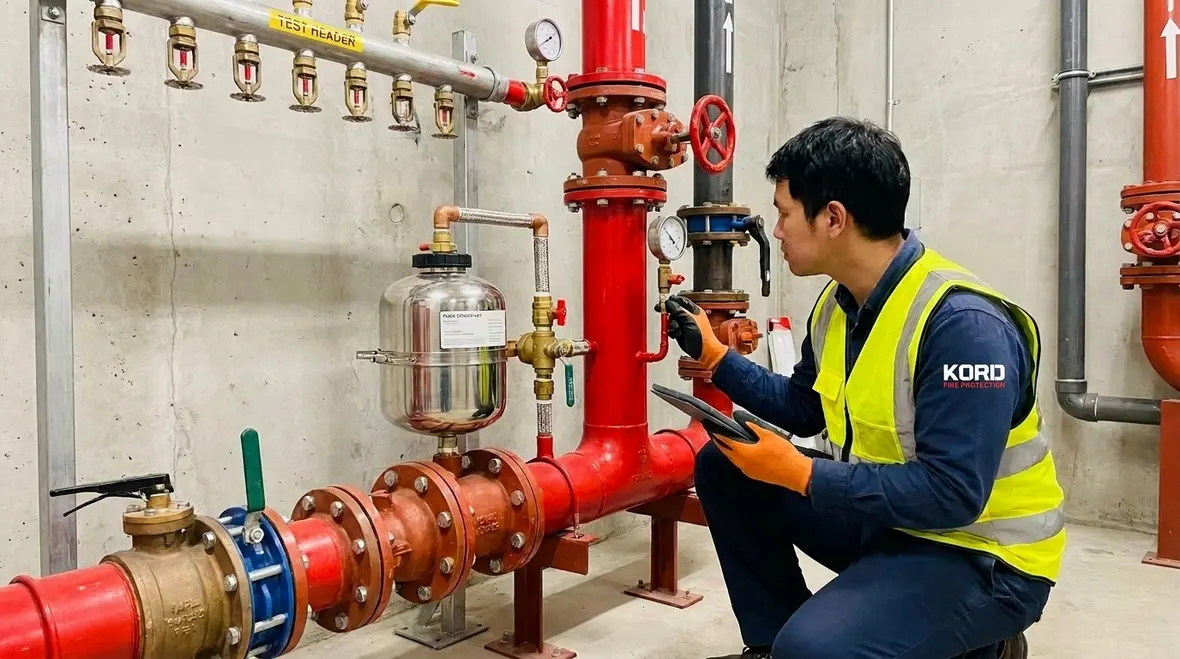
Foam-water systems can include valves and devices that rely on fluid power or flow dependent response. Over time, deposits, corrosion, seal degradation, or mechanical binding can prevent proper travel or reset. NFPA 25C Section 11.5 foam-water sprinkler component action requirements address the need to verify the component’s action capability, not just its presence.
2) Foam proportioning performance drift
Even when a device operates, the system can still under deliver foam concentrate if proportioning performance changes. Concentrate age, incorrect concentration type, and contamination are practical failure points in commercial operations that do not strictly control inventory and storage conditions.
3) Maintenance that does not reproduce the system’s design conditions
Testing that does not align with original design criteria can lead to false confidence. For example, reduced flow conditions, missing pressure targets, or incomplete configuration can prevent the expected component response. Correct compliance testing must reflect the system’s operational parameters.
4) Documentation gaps during audits
Facilities often fail compliance due to incomplete records. Maintenance schedules, inspection findings, corrective actions, and test documentation must tie back to the required scope. If the facility cannot demonstrate the component action checks were performed, enforcement risk increases.
For a broader view of how water-based system maintenance ties back to compliance outcomes, see: NFPA 25 overview and water-based fire protection systems maintenance breakdown.
Operational best practices for meeting component action expectations
Meeting NFPA 25C Section 11.5 foam-water sprinkler component action requirements becomes easier when facilities run a disciplined maintenance process that includes both technical execution and administrative control.
Use a component criticality mindset
Rather than treating every foam-water component the same, facilities should rank components by consequence of failure. Components that influence foam injection or actuation sequence deserve the most rigorous verification and the most detailed corrective action tracking.
Confirm system configuration before testing
Before any functional check, technicians should verify that the system is configured as designed. That includes valve positions, interlocks, proportioning settings, and any impairment tags. Inconsistent configuration is a frequent root cause of inconclusive results.
Control foam concentrate handling and storage
Foam concentrate management must follow the manufacturer’s storage requirements and the system design intent. Facilities should verify identity, shelf life, and storage conditions. If there is uncertainty, the correct action is to test or replace per documented procedures before the system is relied upon.
Close the loop with corrective action and verification
Code compliance requires more than identifying a discrepancy. Facilities should document the repair and verify the component action behavior after correction. Kord Fire Protection emphasizes post repair validation because it reduces repeat failures and improves audit readiness.
Because adoption and enforcement can vary by jurisdiction, commercial owners often benefit from local guidance. For example, Kord Fire Protection has addressed code context in California here: fire sprinkler code California explained.
Maintenance program alignment and partner support
NFPA 25C Section 11.5 foam-water sprinkler component action requirements depend on consistent execution over time. Large portfolios also depend on scheduling discipline, system knowledge transfer, and accurate records during contractor turnover.
Kord Fire Protection supports commercial facilities with ongoing inspection, testing, and maintenance programs aligned with NFPA expectations and manufacturer requirements. For facilities that need foam-focused support, Kord also offers fire suppression system services that naturally fit high-risk environments where foam solutions are part of the protection strategy.
For facilities that want a cross reference of water flow and inspection program thinking, industry resources through firepumps.org can also help teams connect pump and system performance to overall reliability.
Additional organizational resources are available at kordelectric.com and kordfire.com.au.
Frequently Asked Questions
Next step: schedule a compliance verification
Facilities that rely on foam-water systems should not wait for an audit to confirm component action capability. Kord Fire Protection can review system documentation, perform targeted functional checks aligned with NFPA 25C Section 11.5 foam-water sprinkler component action requirements, and return clear findings with corrective action tracking. Contact Kord Fire Protection to plan your next maintenance window.

Join Our Newsletter!
Get the latest fire safety tips delivered straight to your inbox From our Newsletter.