
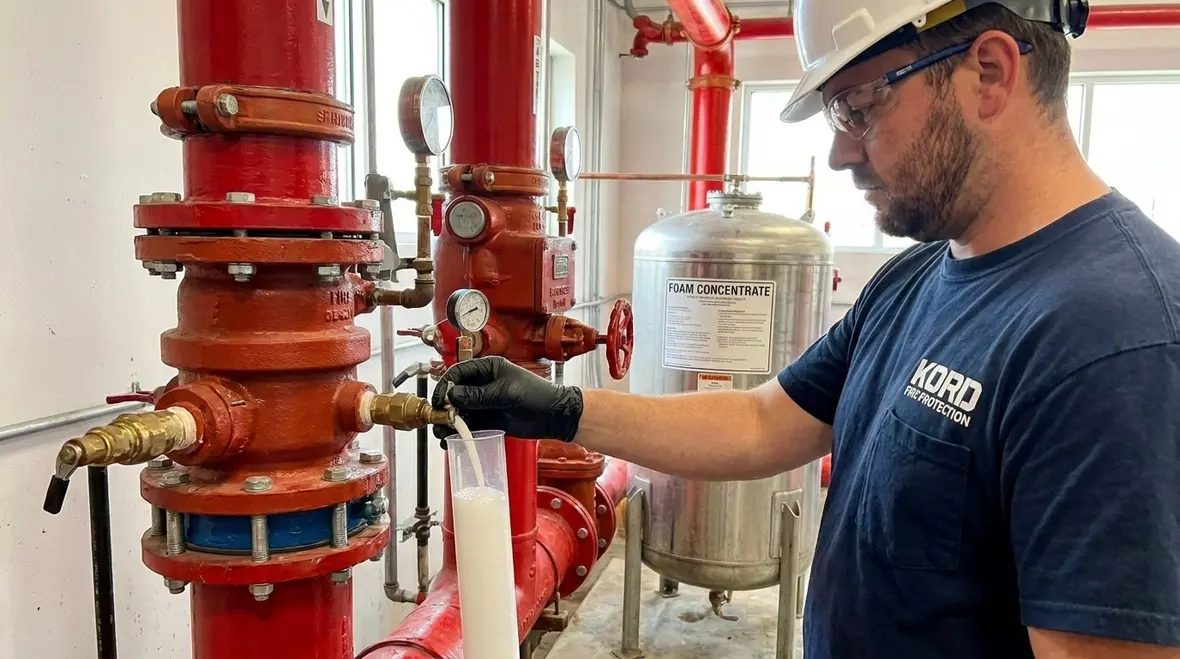
NFPA 25C Section 11.3: Foam-Water Sprinkler System Testing Procedures
Quick Answer
NFPA 25C Section 11.3 focuses on verifying foam-water sprinkler system readiness through practical, repeatable testing of components, water delivery, foam concentrate proportioning, and operational interfaces. Effective testing confirms performance, detects drift, and documents results for ongoing compliance in commercial facilities.
Why NFPA 25C Section 11.3 testing matters in foam-water systems
Foam-water sprinkler systems combine a water supply with a foam concentrate that must be proportioned, stored, and delivered reliably. Unlike water-only systems, performance depends on correct concentrate ratios, correct dilution behavior, and proper foam solution quality at the discharge point. That is why NFPA 25C Section 11.3 foam-water sprinkler system testing procedures emphasize verification of both mechanical condition and functional operation.
Commercial, industrial, and retail properties typically operate with high life safety and business continuity expectations. A foam-water system that looks intact during a visual inspection may still fail during flow due to improper concentrate proportioning, clogged proportioner components, degraded foam concentrate, or misaligned control interfaces. Proper testing closes those gaps by confirming system performance under controlled conditions.
For facilities coordinating broader inspections and routine readiness work, it helps to align foam-water testing with a wider local fire protection service program that includes inspections, testing, maintenance, and deficiency corrections. ([kordfire.com](https://kordfire.com/local-fire-protection/?utm_source=openai))
For context on how water based systems are maintained and why documentation matters, facilities often cross reference the water based maintenance approach summarized in Kord Fire Protection’s NFPA 25 overview and maintenance breakdown.
Additionally, many sites require consistent alignment with installation concepts from the sprinkler side. See NFPA 13 overview for automatic sprinkler system installation to understand how design and component selection influence later testing outcomes.
What systems and interfaces Section 11.3 targets
Section 11.3 testing focuses on components unique to foam-water systems, including the foam concentrate supply, proportioning equipment, foam solution delivery pathways, and operational controls that integrate with the sprinkler system. The testing goal remains consistent: confirm the system can deliver the required foam solution when called upon and that each component performs within expected tolerance and condition.
Key elements that commonly drive compliance and service issues
- Foam concentrate condition: Concentrate can degrade due to age, temperature exposure, contamination, or improper storage practices.
- Proportioning performance: Proportioners can drift, clog, or wear, resulting in incorrect foam to water ratios.
- Strainer and check valve behavior: Debris and biofilm can reduce flow or cause delayed operation.
- Control interface reliability: Foam systems often tie into pump operations, alarms, and valves. Failures in these interfaces can prevent foam delivery even if the sprinkler side operates.
- Hydraulic and flow pathway integrity: Added piping, fittings, and test connections change flow conditions. Leaks and obstructions during testing can mask or create faults.
Commercial facilities typically handle multiple code-driven systems, so foam-water testing must fit existing maintenance calendars and operational constraints. Kord Fire Protection supports ongoing compliance by aligning foam-water checks with the broader fire protection program requirements used across many jurisdictions, including code interpretation practices referenced in fire sprinkler code guidance for California.
Testing workflow: from preparation to validated results
Effective NFPA 25C Section 11.3 foam-water sprinkler system testing procedures follow a structured workflow. The sequence matters because many failure points only appear when the system operates under flow and control conditions.
1) Prepare the facility and document the baseline
- Verify system design intent: concentrate type, foam ratio targets, and operating sequence.
- Confirm current inspection history: prior test results, prior repairs, and recurring issues.
- Review functional interfaces: pump start logic, valve position monitoring, and alarm signaling.
- Plan water usage and discharge management: test conditions require controlled flow and safe handling.
In practice, facilities often underestimate the operational side of foam testing. Downtime coordination, discharge containment, and department notification reduce disruption and improve testing quality.
2) Verify water supply readiness and flow conditions
Foam-water systems depend on adequate water pressure and flow across the proportioning and delivery pathway. Testing procedures evaluate supply stability and ensure the water side performs as expected. If the water side underperforms, the proportioning equipment may deliver incorrect foam solution or fail to produce the required output during discharge.
3) Test foam solution generation and proportioning
Section 11.3 emphasizes confirming foam solution generation by testing the proportioning equipment under controlled flow conditions. The service team typically checks that the system delivers the correct foam concentrate ratio and that the foam solution behaves as intended during discharge.
Common operational failure points include proportioner clogging, regulator wear, and concentrate supply contamination. These issues frequently do not show up in static inspection but become apparent when the system actually draws water and moves through foam generation equipment.
4) Validate control operation and valve sequencing
Foam-water systems often integrate with initiating devices and pump or valve controls. Testing includes verifying correct valve positions, control signal behavior, and the system’s ability to transition into foam generation mode when required. A system may have acceptable hydraulic performance but still fail the compliance intent if control logic prevents foam delivery.
5) Capture measurements, reconcile results, and close the work
Testing must produce traceable records: measurements, observed conditions, corrective actions, and verification that repaired components restore performance. For repeatability, teams commonly include the same measurement points each cycle, track trends across quarters or annual periods, and document any deviations that required adjustment.
Common compliance challenges during foam-water testing
Commercial stakeholders usually focus on “pass or fail” outcomes. In reality, the most important work often happens in the troubleshooting phase. The following challenges repeatedly surface when applying NFPA 25C Section 11.3 foam-water sprinkler system testing procedures in real buildings.
Clogging, debris, and contamination in foam pathways
Foam concentrate systems typically include strainers, check valves, and proportioning internals. Even small amounts of debris can reduce flow or destabilize foam generation. Biofilm or concentrate contamination can also change solution behavior and reduce foam quality. Facilities that do not incorporate cleaning and maintenance into the foam program can experience recurring “almost passes” that later become a true failure during a live discharge test.
Incorrect foam concentrate ratio due to proportioner drift
Proportioners can drift due to wear, seal degradation, or adjustments that do not return to design settings after repairs. When ratio errors occur, the system may not provide the intended suppression performance. Service teams address this by verifying the proportioner operation and adjusting as required with documentation.
Control misalignment between sprinkler demand and foam activation
Valve timing and control signal pathways matter. If a foam enable valve delays or a pump interface does not trigger within the required sequence, foam delivery can be incomplete. Testing should therefore verify not just that components move, but that they move at the right time and in the right order.
Water supply fluctuations that mask proportioning faults
Some failures appear to be foam equipment problems when the water supply is the real driver. A stable test plan confirms water pressure and flow stability so the service team can isolate whether the proportioning hardware or the water delivery path is responsible for any performance shortfall.
How to integrate foam-water testing with broader fire protection maintenance
Many commercial properties manage their fire protection program as a single coordinated system rather than isolated tasks. Foam-water testing should align with broader water-based maintenance expectations to reduce missed interfaces and scheduling conflicts.
To support that integration, Kord Fire Protection frequently coordinates foam-water testing timelines alongside the overall maintenance approach for water based fire protection systems. See NFPA 25 overview and maintenance breakdown for a program level view of how maintenance tasks typically interlock.
Facility teams also benefit from understanding how jurisdictions interpret sprinkler code requirements and how those interpretations can affect testing expectations. For code context and practical planning considerations, refer to fire sprinkler code guidance for California.
Where applicable, teams coordinate pump and water supply considerations with supporting industry resources such as firepumps.org, which many maintenance managers use as a reference for pump system considerations that influence foam-water system performance.
Kord Fire Protection and related service entities such as kordelectric.com and kordfire.com.au support clients through structured compliance programs that include documentation and repeatable test procedures.
Recordkeeping and reporting: what auditors expect to see
Testing results carry more weight when records show measurement transparency and corrective action traceability. Under foam-water maintenance programs, auditors and AHJ representatives expect documentation that confirms the system met the required testing intent and that any deviations were addressed before return to service.
Practical recordkeeping elements
- System identification, concentrate type, and proportioning equipment identification.
- Test method summary, operating conditions, and any test-specific notes.
- Observed results tied to pass or fail criteria and measured values where applicable.
- Repairs and adjustments with component-level detail, including what changed and why.
- Verification steps confirming the system returned to compliance after corrective work.
Because foam-water systems can present “intermittent issues” related to supply conditions and equipment cleanliness, trend documentation can be a deciding factor for how quickly a facility identifies root cause. A good recordkeeping approach prevents repeated troubleshooting and reduces operational disruption during future cycles.
Frequently Asked Questions
Next step: schedule compliant foam-water testing
Facilities that want reliable performance from foam-water sprinklers should plan testing that follows NFPA 25C Section 11.3 foam-water sprinkler system testing procedures with measured documentation, clear troubleshooting, and fast corrective action. Kord Fire Protection supports commercial, industrial, and retail sites with repeatable test plans and ongoing maintenance coordination. Contact Kord Fire Protection to set up an audit-ready testing and maintenance schedule tailored to the building’s system configuration.

Join Our Newsletter!
Get the latest fire safety tips delivered straight to your inbox From our Newsletter.


