
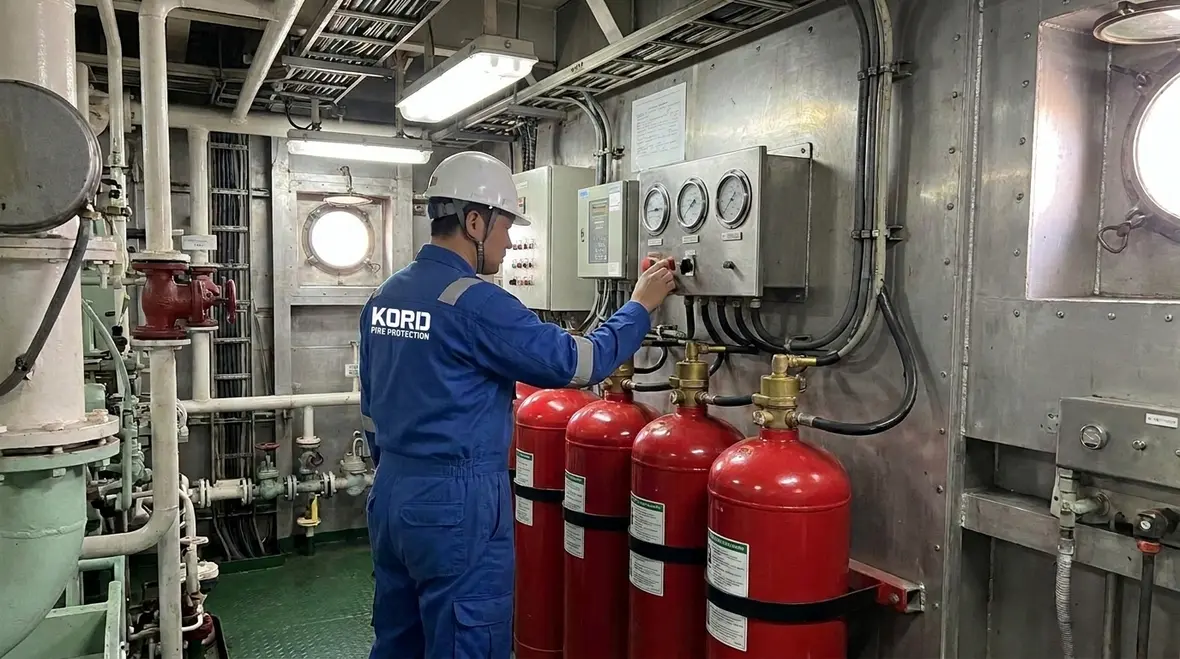
NFPA 2001 Section 13.1 Marine Clean Agent Systems
Quick Answer
NFPA 2001 Section 13.1 sets the stage for marine clean agent fire systems by demanding careful design for shipboard use, tight space control, fast discharge, and strong safety checks. For industrial, commercial, and facility operators across Australia, this means expert planning, testing, and maintenance. Kord Fire Protection can help deliver that work with steady guidance and practical support.
When that planning needs to move from theory into action, Kord Fire Protection’s clean agent fire suppression expertise fits naturally into the conversation because these systems are built for critical spaces where water can create more damage than the fire itself. That same discipline carries over well to marine environments where uptime, equipment protection, and fast, clean suppression all matter. ([kordfire.com](https://kordfire.com/clean-agent-fire-suppression-for-server-rooms-by-kord/?utm_source=openai))
NFPA 2001 Marine Clean Agent Fire Systems: Special Design Considerations
Marine fire protection is not a place for guesswork. In the first 100 to 150 words, the core point is simple: NFPA 2001 marine systems clean agent fire suppression requirements demand a design that fits shipboard conditions, protects people, and controls fire without damaging critical equipment. That matters on vessels, offshore assets, and marine linked facilities where every inch counts and every system must perform under pressure. As a result, design teams must think beyond a standard room install and plan for movement, leakage, ventilation, and rapid response.
For Australia’s industrial, retail, commercial, and facility sectors, these systems often protect control rooms, engine spaces, switchgear, and other high value areas. And yes, the sea has a habit of making simple things complicated. Salt, vibration, and tight layouts tend to show up uninvited.
Why Section 13.1 Matters in Marine Work
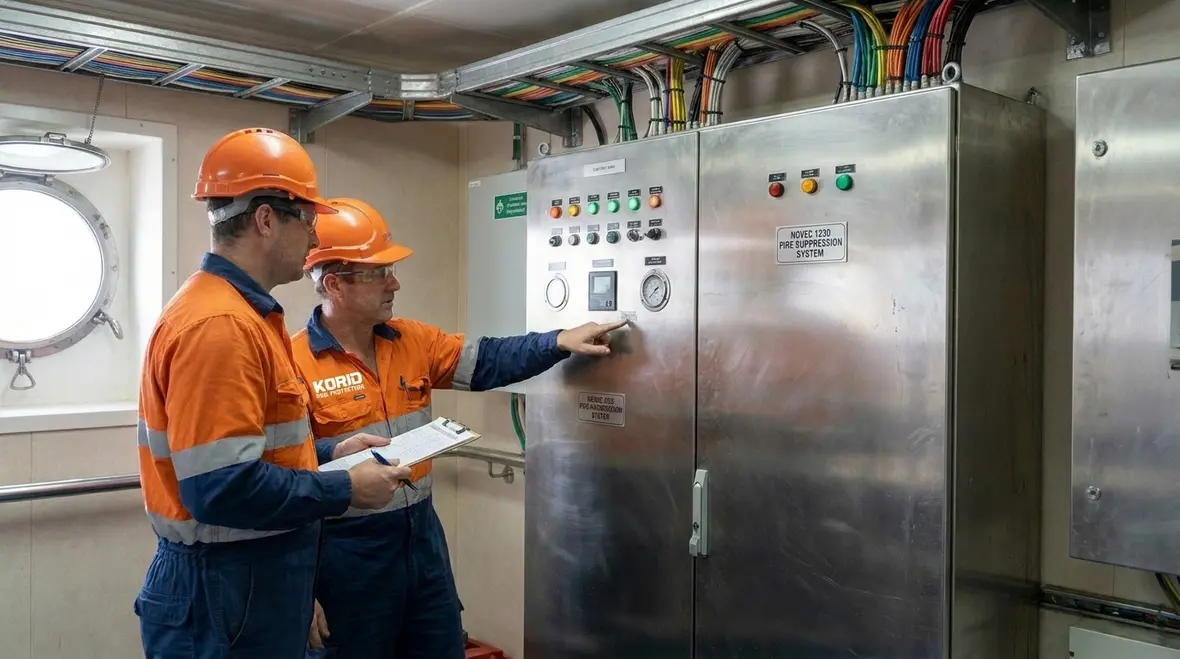
Section 13.1 focuses on special design needs that apply when clean agent systems serve marine spaces. The goal is not just to put out a fire. Rather, it is to deliver the correct agent concentration fast enough to stop the fire while keeping the space safe for people and equipment. Because marine areas often shift with use and weather, the system must stay reliable under real operating conditions.
In practice, this means the designer must check the enclosure, verify leak tightness, study airflow, and confirm that discharge will not fail when the vessel rolls or the plant room hums like a backstage scene from Star Wars. The rules exist because fire in a marine space can move quickly, and delays can cause major loss.
How to design marine clean agent systems
A proper marine clean agent design starts with the protected space. First, the system designer measures the room, checks openings, and studies cable routes, access doors, vents, and penetrations. Next, the team calculates agent quantity and discharge time based on the hazard type and enclosure volume. Then, they confirm that the system can hold the concentration long enough to control re ignition.
- Checking room tightness before final approval
- Confirming ventilation shutdown when discharge starts
- Locating nozzles for even agent spread
- Protecting areas with sensitive equipment
- Reviewing occupancy and escape paths
Because marine systems face motion, corrosion, and limited access, each detail matters. Small errors can become expensive problems later. That is the sort of surprise nobody wants on a vessel or in a critical plant room.
Marine clean agent fire suppression requirements and enclosure integrity
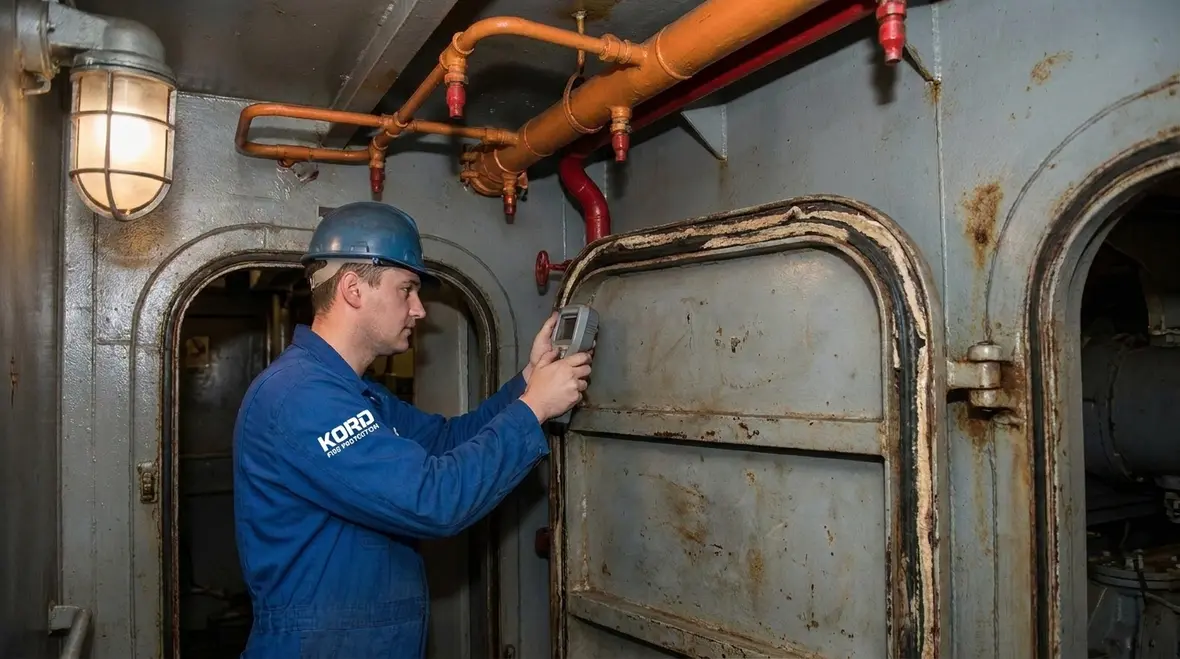
Enclosure integrity sits near the center of NFPA 2001 marine systems clean agent fire suppression requirements. If the protected space leaks too much, the agent concentration drops too fast. Then the system may not control the fire as intended. Therefore, testing often includes door fan checks or similar methods to confirm that the room can hold the agent long enough.
Special marine conditions can make this harder. Doors may open often. Panels may shift. Cables may pass through fresh openings. So, the design must include a plan for ongoing inspection, not just a one time install. In other words, the fire system should not be treated like a one season TV series that gets forgotten after the finale.
That is also why room performance deserves attention long after commissioning day. Kord Fire Protection’s related article on clean agent suppression system and room integrity testing explains how enclosure performance affects whether agent concentration stays where it needs to be. For marine spaces, that is not a side note. It is a core part of whether the system actually does its job. ([kordfire.com](https://kordfire.com/clean-agent-suppression-system-and-room-integrity-testing/?utm_source=openai))
Design Priority
Room integrity, correct agent volume, fast discharge, safe evacuation, and reliable shutdown of ventilation and power where needed.
Why it matters
These steps help the system reach and hold the needed concentration, which improves fire control and reduces damage to critical assets.
Where Kord Fire Protection adds real value
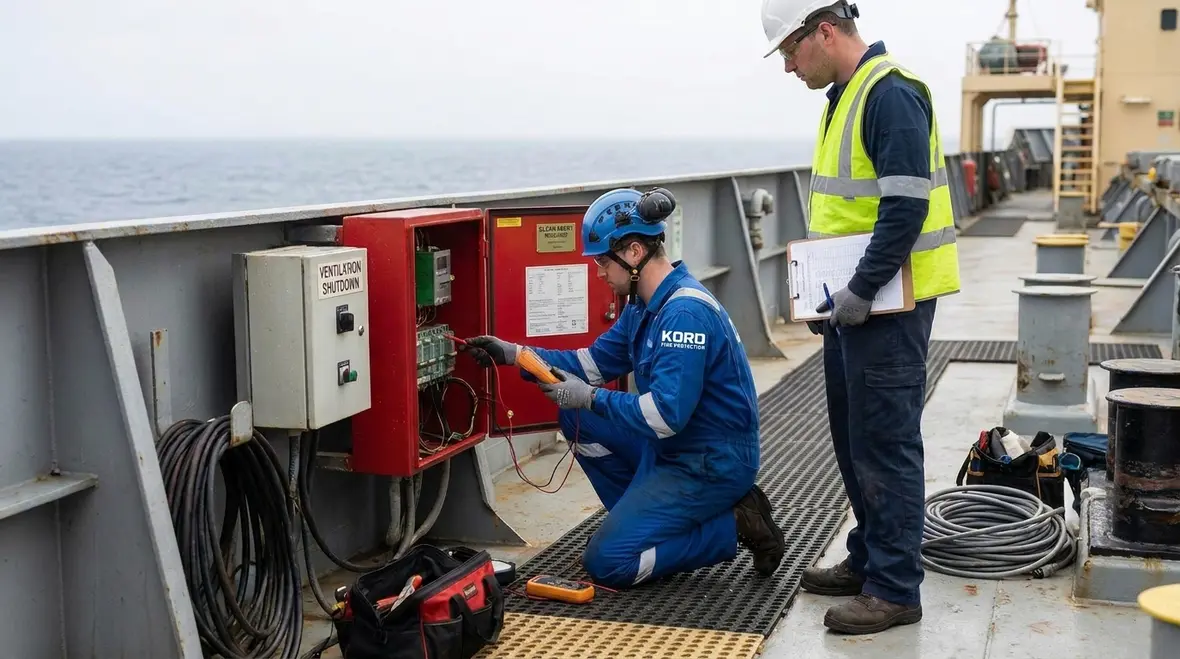
Kord Fire Protection can become a vital partner in this service and job because marine clean agent work needs more than product supply. It needs planning, compliance knowledge, field skill, and careful follow through. Kord Fire Protection can support design review, site checks, installation, testing, and maintenance so the final system suits the marine environment and the business need.
That support matters across Australia, especially for sites that mix marine exposure with commercial operations, logistics, utilities, processing, or asset protection. A trusted partner helps reduce delays, avoid rework, and keep the system ready when it counts. And in fire protection, readiness is the whole game.
For broader context, Kord Fire Protection also ties clean agent work into larger suppression planning through its mission critical fire suppression with clean agent systems resource, which highlights planning, commissioning, documentation, and maintenance support for high consequence environments. That overlap makes sense for marine linked facilities where reliability is not optional. ([kordfire.com](https://kordfire.com/mission-critical-fire-suppression-with-clean-agent-systems/?utm_source=openai))
Installation and testing on marine assets
Installation on marine assets often brings tight access, metal surfaces, active operations, and strict shutdown windows. Therefore, the crew must plan the work in stages and confirm every connection before handover. In addition, testing must prove that controls, alarms, release devices, and ventilation interlocks all work together.
Commissioning should include clear records, as built drawings, and staff training. If operators do not understand the system, then even a strong design can fail in the real world. That is why a careful handover matters just as much as the hardware itself.
How Australian facilities can stay compliant
Australian industrial, retail, and commercial facilities that support marine operations should treat compliance as an ongoing duty. They should review system condition, check access changes, and inspect any new openings or equipment changes that could affect performance. Moreover, they should plan periodic testing so small issues do not grow into costly downtime.
Clean agent systems protect important spaces best when people keep the original design intent alive. That means no casual changes, no ignored alarms, and no “we will sort it next month” thinking. Fire safety rarely enjoys procrastination.
Teams that want a standards focused reference point can also review Kord Fire Protection’s article on NFPA 2001 guidelines for clean agent fire suppression systems, which fits naturally here because marine compliance still depends on getting the fundamentals of clean agent design, discharge, and maintenance right. ([kordfire.com](https://kordfire.com/category/fire-protection/?utm_source=openai))
FAQ
Conclusion
For marine and marine linked facilities across Australia, NFPA 2001 design needs careful attention, not shortcuts. Kord Fire Protection can help guide each step, from planning to testing, so the final system performs as intended and stays ready for the real world.
For owners who value uptime, safety, and less drama, that kind of support makes solid business sense. It keeps the focus where it belongs: on systems that work when pressure rises, spaces get complicated, and nobody has time for a fire protection plot twist.

Join Our Newsletter!
Get the latest fire safety tips delivered straight to your inbox From our Newsletter.



