NFPA 20 Variable Speed Fire Pump Requirements 2025
Quick Answer
NFPA 20 Section 4.8 updated in 2025 clarifies how variable speed fire pump units operate, stressing design controls and testing for reliable performance. The changes push energy efficiency and smoother pressure management while keeping readiness in life safety systems. Kord Fire Protection can guide Australian facilities from design through service, ensuring compliant implementation.
Introduction
Across industrial, retail and commercial facilities in Australia, life safety rests on the reliability of fire protection systems. The NFPA 20 variable speed fire pump requirements in the 2025 edition place a sharper focus on how variable speed pump units respond to real demand. The goal is clear control, efficient energy use, and predictable pump response when the fire alarm rings. Designers now navigate clearer criteria for selecting drives, integrating with building management systems, and validating performance through testing. The result is smoother commissioning and a higher level of confidence that water will reach the right places at the right pressure when it matters most.
If your project also needs a stronger baseline on system power and coordination, Kord Electric’s fire pump electrical requirements for commercial buildings is a useful companion read near the start of planning, especially when the pump room design, standby power, and controls all need to behave like grown-ups under pressure.
What changed in 2025 for NFPA 20 variable speed fire pump requirements
In 2025 the code clarifies the interaction between variable speed drives and pump hydraulics, with emphasis on control sequencing and protection features. It keeps the obligation to prove reliable power supply while allowing smoother operation under fluctuating loads. The updated guidance also strengthens documentation requirements for testing, showing how the pump responds to load changes and coordinates with building management systems. For installers in Australia this translates to clearer procedures and consistent performance across different project sites.
For broader context on how the standard fits together, see how NFPA 20 regulates fire pump systems. It helps connect the variable speed discussion to the wider installation, compliance, and performance picture.
Design and commissioning considerations
Getting the drive, motor, and controls to play nicely together
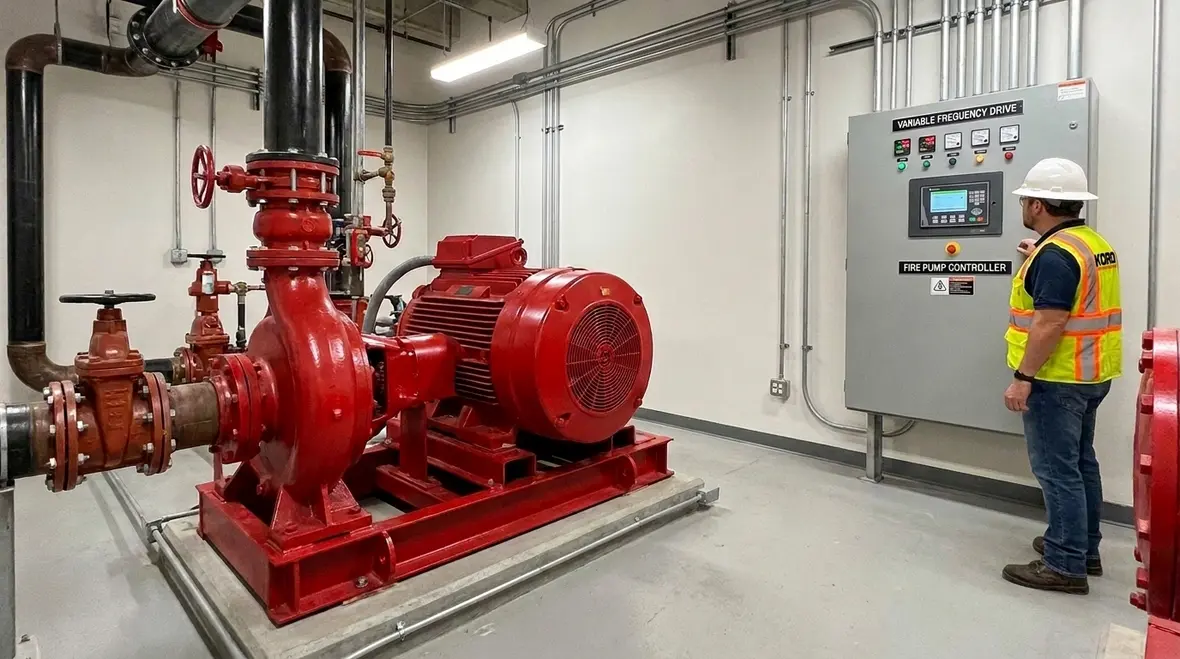
Successful deployment starts with thoughtful choices. First, select a variable frequency drive that suits the pump curve and site conditions while respecting the NFPA 20 variable speed fire pump requirements for control logic. Second, size the motor with a conservative margin to prevent overheating during surge events. Third, ensure protection devices are in place to guard against faults that could interrupt supply. Fourth, verify the pump curve under actual operating conditions and confirm seamless handover to annual testing programs. Finally, plan for integration with emergency power systems so the unit can start and run as needed without delay.
Operational benefits for Australian facilities
Why smoother pressure control is more than a nice-to-have
Applying the 2025 updates brings tangible gains. Facilities experience smoother pressure management, reducing water hammer and wear on valves and pipes. Energy consumption drops because the pump runs only at the speed needed, not at full throttle all the time. Maintenance cycles lengthen as the drive and motor experience gentler loading, while reliability improves during peak demand. Additionally, documentation and testing practices become more consistent, making audits easier and risk management more predictable for industrial campuses, large shopping centers, and manufacturing plants alike.
Kord Fire Protection as a vital partner
Support from design review to long-term service
Kord Fire Protection stands ready to help Australian operations meet the NFPA 20 variable speed fire pump requirements and beyond. Their team offers design review, equipment selection, installation oversight and ongoing maintenance that align with local standards and project budgets. With field experience across varied industries, Kord understands how to tailor variable speed pump solutions to actual site demands, whether a remote regional facility or a high-traffic retail complex. Partners like Kord shorten learning curves, speed up commissioning and deliver reliable service when every second counts.
Column One
Two key areas in the 2025 updates are control logic and testing practice. Clear guidance helps technicians choose compatible VFDs and protective devices. Moreover, the emphasis on realistic testing scenarios ensures the pumps perform under surge conditions and coordinate with the building’s power and monitoring systems.
Column Two
For Australian sites this means fewer surprises during inspections and more predictable performance during emergencies. By aligning procurement, installation and service with NFPA 20 variable speed fire pump requirements, facilities can reduce downtime and improve overall safety outcomes.
Frequently asked questions
Conclusion and call to action
The 2025 updates to NFPA 20 variable speed fire pump requirements tighten guidance where it counts: control, testing and reliability. For Australian facilities this translates into smoother commissioning, measurable energy savings and stronger protection. Kord Fire Protection can be a trusted partner from concept to ongoing care, ensuring your variable speed fire pump units perform when fire safety matters most. Contact Kord to review your project needs today.

Join Our Newsletter!
Get the latest fire safety tips delivered straight to your inbox From our Newsletter.