NFPA 20 Sections 12.5 to 12.8 Diesel Fire Pump Reliability
Quick Answer: NFPA 20 Sections 12.5 to 12.8 focus on how diesel fire pump systems start reliably, keep batteries healthy, and report status through remote alarms. This prevents hidden downtime when it matters most. Kord Fire Protection can support facilities across Australia by designing, testing, and maintaining these critical components.
In Australia, industrial and commercial sites depend on dependable fire pump performance, and NFPA 20 Sections 12.5 to 12.8 help spell out the rules for that reliability. Within these sections, the diesel fire pump starting process, the battery charging expectations, and the remote alarm requirements work together like a well rehearsed team. For facilities, the practical goal is simple: when testing day ends and the real day arrives, the system must start, stay ready, and tell people what it is doing. And while these rules may sound strict, they can be steady, predictable, and manageable with the right partner.
For facilities that want scheduled support rather than last minute heroics, Kord Fire Protection’s fire protection services fit naturally into a broader reliability plan. And for teams already reviewing power continuity, Kord’s article on reliable commercial fire pump power for Australia pairs well with the diesel side of readiness, because pumps do not enjoy surprises any more than operators do.
NFPA 20 Sections 12.5 to 12.8: what facilities must get right
NFPA 20 treats the diesel fire pump system as mission critical, so it aims at three weak points that often get overlooked. First, it addresses how the engine starts under real conditions, not perfect lab conditions. Next, it addresses the battery state because an engine is only as ready as its electrical support. Then, it requires remote alarms so operators can respond quickly instead of guessing.
However, these elements do not operate in isolation. They must work together, and that is where many facilities feel the pain. For instance, a charger can meet a spec on paper, yet still underperform due to wiring, temperature swings, or maintenance gaps. Similarly, a remote alarm circuit can appear functional during routine checks, but fail under load or during commissioning gaps. Therefore, the best approach is a combined compliance and performance mindset.
Diesel fire pump starting and control confidence in real conditions
Why standby systems still need active attention
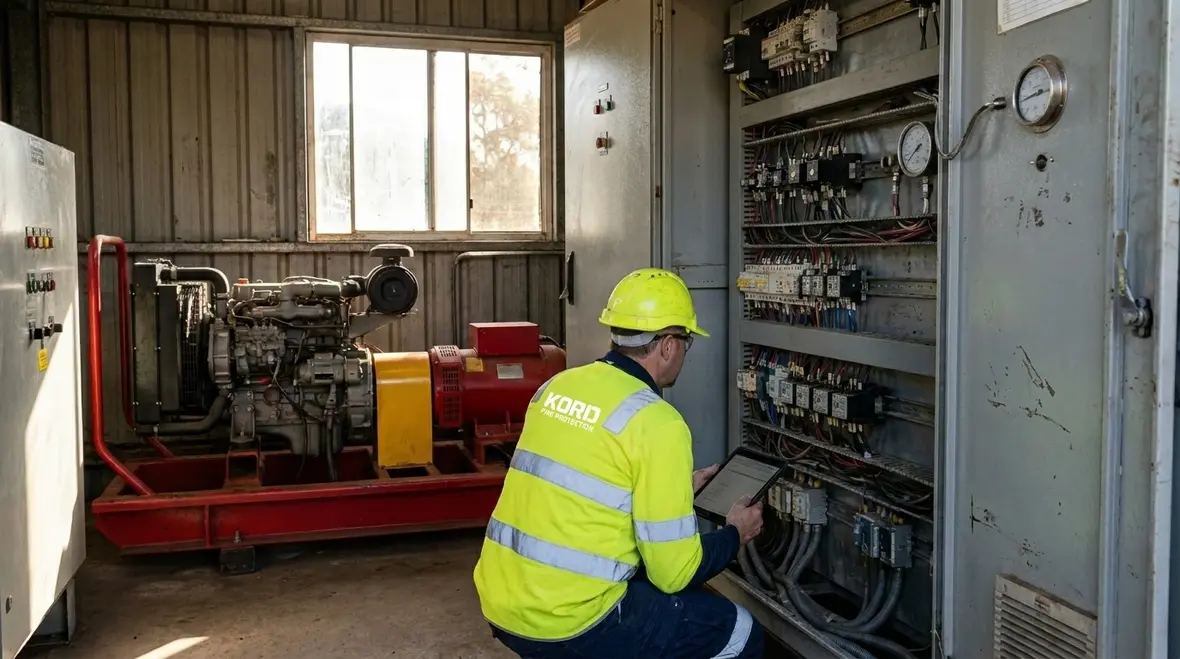
The diesel engine must start when required, and NFPA 20 places attention on the starting method, associated components, and the ability to perform without delay. As the system sits idle, conditions change. Batteries lose charge slowly, and temperature shifts can affect cranking. Meanwhile, electrical connections can loosen over time, because that is what happens when facilities are busy and people think, “It will probably be fine.” Famous last words, like “I’ll just reboot the computer later.”
To meet the intent of diesel fire pump starting and avoid disappointment, facilities typically rely on proper starting arrangements, correct power delivery, and verified readiness during testing. Kord Fire Protection can help by coordinating the right checks and documenting results in a way that supports ongoing assurance across multiple sites.
Moreover, proper commissioning matters. When control logic, wiring, and mechanical set up align, the engine will crank and start as expected. When they do not, you may still get a “start” during test conditions, but reliability drops during actual demand. Therefore, the goal is not only compliance but consistent performance through seasonal changes across Australia.
This is also where Kord’s guide to fire pump start sequence and operating settings becomes useful. It helps connect the code language to the real world details that decide whether a standby engine springs to life confidently or acts like it needs a motivational speech first.
Battery charging fundamentals that keep the engine ready
Readiness is more than having batteries installed
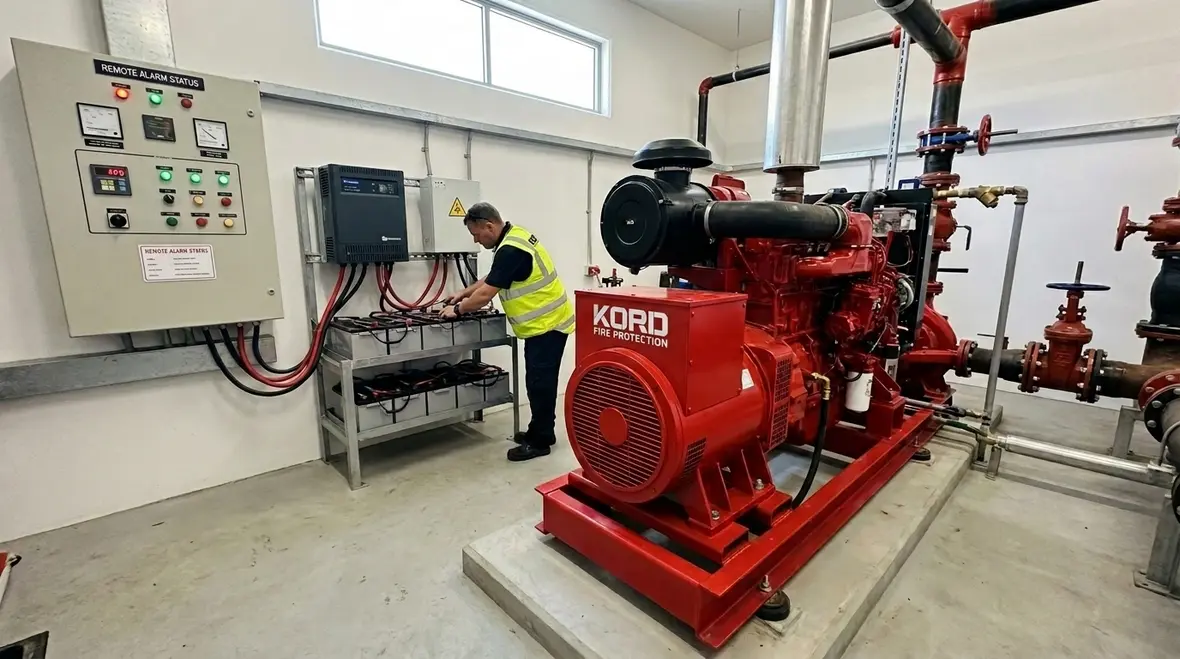
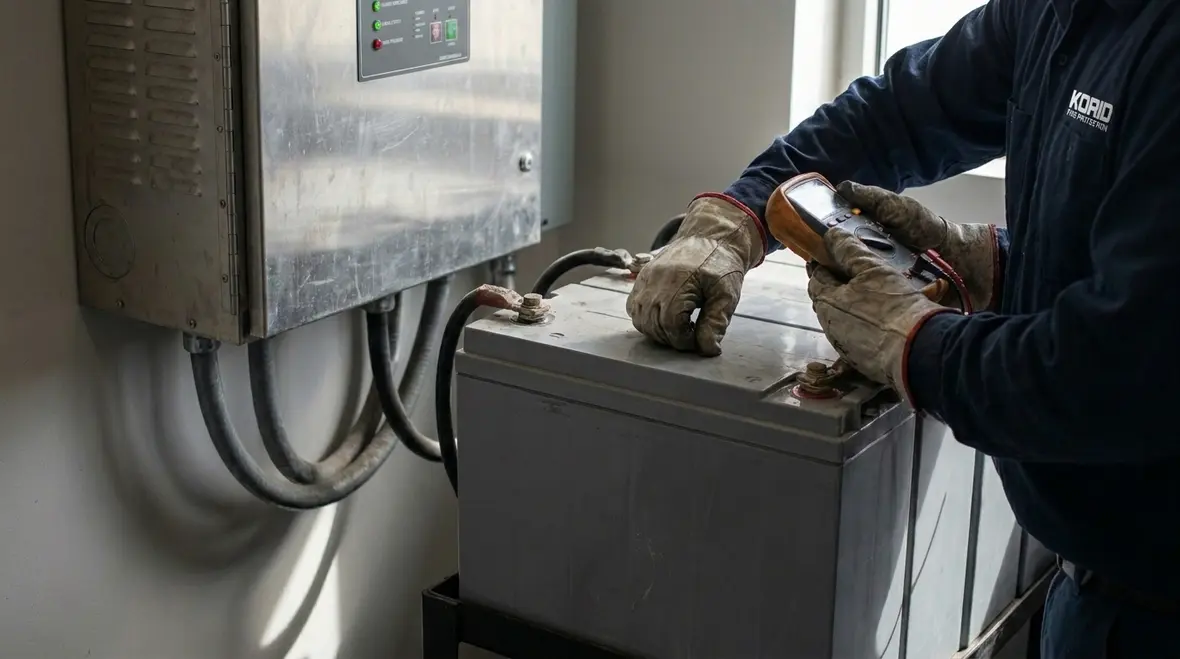
Battery systems for diesel fire pump applications do not behave like everyday consumer batteries. They must support dependable starts, which means charging must match the design and the operating environment. NFPA 20 Section 12.6 focuses on charging and the approach to maintain readiness. In short, the charger must deliver the correct output, at the correct time, in the correct way.
In practice, the battery charger requirements often intersect with real-world issues: battery age, installation quality, temperature effects, and maintenance routines. For example, if a charger is misconfigured or not monitored, batteries can drift out of health without obvious warning. Then, the system still looks “installed,” but readiness falls below what the engine needs to crank with confidence.
Consequently, good maintenance includes more than visual checks. It includes verifying charging performance, ensuring correct connections, and supporting battery health over time. Kord Fire Protection can become a vital partner here by helping facilities plan service that aligns with the charging intent of NFPA 20, so the battery bank stays prepared rather than merely present.
Facilities that want a broader maintenance perspective can also review Kord’s article on preventive maintenance for fire pumps. It reinforces a very practical truth: the healthiest battery program is the one that gets tested, trended, and revisited before anyone discovers a problem during an emergency.
Remote alarms under NFPA 20: when awareness beats guesswork
Good alarms tell the truth clearly and fast
NFPA 20 Section 12.7 and 12.8 require remote alarms that communicate key system conditions. This matters because the person who needs to respond might not be standing next to the fire pump room. They might be in a control room, office area, or another part of the site. Therefore, remote alarm design must deliver clear signals tied to the system’s operating state.
Typically, facilities focus on the alarm outputs, but they also need to think about notification pathways. When alarm outputs connect to a monitoring panel, the panel must interpret signals correctly. Also, the alarms must not be ignored due to poor labeling, unclear mapping, or repeated nuisance events. Nobody trusts alarms that cry wolf every week, and unfortunately, misconfigured alarms can become that “cry wolf” scenario.
Kord Fire Protection can support sites by helping ensure remote signals are coordinated with testing and service schedules. That means the alarms remain meaningful. And when someone receives an alarm during a test or an event, they get the right information quickly. In other words, the system tells the truth instead of making the team play detective.
If your site depends heavily on supervisory signaling, Kord’s article on remote alerts and monitoring components is another useful internal read. Different systems, same lesson: if the signal path is weak, confidence disappears quickly.

How testing, documentation, and service protect compliance year after year
Consistency beats heroic last minute scrambling
NFPA 20 requirements only hold value when facilities can demonstrate that the system performs. That is why testing procedures, records, and service routines matter. Even when the hardware is correct, performance can drift. Therefore, a disciplined approach reduces surprises and protects compliance outcomes.
To keep diesel pump systems dependable, many facilities implement a routine that ties together starting verification, battery charging checks, and remote alarm confirmation. When technicians run these activities together, they also spot interrelated issues earlier. For instance, if the engine’s cranking speed drops, that often connects back to battery health or charging performance. If the remote alarm does not confirm a particular state, that can connect back to wiring, panel programming, or alarm circuit integrity.
Additionally, documentation helps across Australian sites. Companies that manage multiple facilities do not want compliance chaos, and they do not want to search for the last service record when time is tight. Kord Fire Protection can help build a clearer compliance trail, so teams can prove readiness with less stress and fewer “where is that file” moments.
For readers wanting the broader code backdrop, Kord Fire Protection’s article on how NFPA 20 regulates fire pump systems is worth linking into your review process. It connects the detailed reliability pieces in Sections 12.5 through 12.8 to the bigger compliance picture, which is handy when multiple stakeholders all want the short version and the long version at the same time.
Common failure paths that NFPA 20 Sections 12.5 to 12.8 help prevent
Where reliability usually starts to wobble
Even well run facilities face failure risks. People move parts, adjust panels, and change schedules. Over time, those actions can introduce gaps. The good news is that NFPA 20 Section 12.5 to 12.8 targets the areas where reliability most often breaks.
- Starting failures can come from electrical supply issues, incorrect setup, or components not performing as expected.
- Battery deterioration can lead to slow cranking or failure to crank.
- Remote alarms can fail to provide the right information due to wiring issues, programming mismatches, or poor maintenance attention.
- Documentation gaps can hide recurring issues until the system is needed most.
Therefore, these sections prevent the most damaging situation, which is a system that stays quiet until it must act. When Kord Fire Protection partners with facilities, it can help close those gaps through structured service. As a result, teams reduce the chance of hidden weaknesses and strengthen their readiness posture across industrial, retail, and commercial environments throughout Australia.
FAQ
Conclusion: secure your readiness with a real service partner
NFPA 20 Sections 12.5 to 12.8 focus on starting reliability, battery support, and remote alarm awareness, so the diesel fire pump system performs when demand arrives. When facilities handle these areas with routine testing, smart maintenance, and clear records, they reduce risk and protect operations.
Kord Fire Protection can become your vital partner across Australia, helping you keep compliance practical and performance strong. Book a service review today, and let the system do the talking, not your team scrambling.

Join Our Newsletter!
Get the latest fire safety tips delivered straight to your inbox From our Newsletter.