NFPA 20 Chapter 13 Steam Turbine Fire Pump Drives Guide
Quick Answer: NFPA 20 Chapter 13 covers how industrial facilities should handle steam turbine fire pump drives, including key design, installation, testing, and reliability expectations. Because steam turbine fire pump requirements touch both water delivery and power reliability, Kord Fire Protection often becomes a vital partner to keep compliance and performance aligned.
In Australia, industrial and commercial facilities can run on many kinds of power, but when fire protection depends on a steam turbine fire pump drive, the standards become very specific. NFPA 20 Chapter 13 sets expectations for how those drives should be designed, installed, maintained, and tested so the pump can deliver water when it matters most. In this guide, Kord Fire Protection and licensed fire protection teams explain what the chapter focuses on and how facility owners can reduce risk. After all, nothing says “bad day” like a fire pump that hesitates because nobody planned for the steam side.
Near the top of that planning effort, many teams also benefit from broader fire protection services that connect inspection, maintenance, alarms, sprinklers, and pump readiness into one coordinated strategy. And if your team wants a stronger baseline for the standard itself, Kord Fire Protection’s overview of how NFPA 20 regulates fire pump systems fits naturally alongside Chapter 13 planning.
NFPA 20 Chapter 13 overview for turbine driven pumps
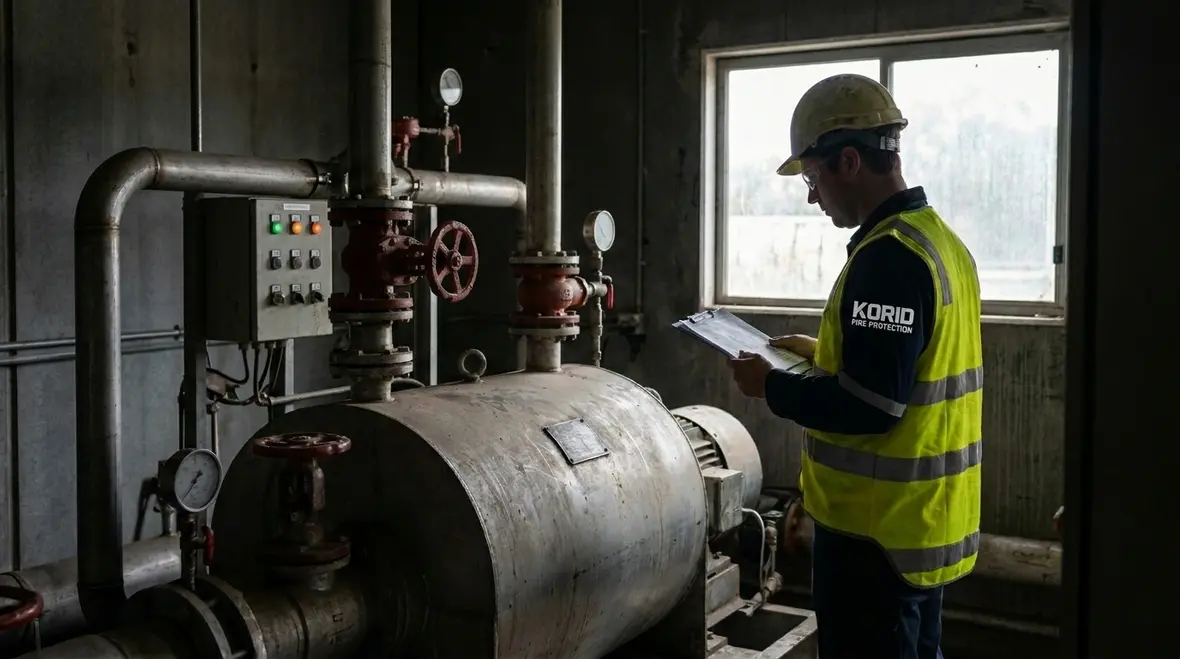
NFPA 20 Chapter 13 addresses steam turbine fire pump drives for industrial fire water systems. It does not treat the turbine like a generic accessory. Instead, it links the drive to pump performance, start-up behavior, and reliability under fire conditions. Therefore, facilities must treat this as a system problem, not a single piece of equipment.
More plainly, a steam turbine fire pump drive must deliver the needed pump speed and run time with predictable results. Additionally, the drive must handle the realities of steam supply, controls, and safety devices that keep personnel protected and the system stable.
Why the chapter treats the drive as part of the whole fire pump system
That systems view matters because the turbine does not work in isolation. It depends on steam quality, inlet arrangements, valve behavior, speed control, and reliable interaction with the pump itself. If one part drifts, the whole arrangement can lose the consistency firefighters and facility teams depend on. In other words, the chapter is trying to prevent a very expensive version of “close enough.”
Steam turbine fire pump requirements that affect system reliability
Steam turbine fire pump requirements focus on getting dependable pump output, even when conditions are demanding. To do that, designers typically consider steam supply quality, valve response, and control logic, so the turbine reaches the correct operating state fast enough for fire attack.
Just as importantly, the installation should prevent “it worked yesterday” problems. That means aligning mechanical interfaces, verifying instrumentation placement, and ensuring the turbine governor and related controls respond as intended.
Facility teams in Australia often share the same challenge: older steam systems or plant changes can quietly alter steam pressure, temperature, or control stability. However, Chapter 13 pushes the owner to verify that the steam turbine drive still supports required pump performance after plant modifications.
Where reliability usually slips first
Most failures do not begin with one dramatic explosion of bad decisions. They start with drift. A valve is slower than it used to be. A control setting gets adjusted for production convenience. Documentation no longer matches the field. Then everyone is surprised when the fire pump behaves like it has never met the design intent before. Chapter 13 is useful precisely because it forces teams to look at those details before they turn into a headline nobody wants.
How designers handle steam supply, valves, and control logic
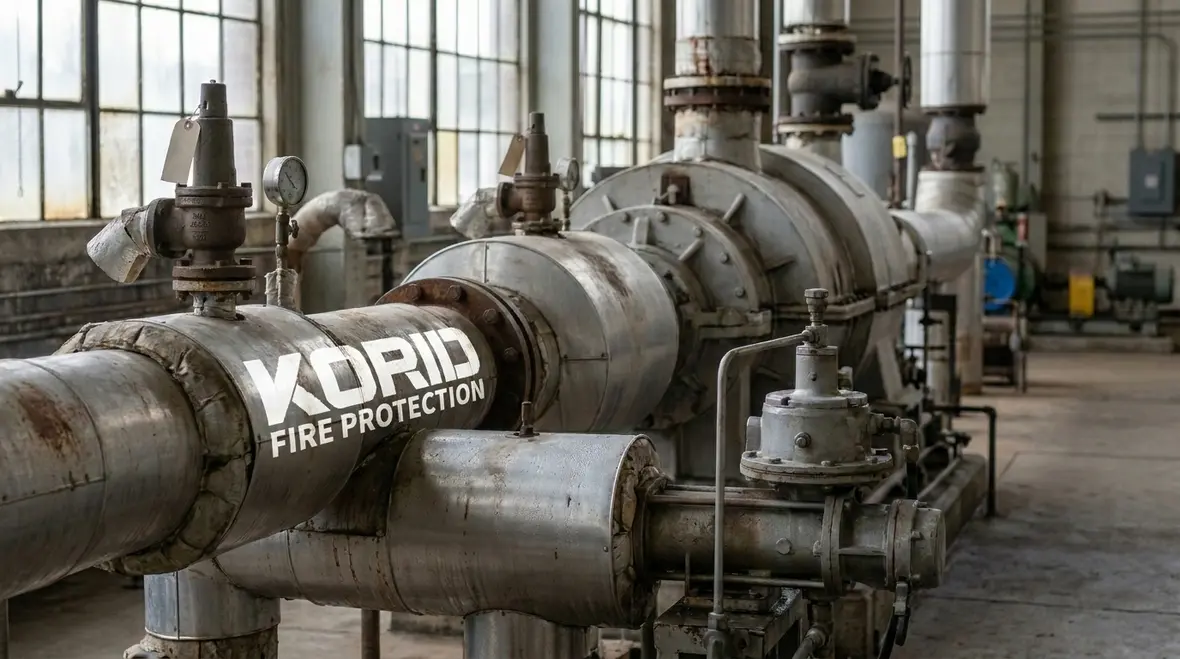
Chapter 13 expectations push the team to treat steam supply as a critical path component. As a result, the turbine drive depends on steam availability and correct pressure control. If the steam side fluctuates, the pump performance can shift too, and the system loses its edge.
Accordingly, designers and installers pay attention to the steam inlet arrangements, including piping configuration, strainers where appropriate, and valve sizing and placement. In many plants, the fire pump room and turbine area share tight spatial constraints, so coordination matters. Still, good design reduces friction in the control sequence.
Control logic also plays a major role. The turbine must start and accelerate in a controlled way, while safety devices prevent unsafe operating conditions. Transitioning from standby to run should happen with discipline, not guesswork.
Design details that deserve more attention than they usually get
Teams should also think through how quickly the steam source can respond, whether inlet valves behave consistently under load, and how the governor reacts during acceleration. Small design oversights here can ripple into weak start-up performance or unstable speed control. Nobody enjoys discovering that the “minor detail” was actually the entire personality of the system.
Installation and commissioning steps that reduce hidden failure points
Even when equipment is correct on paper, installation quality often decides whether the system behaves under stress. Therefore, commissioning must verify that the turbine drive and pump system act together like a single engine.
Commissioning typically includes proving the start sequence, confirming actuation timing, validating instrumentation readings, and checking that the turbine governor behavior matches the design intent. Additionally, crews should verify that pressure switches, relay logic, and any interlocks operate reliably during test conditions.
In real facility work, one common issue is mismatch between documentation and field reality. Pipe routes change, labels get swapped, and control panels inherit “helpful” alterations over time. For that reason, a structured commissioning checklist and document control become a quiet hero. And yes, quiet heroes are still heroes. They just do not get posters.
Commissioning habits that save pain later
The best teams record actual readings, note unusual delays, confirm labels in the field, and preserve as-built changes before memories disappear. That paperwork may not feel glamorous, but it stops future troubleshooting from becoming an archaeological dig with worse lighting.
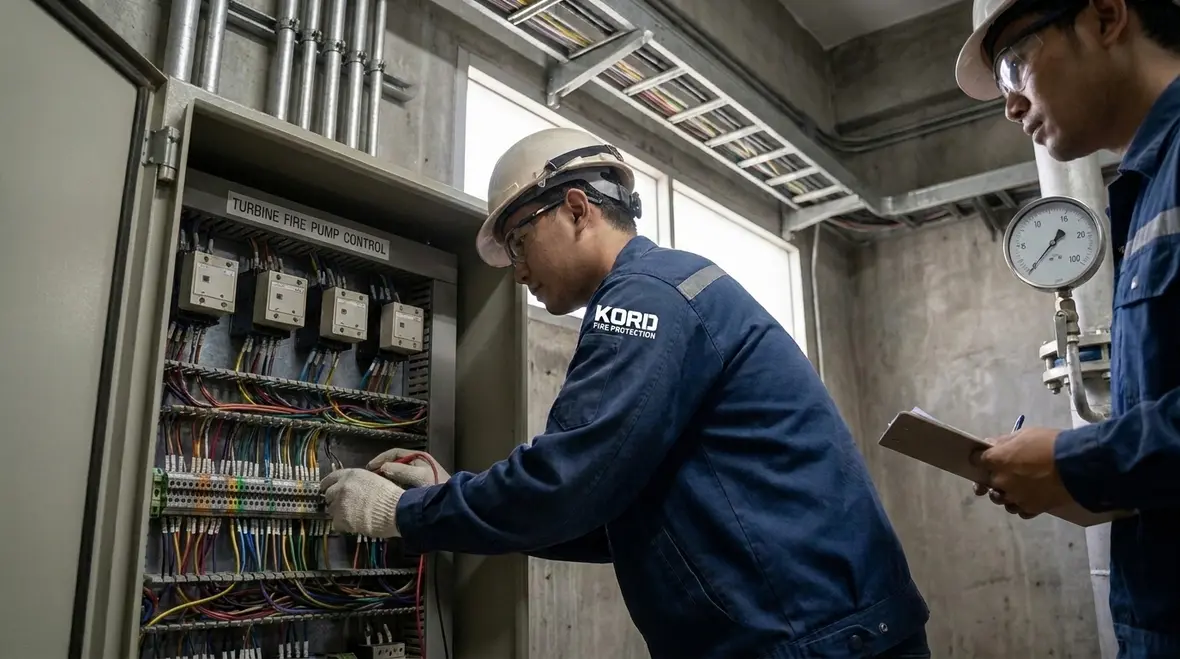
Testing, maintenance, and lifecycle planning for dependable operation
NFPA 20 Chapter 13 encourages a mindset of ongoing reliability, not one-time compliance. Consequently, owners must plan how steam turbine fire pump drives will be inspected, tested, and maintained across their lifecycle. Maintenance activities should protect performance and prevent drift in valve operation, governor response, and steam flow stability.
Because steam systems can be affected by plant operations, maintenance should include coordination with the boiler or steam generation side. If operators adjust steam settings for production efficiency, the fire pump drive must still meet the steam turbine fire pump requirements and deliver the required pump output.
Furthermore, maintenance planning should include access for inspection, clear identification of components, and recordkeeping that shows tests and repairs over time. That is how a facility avoids surprise failures that tend to show up after hours, on weekends, and during the exact moment everyone is least patient.
Lifecycle thinking beats reactive scrambling
A turbine-driven fire pump should not become invisible just because it has behaved for a while. Reliability comes from habits: repeatable inspections, realistic test schedules, coordinated steam-side reviews, and records that let the next technician understand what changed and when. That is not glamorous either, but it works, which is a pretty good personality trait for fire protection.
Why Kord Fire Protection becomes a vital partner in turbine drive jobs
NFPA 20 Chapter 13 can involve both fire protection scope and turbine drive scope, which means it benefits from strong coordination. That is where Kord Fire Protection can step in as a vital partner. They help facilities connect the compliance dots between system design intent and on-site performance.
Kord Fire Protection typically supports owners and project teams by aligning installation practices with fire system requirements, coordinating testing expectations, and helping maintain clear documentation. As a result, the facility reduces gaps between engineers, contractors, and ongoing operations. And when a system relies on steam behavior, that coordination becomes more than “nice to have.” It becomes the difference between planned readiness and reactive scrambling.
Additionally, Kord Fire Protection can assist with compliance planning across Australia, supporting facilities that operate in industrial, retail, and commercial environments where downtime and uncertainty carry real cost. They also help teams build maintenance routines that keep the turbine driven pump dependable, not merely present.
Practical checklist for facilities planning a steam turbine drive upgrade
For industrial sites, retailers with large facilities, and commercial campuses, the best outcomes come from preparation. Here is a practical checklist teams can use during planning and delivery.
- Confirm the design basis and map the steam turbine fire pump requirements to the pump performance goals.
- Verify steam supply parameters with the plant team, including pressure stability and control behavior under normal and test conditions.
- Review control and interlocks to ensure the start sequence accelerates correctly and safety devices function as intended.
- Plan commissioning activities with a clear test sequence, acceptance criteria, and documented results.
- Build maintenance and access into the job scope so inspection and testing stays realistic over the years.
- Align documentation including labels, wiring diagrams, as built drawings, and change history.
- Coordinate ongoing operations so boiler or steam system adjustments do not undermine reliability.
Then, when the job finishes, the facility stays ready. Not forever, because nothing does, but for the time that matters most. Fire protection should behave like a dependable watch, not like a mystery box.
FAQ
Final word for Australian facilities
NFPA 20 Chapter 13 sets the bar for steam turbine fire pump drives, and the bar exists for a reason. When a facility aligns steam supply, controls, installation quality, and testing discipline, the system stands ready when others do not. Kord Fire Protection can help connect the fire protection side to real-world operations, so compliance becomes performance, not paperwork.
Schedule a planning call today and move from guesswork to readiness. That shift is what separates a system that merely exists from one that actually shows up when it is needed. In fire protection, that difference is everything, and Chapter 13 gives teams a much better map for getting there without the usual chaos.

Join Our Newsletter!
Get the latest fire safety tips delivered straight to your inbox From our Newsletter.