
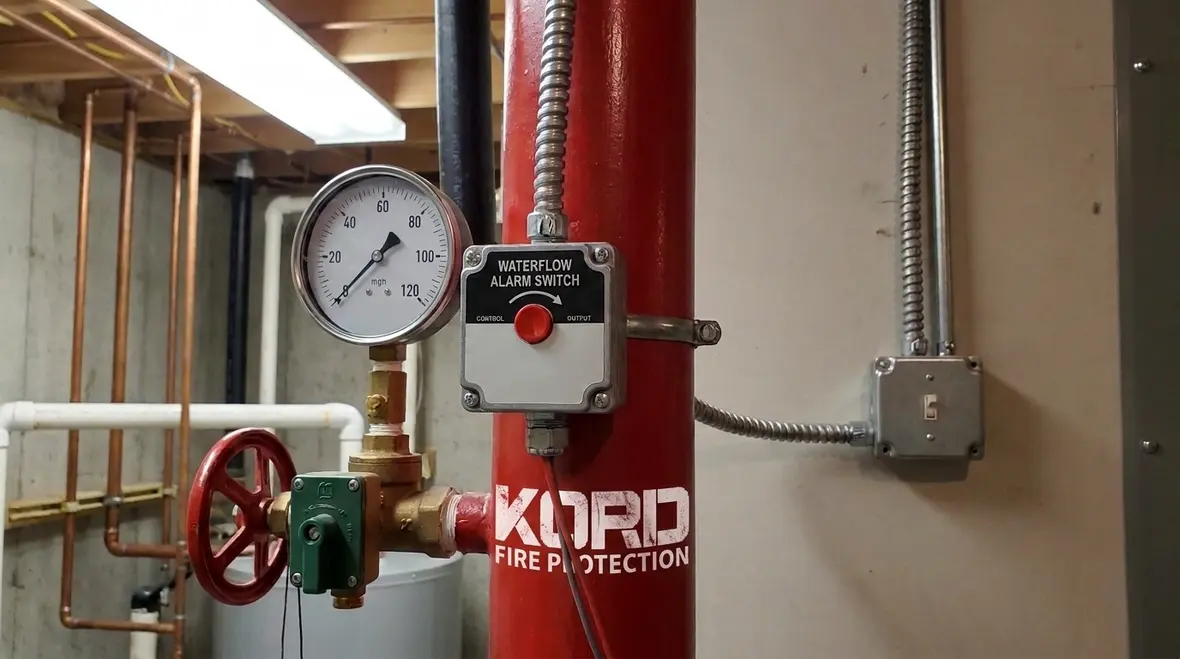
NFPA 13D Section 7.6: Waterflow Alarm Device Requirements for Residential Sprinkler Systems
Quick Answer
NFPA 13D Section 7.6 requires properly listed waterflow alarm devices to positively indicate sprinkler water discharge on residential sprinkler systems. Installations must support dependable signaling to occupants, facilitate notification of responsible personnel, and remain accessible for inspection and testing.
For a broader installation and service baseline, facilities often pair waterflow alarm review with professional fire sprinkler system service so inspection, testing, repairs, and documentation stay aligned from day one.
What NFPA 13D Section 7.6 targets: reliable waterflow indication
For commercial, industrial, and retail facilities that include residential style sprinkler systems or mixed-use occupancies, NFPA 13D waterflow performance directly impacts occupant alerting and maintenance response. The NFPA 13D Section 7.6 waterflow alarm device requirements residential sprinkler systems focus on ensuring that the system produces a dependable alarm when water flows from sprinklers, not only at the valve and not only for a short interval.
In practice, compliance depends on three elements that must work together: (1) a waterflow detection device that responds to actual system discharge, (2) an alarm interface that converts detection into a recognizable signal, and (3) an inspection and testing workflow that proves the entire chain functions under realistic conditions.
Which devices qualify under Section 7.6: alarm initiation and signaling integrity
Section 7.6 addresses waterflow alarm device requirements that trigger an alarm when water flow occurs. The core compliance concept is straightforward: the alarm device must be listed for the intended application and must reliably initiate an alarm signal when waterflow starts and when waterflow conditions persist long enough to activate the system alarm circuitry.
Common waterflow alarm device mechanisms you will see
- Waterflow switches and mechanical detection: Mechanical switches or comparable listed devices sense flow through the pipe and transmit a switch signal to the alarm circuit.
- Flow sensing with electronic interfaces: Some installations use listed flow detection hardware and compatible annunciation equipment designed for sprinkler service.
- Supervisory interfaces for alarm circuits: Where required by the overall system design, the alarm pathway may supervise power loss or circuit integrity depending on the equipment and authority having jurisdiction (AHJ) expectations.
Regardless of mechanism, the inspection goal stays the same: alarm initiation must occur under real sprinkler flow conditions and must do so consistently. Field failures often appear when the device is misapplied, installed out of listing parameters, improperly wired, or obstructed by maintenance practices.
Operational takeaway for facility teams
Facilities teams should treat Section 7.6 as a functional commissioning requirement, not a one time installation. If the alarm device can be mechanically installed but cannot be confidently tested, it becomes a latent failure point during a real event.
Where and how devices connect into the system: installation practices that prevent nuisance and non alarm failures
Waterflow alarm device placement and integration influence both performance and reliability. Even with a listed device, poor installation can prevent activation, cause nuisance activation, or create delays that reduce life safety value.
Key installation checkpoints during acceptance and maintenance
- Correct location relative to the control valve: Detection must represent system discharge, not an unrelated flow path. Verify the device monitors the correct piping segment.
- Orientation and flow direction compliance: Mechanical components often rely on proper orientation to trigger correctly. Electronics may require correct sensor orientation and placement.
- Secure mounting and vibration management: Loose mounting can cause false signals or failure to actuate. Tighten and verify mounting after any construction activity.
- Correct wiring termination and polarity where applicable: Wiring errors are a frequent cause of “alarm silence.” Verify terminations, labels, and conductor routing away from sources of damage.
- Access and service clearance: The AHJ and inspectors expect devices to remain accessible. Enclosures, ceiling finishes, and storage should not block testing access.
For a broader installation baseline that supports waterflow reliability, consult this overview of automatic sprinkler system installation considerations: NFPA 13 overview for automatic fire sprinkler system installation. While that reference addresses NFPA 13 in particular, many of the installation control practices apply directly to dependable notification and alarm pathways.
Inspection, testing, and maintenance: how compliance stays real after turnover
Compliance with NFPA 13D Section 7.6 depends on sustained verification. A waterflow alarm device can be installed correctly and still fail later due to corrosion, damaged wiring, valve impairment, or equipment replacement without updated labeling.
Routine inspection focus areas
- Visual condition of the device and wiring: Look for corrosion, water intrusion, physical damage, missing covers, and loose terminations.
- Signs of tampering or unauthorized changes: Many alarm devices are near control panels, closets, or equipment rooms where tenant changes occur.
- Operational readiness of notification appliances: Confirm that the alarm produces the expected audible or visible indication per the system design.
Testing realities that prevent “paper compliance”
Testing should validate that the alarm initiation and the alarm output occur as a system, not as isolated components. Where testing is performed using approved methods, the facility must ensure that waterflow conditions truly engage the device. Common failure points include partially actuated devices, improper test methods, and failure to verify end to end notification.
Kord Fire Protection supports commercial compliance workflows that emphasize documented testing, prompt corrective action, and repeatable maintenance procedures. This matters for property managers, industrial sites, and retail facilities where alarm devices face frequent access by contractors and higher risk of incidental damage.
Operational failure modes: why waterflow alarms sometimes do not work when needed
Understanding typical failure modes helps teams prioritize prevention and speed up troubleshooting during service calls.
Top failure patterns seen in the field
- Wiring faults and terminal loosening: Vibration, thermal cycling, and maintenance traffic can disturb conductors.
- Misadjusted or contaminated flow detection elements: Debris, corrosion, or improper device servicing can prevent reliable actuation.
- Valve related impairment: If valves are not fully opened, the alarm may not reflect actual sprinkler operation.
- Notification appliance mismatch: The waterflow device may signal correctly, but the alarm output may not alert occupants due to wrong appliance selection, damaged devices, or control panel configuration changes.
- Inadequate labeling and configuration drift: Facilities evolve. Reused panels and reused wiring paths create configuration errors unless labeling stays current.
Because troubleshooting can involve both fire sprinkler components and alarm signaling circuits, Kord Fire Protection treats waterflow alarm device work as integrated system service. When facilities use a consistent service partner, they reduce the risk of missed interfaces and incomplete documentation.
Resources and compliance context for facility teams
While NFPA 13D governs residential sprinkler systems, many commercial and mixed-use properties align inspection and testing disciplines across sprinkler and notification systems. Fire pump and water supply system operators also benefit from understanding how water supply components support reliable sprinkler performance. For technical context on water delivery equipment and system behavior, reference: firepumps.org.
For operational planning, Kord Fire Protection coordinates inspection schedules, maintains clear documentation, and supports AHJ review readiness through systematic testing and corrective action tracking. This approach aligns with how commercial facility standards expect sustained life safety readiness.
Frequently Asked Questions
Next step: keep waterflow alarms compliant and dependable
If your property includes residential style sprinkler systems or mixed-use spaces, the fastest path to reliable NFPA 13D Section 7.6 performance is a disciplined inspection and testing program. Kord Fire Protection supports commercial compliance with repeatable testing procedures, rapid troubleshooting, and clear documentation for AHJ readiness. Arrange a service review to confirm your waterflow alarm devices, wiring, notification appliances, and access points operate as installed.

Join Our Newsletter!
Get the latest fire safety tips delivered straight to your inbox From our Newsletter.



