
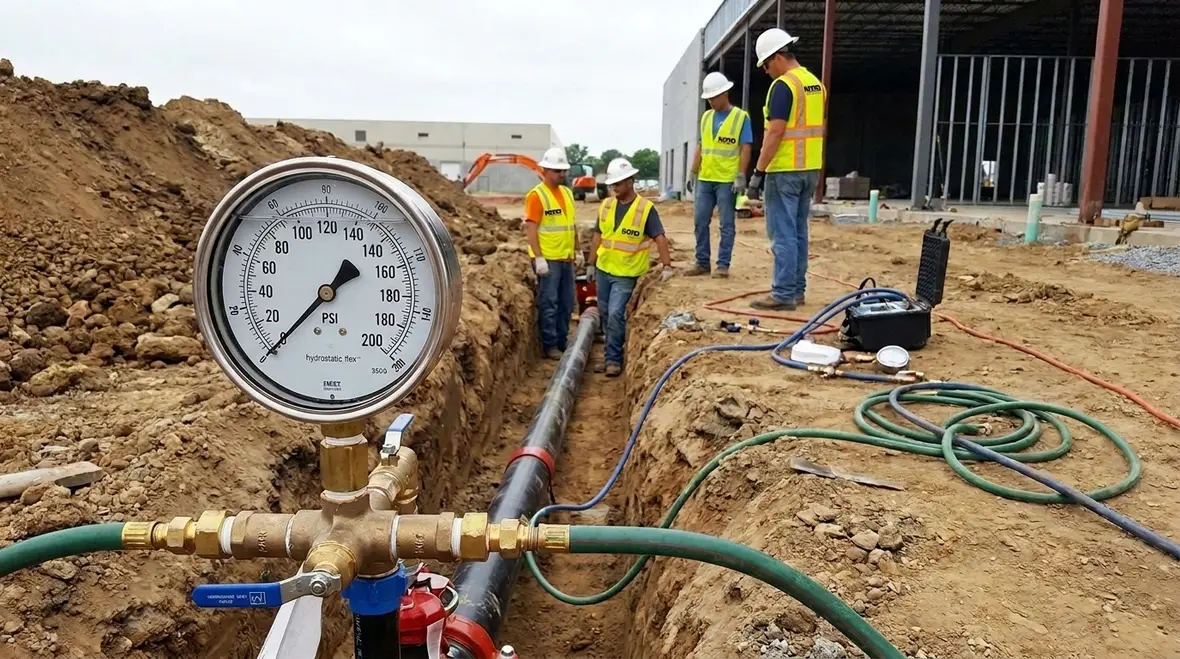
NFPA 13 Section 6.11 – Testing and Acceptance of Underground Piping
NFPA 13 Section 6.11 Testing and Acceptance of Underground Piping
Quick Answer: This section governs the testing and acceptance of underground sprinkler piping to verify integrity and full function. It covers hydrostatic and pneumatic test options, backfill and trench considerations, joint and material verification, and required documentation. Proper execution of NFPA 13 testing acceptance underground piping helps commercial facilities meet code requirements and minimize post installation failures.
If you want the bigger code picture first, see NFPA 13 automatic fire sprinkler system installation overview. For related field practices that naturally connect to underground acceptance work, Kord Fire also covers fire sprinkler system flushing procedures, which fit right into the real-world conversation around getting buried piping ready for dependable service.
Understanding Section 6.11: What It Covers
NFPA 13 Section 6.11 defines the responsibilities for testing and acceptance of underground piping that lies below grade. It addresses pipe materials, joint integrity, trench protection, backfill compatibility, corrosion protection, and the need for thorough verification before system final acceptance. The clause emphasizes that testing results must demonstrate leak free joints, structural stability, and accessibility for future maintenance, with clear documentation supporting the sign off. In practice, the standard applies across commercial, industrial, and retail facilities and must be interpreted in the context of local AHJ expectations.
Why underground acceptance work matters
Below grade piping does not offer the luxury of easy visual checks once everything is covered back up. That means mistakes in joints, materials, bedding, or corrosion protection can stay hidden until they become expensive, disruptive, and very unwelcome surprises. Section 6.11 exists to make sure the system proves itself before it disappears underground and starts acting like it was flawless all along.
Pre-Test Preparation and Documentation
Effective preparation reduces risk and streamlines acceptance. The pre test phase typically includes confirming the project scope and section 6.11 requirements, verifying underground piping materials and routing, and ensuring as built drawings reflect field conditions. Isolation of the underground network, valve and connection accessibility, purge procedures, and debris cleanup are essential. Documentation should include a completed test plan, valve status, backfill type, corrosion protection measures, and a formal sign off from the responsible party.
Documents worth having before anyone touches a gauge
A solid acceptance package usually moves much faster when the drawings, material records, routing confirmation, and field notes are already aligned. Nobody enjoys the classic moment where everyone is standing around a trench asking whether the latest marked-up plan is actually the latest marked-up plan. Good paperwork does not make the test glamorous, but it does keep the test from becoming a scavenger hunt.
Testing Procedures and Equipment
Testing procedures center on confirming pipe integrity and joints during and after installation. For hydrostatic testing, the system is filled with water, ends are sealed, and a pressure substantially above normal operating conditions is applied for a defined period while monitoring for leakage. Pressure drop, gauge readings, and valve performance are recorded. Joints, fittings, and risers receive close inspection, with any suspect area retested after repair. Pneumatic testing remains an option only under strict safety controls and with AHJ approval, given the ignition risks associated with air testing in occupied environments.
Field equipment and observation points
In the field, reliable gauges, isolation points, secure end restraints, visible joints, and a clean fill process all matter. Acceptance testing is not just about hitting a pressure number and hoping the piping shares your optimism. It is about verifying that the whole underground segment behaves like a dependable part of the fire protection system rather than a future callback with terrible timing.
Acceptance Criteria and Record Keeping
Acceptance criteria require a stable test pressure with minimal or no pressure drop over the hold period, no visible leaks, proper joint and valve operation, and compliance with backfill and trenching requirements. All testing results must be documented in a formal report, including pressure history, temperature conditions, inspection notes, and any repairs performed. The audit trail supports ongoing maintenance and future modifications, and it demonstrates compliance with NFPA 13 testing acceptance underground piping for commercial facilities.
What a usable acceptance record should show
A useful record is not just a piece of paper that says everything was fine, trust us. It should make the sequence easy to follow later by showing what was tested, when it was tested, what pressure was applied, who witnessed it, what corrections were made, and how final acceptance was confirmed. That kind of trail becomes valuable the minute someone asks questions after a repair, expansion, or inspection.
Practical Compliance for Commercial Facilities
Commercial facilities face specific challenges when complying with Section 6.11. Scheduling around store hours, coordinating with other trades, and ensuring trench access in active sites require meticulous planning. Material compatibility, corrosion protection, and backfill quality directly affect long term performance and maintenance costs. For complex facilities such as shopping centers, warehouses, and hospitals, robust testing plans, clear communication with the AHJ and experienced contractors minimize delays and reduce post installation failures. Kord Fire Protection offers actionable diagnostics, testing, and ongoing maintenance to support uninterrupted compliance and reliability.
This is also where neighboring topics start to overlap. Underground piping performance influences hydrant reliability, sprinkler flow, and broader site protection strategy, which is why articles like private vs public fire hydrants can be useful context for property teams trying to understand how water delivery, ownership, and maintenance responsibilities connect in the real world.
Frequently Asked Questions
Conclusion and Call to Action
NFPA 13 testing acceptance underground piping is a critical component of reliable fire protection for commercial facilities. By following Section 6.11 with thorough preparation, rigorous testing, and precise documentation, facilities reduce risk and ensure code compliance. For expert guidance, ongoing testing, and proactive maintenance, partner with Kord Fire Protection. Our team delivers comprehensive underground piping testing, inspection, and maintenance services tailored to commercial, industrial, and retail environments. Contact Kord Fire Protection to schedule a compliance review and a proactive maintenance program today.

Join Our Newsletter!
Get the latest fire safety tips delivered straight to your inbox From our Newsletter.


