Fire Sprinkler System Flushing Procedure Guide
Understanding Fire Sprinkler System Flushing Procedures
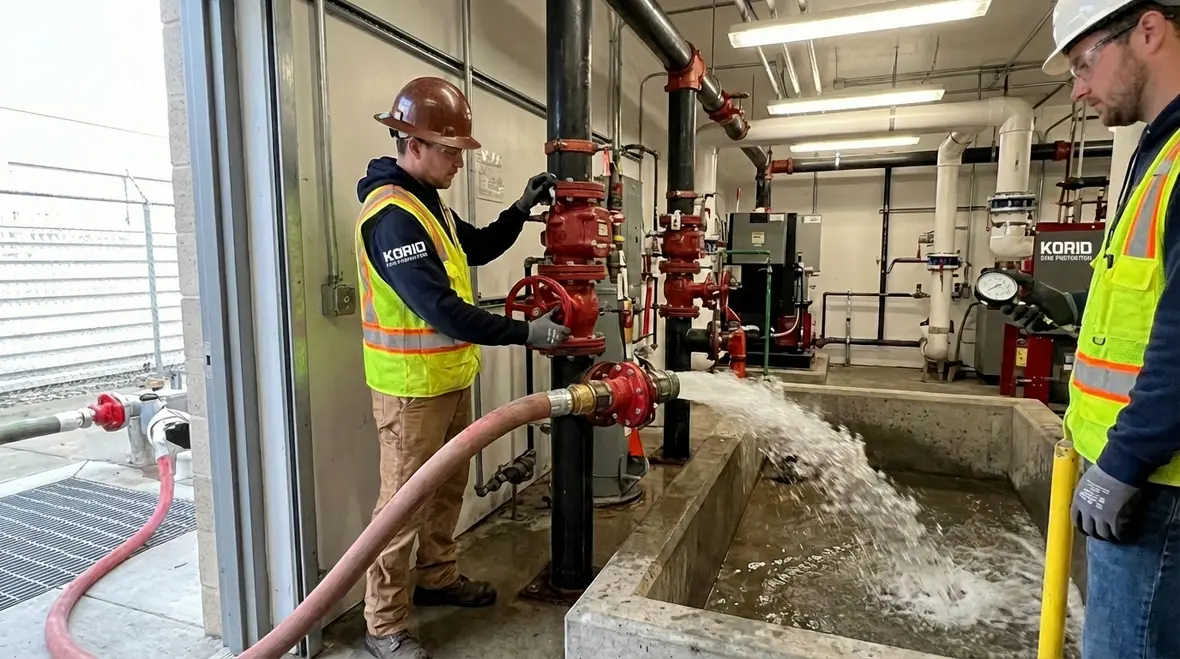
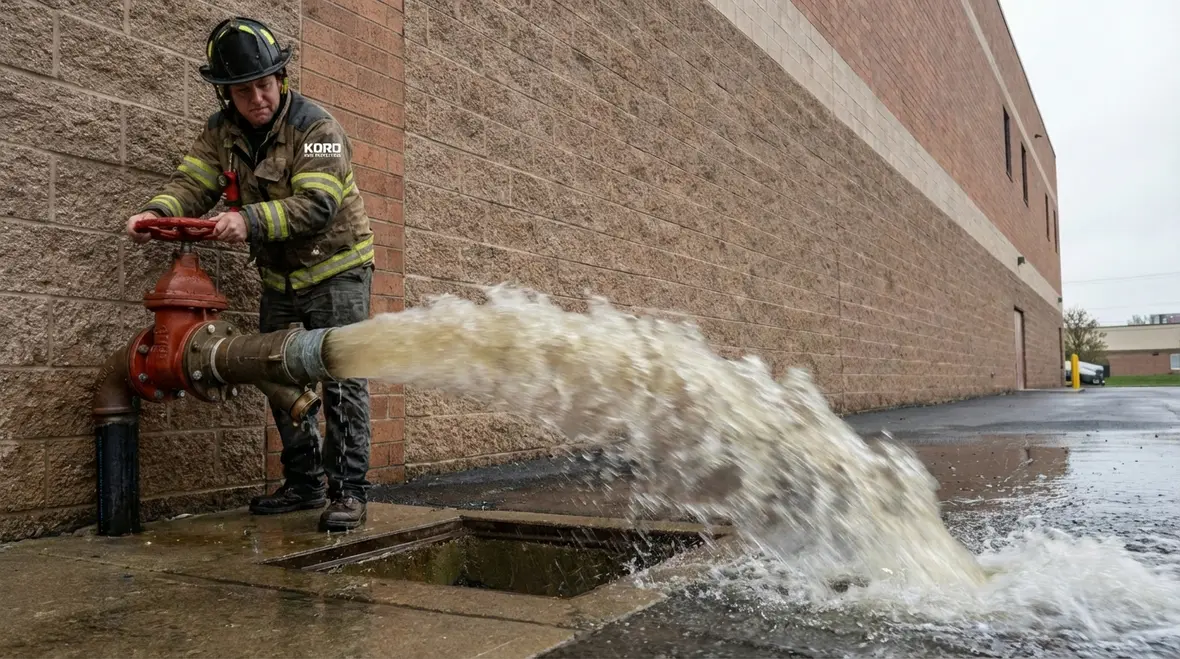
When Kord Fire Protection technicians perform a fire sprinkler system flushing procedure, they follow a clear and disciplined process. First, they isolate the section of piping. Next, they open the main drain and flush water at a high velocity to remove debris. Then, they inspect discharge clarity and measure flow. Finally, they document results and restore the system to service. It sounds simple. However, behind that calm sequence lies a careful balance of safety, code compliance, and performance assurance. This article walks through that process step by step, explaining not only what happens, but why it matters.
So settle in. Think of this as the behind the scenes documentary of your building’s quiet guardian. No explosions. No slow motion action scenes. Just clean water, smart technicians, and a system ready to protect lives.
The Purpose Behind a Fire Sprinkler System Flushing Procedure
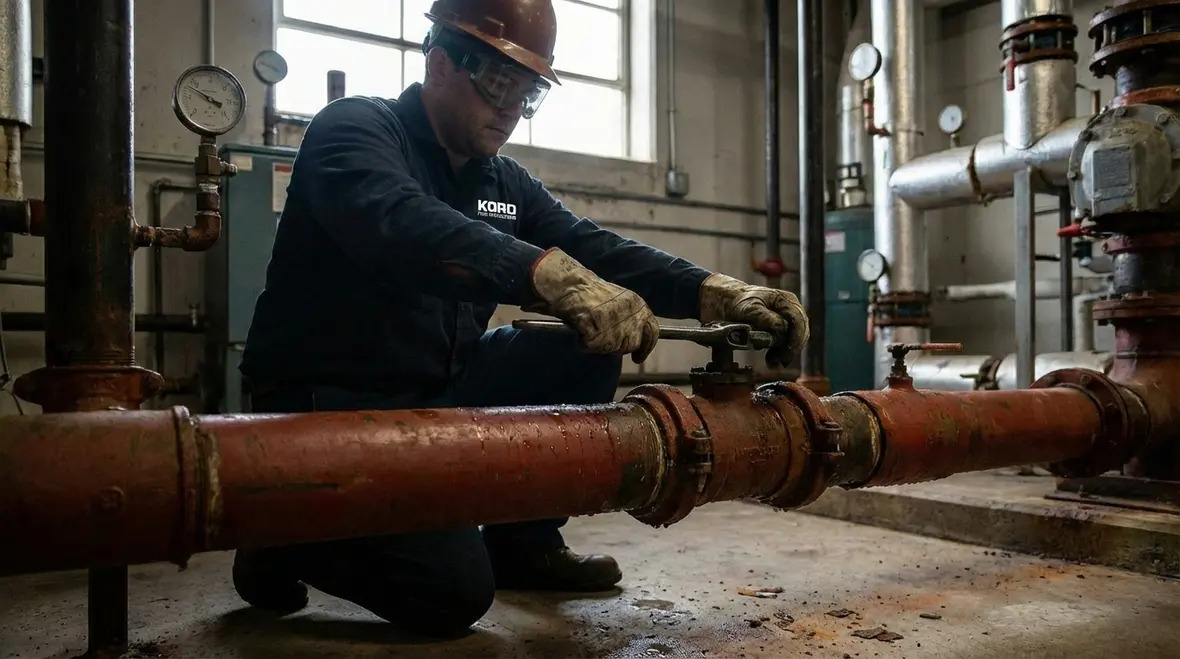
A sprinkler system is only as reliable as the water flowing through it. Over time, debris collects inside pipes. Rust flakes form. Sediment settles. In new installations, leftover construction materials such as pipe scale or small fragments can hide inside the lines. Therefore, flushing ensures nothing blocks or restricts the water flow.
Kord Fire Protection technicians often explain it this way. A sprinkler system is like an artery. If buildup restricts the path, pressure drops. Flow weakens. And in a fire event, weak flow simply will not do.
Additionally, flushing verifies that the water supply can deliver the expected volume and velocity. Fire protection codes require this step after installation, repairs, or modifications. Without it, a system might look complete on paper yet fail under real conditions.
In other words, this is not a ceremonial rinse. It is a performance test wrapped inside a cleaning process.
Essential system flushing also helps restore full pipe diameter, maintain travel time of water, and reduce pressure drops caused by foreign materials, especially in complex or high-rise systems.
When Should a Sprinkler System Be Flushed
Many property owners assume flushing is a one time event. However, several situations call for it:
New system installation
Before a building opens, technicians must flush the piping to remove debris left from cutting and threading.
System modifications
When contractors add or relocate sprinkler heads, contaminants can enter the system.
Underground piping installation
Underground mains require a higher velocity flush to clear rocks, mud, or foreign material.
After repairs
Any time piping opens, flushing protects the integrity of the entire network.
Furthermore, if inspectors notice poor water clarity during routine tests, they may recommend another flush. Think of it as preventative care. No one brags about brushing their teeth, yet everyone appreciates the results. If you’re also seeing discolored or black water, it may be a sign of corrosion or MIC, as explained in Kord Fire’s article on corrosion and black water in fire protection piping.
Step by Step Breakdown from Kord Fire Protection Technicians
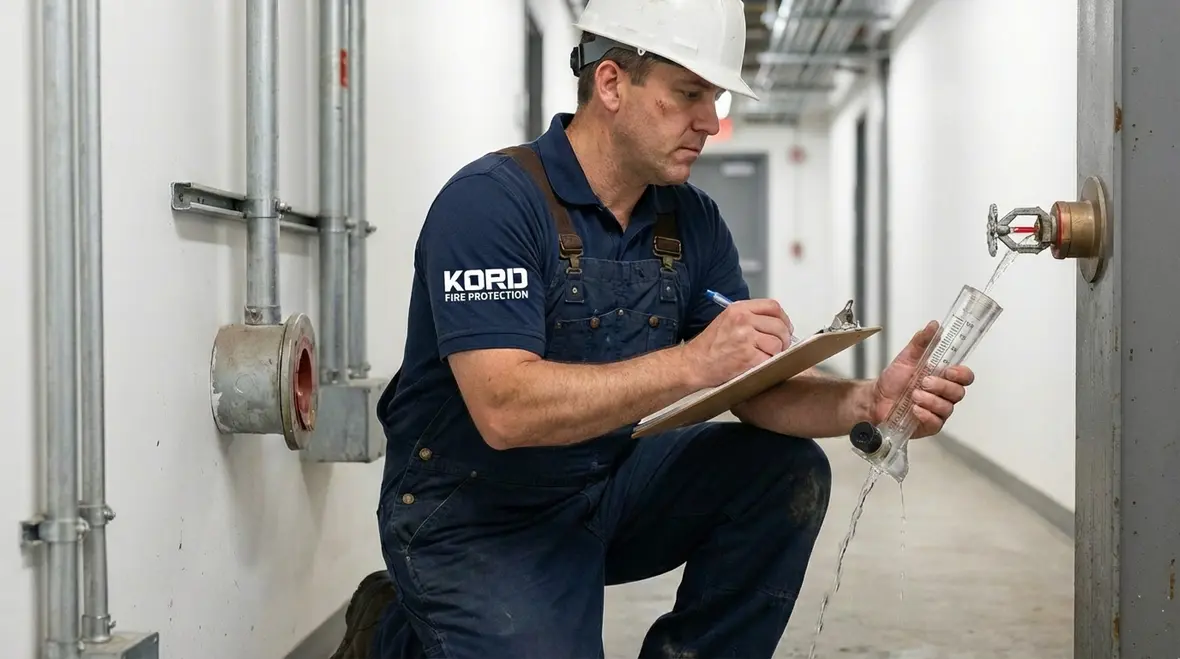
Kord Fire Protection technicians approach each flushing operation with calm precision. They do not rush. They do not guess. Instead, they follow a structured plan that aligns with industry standards.
1. Pre Planning and Safety Review
Before opening a single valve, technicians evaluate the building layout and water supply. They confirm discharge locations so water flows safely away from structures. Moreover, they coordinate with facility managers to avoid surprises. After all, no one enjoys unexpected indoor waterfalls.
2. Isolation of System Sections
Next, they isolate the portion of the sprinkler system scheduled for flushing. This prevents unnecessary water movement in unaffected areas and protects sensitive equipment.
3. Achieving Proper Flow Velocity
This stage defines the success of the operation. Technicians open valves fully to create high velocity water movement. The goal is to push debris out, not politely ask it to leave. Industry standards specify flow rates that must be achieved, especially for underground piping.
4. Visual Inspection of Discharge
As water exits, technicians observe clarity. At first, discharge may appear cloudy or rusty. However, as flushing continues, the water should run clear. This visual confirmation supports the effectiveness of the process.
5. Documentation and Restoration
Finally, they record flow rates, duration, and observations. Once complete, they close valves carefully and restore the system to full operational status. Documentation matters. If it is not written down, inspectors may treat it as if it never happened.
Throughout each step, Kord Fire Protection technicians explain what they are doing and why. Clients often find comfort in that steady guidance. It is like having a pilot narrate the flight, minus the turbulence.
Key Components Involved in the Process
Flushing is not just about opening a valve. Several components work together to ensure accurate results.
Underground mains
These require high velocity flushing because debris tends to collect during installation.
Risers and cross mains
These vertical and horizontal sections distribute water throughout the building.
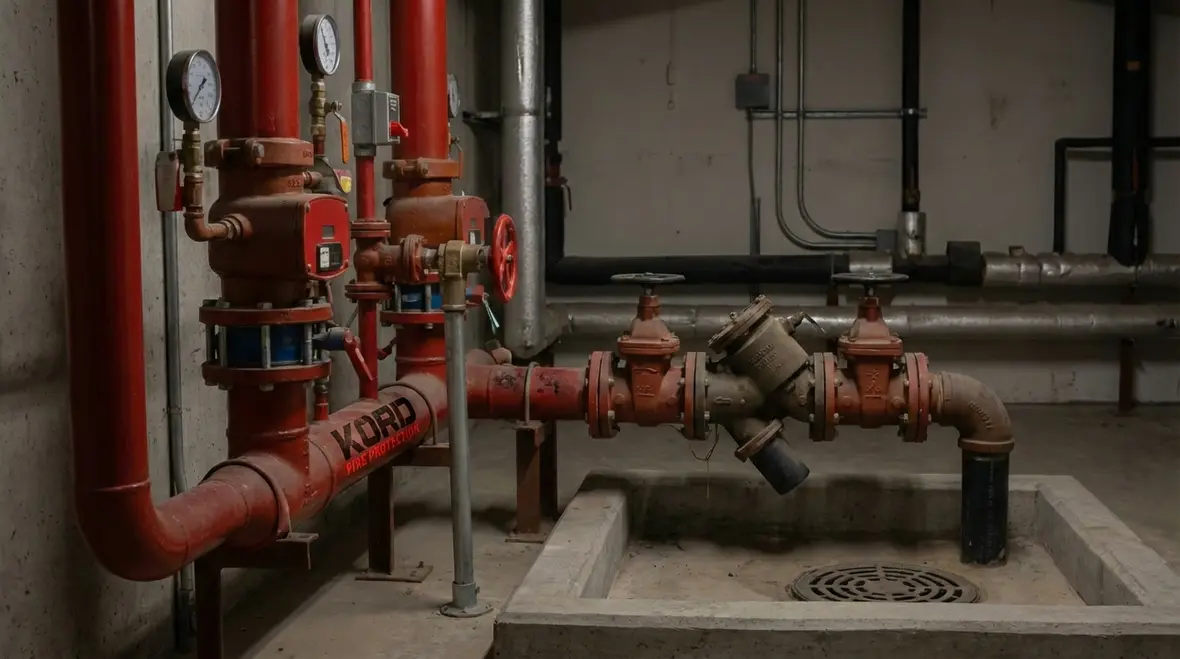
Main drains
These allow technicians to measure pressure and observe flow during discharge.
Backflow preventers
These devices protect municipal water supplies and must function properly during testing.
Each element plays a role in overall performance. Therefore, technicians evaluate the system as a whole rather than treating components as isolated pieces.
Common Mistakes Property Owners Should Avoid
Although flushing sounds straightforward, mistakes can create costly problems.
First, skipping the process after renovations invites hidden debris to remain in the piping. That debris can clog sprinkler heads. Second, failing to document the fire sprinkler system flushing procedure may result in failed inspections. Inspectors want proof, not promises.
Additionally, some assume that clear water at the start means no flushing is needed. However, debris can sit deeper in the system. Only sustained high velocity flow ensures complete cleaning.
Finally, attempting to perform flushing without trained professionals risks property damage. High pressure water demands experience. This is not a garden hose moment. It is closer to opening a hydrant in a controlled way.
What Happens If Flushing Is Ignored
Imagine a sprinkler head activating during a fire. Now imagine rust particles blocking that opening. Water pressure drops. Coverage weakens. Consequently, the fire spreads faster than expected.
Ignoring a proper sprinkler system pipe flushing process can lead to:
- Reduced water flow
Debris restricts movement and lowers system effectiveness. - Clogged sprinkler heads
Foreign material can obstruct discharge patterns. - Corrosion buildup
Sediment accelerates internal pipe damage. - Failed inspections
Non compliance may delay occupancy approvals.
In short, skipping this step saves little and risks much. It is like buying a parachute and never checking the straps. Technically, you own it. Practically, that is not enough.
Quick Reference Guide for Building Owners
Below is a simple dual column overview that Kord Fire Protection technicians often share when explaining expectations.
Situation
New construction completed
Sprinkler heads added or moved
Underground piping installed
Water appears rusty during test
Recommended Action
Perform full system flush before occupancy
Flush affected piping sections
Conduct high velocity underground flush
Schedule evaluation and possible flush
This simple guide keeps owners proactive rather than reactive. For a broader view of red flags, you can also review Kord Fire’s insights on fire sprinkler failure signs and what to do about them.
How Long Does the Process Take and What Should You Expect
The duration depends on system size and water supply capacity. Smaller systems may require only a few hours. Larger commercial properties may need a full day or more. However, technicians always plan efficiently to reduce disruption.
During the fire sprinkler system flushing procedure, occupants may notice strong water discharge outside the building. Noise levels can increase briefly. Yet experienced crews manage the flow carefully to prevent property damage.
Kord Fire Protection technicians often remind clients that temporary inconvenience leads to long term reliability. And reliability, especially in fire protection, carries real value.
Frequently Asked Questions
Conclusion and Next Steps
A properly executed flushing process keeps a sprinkler system ready when it matters most. Kord Fire Protection technicians bring experience, precision, and calm guidance to every project. Therefore, building owners gain confidence, compliance, and peace of mind. If your property recently underwent installation or modifications, now is the time to act. Clean lines mean clear protection, and clear protection saves lives.
To move from theory to action, schedule a professional evaluation with Kord Fire Protection. Their regional fire protection service teams provide inspection, testing, and maintenance for fire sprinkler systems, including flushing. Reach out today to confirm that your system will deliver full, code-compliant performance the moment it is needed.
Know Your Weapon Before You Fight the Flame
Kord Fire Protection is your go-to when it comes to all things fire protection. For over 20 years, we’ve been serving Southern California with the quality service and equipment to keep your home or business safe at all times. Our competitive prices reflect our unwavering commitment to protecting what matters most in the event of a fire emergency. Give us a call, send an email, or use that form!

Join Our Newsletter!
Get the latest fire safety tips delivered straight to your inbox From our Newsletter.