
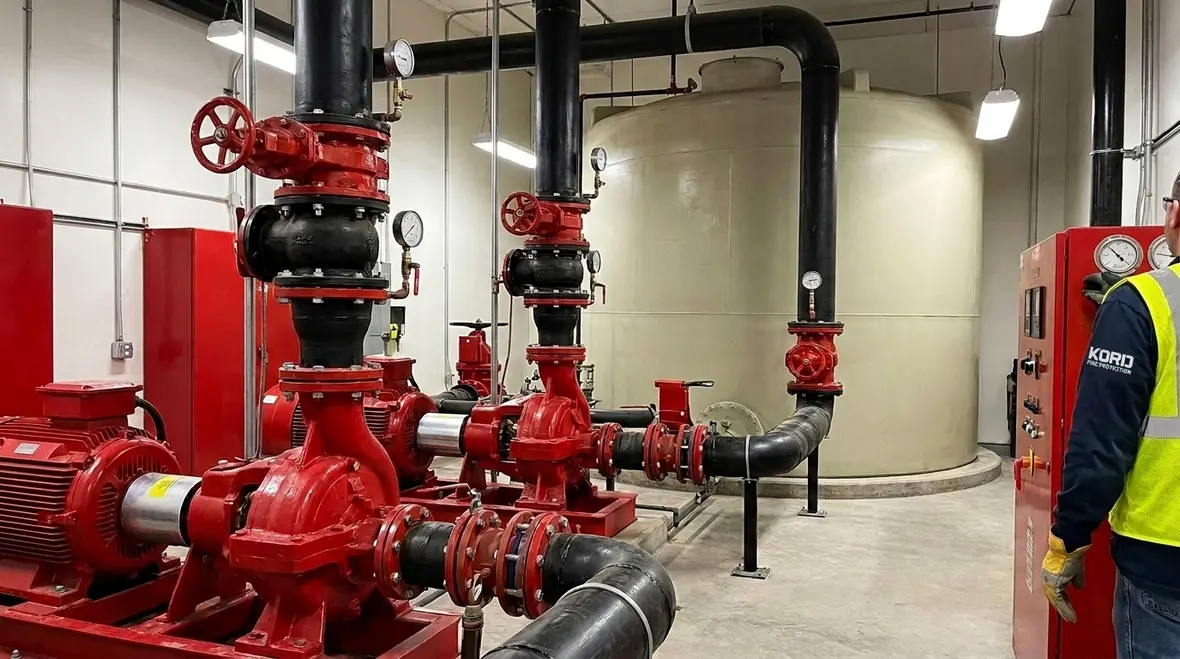
NFPA 13 Section 5.1 — Water Supplies: General Requirements
NFPA 13 Section 5.1 Water Supplies General Requirements
NFPA 13 water supplies general requirements sprinkler outline the minimum sources, storage capacities, and distribution criteria that support automatic sprinkler operation. This article translates Section 5.1 into practical steps for commercial facilities, covering water source integrity, pump sequencing, testing, and ongoing maintenance to sustain reliable fire protection.
If you want a broader code context before getting deep into Section 5.1, this NFPA 13 overview of automatic fire sprinkler system installation is a helpful place to start. And since water supply reliability lives or dies on field verification, commercial fire sprinkler water supply pressure testing and service belongs in the conversation early, not after the pressure gauge starts telling on everybody.
Section 5.1 Fundamentals for Water Supplies
What Section 5.1 Covers
Section 5.1 establishes the overarching expectations for water supply sources, capacity, and reliability that feed automatic sprinkler systems. It emphasizes ensuring that water can reach hydraulically calculated demands without undue pressure loss or interruptions. This foundation informs design decisions in commercial, industrial, and retail facilities.
Core Requirements for Water Sources and Capacity
Key provisions address the type of water sources allowed, the need for redundancy, and the minimum storage volumes or flow rates required to meet system demands. Designers must consider public mains, private wells or reservoirs, and on site storage to provide a dependable supply during peak demand and in temporary supply disruptions.
Hydraulics and Sizing Considerations
- Hydraulically calculated demand governs the required flow rate in gallons per minute and the system pressure at the most remote sprinklers.
- Source capacity must accommodate both ordinary operation and standby conditions, ensuring that variations in use do not compromise protection.
- Storage tanks and elevated towers support surge handling and pump head when mains pressure falls below target levels.
- Redundancy strategies such as secondary pumps or automatic switchover controls reduce the risk of a single point of failure.
- Jockey pumps, fire pumps and their controls must be sized and sequenced to maintain the design pressure without wasting energy or triggering nuisance alarms.
Equipment and System Components
- Water supplies include public mains, private sources, and on site storage that feed the sprinkler system pipeline network.
- Distribution mains, cross mains, and branches must be designed to minimize friction losses and ensure uniform delivery to all zones.
- Control valves, check valves, and backflow preventers protect water quality and ensure proper flow direction.
- Pump assemblies and controllers ensure adequate pressure during peak demand and coordinate with building automation systems for monitoring.
- Monitoring devices, gauges, and remote annunciation support real time visibility of supply status and trigger timely maintenance actions.
Testing, Verification and Documentation
- Acceptance testing verifies that water supplies meet hydraulic demands, reach required pressures, and respond correctly to pump operation and valve changes.
- Flow tests and pressure tests confirm that the system can deliver the intended water volume to all zones under realistic conditions.
- Jockey pump and fire pump run tests validate automatic start and stop sequences, ensuring reliable operation during a fire event.
- Backflow prevention and water quality tests safeguard the integrity of the building water supply and prevent contamination.
- Comprehensive documentation records test results, equipment specifications, inspection dates, and corrective actions for regulatory reviews and future maintenance.
In practice, addressing NFPA 13 water supplies general requirements sprinkler involves coordinating design teams, building operators, and qualified contractors. Kord Fire Protection provides end to end services including design review, testing, and ongoing maintenance to maintain compliance and system readiness.
Because supply integrity also depends on clean flow paths and dependable isolation devices, backflow system services can fit naturally into the maintenance strategy right alongside acceptance testing and routine verification.
Compliance Challenges in Commercial Facilities
- Balancing code requirements with existing utility constraints can complicate source selection and pump sizing in aged buildings or campuses.
- Backflow prevention and water quality concerns require regular inspection and prompt remediation to prevent contamination and code violations.
- Temporary supply disruptions due to construction or municipal projects demand thoughtful contingency planning and approved temporary water supplies.
- Recordkeeping and audit readiness demand disciplined documentation, scheduling, and traceability of all tests and repairs.
- Maintenance budgets and staffing levels influence the ability to perform timely inspections and confirm ongoing system performance.
Commercial, industrial, and retail facilities face these practical challenges daily. A trusted partner like Kord Fire Protection helps facilities align operations with NFPA 13 water supplies general requirements sprinkler expectations through systematic testing, clear documentation, and proactive maintenance plans.
Frequently Asked Questions
Partner with Kord Fire Protection to navigate these requirements, maintain auditable records, and optimize system reliability across your commercial properties.
Conclusion and Call to Action: Ensuring NFPA 13 compliance for water supplies requires expert design, rigorous testing, and disciplined maintenance. Kord Fire Protection offers design reviews, acceptance testing, ongoing maintenance, and reliable emergency readiness for commercial facilities. Contact Kord today to schedule a comprehensive assessment and establish a proactive maintenance program tailored to your building portfolio.

Join Our Newsletter!
Get the latest fire safety tips delivered straight to your inbox From our Newsletter.


