NFPA 13 Section 31.8 – Marine System Acceptance Requirements
Quick Answer: NFPA 13 Section 31.8 establishes how marine fire sprinkler systems must be verified at acceptance. It focuses on hydrostatic or flow testing, alignment with listed components, documentation, and confirmation that system performance matches design intent. These steps reduce commissioning risk on commercial vessels and marine facilities.
For teams planning inspection readiness and approval workflows, fire suppression systems and fire marshal oversight AHJ expectations offers helpful context on how documentation, testing, and field verification come together before acceptance day.
What NFPA 13 marine system acceptance requirements actually test
NFPA 13 marine system acceptance requirements are not just paperwork checks. They are built to confirm that the installed marine sprinkler system will perform under real operating conditions: correct pressures, correct coverage and hazard protection, functional alarm and control interfaces, and properly assembled piping and fittings. In practice, acceptance testing must demonstrate that the system matches the approved design, the applicable installation standards, and the equipment listing requirements.
For commercial owners, industrial operators, and retail marine-adjacent facilities with vessel loading, repair, or storage operations, the main compliance challenge is consistency. Even minor deviations in pipe routing, valve trim, or end device configuration can create measurable acceptance failures during commissioning or subsequence inspection cycles. Commercial fire protection contractors that manage documentation, testing, and maintenance planning from day one reduce these risks.
For a broader installation foundation that supports Section 31.8 acceptance work, see this overview: NFPA 13 overview for automatic fire sprinkler system installation.
How acceptance testing is sequenced in Section 31.8
Marine systems typically face space constraints, corrosion risk, vibration exposure, and challenging routing. NFPA 13 Section 31.8 acceptance requirements account for that by driving a logical verification sequence. Acceptance typically proceeds through the following checkpoints:
- Pre acceptance system verification: Confirm approved drawings, labeled components, correct materials, and correct hazard classification by protected area.
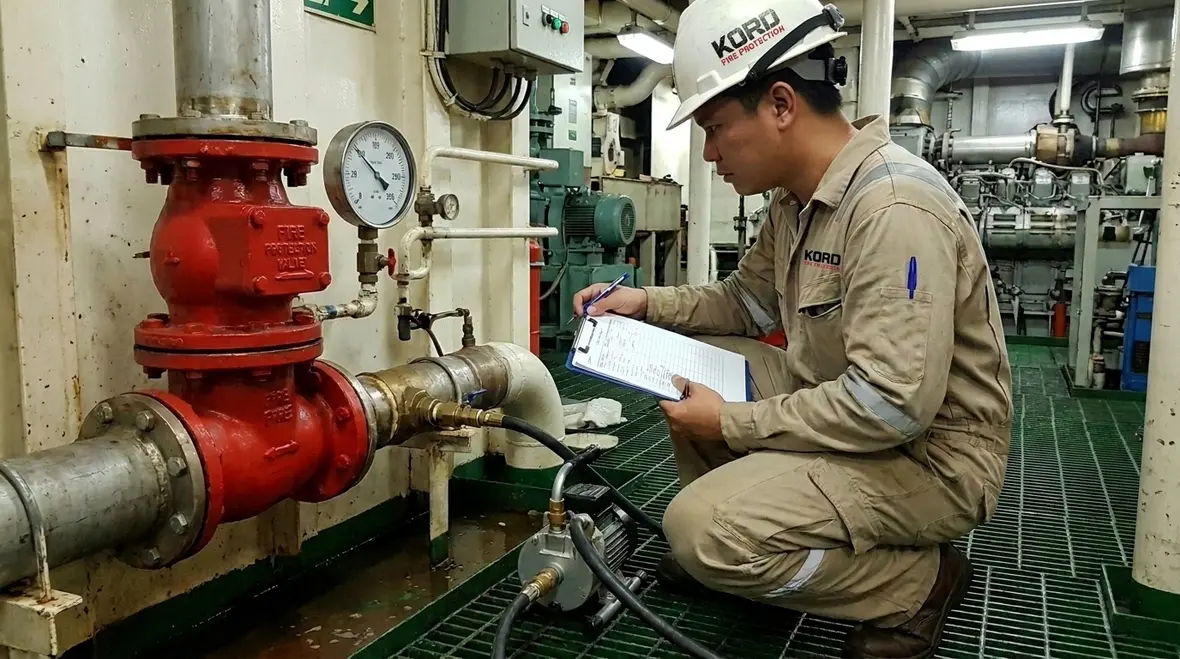
- Pressure integrity checks: Perform hydrostatic testing and verify that joints, hangers, supports, and threaded or welded connections meet required criteria without unacceptable leakage.
- Control and alarm interface validation: Confirm that monitor, supervisory, and alarm functions connected to marine-specific control systems operate as intended.
- Flow and performance demonstration: Validate system performance through water delivery verification and inspection of key operational points.
- Final acceptance documentation: Provide test results, as built records, and evidence of compliance suitable for the vessel or marine facility authority having jurisdiction and internal audits.
This sequencing matters because failures discovered late often require rework that affects system hydraulics, labeling, and installed condition. Early alignment between design intent and the shop drawing package prevents re inspection cycles.
Pressure, flow, and performance verification details
Acceptance for marine sprinkler systems commonly hinges on three operational realities: the system must hold pressure without leakage, the system must deliver water at required pressures and flows, and the system must operate reliably when actuated.
1) Hydrostatic and integrity verification
Pressure integrity checks confirm that the installed pipe network can sustain required test pressures without unacceptable leakage or failure of fittings and joints. Common failure points include:
- Misassembled threaded joints or incorrect thread sealant use.
- Improper welding practices in salt air environments or on dissimilar metals.
- Loose or improperly sealed drains and test connections.
- Support issues that introduce stress at elbows and branch connections.
Marine environments accelerate corrosion risk, so acceptance documentation should align with corrosion mitigation decisions used during design. Contractors supporting NFPA 13 marine system acceptance requirements should ensure that test points remain accessible and that any temporary test plugs or caps are removed and verified for correct final trim configuration.
2) Flow delivery and sectional performance
Marine sprinkler systems frequently use sectionalized approaches to manage pump sizing, water supply capacity, and compartment protection. During acceptance, the system must demonstrate that flow delivery matches hydraulic calculations under acceptance conditions. System performance verification typically requires careful attention to:
- Valve positions and valve trim installation accuracy.
- Backflow prevention and check valve operation consistent with design.
- Correct pump start and stop logic under simulated demand.
- Correct arrangement of controllers, sensors, and marine signaling pathways.
When Section 31.8 acceptance testing identifies a deviation in performance, the corrective action often affects more than one subsystem. A single valve misconfiguration can change effective flow path and cause cascading acceptance failures. A disciplined commissioning checklist and controlled documentation process reduce this risk.
Equipment, listings, and component compliance
Acceptance under NFPA 13 marine system acceptance requirements depends on installed components that align with listing and design intent. Marine systems can include special materials and additional requirements related to corrosion, vibration, and harsh environmental exposure. During acceptance, inspectors and authorities typically look for:
- Correct sprinkler types and finishes: The correct temperature rating, orientation, and environmental suitability based on design documents.
- Correct pipe schedule and material selection: No substitution of pipe types or fittings that alters hydraulic behavior or durability.
- Correct gauges and test headers: Proper installation, calibration readiness, and correct locations for verification.
- Correct valves and trim: End devices, supervisory switches, and alarm connections must function as installed.
Because marine projects frequently involve multi trade coordination, field swaps are common. Acceptance failures frequently occur when a substitution does not match the approved submittal, even if the substitute appears functionally similar. A contract deliverable that ties acceptance testing results to approved submittals improves audit defensibility.
Commercial fire protection partners also manage the installation and commissioning lifecycle. Kord Fire Protection supports NFPA 13 compliance workflows and provides practical field guidance for testing and maintenance planning. For additional context on broader system installation practices, see: Kord Fire Protection NFPA 13 system installation overview.
Common acceptance challenges in marine and commercial settings
Marine environments intensify risk factors that already exist in conventional sprinkler systems. The most frequent acceptance challenges fall into predictable categories that commercial owners and facility managers can plan for.
Documentation gaps and as built mismatches
Acceptance testing requires that what gets tested matches what gets submitted and approved. Common issues include incomplete as built drawings, missing device serial number records, and unverified set points or controller configurations. These problems often force re testing because authorities cannot confirm compliance without a reliable traceability trail.
Valve, alarm, and control interface faults
Marine sprinkler systems rely on correct monitoring and signaling pathways. Failures often include wrong wiring at supervisory switches, incorrect controller programming, or missing continuity verification of circuits connected to marine alarm systems.
Corrosion protection and environmental suitability
Even when the sprinkler system hydraulics are correct, acceptance can fail if material selection or protective measures do not meet the intended marine environment profile. Corrosion related degradation can also affect pressure stability in long standby periods.
Operational readiness after installation
Marine systems are frequently installed while adjacent construction continues. Debris, test residue, and partially closed valves can remain unnoticed until acceptance. A structured pre acceptance flushing and inspection plan prevents system performance surprises.
For commercial and industrial teams that want a practical partner approach, Kord Fire Protection coordinates commissioning support and ongoing compliance documentation. Where pump configuration or water supply testing intersects with system acceptance, additional design and testing perspectives can be supported by resources like NFPA 20 fire pump acceptance testing guide.
Maintenance planning that protects acceptance and long term compliance
Acceptance is a milestone, not an endpoint. Marine sprinkler systems must remain in serviceable condition so that future inspections and operational tests do not repeat the same failure patterns. Commercial facility standards typically require a maintenance plan that addresses:
- Seasonal or operational verification: Confirm that valves, gauges, and controllers perform correctly after maintenance outages.
- Record retention: Store acceptance test results, as built records, and controller configurations in a form that is quickly accessible.
- Corrosion and coating inspection: Verify protective measures and address early signs of corrosion before they compromise integrity.
- Hydraulic performance readiness: Ensure that planned maintenance does not introduce flow restrictions through debris or component wear.
Many commercial owners also value the operational support model. Kord Fire Protection continues to support compliance efforts after installation through inspection readiness and ongoing maintenance alignment. For organization level support resources, visit kordelectric.com and regional service context at kordfire.com.au.
Frequently Asked Questions
Next step
To protect schedule, budget, and acceptance outcomes, commercial owners should plan acceptance testing early and keep documentation traceable from submittals to as built records. Kord Fire Protection can help coordinate commissioning readiness, support NFPA 13 marine system acceptance requirements with practical field verification, and build a maintenance plan that sustains compliance after handover. Contact Kord Fire Protection to review your marine sprinkler scope and acceptance checklist.

Join Our Newsletter!
Get the latest fire safety tips delivered straight to your inbox From our Newsletter.