
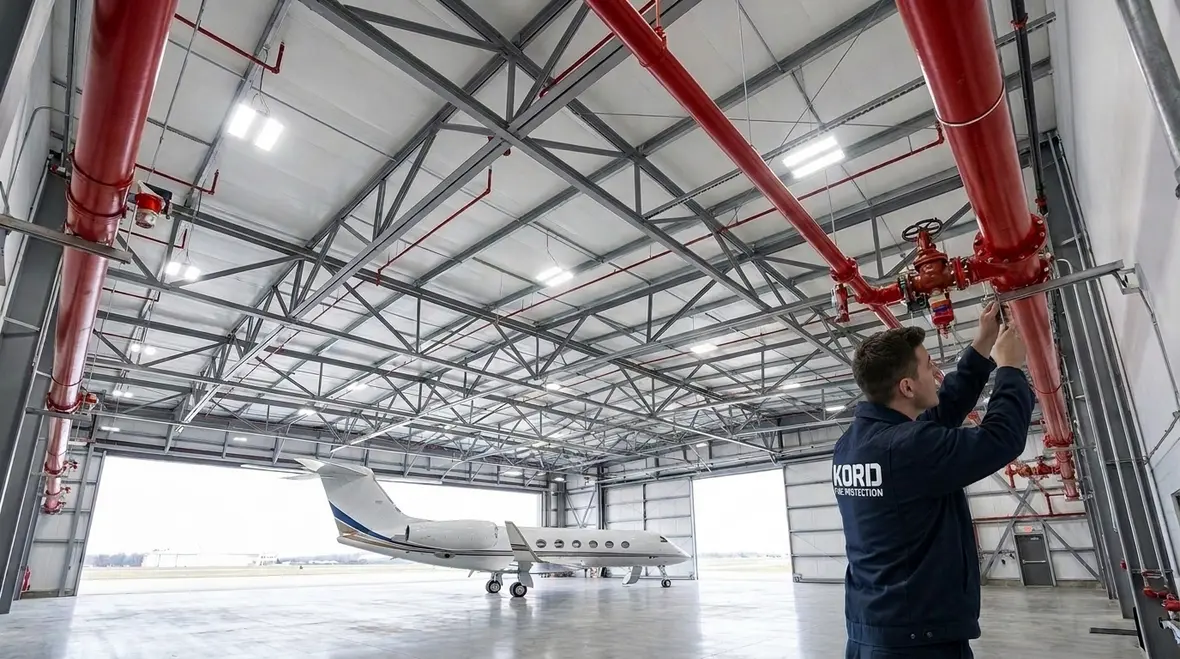
NFPA 13 Section 27.30 — Aircraft Hangars: Sprinkler System Design
NFPA 13 Section 27.30 Aircraft Hangars: Sprinkler System Design
This article analyzes NFPA 13 Section 27.30 for Aircraft Hangars and explains how the sprinkler system design addresses large open spaces, overhead equipment, and restrictive airflow. It covers design criteria, detection, water supply, and maintenance implications for NFPA 13 aircraft hangars sprinkler system design.
1. Understanding the Core Requirements of NFPA 13 Section 27.30
NFPA 13 Section 27.30 provides the framework for sprinkler protection in aircraft hangars, a unique occupancy with expansive bays, aircraft operations, and integrated mechanical systems. The section defines hazard classification, spacing, and sprinkler type selections suitable for aircraft hangars while emphasizing rapid fire control and minimizing collateral water damage. Designers must harmonize open space protection with equipment movement, fueling operations, and vehicle access.
For a broader code foundation, Kord’s NFPA 13 overview of automatic fire sprinkler system installation is a useful companion read before getting into the hangar-specific details.
- Hazard evaluation and design density are tailored to large, open volumes common in hangars.
- Ceiling height, obstructions, and crane or mezzanine systems influence sprinkler placement and coverage.
- Sprinkler types and spray patterns are selected to balance effective protection with minimizing water damage to aircraft and assets.
- Coordination with detection systems and alarms ensures timely notification and rapid response.
- Water supply and hydraulic considerations align with the expected demand of hangar occupancies.
2. Key Design Considerations for Aircraft Hangars
Aircraft hangar design under NFPA 13 aircraft hangars sprinkler system design demands careful alignment of performance with operational realities. The aim is to achieve prompt fire control while preserving aircraft integrity and minimizing downtime for ongoing operations. Practical considerations include:
- Creating coverage for large unobstructed bays while accommodating overhead doors and gantry cranes.
- Addressing fueling or maintenance areas where ignition risks are higher and water damage must be mitigated.
- Evaluating airflow patterns and spray trajectory to prevent wind-driven sprinkler discharge from impeding operations.
- Planning for equipment access, maintenance corridors, and clearances around valves and alarms.
- Integrating with existing or planned detection, alarm, and building management systems to streamline response.
Design teams should document alignment with local AHJ expectations and ensure that all aspects of NFPA 13 aircraft hangars sprinkler system design are thoroughly reviewed during plan approval cycles. Emphasis on practical compliance helps avoid costly redesigns and operational disruptions after occupancy.
When facilities need project support beyond paper compliance, Kord’s fire sprinkler services and repair team can help connect design intent with installation, testing, and long-term system performance.
3. Detection, Water Supply and Piping Arrangements
Sprinkler system design for aircraft hangars hinges on reliable detection, robust water supply, and well organized piping. NFPA 13 aircraft hangars sprinkler system design requires a coordinated approach that supports rapid ignition control and minimizes water exposure to sensitive equipment. Key elements include:
- Automatic detection integrated with alarm signaling to the centralized fire command panel and local responders.
- Dedicated or prioritized water supply arrangements capable of delivering the required flow to multiple sprinklers simultaneously.
- Pipe network layouts that optimize hydraulic efficiency, including looped mains where feasible to improve resilience against supply disruptions.
- Appropriate sprinkler types and placement to suit open volumes and potential obstructions from aircraft and handling equipment.
- Protection of critical areas such as fueling stations, maintenance bays, and electrical rooms through targeted coverage or dedicated zoning.
Water supply design often involves coordination with on-site pumps, storage, and testing protocols. Documentation under NFPA 13 aircraft hangars sprinkler system design should include hydraulic calculations, verification of valve positions, and accessibility for routine maintenance.
Why coordination matters in hangar environments
Aircraft hangars do not forgive sloppy coordination. Large clear spans, sensitive assets, rolling equipment, and operational airflow can turn a decent design into a frustrating field condition if the team does not account for how the building actually functions day to day.
4. Inspection Testing and Maintenance Protocols
Maintenance is essential to sustain the reliability of NFPA 13 aircraft hangars sprinkler system design. Routine inspection and testing reduce the risk of undetected degradation and ensure readiness when a fire event occurs. Critical practices include:
- Adhering to NFPA 25 guidelines for ongoing inspection, testing, and maintenance of sprinkler systems in hangar environments.
- Regular visual checks of sprinkler heads, alarms, and control valves to identify corrosion, leakage, or misalignment.
- Scheduled hydraulic and flow tests to confirm system performance under typical and peak demand conditions.
- Periodic verification of the water supply, pumps, and standby power sources to ensure readiness during power disruption.
- Coordinated maintenance with facility management to minimize downtime and protect aircraft and equipment during service windows.
Given the high-value nature of aircraft assets, a structured maintenance program is essential. Documentation should be retained for regulatory audits and facility inspections to demonstrate ongoing compliance with NFPA 13 aircraft hangars sprinkler system design.
If you’re tightening up documentation and recurring service schedules, Kord’s ITM fire protection inspection, testing, and maintenance guide gives additional context on what a disciplined program should cover.
5. Compliance Challenges in Commercial Facilities
Commercial, industrial, and retail facilities face specific challenges when implementing NFPA 13 aircraft hangars sprinkler system design. Common barriers include coordinating with multiple stakeholders, aligning with local amendments, and maintaining access for inspection teams. Practical considerations to address are:
- Ensuring that hangar modifications or expansions do not compromise listed sprinkler layouts or water supply capacity.
- Managing integration with existing fire alarm, security, and building management systems without sacrificing reliability.
- Scheduling maintenance during aircraft turnover or facility operations to minimize downtime and impact on customers.
- Maintaining clear access to valves, pumps, and control panels for routine testing and emergency response.
- Documenting hydraulic calculations, design decisions, and equipment specifications to satisfy AHJ review and ongoing audits.
Partnering with a capable service provider helps ensure continuous compliance with NFPA 13 aircraft hangars sprinkler system design, while aligning with the safety standards and service expectations of commercial facilities across aviation, manufacturing, and retail sectors.
6. Why Kord Fire Protection Is Your Partner for Ongoing Compliance
Kord Fire Protection brings specialized expertise in designing, installing, testing, and maintaining sprinkler systems for aircraft hangars and other high value facilities. Their approach emphasizes proactive maintenance, thorough documentation, and clear communication with facility managers and AHJs. Services typically include:
- Custom hydraulic analysis and system design aligned with NFPA 13 aircraft hangars sprinkler system design requirements.
- Comprehensive inspection and testing programs that meet NFPA 25 standards and local regulatory expectations.
- Emergency response and routine servicing to minimize downtime and maximize system availability.
- Ongoing training for facility staff on alarms, valves, and operational procedures to support rapid, effective responses.
- Maintainable documentation and digital records to support compliance audits and future renovations.
Choosing a specialist partner helps commercial, industrial, and retail facilities achieve reliable fire protection for aircraft hangars while navigating evolving codes and persistent maintenance demands.
Frequently Asked Questions
Conclusion and Call to Action
Protecting aircraft assets requires more than a one time installation. An ongoing, well documented program grounded in NFPA 13 aircraft hangars sprinkler system design ensures reliable protection, minimizes downtime, and streamlines compliance. To optimize your hangar fire protection strategy, contact Kord Fire Protection for a confidential assessment, hydraulic calculations, installation guidance, and a proactive maintenance plan that aligns with your facility’s operations and budget. Schedule a consultation today to secure compliant, dependable coverage for your hangar assets.

Join Our Newsletter!
Get the latest fire safety tips delivered straight to your inbox From our Newsletter.


