
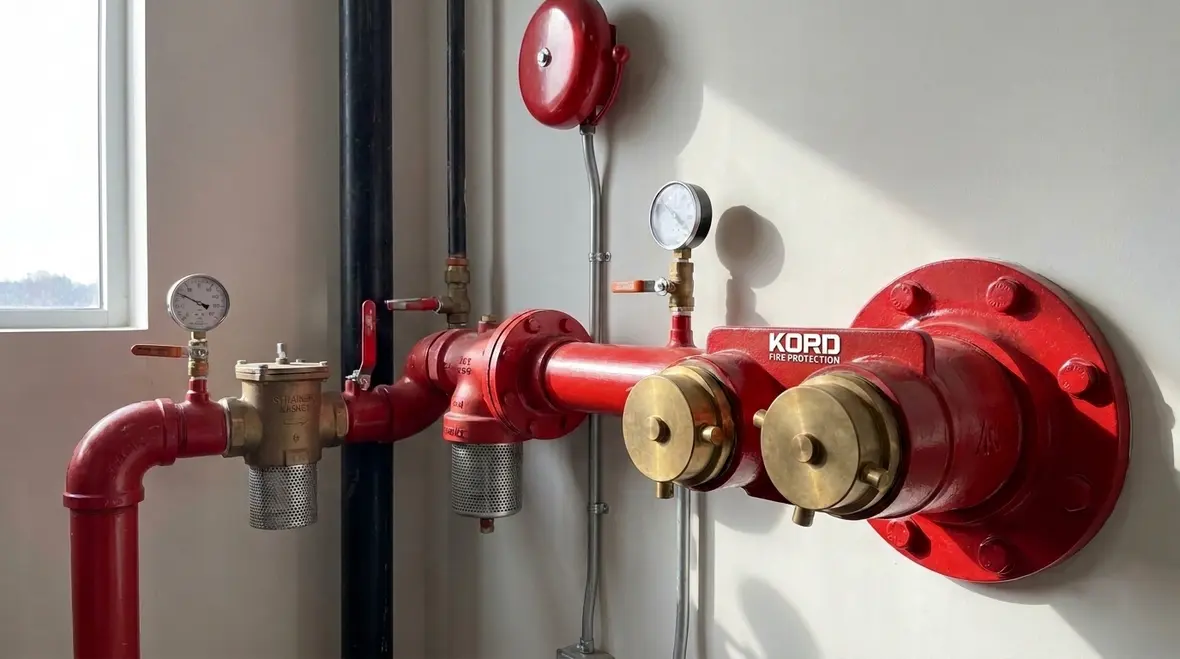
NFPA 15 Section 6.4 Alarms, Gauges, FDCs, and Strainers: Installation Checklist
Quick Answer: NFPA 15 Section 6.4 requires properly installed notification and control hardware, including alarms and gauge connections, fire department connections, and strainers. A compliant installation depends on correct location, identification, flow path alignment, wiring and setpoint verification, and documented testing with ongoing maintenance.
For broader context on water based fixed system design and performance, see this NFPA 15 water spray fixed systems guide.
What NFPA 15 6.4 system attachment requirements focus on?
NFPA 15 6.4 system attachments 90 second alarm gauges strainers cover several field-critical components that ensure a water based fixed system operates as intended, communicates status clearly, and protects pumps and valves from debris. Facilities often pass initial commissioning but fail later due to incomplete hardware identification, incorrect orientation, or strainers left in serviceable but noncompliant conditions.
Installation checklist overview for alarms, gauges, and FDCs
Successful compliance starts with a disciplined walkthrough that confirms each Section 6.4 element is installed per the system design intent and in a condition that supports future inspection and testing. The checklist below organizes common commercial installation tasks into verifiable actions that reduce recurring service calls.
1) Confirm alarm and control interface points
- Correct device selection: Verify the alarm initiating device and notification appliance arrangement matches the approved design for the system and water supply configuration.
- Defined alarm action: Confirm the system will initiate the correct alarm sequence, including any time related performance expectations connected to the hazard signaling strategy.
- Reliable supervision: Ensure alarm circuits are supervised where required by the design and the facility acceptance criteria, including correct wiring terminations and polarity.
- Accessible mounting and labeling: Install alarm and control devices where they remain accessible for testing without dismantling building components. Apply durable labeling that matches as built documentation.
2) Verify gauge installation for reading accuracy and service
- Gauge location and visibility: Mount gauges so that operating and maintenance staff can read them without obstruction. Confirm that typical commercial maintenance access routes do not block gauges.
- Correct connections: Install gauge connections at the specified points in the water flow path, ensuring fittings and adapters match the system piping and gauge rating.
- Mechanical integrity: Confirm fittings are properly sealed, aligned, and secured to prevent vibration looseness that can lead to intermittent pressure readings.
- Protection from damage: Prevent gauge damage from drips, condensation, and mechanical impacts by selecting appropriate mounting orientation and protective accessories where needed.
3) Confirm fire department connection readiness
- Correct location and identification: Place the FDC where responding personnel can access it quickly. Ensure the FDC is clearly identified and does not conflict with site circulation patterns.
- Proper piping layout: Verify FDC piping routing avoids unnecessary elbows, kinks, or obstructions that can affect flow delivery.
- Valve and check arrangement: Confirm the FDC valves, check valves, and any required backflow prevention elements are installed and oriented correctly to support intended operation.
- Thread seal and joint integrity: Ensure all joints and seals are appropriate for fire protection service and are installed without leaks.
Strainers and system attachments: the installation details that prevent pump failures
Strainers protect system components by trapping debris that can block sprinkler or water supply components, create abnormal pressure loss, and contribute to premature failures. In many commercial and industrial facilities, strainer noncompliance occurs indirectly through installation shortcuts such as incorrect orientation, incomplete blow down capability, or lack of service clearance.
4) Strainer installation checklist
- Correct strainer type and size: Verify the strainer matches the hazard design and flow requirements, including mesh or screen characteristics intended by the design.
- Proper orientation: Install strainers so flow direction aligns with the strainer marking and internal screen orientation. Incorrect orientation can reduce capture effectiveness and increase bypassed debris.
- Service clearance: Provide working space for removal, cleaning, and reinstallation. Retail and warehouse retrofits often violate clearance limits, causing strainers to be “hard to service,” which becomes a long term risk.
- Secure seating and gasket condition: Verify gaskets and seating surfaces are intact and compatible with the system fluid. Poor gasket installation can cause slow leaks that staff may ignore until maintenance becomes urgent.
- Blow down or drain provisions: Confirm strainers include the required capability to flush debris without contaminating adjacent areas or creating an environmental hazard.
5) Validate 90 second alarm gauge strainers operational linkage
Facilities that reference NFPA 15 6.4 system attachments 90 second alarm gauges strainers typically need confirmation that alarm logic, gauge monitoring, and strainer protected flow remain consistent through start up and testing. The installation should support verification during commissioning and during later impairment investigations.
- Commissioning test pathway: Ensure commissioning tests can be performed without reworking piping, wiring, or access clearances.
- Gauge response credibility: Confirm gauge readings respond predictably when flow changes occur and that no air trapping conditions falsely distort readings.
- Strainer pressure loss expectations: Document baseline pressure loss after commissioning. Later inspections can then distinguish normal accumulation from abnormal strainer obstruction.
Wiring, supervision, and identification requirements that inspectors verify
Commercial fire protection inspections often focus less on “installed” status and more on whether components support reliable testing, clear identification, and consistent readings. Installations should be built to survive real world tenant work, maintenance scheduling, and seasonal humidity changes.
6) Alarm wiring discipline
- Clean terminations: Verify terminations are secure, labeled, and protected from moisture ingress where enclosures or conduit runs cross wet areas.
- Separation from non fire circuits: Maintain routing practices that prevent interference and minimize the likelihood of nuisance activation or supervisory trouble conditions.
- As built wiring documentation: Update documentation immediately after installation to reflect any field changes. This reduces the risk of testing the wrong circuit or misreporting alarm performance.
7) Device labeling that holds up in active facilities
- Durable legibility: Use labels that resist fading in warehouses, kitchens, industrial areas, and outdoor service yards.
- Match the system narrative: Labels should align with the narrative in the approved plans and the equipment schedule, not just the contractor’s internal identifier.
- Access route compatibility: Ensure labels and hardware do not violate access clearance expectations used by maintenance staff.
Common installation failure points in commercial, industrial, and retail buildings
Even when contractors follow good workmanship standards, the following issues frequently cause repeat service visits, delayed acceptance, or findings that require rework. These are also the items most likely to show up during Authority Having Jurisdiction review, occupancy change inspections, or routine maintenance audits.
- Strainer orientation mistakes: Incorrect flow direction leads to lower debris capture and higher pressure losses over time.
- Blocked gauge access: Gauges installed behind piping supports, insulation, or storage restrict visibility and safe readings.
- Incomplete documentation: Inconsistent point naming for alarms and gauges causes confusion during testing and can lead to incomplete test records.
- FDC site conflicts: FDCs installed where landscaping, vehicle barriers, or construction staging blocks access.
- Leakage at connections: Minor joint leaks near gauges and strainers can create slippery hazards and corrosion conditions that degrade long term performance.
Maintenance and retesting: keeping NFPA 15 6.4 attachments compliant after installation
NFPA 15 compliance does not end at turnover. The practical goal is to keep alarms credible, gauges readable, FDCs accessible, and strainers clean enough to prevent system degradation. A commercial facility benefit comes from pairing installation verification with a maintenance plan that reflects how the building actually operates.
Maintenance practices that align with real service schedules
- Baseline test documentation: Record initial gauge readings and alarm behavior during commissioning so later inspections can identify drift.
- Strainer cleaning cadence: Increase cleaning frequency when the facility has dust loading, construction activity, or known debris sources.
- Periodic functional testing: Confirm alarms initiate as intended and that gauge indications support reliable monitoring.
- Seasonal verification of FDC accessibility: Inspect that outdoor obstructions, signage condition, and site access routes remain clear.
For additional guidance on enhancing water based fixed system performance and ongoing risk reduction, see: NFPA 15 enhancing fire safety with water spray fixed systems.
Where pump and water supply operational performance intersects with fire protection testing and maintenance resources, fire pump education can also support better field decisions. Reference: NFPA 20 fire pump acceptance testing guide.
FAQ: NFPA 15 Section 6.4 alarms, gauges, FDCs, and strainers
CTA: Kord Fire Protection helps commercial owners and maintenance teams prevent costly rework by supporting plan aligned installation reviews, commissioning assistance, and ongoing compliance testing. Engage Kord Fire Protection early for a Section 6.4 installation checklist walkthrough, documented verification, and a maintenance plan built for real occupancy conditions. This approach reduces inspection findings and supports dependable performance throughout the system life cycle.

Join Our Newsletter!
Get the latest fire safety tips delivered straight to your inbox From our Newsletter.



