NFPA 13 Section 27.27 — Marine Terminals, Piers, and Wharves Sprinkler Design
Quick Answer: NFPA 13 marine terminals piers wharves sprinkler design governs sprinkler system requirements for waterfront facilities, addressing corrosion resistant materials, environmental exposure, water supply and hydraulics, detection and alarm integration, and coordination with terminal operations to ensure reliable protection and ongoing maintenance.
For a related look at fire suppression for port and terminal equipment, Kord Fire Protection has a practical breakdown of how terminal hazards, equipment movement, and operational realities shape protection strategy.
Overview of Scope and Practical Implications
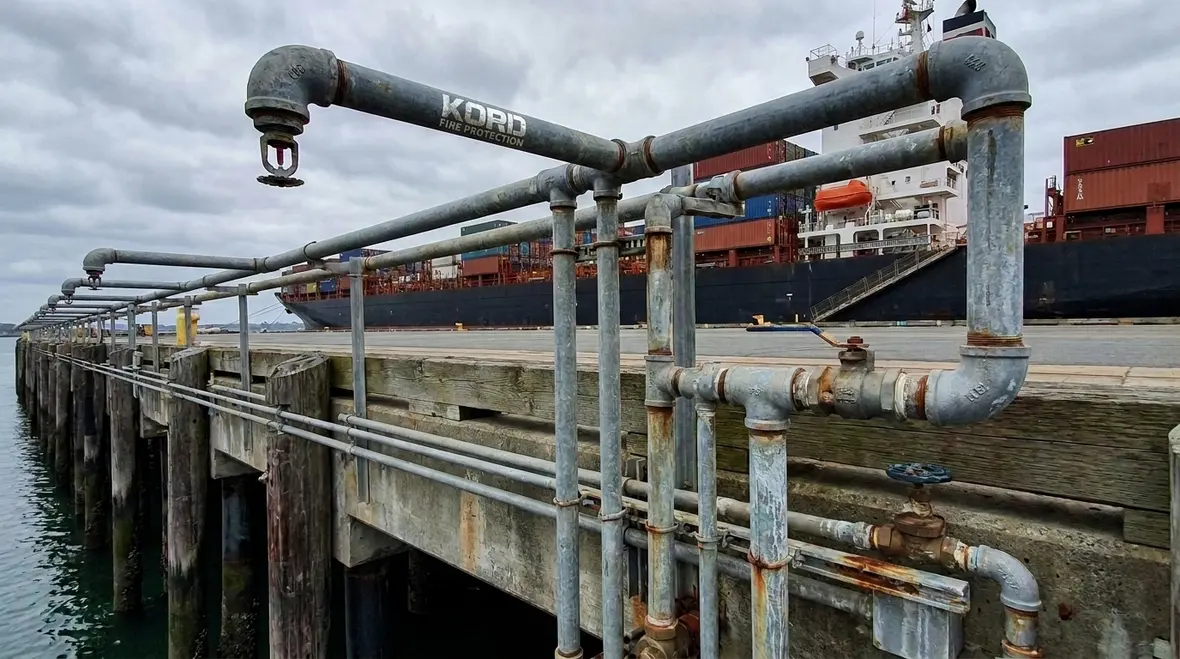
The 27.27 section of NFPA 13 tackles sprinkler design for marine environments including terminals, piers and wharves. It recognizes unique exposure conditions such as salt air, high humidity, deck movement and adverse weather. The standard emphasizes robust materials, corrosion resistance, outdoor endurance, and careful interface with docking operations and ship loading activities. For commercial facilities, this means prioritizing reliability, maintainability and life safety while minimizing nuisance activations from sea spray and humidity.
If you want a broader refresher on the standard itself, Kord Fire Protection also covers NFPA 13 automatic fire sprinkler system installation requirements in a separate overview that fits naturally with this waterfront focused section.
Marine Environment Specific Design Requirements
Facilities located at docks or waterfronts must tailor sprinkler design to withstand salt corrosion, wind-driven rain and deck movement. Key considerations include:
- Corrosion resistant piping and fittings appropriate for salt air exposure, typically galvanizable or stainless components as permitted by NFPA 13.
- Protection of control valves and electrical components from moisture and salt damage.
- Outdoor and aerial portions of the system designed to prevent debonding or coating failure due to freeze and thaw cycles.
- Strategic placement of sprinkler heads to accommodate cargo handling zones, bulk liquids, and vehicle traffic without impeding operations.
Why Exposure Conditions Change the Design Conversation
Marine work sites are not exactly known for being gentle on hardware. Salt, moisture, vibration, and open weather exposure can turn an ordinary design into a maintenance headache if the material choices are too optimistic. That is why this section pushes teams to think past initial installation and into how the system will still behave after months and years of hard waterfront service.
Hydraulic Design and Water Supply for Piers and Wharves
Hydraulic calculations for marine facilities must account for long feed runs, remote hydrants, and possible interruptions in supply. Practical steps include:
- Verifying water supply are adequate for the most hydraulically remote sprinkler and ensuring residual pressure meets NFPA requirements during design basis scenarios.
- Coordinating with port authorities to assess available water sources, including dedicated fire protection mains and standpipes where applicable.
- Utilizing hydraulic calculations that reflect elevated static pressures from vessels or open water environments and incorporating backflow prevention as required.
Remote Areas Can Expose Weak Water Planning Fast
On marine sites, distance is not just a line on a drawing. Long pipe runs and remote terminal areas can magnify pressure loss issues and make a supposedly solid design feel a little too adventurous. If the water supply plan is undercooked, the most remote area is usually where the truth shows up first.
Systems Types and Materials Suited for Salt Air and Corrosion
Selection of system type and materials is crucial for durability in marine settings. Considerations include:
- Wet pipe versus dry pipe configurations depending on climate, with corrosion resistant coatings or sequestered systems in exposed areas.
- Head and sprinkler body materials chosen for corrosion resistance and ease of maintenance in salty atmospheres.
- Use of exterior rated alarm and detection devices designed to tolerate humidity and salt exposure without frequent recalibration.
- Integrated backup power and redundant pumps to ensure fire protection even during dockside power interruptions.
Material Selection Is Where Durability Either Wins or Quits
A marine terminal can be brutally honest about material mistakes. If components are not suited for salt air and constant exposure, corrosion will start writing its opinion all over the system. Choosing the right pipe, fittings, sprinklers, and rated devices up front is a lot cheaper than discovering later that the ocean has opinions and zero chill.
Protection of Piers and Wharves: Access, Deluge and Drainage Considerations
Marine terminals impose distinct operational demands. Design must ensure:
- Accessible valving and control points that allow quick isolation after a discharge while not compromising protection during routine operations.
- Appropriate use of deluge or open sprinklers where fast response to large areas is required, while minimizing flooding risk to cargo handling equipment.
- Drainage provisions that prevent standing water accumulation around scaffolding, loading arms and fetes, reducing corrosion and tripping hazards.
- Coordination with dock design to ensure sprinkler heads do not interfere with crane booms, gangways, or vessel taxi paths.
Protection Has to Work Without Wrecking Operations
There is always a balancing act here. A system needs to respond quickly and thoroughly, but it also cannot create daily conflicts with cranes, loading routes, gangways, or maintenance access. In other words, the design has to protect the terminal without becoming that one coworker who means well but blocks the doorway every single day.
Inspection, Testing and Maintenance Practices for Marine Installations
Ongoing compliance hinges on rigorous maintenance. Best practices include:
- Regular visual inspections for corrosion, coating integrity, and mechanical damage to piping and sprinkler heads.
- Annual system tests including water flows, alarm verification, and valve operation to confirm emergency readiness.
- Salt air exposure requires more frequent lubrication of mechanical joints and seals, plus humidity control around control rooms and electrical panels.
- Record keeping that logs test results, corrective actions, and parts replacements to support facility audits and insurance requirements.
Marine Maintenance Is Not a Set It and Forget It Situation
Salt air tends to turn neglect into a speed run. Even a well designed sprinkler system can drift into trouble if inspections, testing, and corrosion control get pushed aside. Strong maintenance programs are what keep the original design intent alive long after the ribbon cutting and the optimistic spreadsheets are gone.
Operational and Compliance Challenges in Commercial Facilities
Commercial, industrial and retail operations with marine exposure face specific challenges. Practical compliance hurdles include coordinating with maritime tenants, scheduling tests around vessel berthing, and maintaining corrosion control in a high humidity, salt laden environment. A proactive program that includes quarterly inspections, timely valve tests, and corrosion remediation plans helps minimize downtime and keeps facilities fire protection compliant.
Frequently Asked Questions
For ongoing compliance, testing, and maintenance of NFPA 13 marine terminals piers wharves sprinkler design, partner with Kord Fire Protection. Our team specializes in waterfront facilities, corrosion resistant system design, and comprehensive maintenance programs that keep facilities safe and code compliant.
Conclusion and Call to Action: Kord Fire Protection offers expert design reviews, preventive maintenance, and rapid response services tailored to marine terminals, piers and wharves. Contact us to assess your current sprinkler design, validate hydraulic performance, and implement a durable maintenance plan that minimizes downtime, protects people and assets, and maintains regulatory compliance.

Join Our Newsletter!
Get the latest fire safety tips delivered straight to your inbox From our Newsletter.