
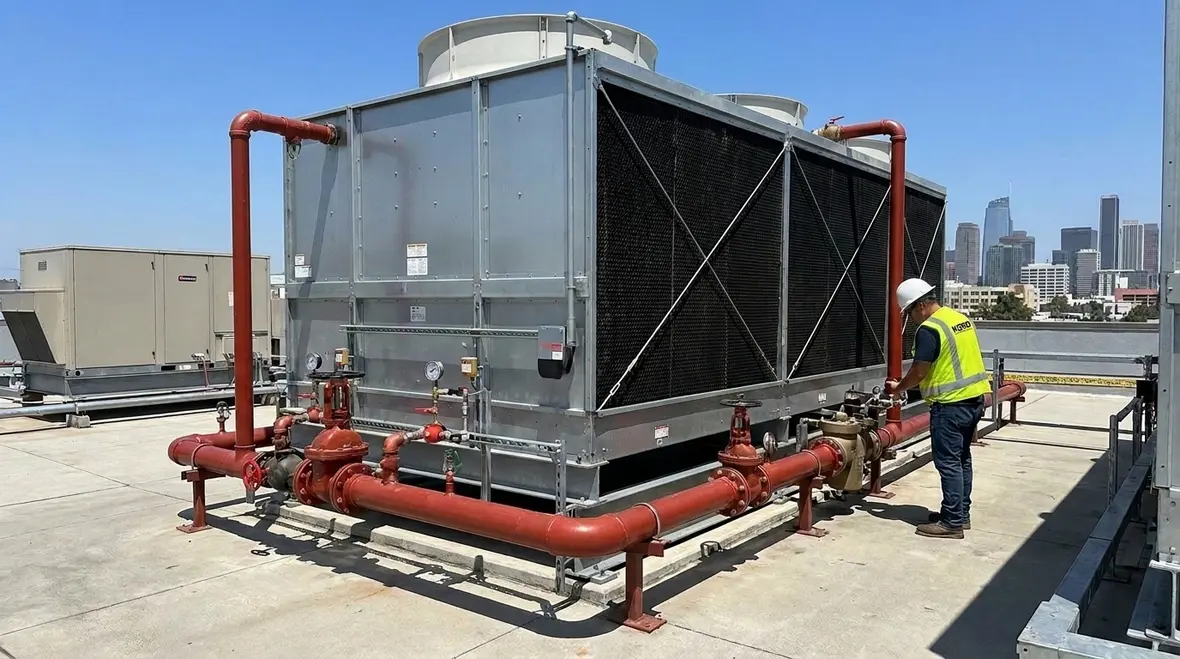
NFPA 13 Section 27.26 — Water Cooling Towers: Sprinkler System Requirements
NFPA 13 water cooling towers sprinkler system requirements require cooling towers to be integrated into the building fire protection strategy with proper protection, backflow control, and ongoing maintenance. This article outlines practical implementation for commercial facilities and highlights how Kord Fire Protection supports ongoing compliance, testing, and maintenance.
If you want the bigger picture on how sprinkler systems are designed and installed before zooming into cooling tower details, Kord’s NFPA 13 overview for automatic fire sprinkler system installation is a smart place to start. And if your facility is already juggling inspections, testing, and maintenance schedules, Kord’s ITM fire protection inspection testing maintenance services fit naturally into the real-world side of staying compliant.
NFPA 13 Section 27.26 — Water Cooling Towers: Sprinkler System Requirements
Overview of NFPA 13 Section 27.26
Section 27.26 of NFPA 13 addresses the protection of water cooling towers and their associated components within a sprinkler system. It establishes when cooling towers must be protected by the fire protection system, outlines required interfaces with piping and drainage, and sets expectations for access, alarm signals, and coordinated maintenance. The goal is to reduce risk of water mist or surge that could compromise sprinkler performance while ensuring reliable fire protection for the facility.
Protection strategy and system integration
- Cooling towers may be shielded by the building sprinkler system or by a dedicated protected branch, depending on system design and risk assessment.
- Backflow prevention and air gap devices are typically required to keep tower water from contaminating the fire water supply. Regular checks ensure these devices function during normal operation and during testing.
- Critical interfaces include drainage connections, sump pans, and sump pump controls. The design must prevent cross connections that could compromise either the tower or the fire protection water supply.
- Coordination with the cooling tower controls is essential. Alarms and supervisory signals should clearly indicate any sprinkler related activity and allow rapid isolation if required.
Design criteria and coverage considerations
Design criteria focus on achieving reliable sprinkler coverage for the cooling tower area while accounting for the unique geometry and airflow around the tower. Hydraulic calculations must reflect the selected configuration, whether it is the shared system or a dedicated protection circuit. Occupancy type and hazard classification influence head placement, water supply reliability, and the required verification steps during commissioning.
Installation practices and piping details
- Piping materials and routing should minimize corrosion risk when cooling tower water contains treatment additives or additives used in the tower basin.
- Drip pans and drain lines must terminate so there is no backflow into the sprinkler piping. Clear access for inspection is essential.
- Isolation valves and check valves should be sized and positioned to permit maintenance without compromising system integrity. All connections must be compatible with local code requirements.
- Sprinkler heads near cooling towers should be selected and installed to avoid exposure to high heat, vibration, or water splash that can lead to nuisance activations or mechanical damage.
Maintenance, inspection and testing protocols
Maintenance programs for NFPA 13 water cooling towers sprinkler system requirements emphasize regular inspections, testing, and recordkeeping. Key activities include visual checks of piping and hangers, verification of alarm and supervisory circuits, and confirmation that backflow preventers remain functional. Annual hydrostatic testing and backflow testing by licensed professionals are commonly required, with documentation retained for authorityHaving jurisdiction review.
Practical compliance challenges for commercial facilities
- Retrofits in existing retail or industrial spaces often present space constraints and access challenges for piping runs to cooling towers located on rooftops or exterior locations.
- Coordinating multiple trades during renovations can create scheduling risks that affect protection system commissioning and later maintenance windows.
- Water treatment chemicals, corrosion potential, and climate conditions influence material selection and ongoing inspection regimens, increasing lifecycle costs but improving reliability when properly managed.
- Documentation and traceability of tests, repairs, and replacements are critical for audits and for maintaining code compliance across multiple facilities.
Frequently Asked Questions
Conclusion and call to action
For commercial, industrial, and retail facilities, staying compliant with NFPA 13 water cooling towers sprinkler system requirements is a continuous effort. Kord Fire Protection offers comprehensive design review, installation coordination, and ongoing maintenance programs to ensure reliable protection. Contact Kord to schedule a site assessment, develop a tailored maintenance plan, and establish a proactive testing schedule that aligns with your facility needs and local code requirements.

Join Our Newsletter!
Get the latest fire safety tips delivered straight to your inbox From our Newsletter.


