Fire Suppression for Port and Terminal Equipment
In the real world of fire suppression for port and terminal equipment, one incident can ripple through schedules, budgets, and safety culture. Ports run on tight timelines, heavy machinery, and high value cargo, so a delay after a fire starts can turn into a very expensive domino effect. Port equipment fire suppression helps terminals react fast, control risk, and protect people, assets, and critical infrastructure. And because smoke does not care about “we will handle it next week,” the system design, inspection routine, and coordination matter. With the right partners in place, a terminal can move from reactive firefighting to reliable fire control. Think of it like turning a disaster movie into a contained season finale.
Why port and terminal equipment faces unique fire risks
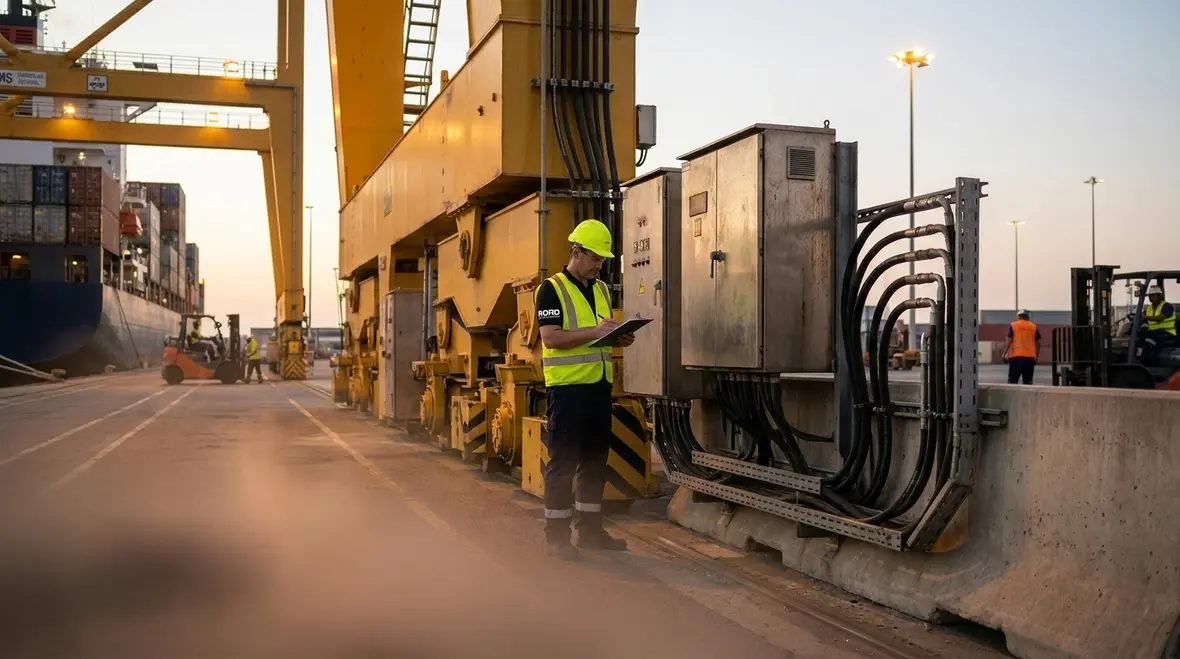
Ports and terminals handle fuels, solvents, lubricants, power units, and cargo materials that can vary by shipment. As a result, fire behavior changes across areas such as loading zones, maintenance bays, electrical rooms, and transfer points. In addition, equipment sits outdoors where wind, salt air, dust, and temperature swings can affect both ignition sources and system components.
Moreover, fires in port environments often start in places that crews do not watch continuously, such as cable trays, battery storage, or hydraulic lines. Then, if flames reach a stack of containers or a fuel source, the heat load rises quickly. So, the goal of fire suppression for port and terminal equipment is not just “put it out.” It is also to limit spread, reduce heat exposure on adjacent items, and create time for safe evacuation and shutdown.
Hazards change from zone to zone
That variability is exactly what makes terminal fire protection so different from a one-note facility. A dockside crane, a container yard transfer path, and a maintenance enclosure can all sit on the same property while presenting completely different ignition profiles. Some risks are tied to fuel and hydraulics. Others come from electrical loads, charging equipment, overheated bearings, or hidden debris buildup. Fire protection has to account for all of it without slowing the operation into a bureaucratic traffic jam.
Which protection systems terminals typically use
A terminal usually needs a mixed approach, because one system type rarely fits every hazard. Therefore, teams often select solutions based on the space, the fuel load, the equipment geometry, and the operational limits. Common approaches include fixed suppression systems for enclosed or hazard focused areas, plus manual response plans that align with local fire codes. Kord Fire Protection’s fire suppression services reflect that kind of layered planning, where system choice follows risk instead of habit. ([kordfire.com](https://kordfire.com/fire-suppression/?utm_source=openai))
In many facilities, these elements appear together:
- Water based systems where water supply and exposure control work effectively
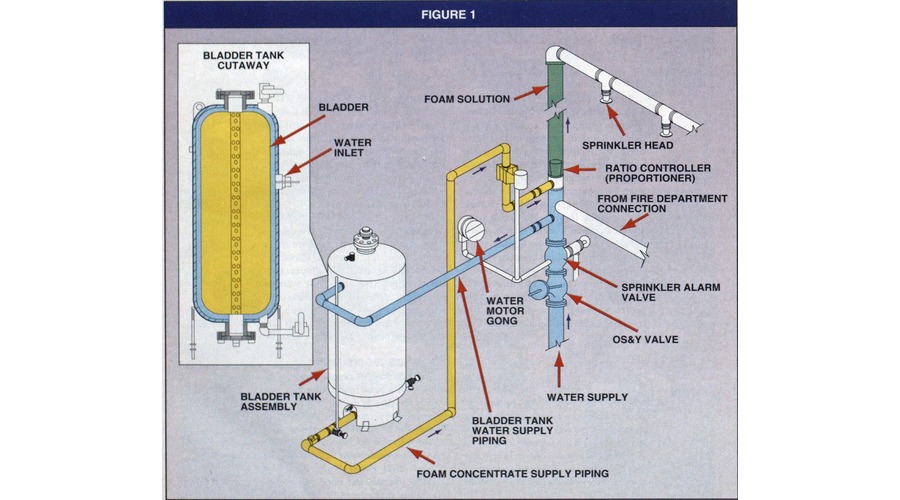
- Foam systems for flammable liquid hazards, especially where runoff could spread fire
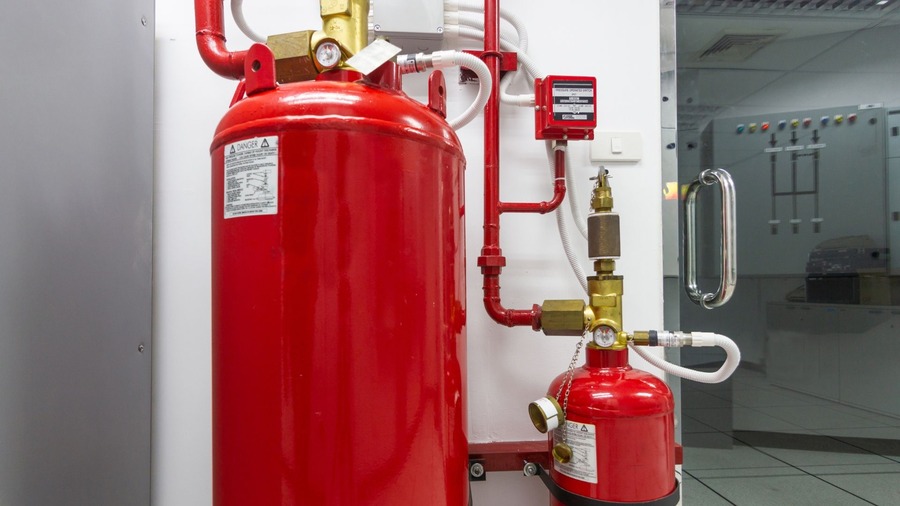
- Clean agent or gaseous systems for sensitive electrical areas where water could cause damage
- Dry chemical or targeted suppression for specific equipment compartments
- Engineered fire detection that triggers faster than humans noticing smoke
Just as important, the terminal needs clear rules for when the system activates and who follows up. After all, deploying suppression without the right shutdown sequence can create a new problem. Like opening a bag of popcorn in a library, it might stop one issue while causing a different one.
Layered systems work better than wishful thinking
This is also where integration matters. Kord Fire Protection highlights suppression system integration as the difference between isolated hardware and coordinated life safety performance, especially when alarms, controls, shutdowns, and suppression must act as one system. ([kordfire.com](https://kordfire.com/fire-suppression-system-integration-for-life-safety/?utm_source=openai)) For terminal operators, that means designing around how fire could spread through equipment, structures, and work processes rather than assuming a single agent or a single device can somehow do all the heavy lifting.
How engineers size coverage for docks, yards, and equipment bays
Proper coverage depends on more than a general “square footage” estimate. Engineers evaluate hazard class, likely ignition scenarios, airflow patterns, and how equipment moves during operations. For instance, a yard area around cranes faces different risks than a maintenance bay. Also, a suppression strategy for a cable trench cannot mirror one for a fuel transfer skid.
To build an effective plan, engineers typically look at:
- Heat release potential and how quickly flames could reach neighboring assets
- Ventilation effects from doors, open bays, and wind exposure
- Location and orientation of nozzles, discharge points, and valve stations
- Obstructions that could block flow, such as racks, shelters, or stacked gear
- Water or agent delivery limits, including pipe sizing and pressure stability
Furthermore, terminals require practical layouts. A system should reach the hazard without interfering with access for lifts, maintenance, or emergency response. In short, the best design protects the terminal without turning it into a maze of pipes and regrets.
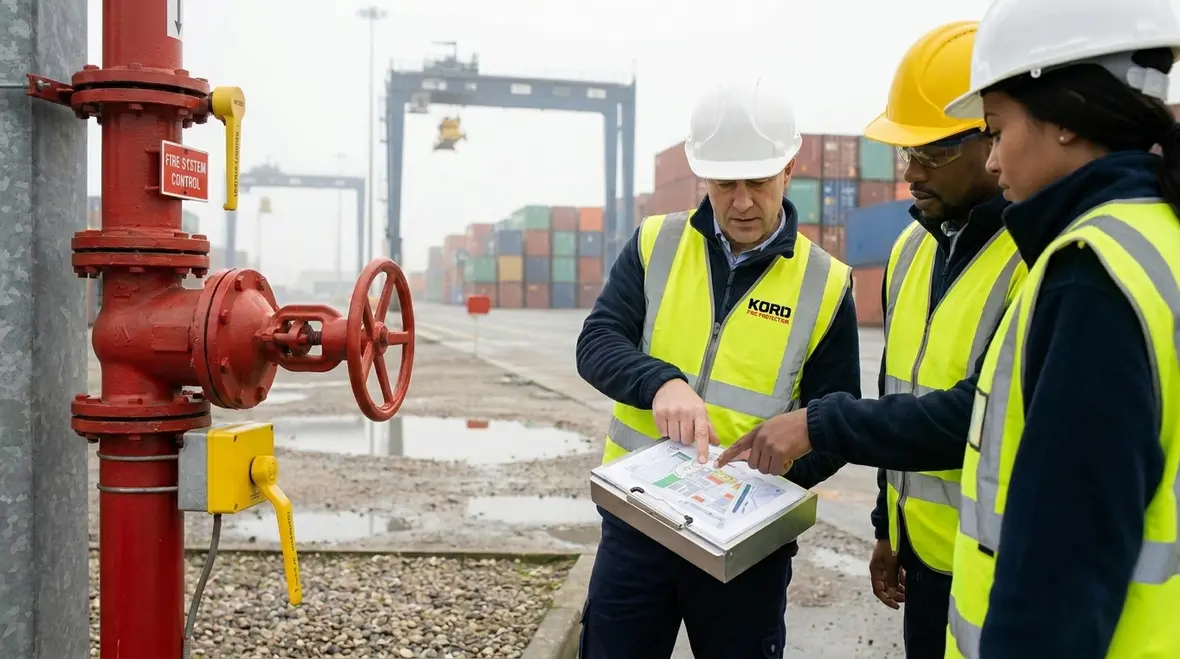
Coverage has to follow movement, not just maps
That is especially true in active terminals where machines move, lanes shift, and work areas evolve with the cargo mix. A beautiful drawing that ignores real operations is basically decorative optimism. Engineers need layouts that still make sense when equipment is being serviced, repositioned, or used under pressure. In practice, that means accounting for access, discharge paths, protection overlaps, and the lovely surprise that wind and open space like to complicate everyone’s day.
Operational readiness: inspection, testing, and response coordination
A suppression system that looks perfect on day one can fail quietly if maintenance slips. That is why readiness includes more than annual paperwork. It includes scheduled testing, verification of valves and tanks, sensor health checks, and documentation that tracks trends over time.
Transitioning from “we have a system” to “the system works when needed” requires disciplined steps. For example, teams often verify detection spacing, confirm alarm routing, and test interfaces with pumps, power shutdown controls, and ventilation shutdowns. Additionally, they train crews on what to do after discharge, so they can secure the area and prevent reignition. Kord Fire Protection’s discussion of fire pump testing requirements reinforces the same lesson: readiness is built through testing, not assumptions. ([kordfire.com](https://kordfire.com/fire-pump-testing-requirements-things-to-know/?utm_source=openai))
Just as importantly, they coordinate with local response partners. A port site has multiple access points and different traffic routes for fire units. Therefore, a strong response plan includes clear site maps, equipment shutoff locations, and staged action roles for terminal operations, maintenance, and safety leads.
Documentation is part of the protection strategy
A living inspection record gives teams something better than vague confidence. It shows trends, recurring trouble spots, deferred repairs, and changes in the field that can affect performance. That level of visibility matters in terminals because layouts and equipment are rarely frozen in time. When the site changes, the fire protection plan should not be the last one to hear about it.
Why Kord Fire Protection becomes a vital partner for port jobs
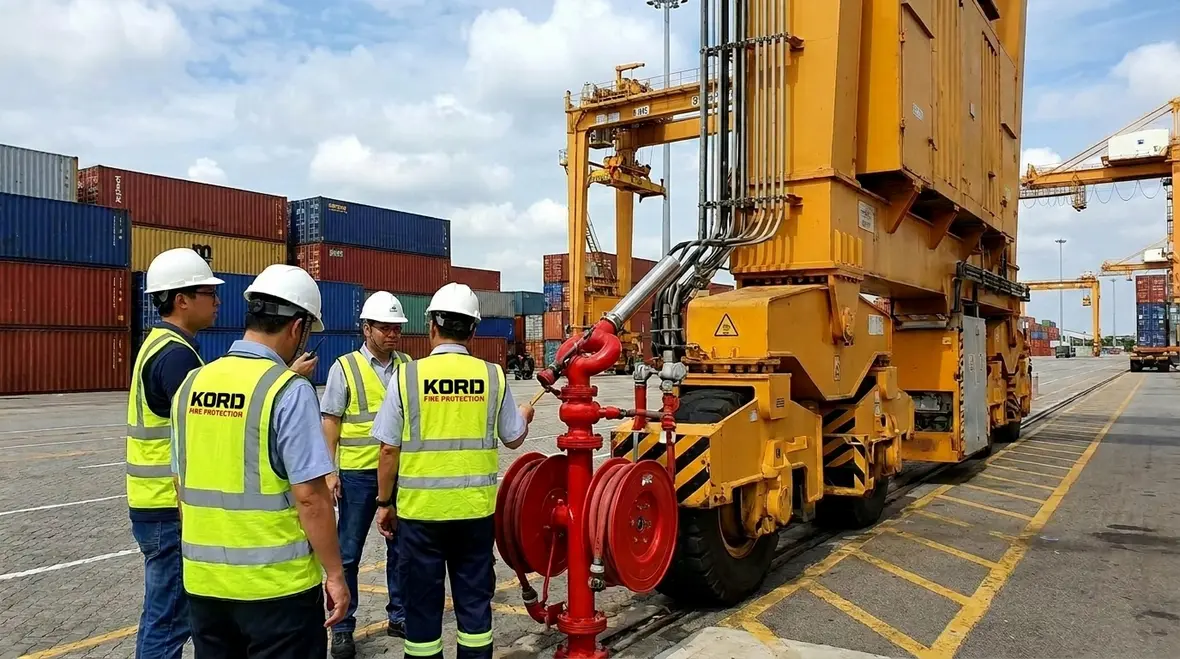
Ports run on teamwork, and fire protection works best when it behaves like part of the operating system, not an outside visitor who shows up for the audit and vanishes. Kord Fire Protection can become a vital partner by bringing planning discipline, field focused execution, and ongoing support that aligns with how terminals actually operate.
For terminals, that partnership matters because the job is not one-size-fits-all. Kord Fire Protection supports the full cycle: design support, system integration, installation coordination, commissioning assistance, and a practical maintenance mindset. Its recent materials on integration and automation emphasize submittal review, device mapping, control logic, commissioning, and service continuity, all of which align naturally with complex terminal environments. ([kordfire.com](https://kordfire.com/fire-suppression-system-integration-for-life-safety/?utm_source=openai))
In other words, Kord helps terminals keep port equipment fire suppression aligned with real hazards and real operations. That reduces downtime risk and improves confidence during emergencies. Also, it helps teams avoid the classic mistake of treating fire protection like a museum exhibit. You do not just look at it. You rely on it.
If the terminal also operates vehicle fleets, cranes, service trucks, or specialty mobile assets, Kord Fire Protection’s vehicle fire suppression systems page is a natural related resource to review alongside fixed suppression planning, especially when protection needs extend beyond the building envelope. That connection is also supported by Kord’s vehicle maintenance guidance and fleet compliance content. ([kordfire.com](https://kordfire.com/vehicle-fire-suppression-systems-maintenance-guide/?utm_source=openai))
Implementation steps that reduce downtime and protect compliance
Terminal projects often compete with shipping windows, staffing limits, and planned maintenance shutdowns. So, implementation needs a careful sequence that reduces downtime and avoids last minute surprises. A strong project plan also supports code compliance and inspection readiness.
Typically, teams follow a flow like this:
- Risk walkthrough and equipment review to confirm hazard assumptions
- System layout validation so discharge and access work in the field
- Materials and lead time planning to protect the install schedule
- Installation staging during low traffic hours or planned outages
- Commissioning and functional testing with documentation capture
- Training for operators and maintenance so response actions stay clear
Then, they maintain a living record of changes. For example, if a terminal adds new cable routing or moves transfer equipment, they can update the fire protection approach without waiting for “something to happen.” This proactive method keeps the facility safer and helps avoid compliance gaps that lead to costly rework.
Staging work around live operations
The best implementation plans respect the reality that terminals do not pause for convenience. Work may need to happen during off-hours, around vessel schedules, or in phases that preserve safe access to active equipment. Good planning reduces the odds of a fire protection project becoming the reason everyone suddenly has a scheduling headache and a new favorite complaint.
FAQ
Final call to action for safer port operations
Fire protection for terminals should never be an afterthought. When fire suppression for port and terminal equipment is designed, installed, and maintained with real operational input, the terminal gains real resilience. Kord Fire Protection can help terminals move from basic coverage to confident performance, with support that fits the way ports run.
If a system upgrade, inspection gap, or hazard change is on the horizon, now is the time to act. Reach out through Kord Fire Protection’s fire suppression services page and review the vehicle fire suppression systems resource for mobile equipment protection planning that supports safer, more reliable port operations. ([kordfire.com](https://kordfire.com/fire-suppression/?utm_source=openai))

Join Our Newsletter!
Get the latest fire safety tips delivered straight to your inbox From our Newsletter.