
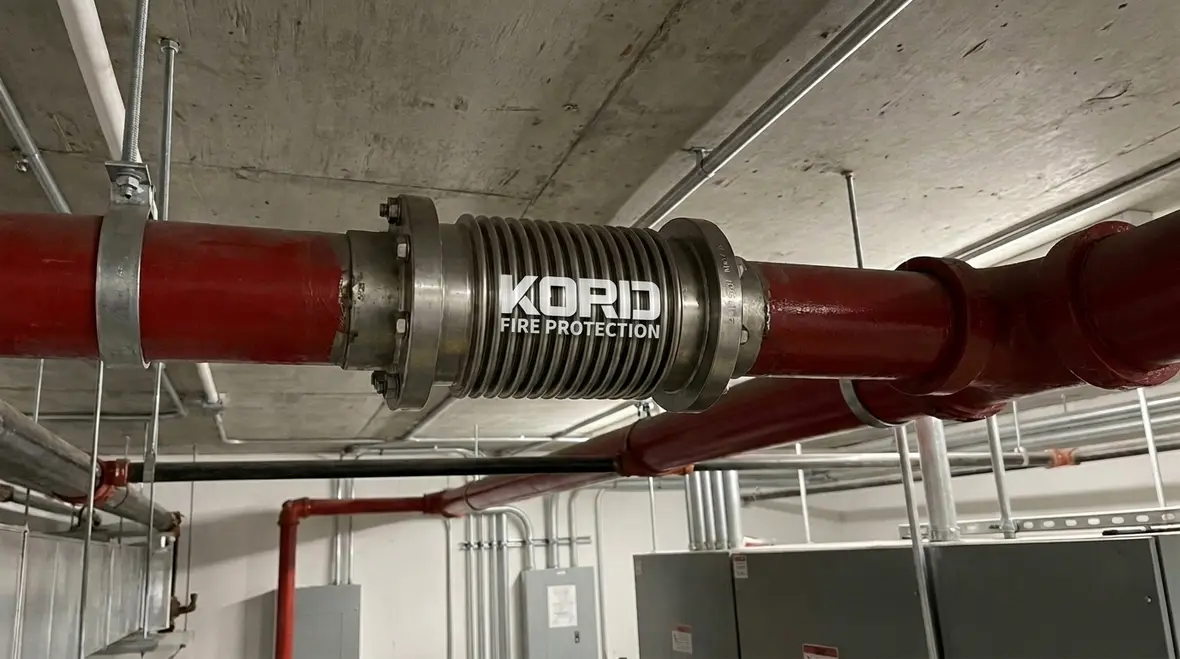
NFPA 13 Section 18.3 Seismic Separation Assembly Requirements: Practical Guidance for Commercial Facilities
Quick Answer
NFPA 13 seismic separation assembly requirements mandate installing seismic separation assemblies to isolate sprinkler system segments across seismic zones. These assemblies accommodate building movement, protect critical valves and mains, and support reliable post quake service. Proper installation reduces leakage risks and simplifies maintenance.
For a broader foundation on system layout and installation logic, see this NFPA 13 overview of automatic fire sprinkler system installation. If you are planning upgrades or evaluating compliance in an active facility, Kord Fire’s fire sprinkler service page is also a practical place to start.
NFPA 13 Section 18.3 Overview and Design Criteria
Section 18.3 of NFPA 13 addresses seismic separation for sprinkler systems and sets the framework for where and how seismic separation assemblies (SSAs) are deployed. The goal is to permit limited, controlled movement between zones while preserving water supply integrity and minimizing collateral damage to piping, valves, and ancillary devices. Designers specify the location, movement rating, and supporting hardware based on building geometry, occupancy type, and anticipated seismic forces. For commercial facilities, this translates into clear boundaries between zones such as tenant spaces, mechanical rooms, and core infrastructure, with SSAs positioned at logical transition points to absorb movement without leaking or breaking joints.
Design Criteria and Components of Seismic Separation Assemblies
Seismic separation assemblies comprise several essential elements, chosen to accommodate the expected movement and environmental conditions while preserving system performance:
- Movement rating: Each SSA has a defined movement capability, calibrated to the design level of seismic risk and system layout.
- Segmentation points: Assemblies are placed where sprinkler zones transition or where structural movement could impact piping alignment.
- Connection methods: Assemblies employ flexible couplings, slip joints, or expansion devices that isolate the pipe segments yet maintain water continuity.
- Support and restraint: Proper hangers, clamps, and restraints prevent unintended contact with other equipment and ensure serviceability during movement.
- Materials and enclosure: Components use corrosion resistant materials and may include protective enclosures to guard against debris and weather when located in exposed areas.
Design teams specify the exact SSA type, movement range, and mounting details in the project drawings. Compliance with the NFPA 13 seismic separation assembly requirements requires careful coordination with structural, mechanical, and fire protection disciplines to avoid conflicts with fire pumps, standpipes, and other critical elements.
Why Coordination Matters in Real Buildings
On paper, an SSA can look like one tidy detail in a sea of tidy details. In actual commercial buildings, it has to coexist with ductwork, access panels, cable trays, structural members, and the occasional mystery condition nobody mentioned during preconstruction. That is why early coordination is not optional if you want a clean installation instead of a field fix parade.
Installation and Field Practices
Execution of SSAs in the field follows a disciplined sequence to preserve functionality and code compliance:
- Coordinate with project stakeholders: Confirm zone boundaries, utilities routing, and structural constraints before ordering assemblies.
- Prepare the installation space: Ensure clean access, proper supports, and alignment references for both ends of the SSA.
- Install per manufacturer instructions: Use approved fasteners, maintain correct orientation, and secure movement joints without over constraining the pipe.
- Verify clearances and alignment: Check that the assembly does not interfere with valves, gauges, or electrical conduits and that there is adequate working space for maintenance.
- Hydrostatic and functional testing: Conduct tests to verify water tightness and verify that movement occurs within the rated range without binding or leakage.
- Documentation and markups: Record installation details, movement ratings, and location maps for future inspections and remodels.
Commercial facilities should anticipate coordination challenges with architectural finishes, mezzanine levels, and high traffic areas. Adherence to NFPA 13 18.3 installation practices minimizes post quake downtime and keeps the system operable under real world conditions.
Field Reminder: Do Not Over-Constrain the Assembly
This is one of those details that can quietly ruin the whole point of the assembly. If the movement component is installed correctly but boxed in by rigid supports, poor clearance, or adjacent equipment, the system may look fine right up until it actually needs to move. And that is a terrible time for a surprise.
Inspection, Maintenance, and Troubleshooting
Ongoing care ensures SSAs remain reliable partners during seismic events. A robust maintenance regime includes the following:
- Periodic inspections: Schedule routine inspections to verify that supports, clamps, gaskets, and seals remain intact and free from corrosion.
- Movement verification: Confirm that the assembly still accommodates its rated movement without binding or friction.
- Joint integrity: Check joints and connections for signs of leakage or stress that could indicate misalignment or damage.
- Valve and accessory access: Ensure nearby valves, gauges, and test connections remain reachable for operation and testing.
- Post remodel checks: Reassess SSA location and performance after renovations or structural work that could alter seismic demand.
- Testing cadence: Implement an annual testing and documentation cycle, with additional checks following significant events or maintenance work.
Common failure points include improper installation, insufficient movement allowances, misaligned supports, debris in joints, and corrosion of metal components. Addressing these issues promptly preserves system reliability and simplifies subsequent post earthquake service.
Kord Fire Protection supports ongoing compliance through integrated inspection and maintenance programs tailored to commercial, industrial, and retail facilities. Our teams provide field assessments, testing, and documentation aligned with NFPA 13 and NFPA 25 requirements. For a wider view of how inspection, testing, and maintenance programs fit together, see Kord Fire’s ITM fire protection inspection, testing, and maintenance guide.
Compliance Challenges in Commercial Environments
Commercial buildings face unique hurdles when implementing NFPA 13 seismic separation assembly requirements. Key challenges include:
- Space constraints: Dense mechanical rooms and congested corridors can limit SSA placement options and hinder future access for maintenance.
- Coordination with other trades: Structural bracing, electrical work, and HVAC components must be harmonized with SSA routing and supports.
- Existing condition retrofits: Retrofitting SSAs in older facilities requires careful assessment of seismic risk, building movement paths, and potential structural modifications.
- Lifecycle costs: Initial installation plus ongoing maintenance and testing contribute to total cost of ownership that must fit facility budgets.
- Documentation and reporting: Maintaining up to date drawings, operation and maintenance manuals, and test records is essential for audits and tenant compliance.
Effective management of these challenges requires proactive planning, cross discipline communication, and a structured maintenance program. Engagement with a knowledgeable partner helps translate NFPA 13 seismic separation assembly requirements into practical, budget aligned solutions.
Frequently Asked Questions
Conclusion and Call to Action
To stay compliant with NFPA 13 seismic separation assembly requirements, contact Kord Fire Protection for a comprehensive review and ongoing maintenance program. Our team delivers field assessments, installation oversight, testing, and documentation to keep sprinkler systems resilient during earthquakes. Schedule a consultation today to design and maintain SSA solutions that fit your facility and budget.

Join Our Newsletter!
Get the latest fire safety tips delivered straight to your inbox From our Newsletter.


