What Happens During a CO2 Fire Suppression Discharge
What Happens During a CO2 Fire Suppression Discharge
When a CO2 system discharge starts, the goal stays simple: stop a fire fast by changing what the fire needs to keep going. First, the system detects danger, then it releases carbon dioxide in a controlled burst. As the gas floods the protected space, it pushes oxygen down to a level where flames cannot survive. Meanwhile, the alarms keep people moving toward safety, and timers guide the discharge so responders and occupants follow the right steps.
To be clear, this is not “fire fighting by magic.” It is physics with good paperwork. And that is exactly where skilled partners like Kord Fire Protection can become vital, because the real work happens before the discharge, during the test, and after the event when documentation and maintenance matter. If you want a closer look at system design, service, and support, the team’s CO2 fire suppression systems page gives helpful context on where these systems fit and why they are often chosen for sensitive, high value spaces.
How the system triggers and prepares to release CO2
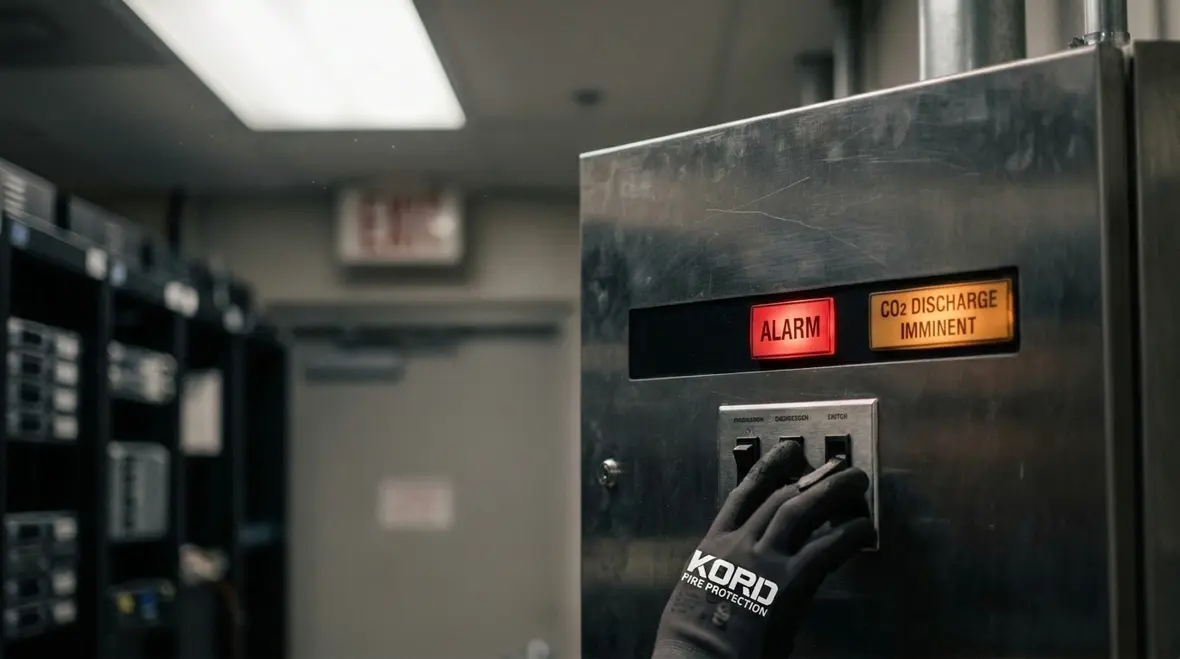
In most setups, the chain begins with detection devices such as heat or smoke sensors, or with a manual pull station in certain risk areas. Once the control panel confirms the alarm condition, it starts the pre discharge sequence. During this phase, the building alerts occupants through visible and audible signals. Then, if the design includes it, the system uses delayed actuation to give trained personnel time to evacuate and secure the hazard area.
Next, the system checks critical inputs. It verifies the correct zone, confirms the release path, and makes sure interlocks align. For example, fans may stop to prevent the agent from being pushed out of the enclosure. Also, door hold open controls may release so the enclosure can seal more tightly. At this point, the system is ready, like a bow pulled back, but it waits for the final go signal.
Why the pre discharge sequence matters more than people think
This stage is where good engineering earns its paycheck. A CO2 system is not supposed to act like a jump scare with cylinders. It is supposed to warn, verify, isolate, and then release in a way that matches the protected hazard. That means the panel logic, alarms, delays, and shutdowns all need to work together without improvisation. If even one part of that chain fails, the discharge can become less effective or far more confusing than anyone wants during an emergency.
Step by step: what happens during the actual CO2 release
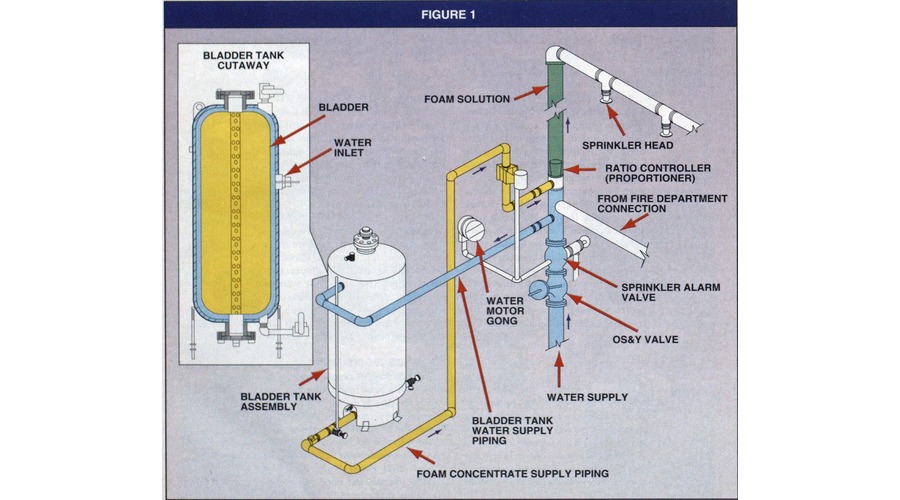
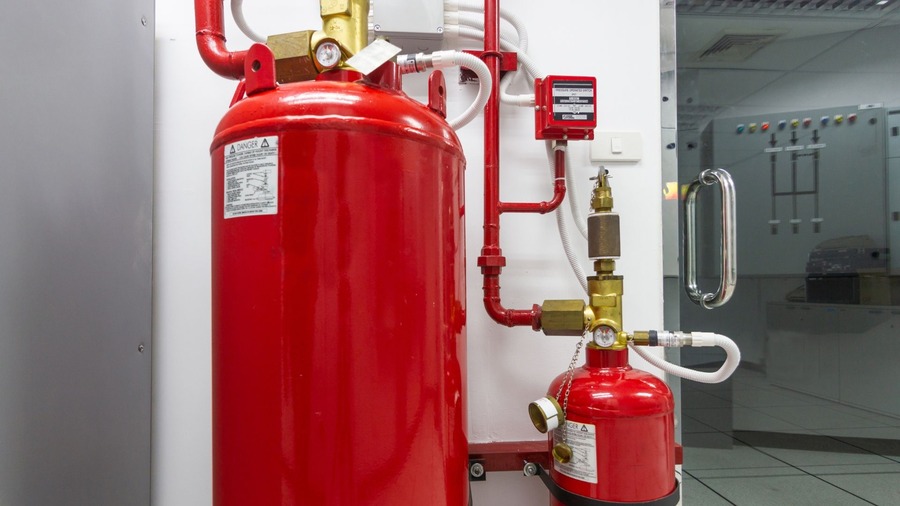
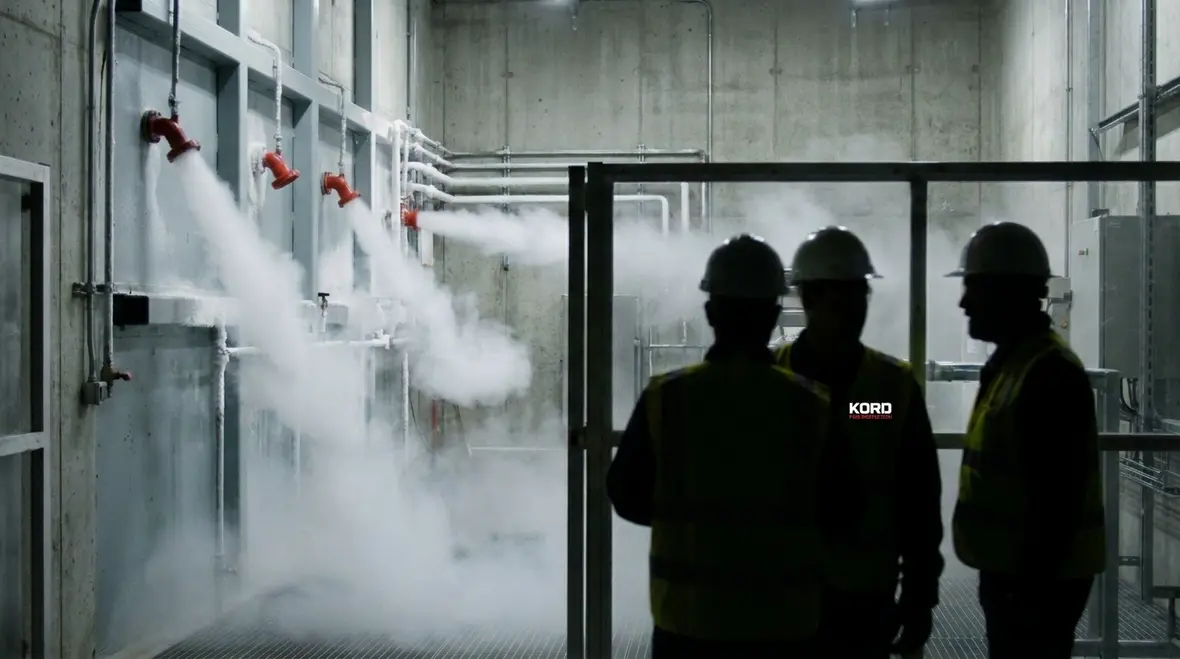
When the system enters the discharge window, it releases the stored CO2 from the cylinders or tank system through valves and distribution piping. Then the agent moves through nozzles and into the protected space. As CO2 exits the piping, it expands rapidly, cooling as it travels.
Here is what typically happens in sequence:
- Valve opens and the release begins in milliseconds to seconds, depending on the system design
- CO2 flows through piping toward the manifold and discharge nozzles
- Agent distributes into the hazard area using planned flow paths and nozzle layouts
- Gas concentration rises as it displaces oxygen and slows combustion
- Faster knockdown follows because flames lose the oxygen they need
To keep it simple, think of it as turning the room into a place where the fire gets no air, no attitude, and no future. And yes, that sounds dramatic. But it is what the math requires.
What the discharge sounds and feels like on site
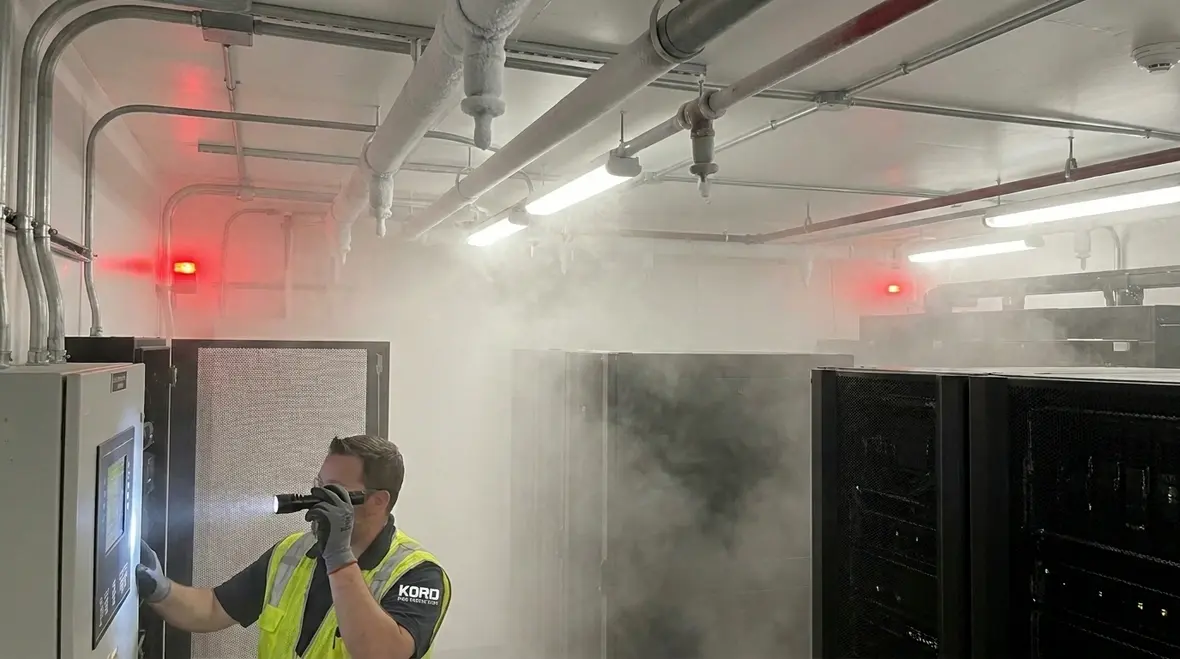
For people who have never been around one, the event can feel surprisingly abrupt. There is alarm activity, mechanical actuation, fast gas movement, and a sudden sense that the room is no longer interested in being comfortable. In enclosed hazards, the release is controlled by design, but it still happens with enough force and speed to remind everyone that this is a life safety system, not a decorative suggestion on the wall.
Why CO2 works so well and what it does to the fire
CO2 does not “starve” fire by removing fuel. Instead, it reduces the available oxygen in the air mixture. As the oxygen level drops, the combustion process slows. At the same time, the release cools the local environment near the nozzle discharge. Together, this cuts off the chain reaction that keeps flames growing.
However, the performance depends on the protected volume and the integrity of the enclosure. If doors, vents, or gaps allow gas to leak out, the CO2 system discharge may not reach the intended concentration. That is why careful design matters, and why ongoing maintenance matters even more. A system can be approved on paper and still underperform if components degrade, valves stick, or piping receives damage.
As a result, the most reliable teams plan for real world conditions. They account for ceiling height, airflow, and equipment layouts, then they verify coverage through testing and inspections. That is also why related services like fire suppression inspections, testing, installation, and maintenance matter so much over the full life of the system. The discharge may only last a short time, but the preparation behind it is ongoing.
What occupants and responders experience during release
During a discharge event, the space becomes hazardous quickly. CO2 is not a “low concern” gas. It reduces oxygen, which can lead to breathing risk for anyone inside the area. Therefore, systems use alarms, signage, and time delays to support safe evacuation.
From the responder side, communication becomes key. Responders need to know which zone discharged, whether secondary sources exist, and how long to maintain a safe stance before entry. In many cases, the system logs the event and provides details such as activation time, zone, and fault states.
Also, the release can create low visibility near the discharge path, and the cooling effect can raise concerns about frost or thermal stress near nozzles. That is why the job does not end at “it went off.” It continues with verification, ventilation planning, and safe re-entry procedures.
Because people sometimes treat alarms like background noise, teams build processes that do not rely on guesswork. Kord Fire Protection supports those processes by aligning system design, labeling, and field checks so a discharge event stays predictable instead of chaotic. For facilities comparing suppression options across different hazards, Kord’s broader fire suppression solutions page is a useful next stop.
Why training changes the outcome
The technology can be excellent and still fall flat if people do not know what the alarms mean, where the exits are, or who is responsible for the post discharge checks. Training removes hesitation. It tells occupants when to leave, tells supervisors what to verify, and tells responders what conditions may exist on arrival. In other words, it replaces panic with procedure, which is one of the better upgrades any facility can make.

After the discharge: reset, inspection, and restoring readiness
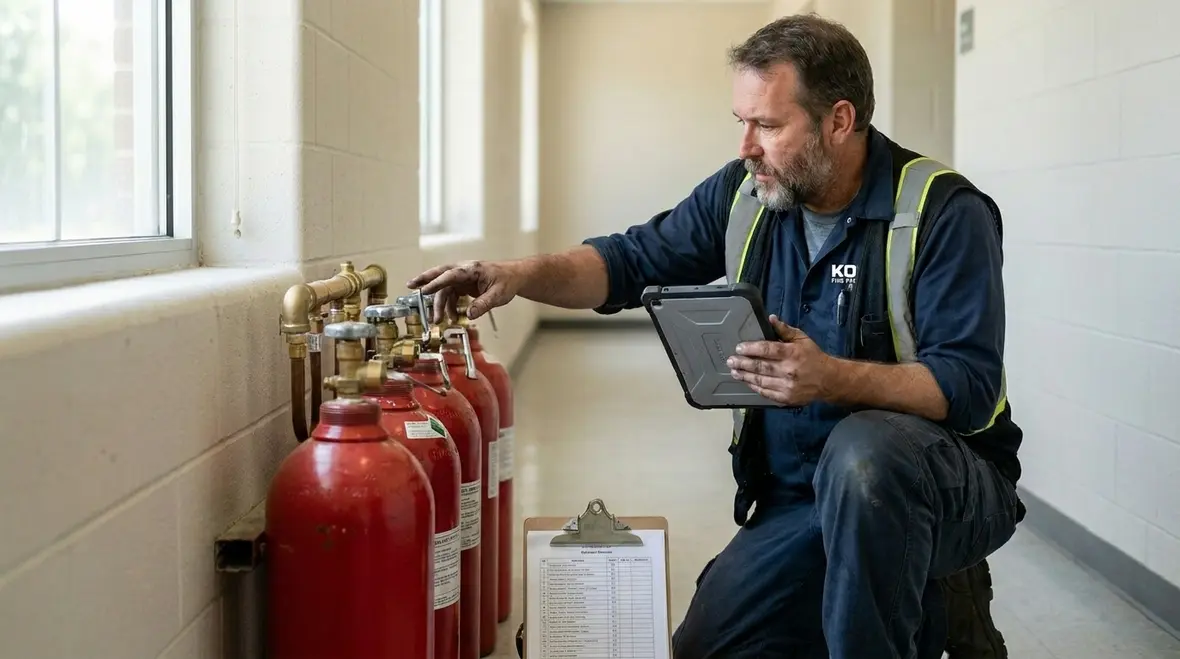
Once the fire is controlled or extinguished, the organization must restore system readiness. First, someone must confirm the event details: what triggered it, which zone released, and whether any faults appeared. Then, the team inspects the enclosure, checks for leaks, and reviews operational logs.
In many systems, the cylinders may need replacement or recharging. Valves and discharge nozzles get checked for damage or obstructions. Wiring and detection components get tested as well, because the next event will not wait for loose ends.
Meanwhile, maintenance helps prevent “repeat problems.” For instance, if a door interlock failed during the event, it can repeat later. If a control relay stuck in a prior inspection, it can cause another delay or failure. Therefore, CO2 system discharge events become a real lesson, and skilled service teams treat them like such.
Kord Fire Protection can act as a vital partner here, because it does not just show up with a clipboard. It supports documentation, schedules, and field verification so the system remains compliant and reliable. In business terms, that means fewer surprises and faster return to normal operations.
How to choose a partner for CO2 systems that actually stays with the job
Hiring a fire protection partner is not only about install day. It is about the full lifecycle: design support, inspection planning, testing execution, and quick response when the unexpected happens. A strong partner tracks system health and keeps records organized for audits and insurance requests.
When the protected risks include data centers, generator rooms, or process areas, the stakes rise. A good partner ensures the enclosure concept matches the real floor layout, and it verifies interlocks and alarms function as intended. It also helps train facilities teams on what to do during an event, including re-entry steps and ventilation considerations.
So yes, you could hire the cheapest vendor and roll the dice. But that is like choosing a parachute based on vibes. Kord Fire Protection helps organizations build confidence, because it treats CO2 systems as safety equipment that must stay ready, not as a one time project. Near the finish line, that points back to the practical next move: review your facility with a qualified suppression team and schedule service through Kord Fire Protection’s fire suppression services if your system needs inspection, maintenance, repair, or a compliance check.
FAQ
Conclusion
A CO2 system discharge works quickly, but its success depends on planning, correct design, and reliable service before and after activation. When the system detects danger, prepares the zone, and releases CO2, the right outcome depends on enclosure integrity, interlocks, and verified coverage. After the event, resets and inspections keep the system ready for the next emergency.
If your facility needs dependable CO2 service, inspections, and support, contact Kord Fire Protection today and keep your safety program truly on guard. A smart next step is to review the company’s CO2 fire suppression systems service page or request help through their fire suppression service team for inspection, testing, repair, and ongoing readiness.

Join Our Newsletter!
Get the latest fire safety tips delivered straight to your inbox From our Newsletter.