NFPA 1 Section 18.1 Fire Department Access and Fire Lanes
Quick Answer
NFPA 1 Section 18.1 sets the basic rules for fire department access so crews can reach a building fast and safely. For industrial, retail, commercial, and facility sites across Australia, this means clear access roads, proper fire lanes, and reliable turning space. Kord Fire Protection can help plan, assess, and maintain that access before trouble arrives.
If your site is already reviewing broader system readiness, Kord Fire Protection’s full fire protection services fit naturally into access planning because response routes, hydrants, suppression support, alarms, and ongoing maintenance should work together instead of living on separate planets. Access is not a side note. It is part of the whole emergency performance story.
NFPA 1 Section 18.1 and Why It Matters
NFPA 1 Section 18.1 focuses on one simple idea: fire crews must get in without drama. No locked gates acting like a stubborn nightclub bouncer. No crowded yards. No blocked paths. When access fails, response slows, and risk rises for people, stock, plant, and the whole site.
For industrial and commercial properties, this rule matters even more because large buildings, heavy equipment, and wide footprint sites often leave little room for error. In practice, fire department access NFPA guidance supports fast entry, safer operations, and better outcomes when every second counts.
That practical mindset lines up with Kord Fire Protection’s broader approach to planning and readiness. In its article on building fire safety emergency planning for commercial facilities, the same theme shows up clearly: emergency performance depends on routes, documentation, and site conditions that actually work when stress levels go up and patience goes out the window.
Why access is often the first hidden weakness
A facility can spend serious money on alarms, sprinklers, extinguishers, and suppression equipment, then quietly lose precious response time because a truck cannot approach the right side of the building or set up where it needs to. That is why access deserves the same respect as equipment. A brilliant system behind a blocked route is like buying a race car and parking it behind a brick wall.
What Fire Department Access Means on a Busy Site
Fire department access covers the routes and spaces fire crews use to reach the building, move equipment, and set up for attack and rescue. That includes the driveway, access road, entry points, and the clear space around hydrants and doors. It also includes room for trucks to stop without playing a real life game of Tetris.
On a commercial site, access must stay open for the long haul, not just on inspection day. Therefore, site teams should keep an eye on parked trailers, waste bins, delivery goods, pallets, and temporary works. A clear path today saves a long afternoon tomorrow.
The parts of access teams forget most often
People usually notice the obvious obstructions first, like a van in the wrong place or a stack of pallets parked where they definitely should not be. Yet the subtler problems can be just as harmful. Slow gates, poor directional signs, awkward dead ends, tight turning points, overgrown branches, and last minute site changes can all chip away at emergency speed. None of them looks dramatic on a calm Tuesday. Together, they can become a headache with sirens attached.
Fire Lane Requirements for Commercial and Industrial Sites
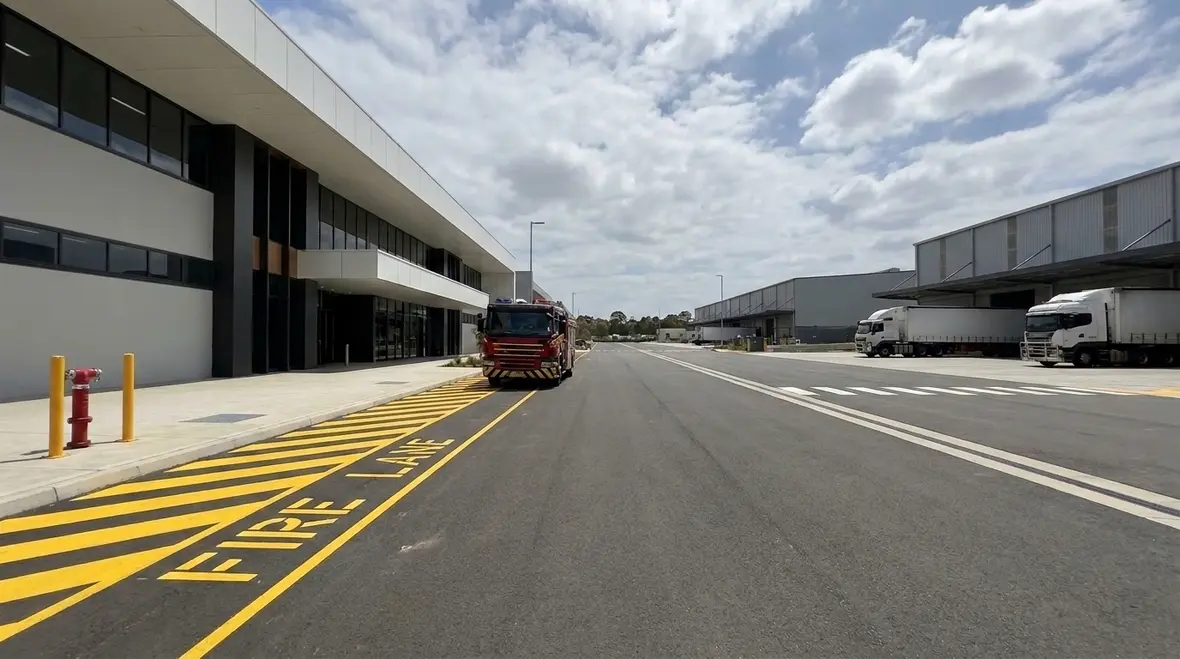
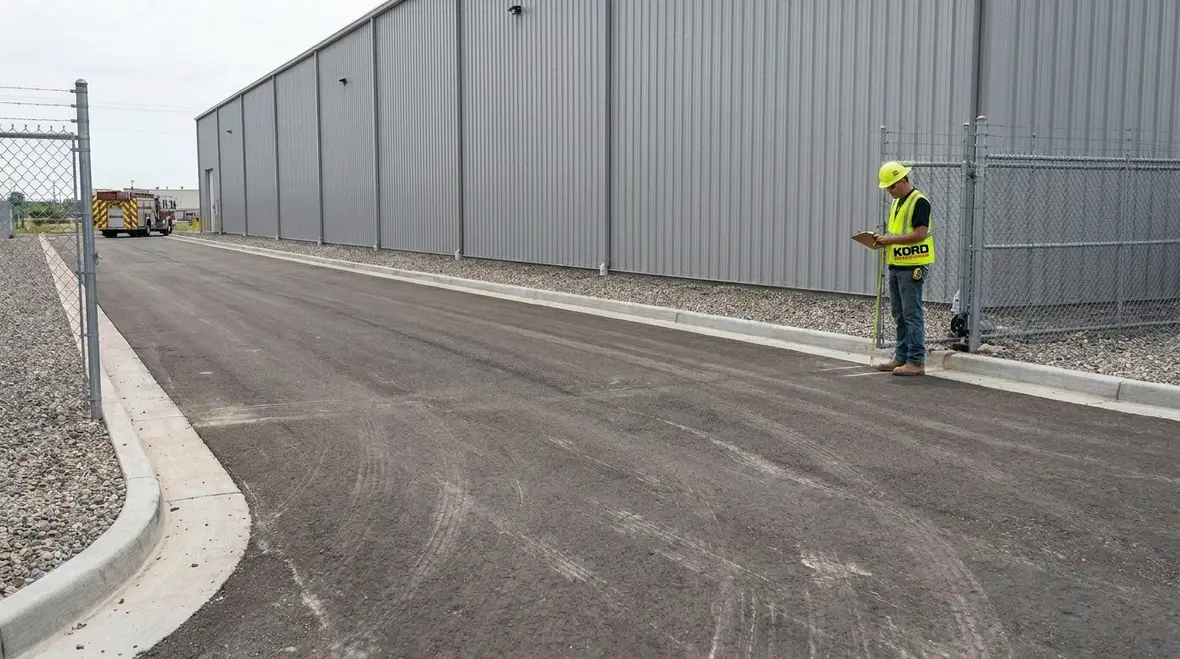
Fire lane requirements usually call for a clear, unobstructed route with enough width, height, and surface strength for fire apparatus. The exact details depend on local rules, site size, and vehicle type. Still, the core goal stays the same: let crews move quickly and safely.
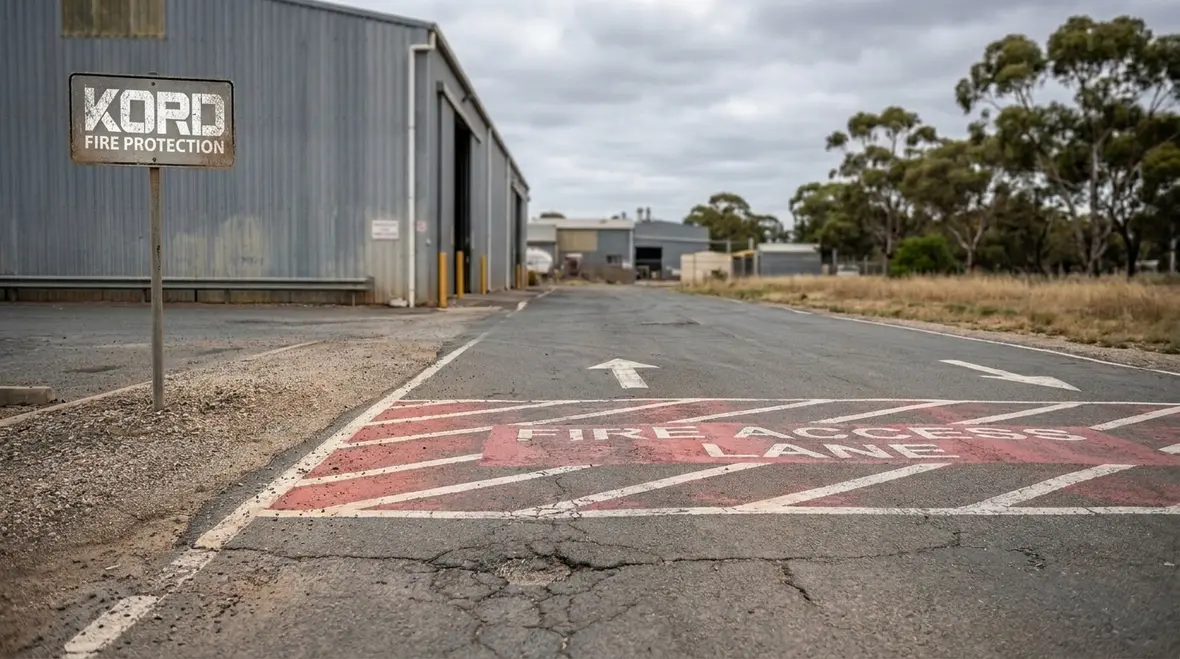
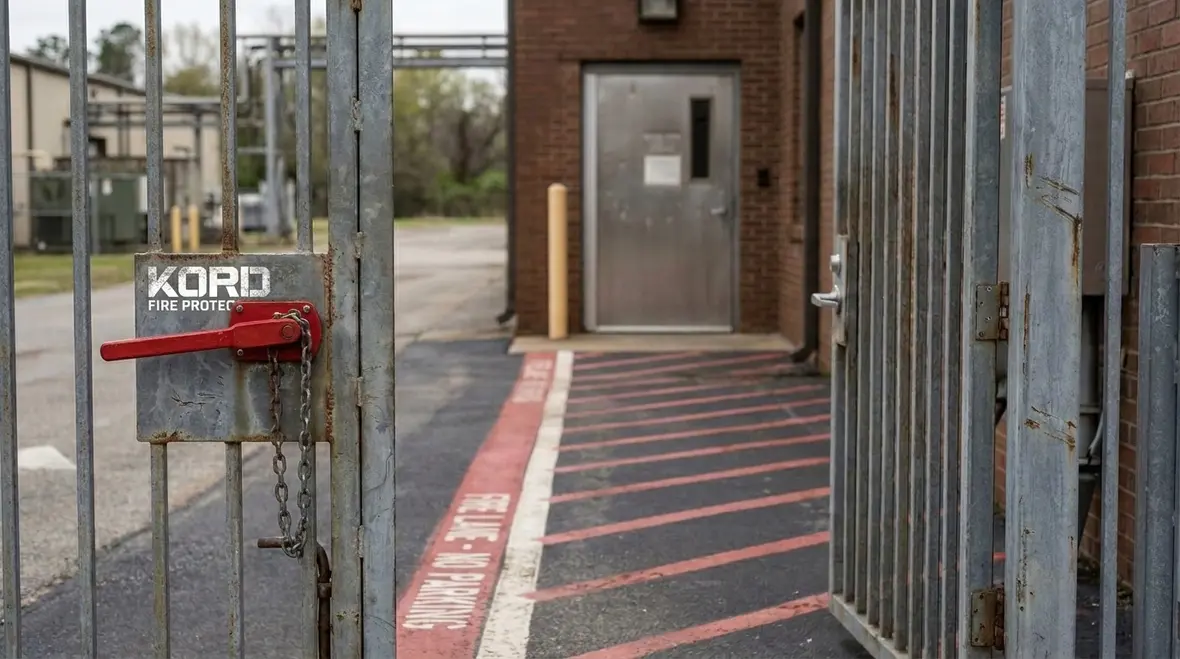
In many cases, a fire lane must stay free of parking, storage, and fixed barriers. Also, signage and markings help workers and contractors know where they cannot block access. If a site treats the fire lane like a spare storage bay, the fire service will not find that funny, even if everyone else does.
Common trouble spots around fire lanes
- Overflow parking during peak hours or shift changes
- Temporary storage that somehow becomes permanent
- Contractor skips and bins left too close to access paths
- Faded markings that nobody respects because nobody can see them
- Security gates that open slowly or need staff intervention
- Landscape growth that quietly steals clearance over time
This is also where regular review matters. Kord Fire Protection’s fire protection system upgrades for modernized facilities points out a truth many sites learn the hard way: once a building layout evolves, the old assumptions about access, service space, and emergency operations may stop being accurate. The building changed. The access plan needs to keep up.
How a Fire Apparatus Access Road Works
A fire apparatus access road code sets the standard for roads that support fire trucks, rescue units, and hose lines. These roads need the right width, turning radius, surface load, and clearance under structures or tree limbs. Otherwise, the truck may arrive, then stop short like a hero in a bad action film.
For large facilities, the access road often has to serve more than one building face. So, planners should think about entry from the public road, internal loops, dead ends, and places where trucks can reverse or turn around. Good design prevents delay, and it also reduces damage to site assets during an emergency response.
Design details that matter more than they seem
Surface strength is one of those details that sounds boring right up until a heavy vehicle needs to cross it in a hurry. Turning geometry matters for the same reason. If drivers need awkward multi point maneuvers near buildings, fences, plant gear, or loading docks, setup time increases and risk follows it in the front door. Good access roads remove friction. They give responders options instead of obstacles.
Checklist for Site Owners and Facility Managers
Site owners should check access often, not just after an incident. A simple routine can reveal weak points before they become a serious problem. The following list can help:
- Keep access roads clear of parked vehicles and stored goods
- Check gate width and opening time for emergency use
- Confirm turning space for large fire appliances
- Maintain surface strength for heavy emergency vehicles
- Trim plants and trees that block height clearance
- Mark fire lanes clearly and keep signs visible
- Review changes after building works, fit outs, or yard changes
In addition, the site team should coordinate with tenants, contractors, and security staff. A clean access plan only works when everyone follows it. That part sounds simple, yet it often fails right when the site gets busy.
If you want a bigger picture view of that process, Kord Fire Protection’s full lifecycle of fire protection servicing makes the case that planning, installation, inspection, and ongoing maintenance all depend on smart access and practical layout decisions. In other words, access is not just for firefighters. It also supports the people responsible for keeping protection systems serviceable year after year.
Dual Column View: Access Risks and Practical Controls
Common access risk
- Blocked driveway
- Weak pavement
- Low overhead clearance
- Locked gates
- Confusing layout
Practical control
- Keep a no parking zone and use bollards or signs
- Inspect load bearing areas and repair damage early
- Trim branches and check overhead services
- Fit emergency release access and train staff
- Update site plans and mark emergency routes
How Kord Fire Protection Becomes a Vital Partner
Kord Fire Protection can serve as a practical partner for sites that want access done right. First, the team can review the property layout and spot problems that may slow an emergency response. Then, it can support planning for fire department access NFPA expectations, fire lane rules, and apparatus access road needs.
Just as important, Kord Fire Protection can help facility teams stay ahead of changes. New storage racks, yard expansion, tenant changes, or upgraded plant equipment can all affect access. Therefore, regular checks and expert guidance can keep the site ready instead of merely hoping for the best. Hope is not a maintenance plan. It never was, and frankly, it never will be.
That same partnership approach appears in Kord Fire Protection’s fire suppression safety protocols for coverage optimization, where access routes, maintenance coordination, and real site conditions are treated as practical essentials, not afterthoughts. The smartest fire protection work usually looks calm and organized long before any emergency ever tests it.
Connecting NFPA 1 Thinking With Broader Fire Prevention
Access is only one section of a much larger safety picture, but it is one of the most visible indicators of whether a site is truly ready. When roads are clear, routes are marked, equipment areas stay open, and responders can reach critical points without delay, the rest of the fire protection strategy has a much better chance to do its job.
For readers who want the wider code context, Kord Fire Protection’s guide to NFPA 1: a comprehensive guide to fire prevention and safety is a useful next step. It helps connect site access with the broader prevention philosophy behind the code, which is helpful if you are trying to explain to owners, managers, or tenants why clear fire lanes are not optional decorations painted on asphalt.
FAQ
Keep Access Ready Before It Is Needed
Clear access saves time, protects assets, and supports safer emergency response. For industrial, retail, and commercial sites across Australia, Kord Fire Protection can help turn access from a weak spot into a strength. The best time to fix a blocked path is before smoke rises.
Reach out for a site review and keep the route open when it matters most. When roads, gates, turning areas, and fire lanes all stay ready, crews can do their work faster and your site has a better chance of avoiding the kind of chaos nobody wants to explain later.

Join Our Newsletter!
Get the latest fire safety tips delivered straight to your inbox From our Newsletter.