NFPA 1 Section 13.7 Fire Detection Alarm Systems Requirements
Quick Answer
NFPA 1 Section 13.7 sets the baseline for fire detection and alarm systems by guiding where devices go, how they work, and how they connect to monitoring. For industrial, retail, and commercial sites across Australia, these rules support safer buildings, faster response, and fewer costly surprises. Kord Fire Protection can help keep that system ready, tested, and compliant.
If you need help turning those requirements into a practical maintenance plan, Kord Fire Protection’s fire alarm services and monitoring solutions are built around inspection, testing, repairs, monitoring, and code-focused support for commercial properties. For a broader code context, it also helps to review NFPA 1: A Comprehensive Guide to Fire Prevention and Safety before diving deeper into detection requirements.
NFPA 1 Section 13.7: Fire Detection and Alarm Systems
NFPA 1 Section 13.7 focuses on fire detection and alarm systems that warn people early and help teams respond fast. In practice, that means the system must suit the building use, the risk level, and the way the site operates. For fire alarm system requirements, this is where the fine print stops being boring and starts being life saving. In busy commercial spaces, a delay of even a minute can turn a small event into a very expensive headline.
For Australian businesses, the fire detection NFPA code can still offer strong guidance, especially where operations include mixed tenancies, warehousing, production lines, or high traffic public areas. It helps decision makers build safer sites, reduce downtime, and support fire alarm monitoring requirements with a system that works when it matters most.
How fire alarm system requirements shape site safety
Detection has to match the real hazard
Good fire alarm system requirements do more than tick a box. They guide how the system detects smoke, heat, or flame, how it signals alarm, and how it reaches the right people at the right time. First, the system must match the hazards in the building. A warehouse with high racks needs a different approach from a shopping centre or a food processing plant. Also, the system must support the building layout, ceiling heights, airflow, and occupancy patterns.
Reliability matters more than good intentions
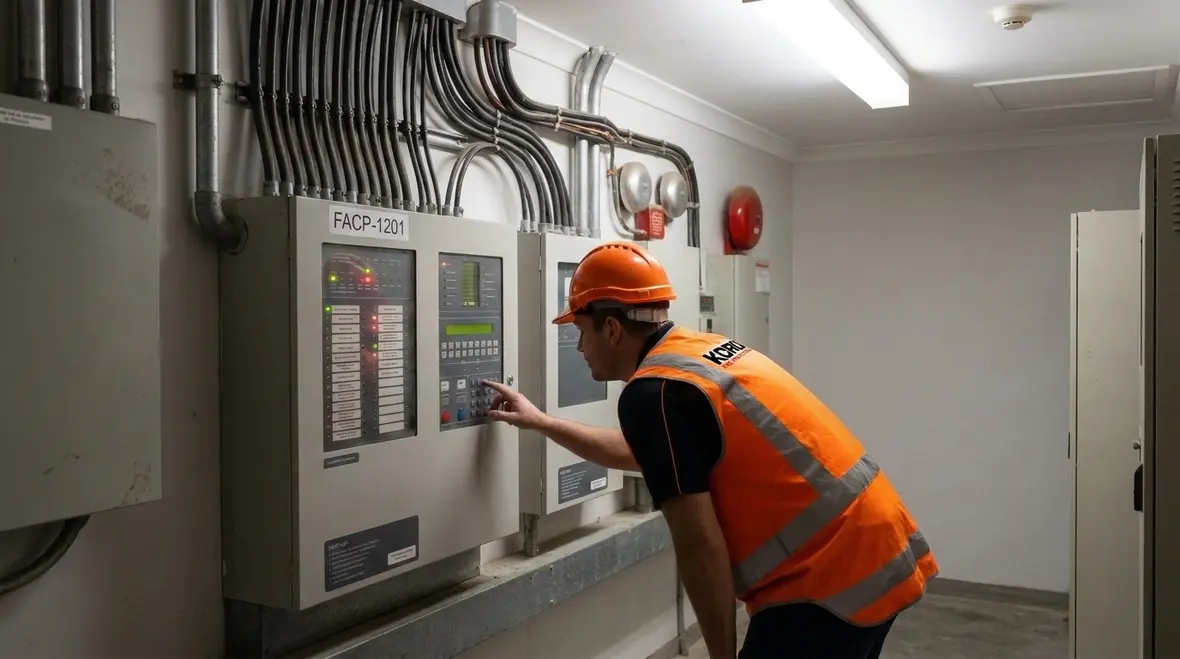
Next, the system must stay reliable under real conditions. That means proper device spacing, suitable control panels, clear alarm zones, and backup power that holds the line during an outage. Because smoke does not wait for business hours, the system must stay ready around the clock. It sounds dramatic, but that is only because fire tends to be rude.
That practical reliability is a recurring theme across Kord Fire’s fire alarm content as well. Their overview of fire alarm systems explained reinforces the same idea: the right components, placement, and upkeep matter far more than simply having a panel on the wall that looks impressive during inspections.
What the fire detection NFPA code expects in real buildings
Installed hardware is only the start
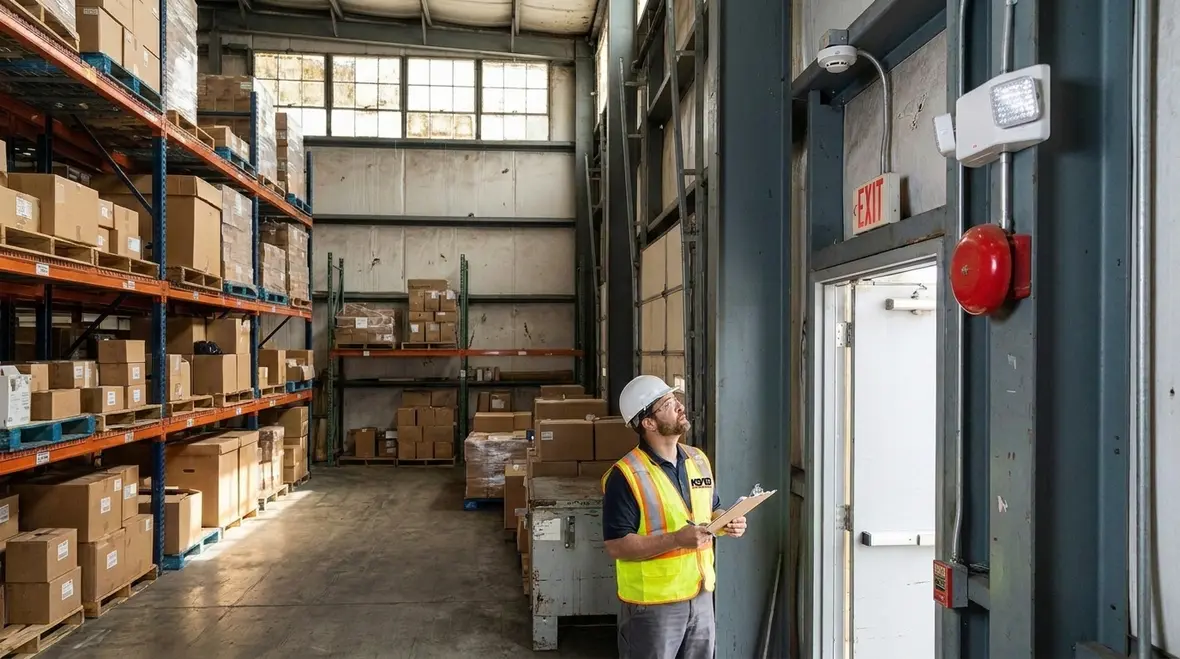
The fire detection NFPA code expects more than installed hardware. It expects the system to be planned, tested, and maintained so it keeps doing its job. Detection devices should suit the risk. For example, smoke detection may work well in some office and retail areas, while heat detection may fit dusty or high activity zones where false alarms could become a weekly comedy series no one asked for.
Signals must be clear, coordinated, and useful
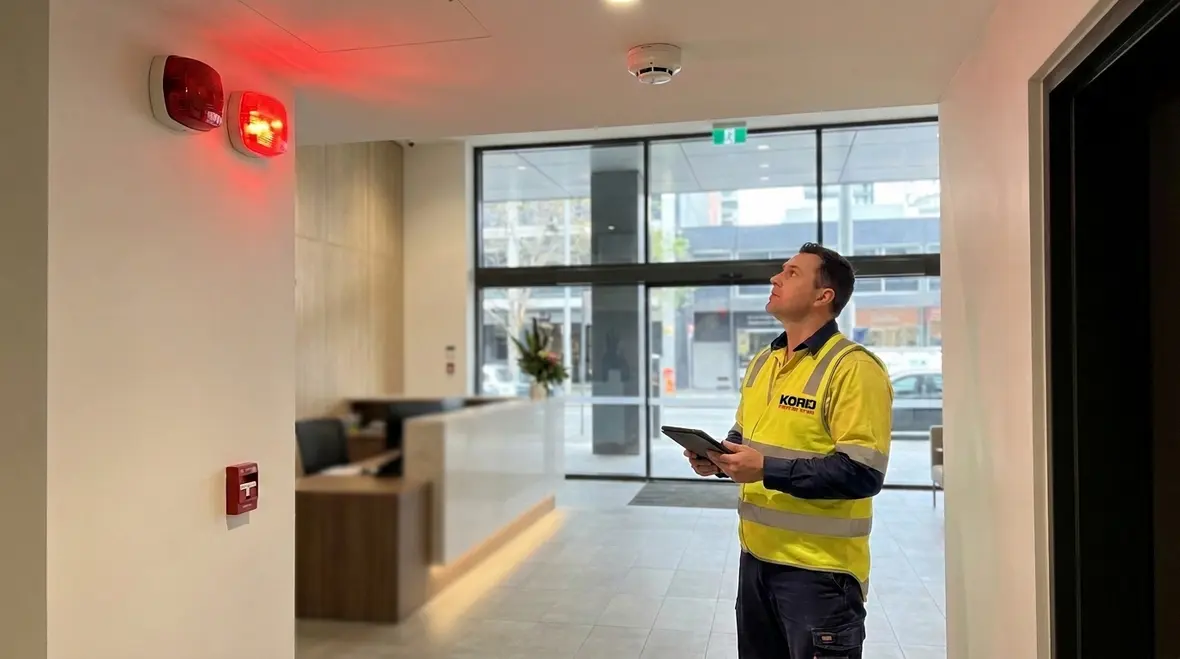
Also, alarm signals must reach occupants clearly. Audible and visible devices should work together so people can react without confusion. In larger sites, the code approach also supports phased response, zoning, and interface with other building systems. That can include lift control, air handling shutdown, and door release. As a result, the whole building responds in a more controlled way instead of all systems trying to be the hero at once.
This is especially important in mixed-use and industrial settings, where operations continue across multiple shifts and building zones. Once alarms, shutdown functions, and occupancy movement all start interacting, the difference between a coordinated response and a chaotic one can come down to whether the system was planned as a whole instead of pieced together over time.
Documentation quietly does a lot of heavy lifting
Another practical expectation is documentation. Test records, fault history, maintenance notes, and monitoring details all help prove the system is not just installed, but actively managed. That paperwork may not be glamorous, but neither is explaining to a stakeholder why a known fault sat unresolved while everyone hoped it would fix itself out of sheer optimism.
Fire alarm monitoring requirements for commercial and industrial sites
Monitoring closes the response gap
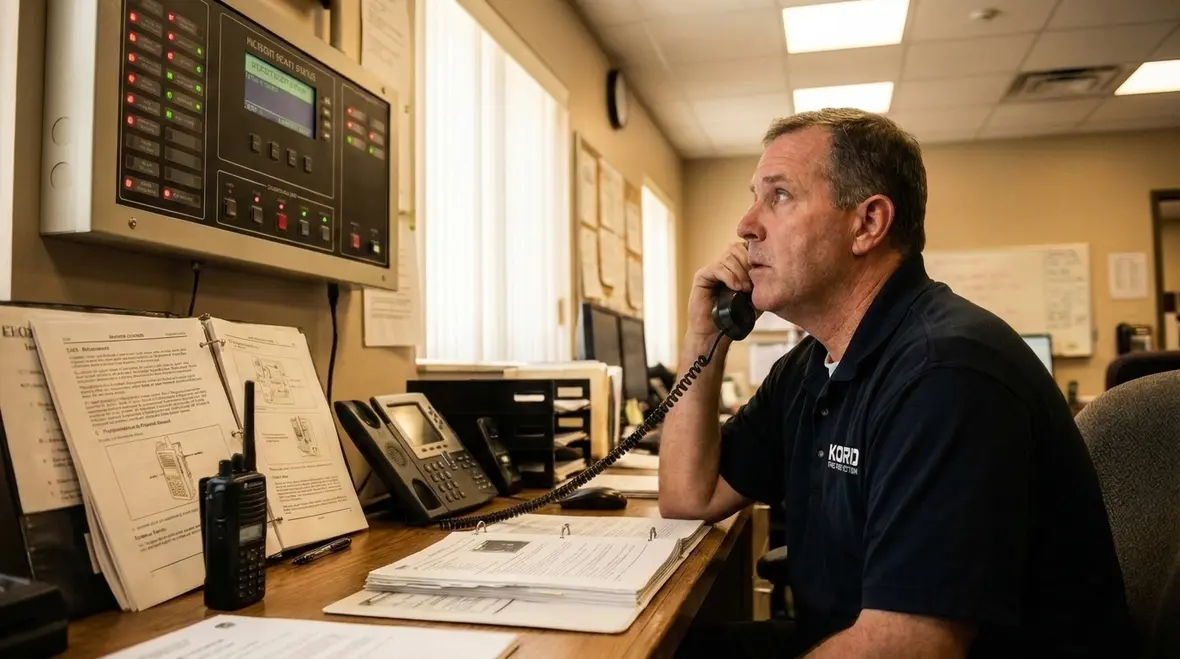
Fire alarm monitoring requirements matter because an alarm that no one sees in time is only part of a solution. Monitoring connects the site to a response path, often through a monitoring centre or emergency service link. That matters for businesses that run after hours, across large campuses, or in sites with limited on site staff.
For commercial operations, monitoring helps reduce response delays and supports compliance goals. It also helps protect stock, equipment, and continuity. Moreover, many facilities need monitoring that connects neatly with maintenance records, test logs, and fault reporting. When a fault appears, the system should not play hide and seek. It should tell the team straight away so action can follow.
Good monitoring also improves day to day management
The value of monitoring is not limited to emergencies. It also helps facilities teams respond to troubles, supervisory conditions, and equipment faults before they become larger problems. Kord Fire’s article on commercial fire alarm monitoring for safer operations makes that point well by connecting monitoring to response speed, accountability, and cleaner site management.
Where Kord Fire Protection fits into the process
Kord Fire Protection can become a vital partner by helping businesses turn code language into working protection. That includes system design support, device selection, installation, testing, servicing, and ongoing compliance checks. For multi site operators, that support can save time and reduce confusion across different properties and risk profiles.
Below is a simple view of how support can line up across the job:
| Service area | What it helps with |
|---|---|
| System planning | Matches protection to the building use and risk |
| Installation | Places devices and panels in the right locations |
| Testing | Confirms alarms, signals, and backup power work properly |
| Monitoring setup | Supports fast response and fault awareness |
| Maintenance | Keeps the system reliable over time |
With this kind of support, Kord Fire Protection helps site managers avoid gaps between what the code expects and what the building actually needs. In other words, it helps turn a technical standard into a system that behaves in the real world, not just on paper where everything is always perfectly cooperative.
If a site needs wider coordination beyond alarms alone, Kord Fire also offers full fire protection services that can align alarms with sprinklers, extinguishers, suppression systems, and broader inspection planning.
How compliance helps reduce risk and downtime
Compliance protects more than the building
When fire detection and alarm systems stay compliant, businesses gain more than safety. They also reduce shutdown risk, protect staff, and limit property loss. In industrial and retail settings, downtime can hit hard and fast. A failed alarm device or a missed inspection can lead to serious delays, insurance issues, or worse.
Confidence grows when systems behave as expected
Regular inspection and testing also build trust with staff and tenants. People notice when systems work as expected. They also notice when they do not, and that tends to cause stress, confusion, and a lot of awkward questions. Therefore, a steady compliance plan supports both safety and confidence.
This is one reason businesses often treat testing and maintenance as operational protection rather than a narrow compliance chore. When a property depends on uninterrupted trade, production, storage, or tenancy, even a small fire system issue can ripple into scheduling delays, emergency callouts, tenant complaints, and avoidable expense.
What Australian facilities should check now
Start with changes in building use
Australian industrial, retail, and commercial sites should review whether their fire alarm system requirements still match current use. Buildings change. Tenants change. Stock changes. Sometimes even the ceiling layout changes, because somebody decided that a mezzanine was a great idea on a Tuesday.
Then verify the system still supports that reality
Facilities teams should confirm the system design, monitoring link, device condition, test records, and maintenance schedule. They should also check whether any site upgrades have affected fire detection coverage or alarm audibility. If the building has changed, the protection plan should change with it.
- Review whether occupancy, tenancy, storage, or production changes have altered risk.
- Check that detectors, notification appliances, and control equipment still suit the layout.
- Confirm monitoring pathways, fault alerts, and response responsibilities are clear.
- Verify inspection records, test logs, and maintenance actions are current and accessible.
- Assess whether renovations or fit-outs have reduced coverage or audibility.
FAQ
Conclusion
NFPA 1 Section 13.7 gives businesses a clear path toward safer fire detection and alarm systems. For Australian industrial, retail, and commercial sites, the right support makes all the difference. Kord Fire Protection can help assess, install, test, and maintain systems that stay ready when it counts.
For sites that want less risk and more certainty, now is the time to act. A system that is correctly planned, properly monitored, and consistently maintained is far easier to trust than one that has been left to age quietly in the background while everyone hopes for the best.

Join Our Newsletter!
Get the latest fire safety tips delivered straight to your inbox From our Newsletter.