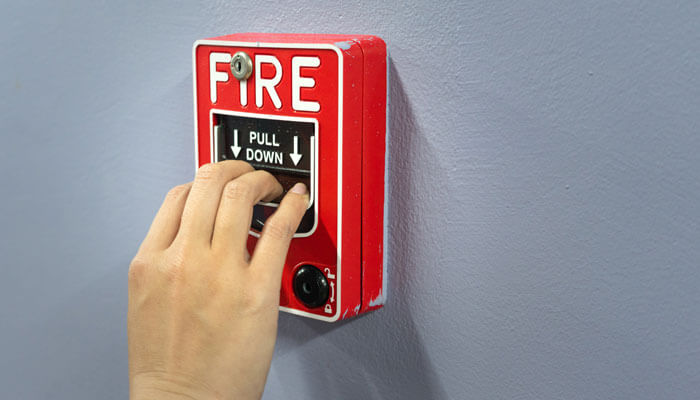
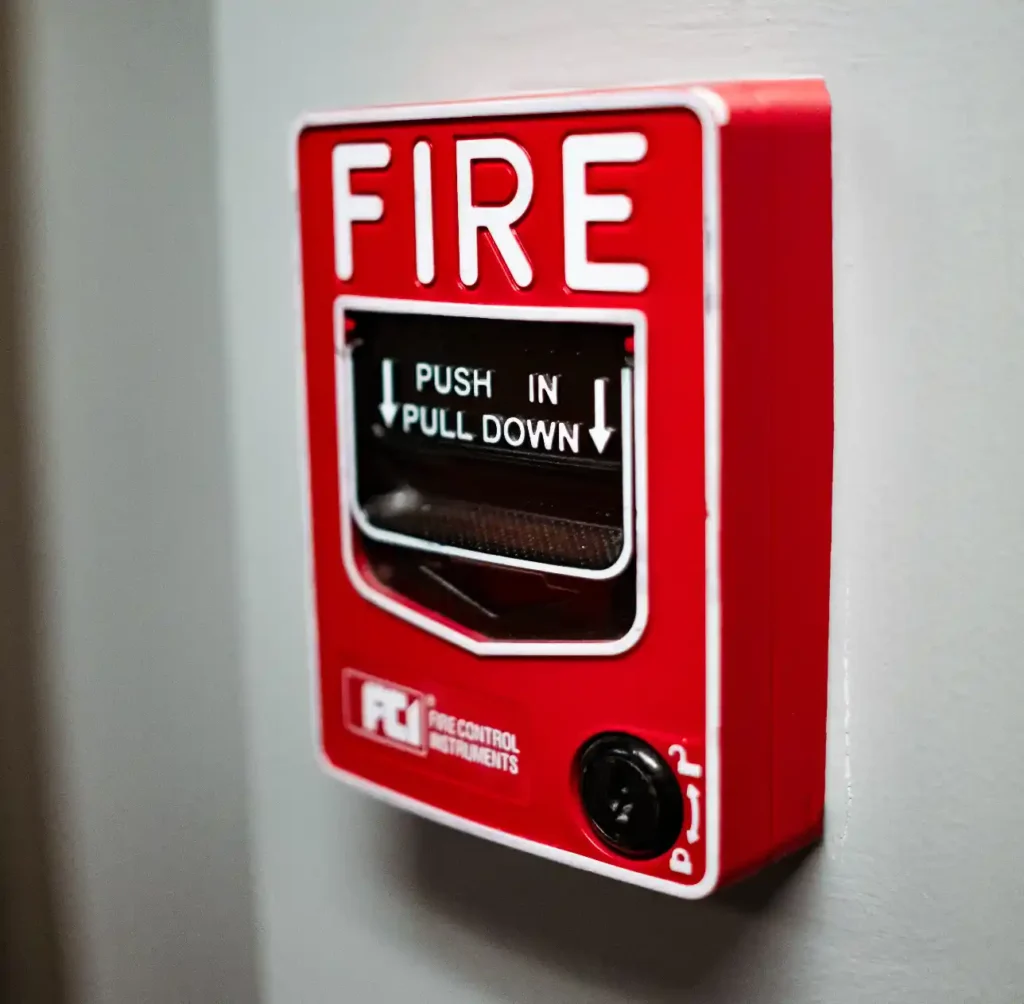
Commercial Fire Alarm Monitoring for Safer Operations
Commercial fire alarm monitoring that protects people and keeps operations steady
Commercial fire alarm monitoring sits at the center of modern life safety for many businesses. When a signal comes in, the right plan ensures the alarm gets verified, the correct responders get notified, and the property team can act fast without guessing. In the first minutes, clarity matters more than panic, and that is where a solid monitoring setup earns its keep. Kord Fire Protection technicians explain it plainly to building teams: the goal is not just to hear an alarm, but to prevent small problems from turning into big headlines. And yes, unlike a bad sitcom, fire safety should never run on “we will figure it out later.”
How to assess risk before the first device ever reports
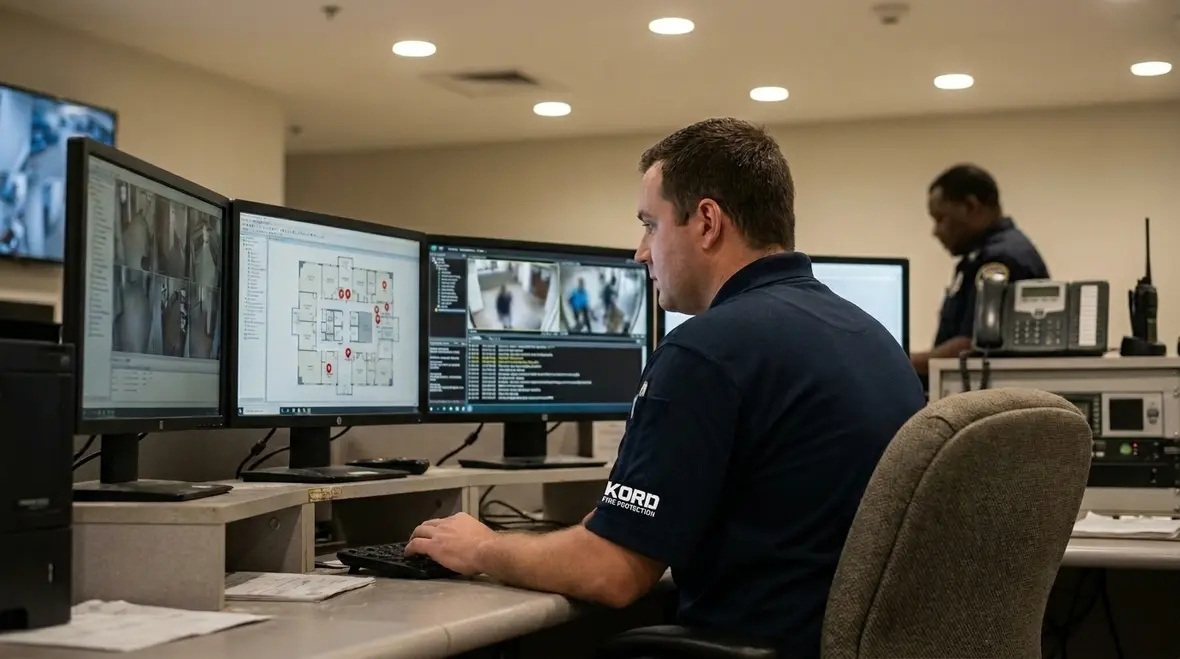
Before companies upgrade systems, they should look at real fire risk, not generic checklists. Kord Fire Protection technicians often start with a walk-through of the site and a review of building use, occupancy load, and history of false alarms. Then they match alarm zones to where people actually work, move, and sleep in their day-to-day routines. For example, the risk in a warehouse with high racks differs from the risk in a quiet office suite. As a result, commercial fire alarm monitoring should reflect the building’s behavior, not just the equipment list.
They also evaluate maintenance gaps and workflow issues. If inspections happen only when something breaks, the monitoring center will get signals that do not reflect true events. Therefore, the safest plan includes a schedule, clear responsibilities, and a way to measure whether the system stays trustworthy over time.
What event reporting should include for maximum safety
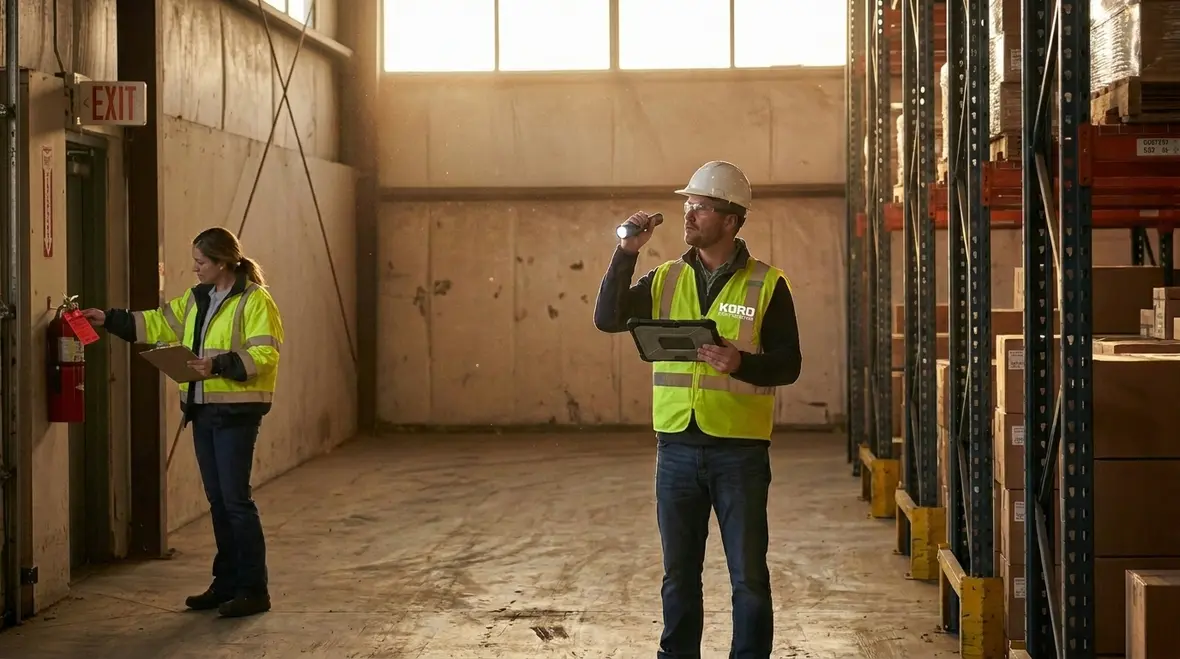
A monitoring plan should send more than a generic “alarm happened.” Instead, it should deliver specific event details that help responders make good choices on the first call. Kord Fire Protection technicians explain that the best commercial fire alarm monitoring programs include clear device location, alarm type, and the time the signal occurred. That matters because responders have to decide quickly whether they need to evacuate, isolate areas, or investigate a possible nuisance condition.
They also recommend that monitoring reporting align with the system’s actual configuration. If the panel uses zones and the monitoring platform cannot translate them into readable locations, staff wastes precious minutes. Plus, when information arrives in a clean format, the building team avoids the “telephone game” effect where everyone hears a different version of events.
How monitoring integrates with response and escalation
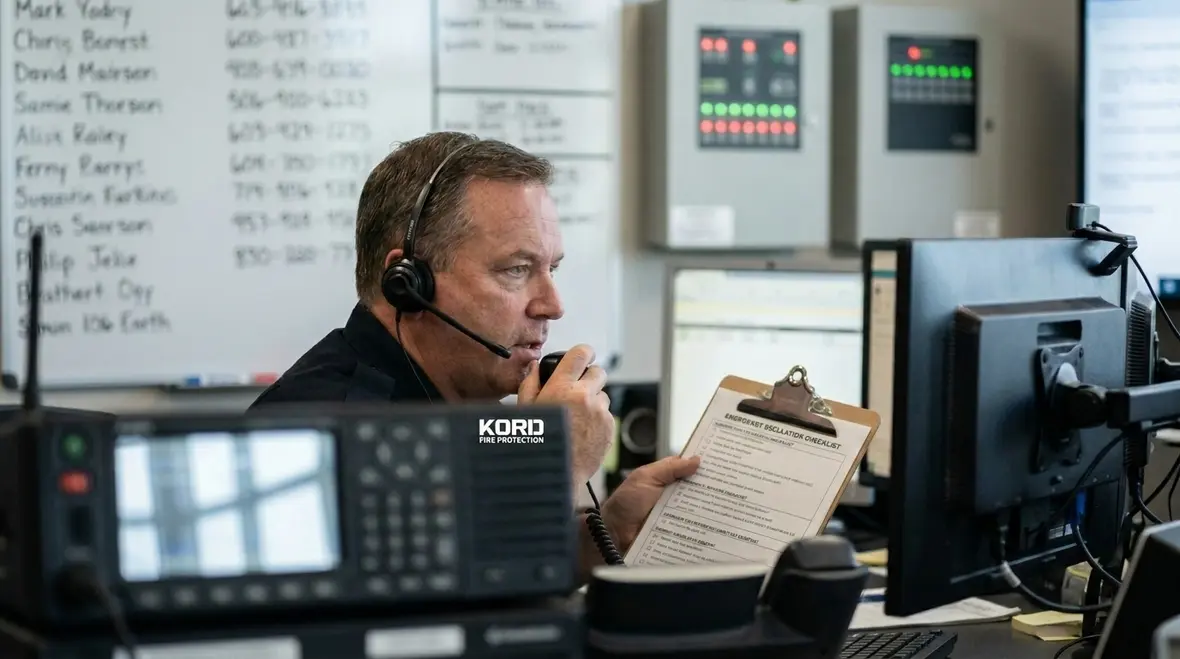
Many businesses treat monitoring as a receiver, then stop there. However, monitoring becomes truly useful only when it ties into response steps and escalation rules. First, the plan should define who confirms the event and who triggers evacuation. Next, it should specify how long responders wait before escalating if confirmation does not arrive. Finally, it should cover after-hours operations, especially for retail, manufacturing, and any site with night shifts.
Kord Fire Protection technicians often help clients design escalation that fits real staffing. For example, a small team cannot always dispatch someone to the property in the first two minutes. In that case, the monitoring process should notify the right contacts sooner while still supporting verification steps. This approach reduces delays while keeping response organized.
To keep everything aligned, companies should test the entire chain, not just the alarm panel. That includes verifying that contact lists stay updated, that call routing works, and that responders understand what each event code means. When the chain holds, the building gets faster help without adding confusion.
Which technologies improve accuracy and reduce false alarms
Accuracy comes from smarter detection, better maintenance, and better communication. While every building varies, monitoring performance often improves when companies use devices that match their environment. For instance, smoke detection choices should consider airflow, dust, humidity, and cooking activity. Heat detection may fit certain spaces better. In addition, supervision features help identify trouble conditions before they become emergency events.
Kord Fire Protection technicians frequently stress that false alarms harm safety culture. When alarms appear random, staff starts to treat them like background noise. Therefore, the monitoring system should support trouble reporting, maintenance reminders, and clear indicators for building teams. This reduces nuisance events and helps technicians correct issues before they trigger a “boy who cried wolf” moment.
They also recommend reviewing panel programming and zone mapping. If devices report to the wrong area, commercial fire alarm monitoring loses its value. Likewise, if walkthrough testing uses outdated floor maps, the system may fail during a real event. Small fixes, done early, prevent big surprises later.
Monitoring and compliance: aligning your program to standards
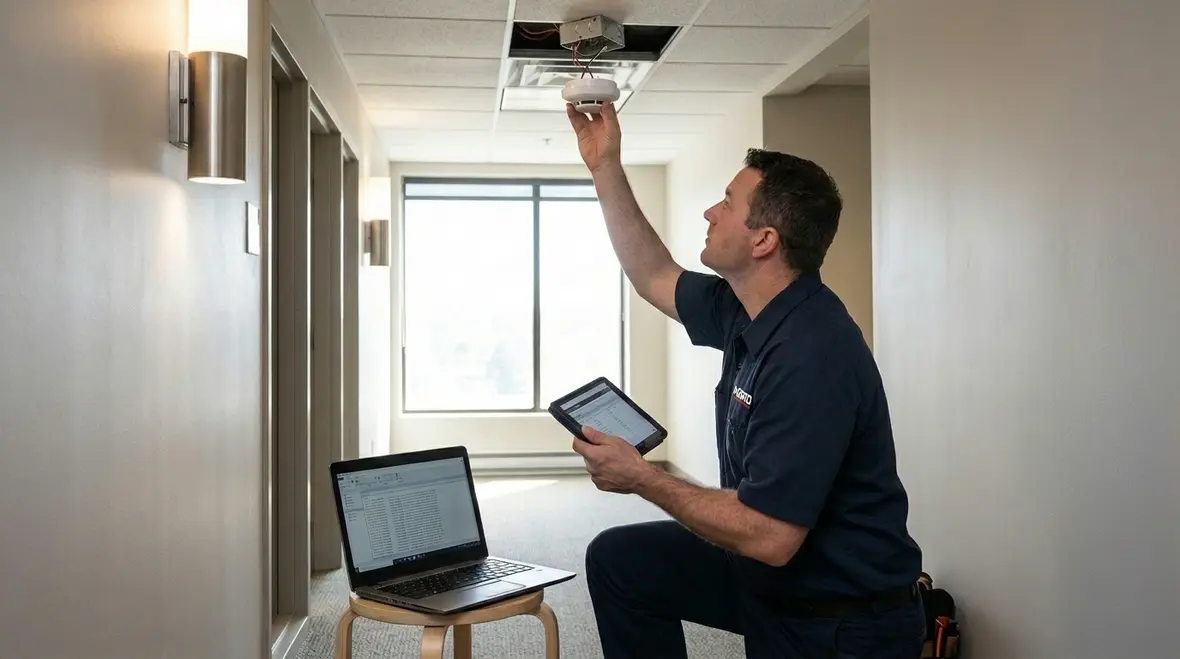
Businesses do not survive on hope, and safety programs do not survive on vague plans. They need compliance practices that fit their jurisdiction and risk level. Kord Fire Protection technicians help clients connect monitoring decisions to inspection schedules, documentation needs, and site-specific requirements. That usually includes verifying device listings, ensuring system supervision paths stay intact, and confirming that monitoring service terms match how the building operates.
To keep compliance practical, companies should treat it like a business process. They should track inspections, maintain records, and use a simple method for reporting issues to the right parties. Then, when contractors or facility managers change, they can quickly bring the next team up to speed. In other words, compliance should not depend on one hero employee knowing everything.
Dual-column planning checklist for upgrades and daily readiness
| What to review | Why it matters |
| Alarm zone mapping to real locations | Speeds correct response and reduces confusion during an event |
| Supervision and trouble reporting settings | Finds issues before they become false alarms or dead signals |
| Escalation rules and call routing | Ensures the right people act at the right time |
| Testing frequency and method | Confirms the chain works, not just the panel |
| Updated contact lists and after-hours plans | Prevents delays when teams are not on site |
| Maintenance logs and corrective actions | Shows real upkeep and supports faster troubleshooting |
Featured FAQ on commercial fire alarm monitoring
Next steps with Kord Fire Protection technicians
Safety improves when planning turns into action. Kord Fire Protection technicians help businesses tune commercial fire alarm monitoring for accurate reporting, smoother escalation, and fewer nuisance events. If your system sends vague alerts, if false alarms frustrate staff, or if response steps feel unclear, it is time to tighten the chain.
Request a safety review and upgrade plan today, then schedule testing that confirms the whole process from alarm to response. Protect people, protect property, and keep operations moving with confidence. Learn more about fire alarm service systems and how they support reliable monitoring.

Join Our Newsletter!
Get the latest fire safety tips delivered straight to your inbox From our Newsletter.