NFPA 1 Section 13.7 Fire Detection and Alarm Systems
Quick Answer
NFPA 1 Section 13.7 sets the stage for reliable fire detection and alarm systems that help protect people, assets, and daily operations. For industrial, retail, and commercial sites across Australia, it guides system design, testing, monitoring, and upkeep. Kord Fire Protection can support this work with expert service, compliance help, and steady long term care.
If you need a practical partner for inspections, repairs, and monitoring support, Kord Fire’s fire alarm services fit naturally into this conversation because they cover installation, maintenance, performance testing, and 24/7 monitoring support for commercial properties. That makes the quick answer a little more useful and a lot less theoretical.
NFPA 1 Section 13.7 matters because it helps facilities build a fire safety setup that works when it counts. In practice, fire alarm system requirements, fire detection NFPA code guidance, and fire alarm monitoring requirements all shape how alarms are installed, maintained, and supervised. That matters for warehouses, shopping centres, offices, plant rooms, and other busy sites where downtime can cost more than a bad cup of coffee on a Monday morning.
Understanding NFPA 1 Section 13.7
NFPA 1 Section 13.7 focuses on fire detection and alarm systems as a core part of life safety. It expects systems to detect danger early, alert occupants fast, and support emergency response. Therefore, the section does not treat alarms as a box to tick. It treats them as a working safety system that must stay ready every day.
For Australian businesses, the section offers useful direction even when local codes govern final compliance. It helps facility teams think clearly about coverage, device placement, monitoring, testing, and records. As a result, managers can reduce gaps that often hide in plain sight until the fire panel starts shouting for attention.
Why this section deserves attention from operations teams
The real value of Section 13.7 is that it pushes people to think beyond equipment lists. A panel, a detector, and a strobe do not magically become a strategy just because they share a wall. The section encourages a full system mindset, where design, performance, supervision, and maintenance all work together. That matters in facilities where people are moving fast, equipment runs hot, and one weak link can throw the whole plan off balance.
How fire alarm system requirements shape real site safety
Fire alarm system requirements usually cover the basics that keep a system dependable. These include correct device selection, clear alarm signals, proper power supply, sounder levels, and routine testing. In addition, the system must fit the building use and the risks inside it.
For example, a retail site needs quick occupant warning and clear exit guidance. Meanwhile, an industrial site may need stronger detection in dusty, hot, or high ceiling spaces. Therefore, the best design always starts with the risk, not with a one size fits all guess. That approach keeps the system useful instead of merely impressive on paper.
Common design points that cannot be guessed
- Detector type should match the hazard and surrounding conditions.
- Notification devices must be audible and visible where occupants actually are.
- Power supplies and backup arrangements should support dependable operation.
- Zoning and annunciation should help responders locate trouble quickly.
- Testing access should be practical, not an afterthought hidden behind impossible ceiling space.
When these points are planned well, a facility gets more than compliance language in a folder. It gets a system people can trust during a stressful event. When they are planned badly, the system may still exist, but confidence in it quietly evaporates every time a nuisance alarm interrupts the day.
What the fire detection NFPA code means for busy facilities
The fire detection NFPA code places real value on early warning. It expects detection methods that suit the hazard and the environment. Because of that, smoke detectors, heat detectors, beam detectors, and manual alarm points must all be chosen with care.
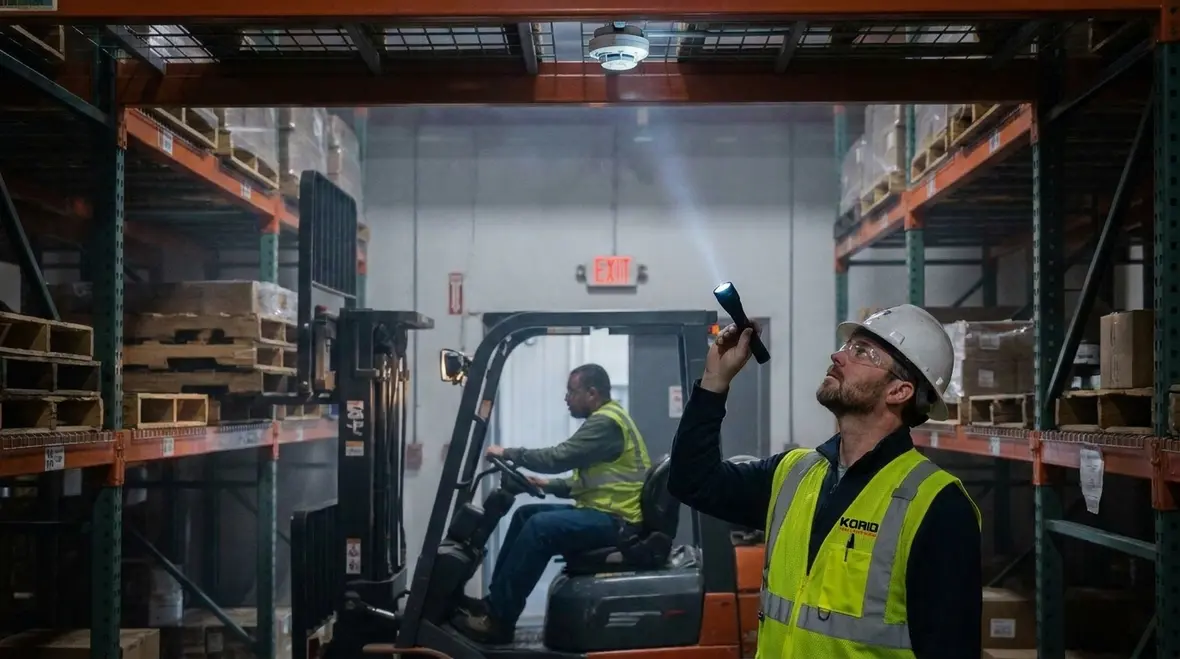
In large commercial sites, airflow, ceiling height, and equipment layout can affect detection speed. Likewise, in warehouses and distribution centres, dust and forklift movement can create false alarms if the system is not planned well. So, the code pushes facilities toward smarter design, not just more devices. That saves time, money, and a few headaches that nobody asked for.
Early warning only works when the environment is understood
Detection strategy should follow the space, not fight it. High ceilings can delay smoke reaching spot detectors. Dusty production areas can trigger nuisance alarms if the wrong device type is used. Plant rooms may need heat based solutions where smoke detection would struggle. None of this is glamorous, but it is exactly where dependable performance is won or lost.
This is also where related guidance can help. Kord Fire’s guide to NFPA 1, a comprehensive guide to fire prevention and safety gives broader context around how fire prevention expectations connect with system level decisions. It is helpful when teams want to understand the bigger picture instead of reading one requirement at a time like a mystery novel with missing pages.
Fire alarm monitoring requirements explained for operations teams
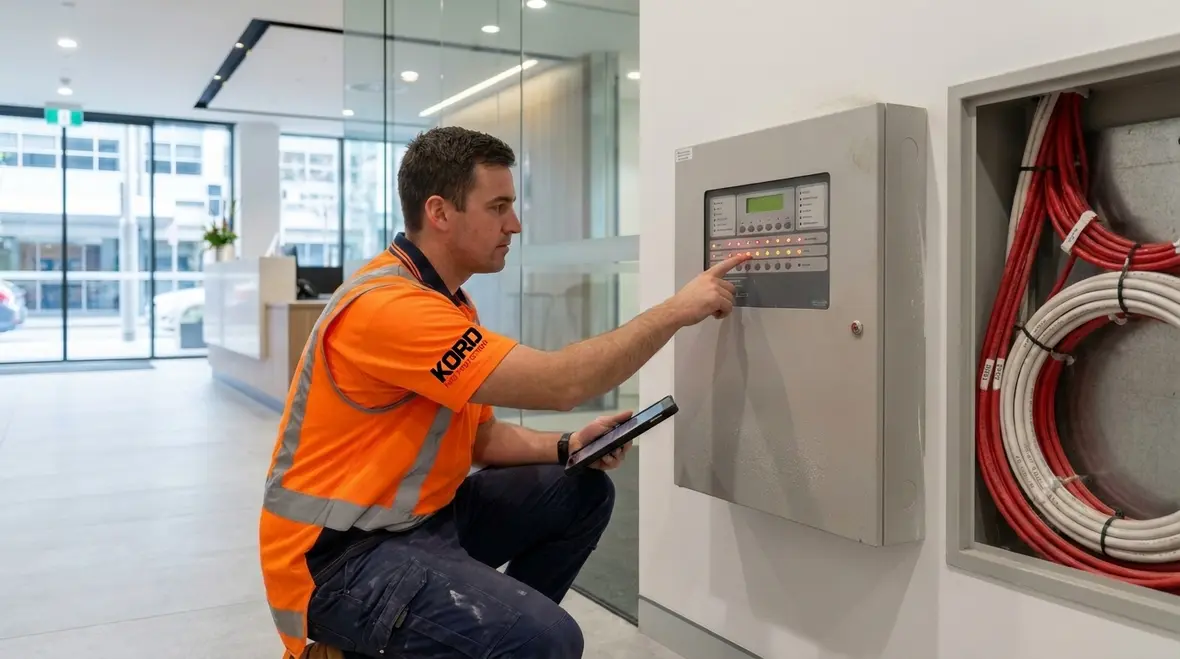
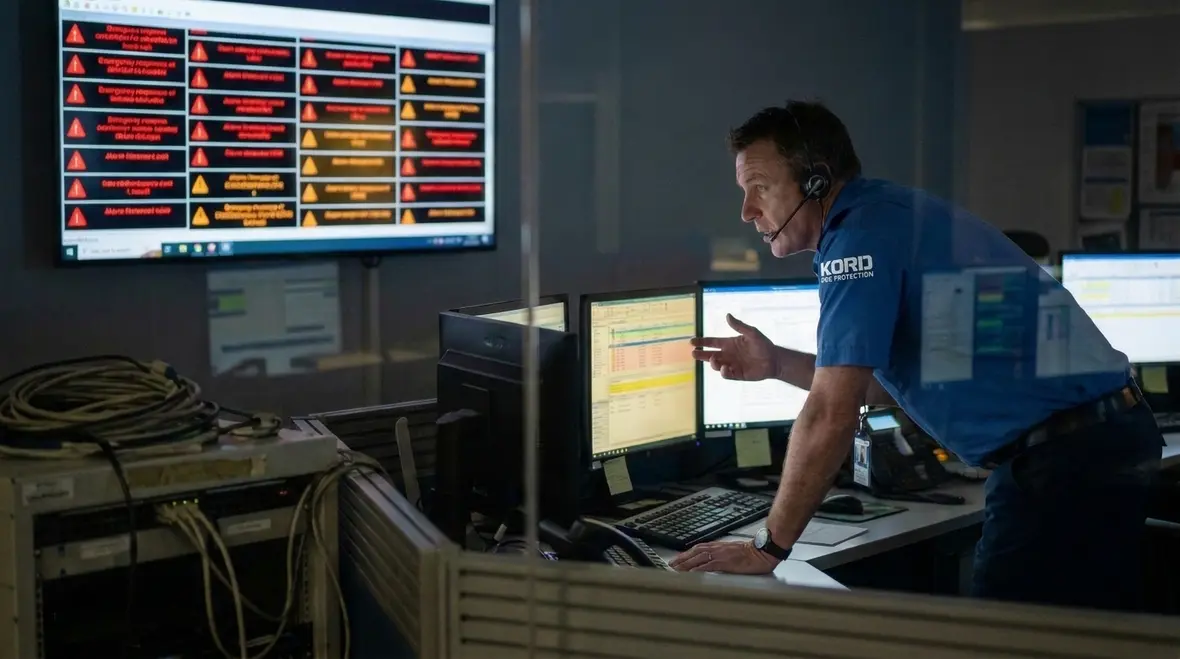
Fire alarm monitoring requirements matter because a system that only sounds on site may not be enough. Monitoring connects the alarm to a central station or approved response path, so help can move even when no one is near the panel. In a large facility, that speed can make all the difference.
Monitoring also supports after hours protection. For multi site operators, it gives leadership a clearer view of risk across the business. Therefore, the system does more than scream for help. It sends the right message to the right people at the right time, which is a far better plan than hoping someone notices smoke before lunch.
What strong monitoring support usually looks like
- Signals are transmitted reliably and clearly.
- Device locations and alarm types are easy to identify.
- Supervisory and trouble signals are not ignored behind the scenes.
- After hours events still trigger the right response path.
- Service teams can investigate recurring issues before they become recurring chaos.
That is one reason many businesses tie system service and monitoring together rather than treating them as distant cousins that only meet at compliance time. A coordinated approach usually produces cleaner records, faster troubleshooting, and less confusion when faults appear at the least convenient moment, which is of course their favourite moment.
Compliance checklist for Australian commercial and industrial sites
| Column 1 | Column 2 |
| System design | Match devices and layout to the building use and hazard level |
| Testing | Carry out routine checks, device tests, and panel inspections |
| Monitoring | Confirm alarm signals reach the correct response service |
| Records | Keep clear logs for servicing, faults, and corrective work |
| Maintenance | Fix defects quickly and replace failed parts without delay |
This checklist helps site leaders keep fire safety practical. However, compliance works best when teams treat it as an ongoing process. A fire alarm system that is installed and forgotten can become as useful as a smoke detector in a thunderstorm that has already moved on.
Simple habits that strengthen compliance over time
- Review site changes before they affect detector coverage or audibility.
- Keep service records organised and easy to access during inspections.
- Respond to faults quickly instead of letting them age into bigger problems.
- Train on site contacts so they know what alarms, troubles, and supervisory signals mean.
- Check that contractors, tenants, and facilities staff are not creating blind spots through layout changes.
How Kord Fire Protection supports Section 13.7 compliance
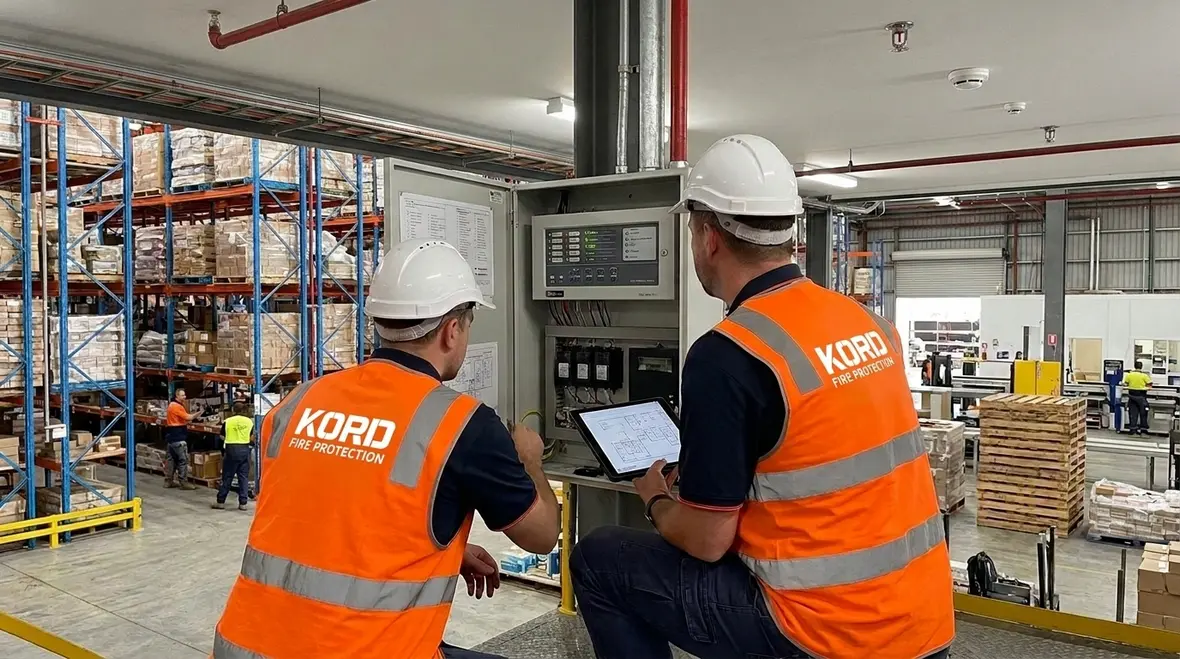
Kord Fire Protection can become a vital partner because this work demands both technical skill and reliable follow through. The team can help assess fire alarm system requirements, check current device performance, support upgrades, and maintain systems so they stay ready. In addition, Kord Fire Protection can assist with fire alarm monitoring requirements and ongoing service needs across commercial and industrial sites.
That kind of support matters for facilities that manage multiple buildings, mixed tenancies, or complex plant areas. Because each site carries its own risk, Kord Fire Protection can help tailor the service to the environment instead of forcing the site into a generic template. In short, they help turn compliance from a stress event into a managed process.
For organisations that want a broader partner beyond one system category, Kord Fire’s full fire protection services also connect alarms with sprinklers, extinguishers, testing, and maintenance planning. That wider view can be helpful when one site issue has a habit of affecting three different compliance folders at once.
Why regular servicing protects uptime and people
Regular servicing keeps alarms sensitive, stable, and useful. Over time, dust, damage, age, and poor changes to the building can affect performance. Therefore, service visits help catch small issues before they become large failures.
For facilities, that means fewer false alarms, less disruption, and better confidence during inspections. It also means staff can focus on work instead of wondering whether the panel is having a dramatic moment worthy of a movie sequel. Proper service protects both people and business continuity, and that is a rare win in any budget cycle.
Servicing is where reliability becomes real
Routine maintenance is not glamorous work, but it is where systems earn trust. Device cleaning, battery checks, signal verification, panel review, and fault follow up all support the kind of reliability facilities need. A well serviced system reduces nuisance alarms, shortens troubleshooting time, and improves confidence when regulators, insurers, and occupants all expect the same thing: for the system to work without excuses.
FAQ
Conclusion
NFPA 1 Section 13.7 gives facilities a strong path toward better fire safety, faster warning, and stronger control. For Australian industrial, retail, and commercial sites, the right partner makes the difference. Kord Fire Protection can help keep systems compliant, monitored, and ready, so businesses can protect people and keep operations moving.
Reach out to Kord Fire Protection to build a safer, smarter fire alarm plan. With practical support across service, monitoring, maintenance, and broader compliance needs, teams can move from reactive fixes to a more stable and confident approach. That is better for people, better for uptime, and much better than waiting for the panel to choose chaos again.

Join Our Newsletter!
Get the latest fire safety tips delivered straight to your inbox From our Newsletter.