NFPA 1 Flammable Liquid Drum Storage Guide
Quick Answer
NFPA 1 Section 66.9 guides how flammable liquids are stored in drums and containers, focusing on containment, spacing, and fire protection. For Australian facilities the standard serves as a benchmark while local codes steer compliance. Kord Fire Protection can be your trusted partner from assessment to installation, training and audits, ensuring safe storage that protects people, property and profits.
NFPA 1 flammable liquid container drum storage fire code in focus
The NFPA 1 flammable liquid container drum storage fire code is a blueprint for safe handling. It emphasizes secondary containment, bonding and grounding, proper venting and labeling, and separation of incompatible liquids. In addition to these core ideas, the code calls for durable storage enclosures, spill control measures, and regular inspections. For Australian facilities, this US standard acts as a strong reference point while local regulations determine exact practices. Embracing these guidelines reduces ignition risks and improves response readiness.
Facilities reviewing storage upgrades should also look at NFPA 30 flammable and combustible liquids guidance to better understand how liquid classification and storage methods influence overall protection strategy.
The core of NFPA 1 Section 66.9 and what it means for drums
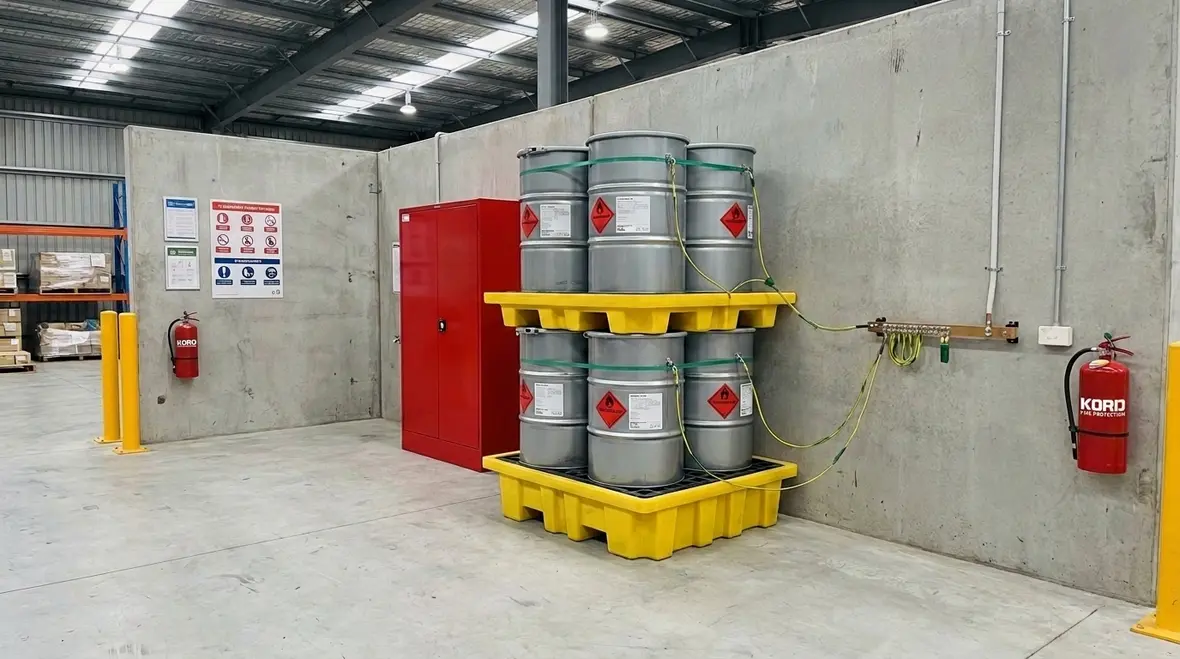
Section 66.9 centers on containers that hold flammable liquids, including drums and portable tanks. It requires secondary containment with sufficient capacity, corrosion resistant surfaces, and clear accessibility for emergency responders. It also highlights bonding to prevent static discharge and proper labeling so workers recognize hazards at a glance. In practice this means dedicated storage zones, drip pans under drums, and routine checks to catch leaks early. The result is a safer site with fewer surprises, like a plot twist you actually welcome.
For broader fire prevention context, it is also worth reviewing NFPA 1: A Comprehensive Guide to Fire Prevention and Safety as part of a bigger compliance picture.
Storage best practices for Australian facilities
Australian facilities should place flammable liquid drums away from ignition sources and ensure room for safe movement and emergency access. Fire-rated cabinets and spill pallets help contain incidents and make inspections easier. Ventilation matters, but so does temperature control and container compatibility. In addition to keeping stacks orderly, teams should separate incompatible liquids, maintain accurate inventories and post visible hazard signage. The aim is steady operations with minimal risk, not a dramatic rescue scene.
Design maintenance and labeling you can trust
Build the storage setup to stay boring in the best possible way
Choosing the right drum materials and ensuring lids seal properly matters. Regular inspection of drum integrity, couplings, and gaskets prevents hidden leaks. Labels must clearly indicate contents, hazards, and date codes. Maintenance extends to the storage area itself: clean floors, leak detection routines, and promptly addressing corrosion or rust. When maintenance is consistent and straightforward, compliance follows naturally rather than feeling like a perpetual sprint to meet a deadline.
Partnering with Kord Fire Protection
Kord Fire Protection offers more than a service; it provides a trusted partnership for risk reduction. From initial site surveys to design, installation, training and ongoing audits, Kord helps facilities align with the NFPA 1 flammable liquid container drum storage fire code while meeting Australian standards. Their team can tailor containment solutions, install compliant cabinets, and deliver practical staff training. With Kord, a facility gains a calm, capable ally who speaks in plain terms and delivers measurable safety improvements.
Where hazards go beyond cabinet storage alone, a layered fire protection system for flammable liquids can help tie storage controls to detection, suppression, and emergency response.
Implementation steps for compliance
- Assess current storage and identify gaps relative to 66.9 and local rules
- Design a compliant layout with secondary containment and clear separations
- Install appropriate drums, cabinets, and spill control measures
- Label everything clearly and establish a bonding grounding plan
- Train staff on safe handling and emergency response
- Schedule audits and regular maintenance checks
- Responsible parties and timelines
- Required permits and documentation
- Key performance indicators for ongoing safety
- Emergency contacts and incident reporting procedures
- Refreshers and revalidation intervals
- Audit readiness and continuous improvement processes
FAQ
Conclusion and call to action
Safe storage of flammable liquids protects people and assets while enabling steady production. By following NFPA 1 principles and engaging a partner like Kord Fire Protection, Australian facilities can achieve reliable compliance and smoother operations. Take the first step today by arranging a site review with Kord to tailor a drum storage solution that fits your space, budget and risk profile.

Join Our Newsletter!
Get the latest fire safety tips delivered straight to your inbox From our Newsletter.