
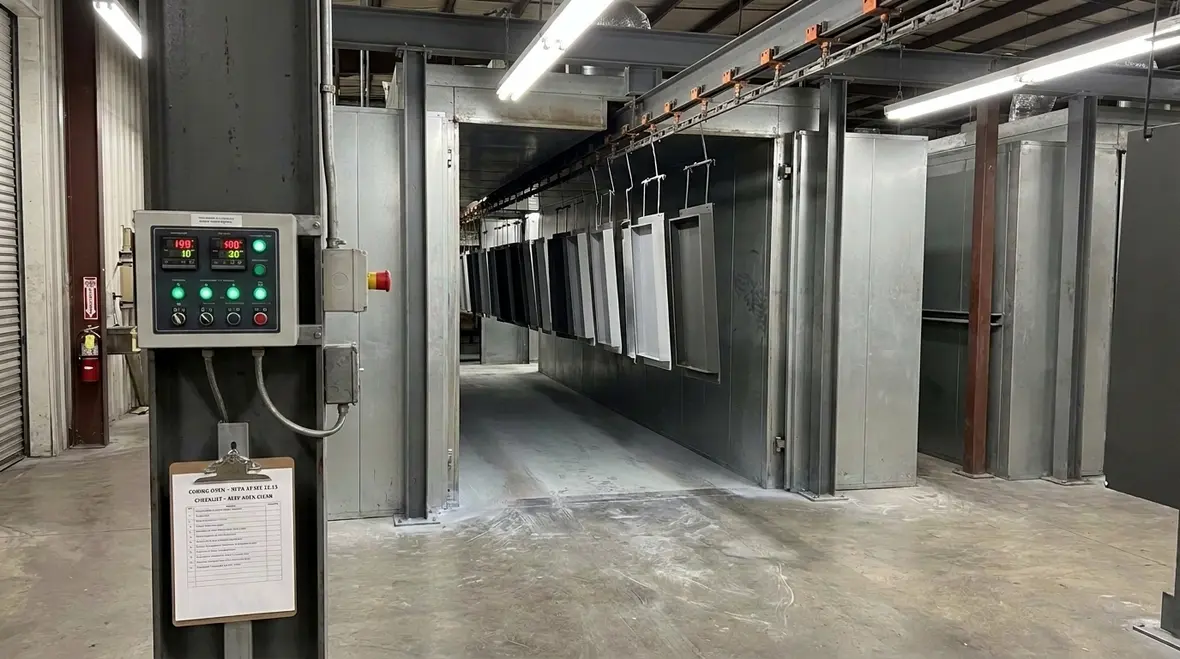
NFPA 33 Section 15.13: Drying, Curing, and Fusing for Powder Coating
Quick Answer: NFPA 33 Section 15.13 sets performance based fire protection expectations for powder coating drying, curing, and fusing operations. It focuses on controlling ignition sources, managing powder cloud hazards, and protecting equipment integrity through appropriate installation, operation, and inspection of the process.
Facilities tightening their overall spray operation compliance often also benefit from reviewing NFPA 33 application coverage and exclusions so the curing and fusing stages are evaluated within the correct fire protection scope.
What NFPA 33 15.13 covers in powder coating operations
NFPA 33 governs spraying operations, including the hazards created during preparation, deposition, and post processing of coatings. Section 15.13 addresses the drying, curing, and fusing stages, when powder is heated to form a cured film. These steps are not “low hazard” simply because the material is now immobilized on the substrate; heating equipment introduces ignition potential, hot surfaces, and failure modes associated with airflow loss, overheating, or contaminated components.
For many commercial facilities, the practical takeaway is that NFPA 33 powder coating drying curing fusing equipment must be integrated with the plant fire safety program. That includes documented operating limits, inspection routines, and verification that control systems prevent or detect unsafe conditions. In practice, compliance gaps frequently appear when ovens, gas fired curing systems, or thermal oxidizers are modified without a fire risk review or when maintenance records cannot demonstrate that safeties and exhaust controls work as intended.
Where the risk concentrates during drying, curing, and fusing
Drying, curing, and fusing stages involve elevated temperatures and airflow movement that can disturb residual powder, generate dust layers, or create localized powder dust in exhaust and ductwork. Even when bulk powder is no longer airborne, combustible dust can accumulate, and process exhaust can transport fine particulates. NFPA 33 15.13 expects facilities to manage these hazards rather than treating them as incidental to the coating line.
Common hazard scenarios that trigger enforcement attention
- Hot surface ignition: Aging heating elements, failing insulation, or improper clearances can expose surfaces that ignite dust or residual fines.
- Airflow disruption: Loss of ventilation or improper balancing increases the chance of powder deposition in ducts and the formation of combustible layers.
- Residual powder in zones: Powder carryover, poor housekeeping at line transitions, and blocked filters create a larger fuel source.
- Exhaust and duct contamination: Fine powder can accumulate in exhaust plenums and transitions, especially where condensation and cooling occur.
- Oven and curing control failures: Overtemperature conditions, stuck dampers, or malfunctioning interlocks can drive unsafe operation.
Equipment design and controls expected under NFPA 33 Section 15.13
Section 15.13 focuses on operational and protective measures that reduce ignition likelihood and limit consequences. The facility must ensure the powder coating drying curing fusing equipment and its associated systems operate within designed parameters and that ignition sources remain controlled. Compliance tends to be strongest when the facility can show a clear linkage between hazard control objectives and the physical controls installed.
Key control themes facilities typically document
- Temperature control and overtemperature safeguards: High limit devices and control logic that prevent runaway heating.
- Exhaust, ventilation, and airflow integrity: Interlocked operation between fans, dampers, and heating modes where required.
- Safe heat application and distribution: Burner and heating system operation within manufacturer specified ranges.
- Hot surface management: Insulation integrity, guardrails, and surface temperature control practices.
- Component reliability: Preventive maintenance for controls, sensors, and heating elements.
Where the facility uses a gas fired curing system, an air handling system, or supplementary thermal treatment, compliance documentation should include commissioning records, updated operating procedures, and evidence of ongoing verification. If modifications occur, the facility should reassess how changed airflow patterns and temperature profiles affect dust deposition and ignition potential.
Operational procedures that prevent ignition during post bake processing
NFPA 33 compliance does not end with equipment selection. Plant operators must maintain consistent operating sequences, manage startup and shutdown states, and prevent unsafe conditions that can occur during transitions. These are the moments when powder carryover is most likely to be disturbed and when exhaust systems can be temporarily misaligned with heating operation.
Practical procedure elements to implement
- Interlock aware startup: Ensure exhaust and airflow are proven before heat is enabled.
- Controlled ramp up: Avoid rapid temperature changes that destabilize flow patterns and increase condensation associated with dust carryover.
- Shutdown purging where applicable: Maintain exhaust for an appropriate period to reduce residual powder movement.
- Clear product changeover steps: When changing powders, validate that cleaning and purge steps are sufficient to avoid cross contamination and layer buildup.
- Operator training and documented limits: Confirm operators understand what constitutes unsafe operation and how to respond.
In retail and light industrial settings, the biggest operational failure point is inconsistent housekeeping schedules. In manufacturing environments, the issue often becomes maintenance drift, where interlocks are bypassed or dampers are adjusted to “solve” production complaints without restoring design intent.
Inspection, maintenance, and common failure points
A robust maintenance program is a direct compliance lever. NFPA 33 Section 15.13 expectations are difficult to meet when the facility cannot demonstrate that safeties, exhaust performance, and ignition source controls remain functional. Fire inspection and maintenance should be treated as a continuous verification system, not an annual paperwork event.
What inspectors and auditors look for
- Documentation quality: Maintenance logs for sensors, high limits, interlocks, dampers, and heating components.
- Housekeeping evidence: Proof of scheduled cleaning that addresses powder accumulation in ducts, plenums, and oven zones.
- Exhaust pathway condition: Inspections for blockages, filter loading, duct abrasion, and residue buildup.
- Functional testing results: Verification that controls prevent heat when airflow is not within acceptable parameters.
- Training records: Training that reflects the actual operating procedures for the curing systems installed.
Frequent “hidden” failure points in curing and fusing lines
- Interlocks out of adjustment: Dampers or proof switches drift over time, leading to latent unsafe operation.
- Contaminated sensors: Heat and airflow sensors can become coated, reducing their accuracy.
- Degraded insulation: Small insulation defects can expose hot surfaces to nearby dust layers.
- Undocumented line modifications: Replacement fan units, revised ducting, or rebalanced dampers without hazard review.
To strengthen readiness, commercial facilities often benefit from ongoing third party oversight. Kord Fire Protection supports industrial and commercial compliance by aligning fire protection documentation, inspection routines, and functional verification with real equipment configurations. If your team needs a partner to validate ongoing performance for your powder coating systems, Kord Fire Protection can help streamline inspections and maintenance planning. For additional guidance, review Kord Fire Protection resources here: NFPA Codes and Guidelines: Solutions for Fire Protection and Life Safety.
How to demonstrate compliance during audits and insurer reviews
Successful audits usually show an evidence based trail: hazard identification, installed controls, operating procedures, and maintenance records that confirm controls remain effective. For drying, curing, and fusing, auditors often focus on how the facility prevents ignition during heating and ensures that exhaust and dust control measures keep ignition fuels and ignition opportunities separated.
Build a compliance packet with these documents
- System description: Diagrams and narratives of the curing oven or fusing system and its exhaust route.
- Operating procedures: Startup, shutdown, upset condition response, and changeover processes.
- Inspection and maintenance plan: Frequency, responsible roles, and acceptance criteria.
- Functional testing records: Interlock and control verification results, including corrective actions taken.
- Housekeeping program: Cleaning schedules with verification methods and escalation triggers.
When these elements align, facilities can show that NFPA 33 powder coating drying curing fusing equipment is managed as an integrated fire prevention system, not as stand alone hardware.
Frequently Asked Questions
Next step: verify your drying, curing, and fusing controls
NFPA 33 compliance for drying, curing, and fusing depends on evidence: operating procedures, functional testing, dust control practices, and reliable ignition prevention. Kord Fire Protection helps commercial facilities confirm that NFPA aligned controls perform as installed and remain dependable through maintenance. Request a consultation to review your powder coating drying curing fusing equipment and develop an inspection and verification plan that stands up to audits, insurers, and day to day operations.

Join Our Newsletter!
Get the latest fire safety tips delivered straight to your inbox From our Newsletter.



