NFPA 1 Flammable Liquid Classification Australia
Quick Answer
NFPA 1 Section 66.4 defines how liquids are classified by flammability and storage risk. It guides labeling, container design, ventilation, and emergency response for industrial retail and commercial sites across Australia. Kord Fire Protection can partner with you to perform classifications, implement compliant labeling, and train staff for safer operations.
Industrial, retail and commercial facilities across Australia rely on a clear plan for handling liquids. The NFPA 1 flammable liquid classification hazard fire code provides that plan, turning complex rules into practical steps. In the hands of a patient partner like Kord Fire Protection, classification becomes a simple routine rather than a mystery box of safety gear. The result is safer sites, smoother audits, and less drama when a spill happens, which in truth is the only time anyone wants to see a drama without the thrills.
For facilities building a broader liquid risk strategy, this NFPA 30 flammable and combustible liquids guide fits naturally alongside classification work and helps connect storage decisions to day to day protection planning.
Sites with higher risk processes may also benefit from special hazard fire suppression in Australia by Kord, especially where flammable liquids, enclosed spaces, or sensitive equipment all share the same address and refuse to keep things simple.
NFPA 1 flammable liquid classification hazard fire code implications for industrial sites
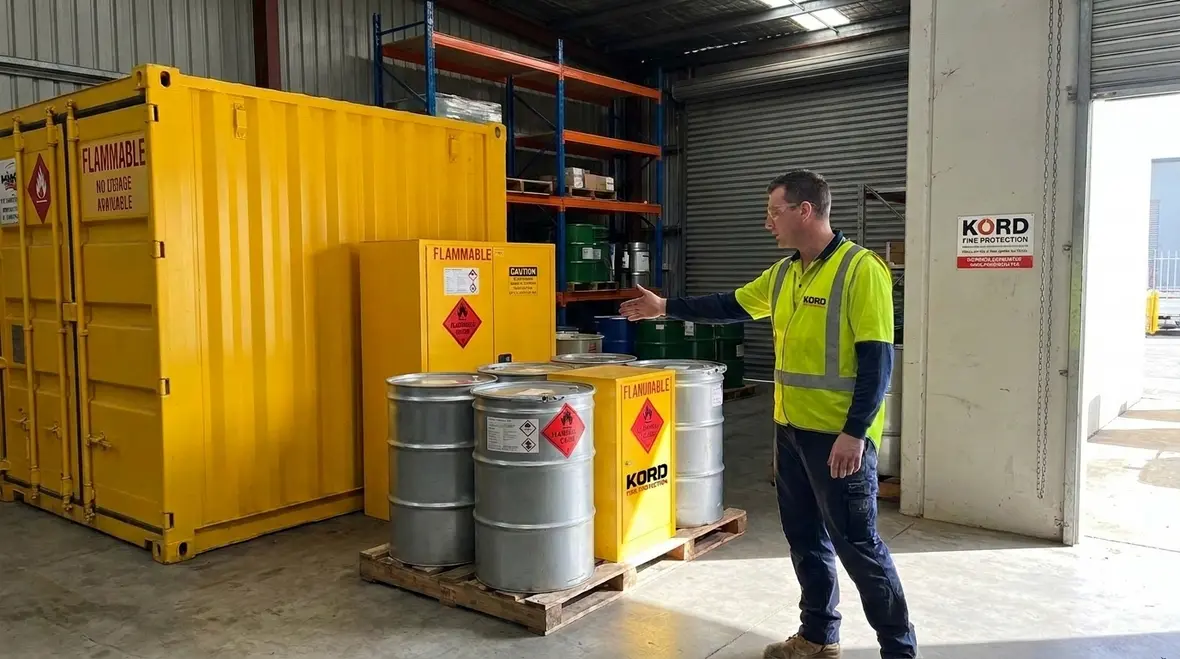
Section 66.4 of NFPA 1 sets how liquids are divided into categories such as flammable liquids and combustible liquids, influencing their handling, storage, and fire protection measures. The classification affects what container sizes are allowed, what ventilation is needed, and how spills are managed. Across industries, this framework reduces risk and clarifies responsibilities. In practice, teams lean on this guidance to decide storage room design, eyewash availability, and the level of fire protection required for different liquid classes.
Why classification drives more than labels
Once a liquid is classified correctly, the rest of the site plan stops feeling like guesswork. Storage layouts, cabinet choices, ventilation, spill response, and extinguisher placement all begin to line up. That is why classification is not just a paperwork task. It is the starting point for every other practical control that follows.
Adopting NFPA 1 flammable liquid classification hazard fire code practices in daily operations
Kord Fire Protection brings practical depth to this work. They perform site assessments, help classify liquids using local data, and install labeling that matches the standard. Their team trains staff to recognize hazards, respond to spills, and coordinate with local fire authorities. In short, they turn a challenging standard into clear daily steps. For businesses, this means fewer surprises during inspections and more consistent safety performance, even when deadlines loom like a corporate town hall meeting.
What daily adoption usually includes
- Reviewing the liquids actually on site instead of relying on old assumptions
- Matching labels and signage to current classifications
- Checking storage conditions, segregation, and ventilation
- Training staff on spill response, reporting, and safe handling
- Updating emergency planning so it reflects the real hazard profile
Why this matters for Australian industries
Australian facilities in manufacturing, logistics, and retail rely on consistent liquid handling programs. When 66.4 classifications are applied correctly, warehouses reduce mislabeling and avoid the wrong storage configurations. The result is smoother operations, better inventory control, and a lower risk profile. Kord Fire Protection brings an Australian focus, aligning NFPA 1 guidance with local codes and practical site realities. The partnership helps facilities stay compliant while keeping production moving and margins intact.
For a broader prevention framework, teams can also refer to NFPA 1: A Comprehensive Guide to Fire Prevention and Safety as a natural companion resource when building site procedures and training content.
Steps to implement a compliant classification program
- Conduct a liquid inventory review to identify flammable and combustible liquids
- Assign classification and labeling according to NFPA 1 Section 66.4 guidelines
- Update storage configurations and ventilation to match the liquid class
- Train staff on classification, labeling, spill response, and incident reporting
- Schedule regular audits and refreshers to maintain best practice
A practical note before rollout
The easiest programs to maintain are the ones that are documented clearly and explained in plain language. If people understand why a liquid sits where it sits and why a label says what it says, compliance tends to stick much better than if the whole thing arrives like a mysterious decree from Mount Clipboard.
Two column snapshot of the approach
Column A
- Classification criteria drive storage and containment choices
- Labeling and signage reflect the exact liquid class
- Emergency response plans align with the class of liquid
Column B
- Kord Fire Protection conducts site surveys and provides tailored labeling
- Staff training covers practical drills and familiarization with NFPA 1 practices
- Spill response and waste handling follow clear, repeatable steps
Practical impact across sectors
In industrial plants, classification helps set up correct storage cages and fire protection control panels. In retail spaces, it supports safer bulk liquid areas and better signage. Facilities managers gain a unified framework that makes compliance predictable rather than perilous. The overarching result is a calmer, more capable operation, where safety becomes routine rather than reactive, a little like a steady drumbeat in a long movie score.
FAQ
Conclusion and call to action
By aligning with NFPA 1 Section 66.4 and partnering with Kord Fire Protection, facilities across Australia can transform liquid handling from a risk area into a reliable process. The approach reduces incidents, simplifies compliance and protects people. Reach out to Kord Fire Protection to schedule a site assessment and start building a safer operation today.

Join Our Newsletter!
Get the latest fire safety tips delivered straight to your inbox From our Newsletter.