NFPA 30 Flammable and Combustible Liquids Guide
There is a certain gravity that settles over a room when someone mentions the nfpa 30 flammable and combustible liquids code. It sounds serious. It sounds official. And truth be told, it is. Yet beneath the formal title lies something very practical. It is a guide designed to keep facilities from turning into scenes out of an action movie where someone yells, “Everybody out!” while flames climb the walls.
This article offers a plain English look at what that code means for real world facilities. Along the way, Kord Fire Protection technicians step in to explain how the rules translate into daily operations. Because while codes live on paper, safety lives in the building.
What Is NFPA 30 and Why Should Facilities Care?
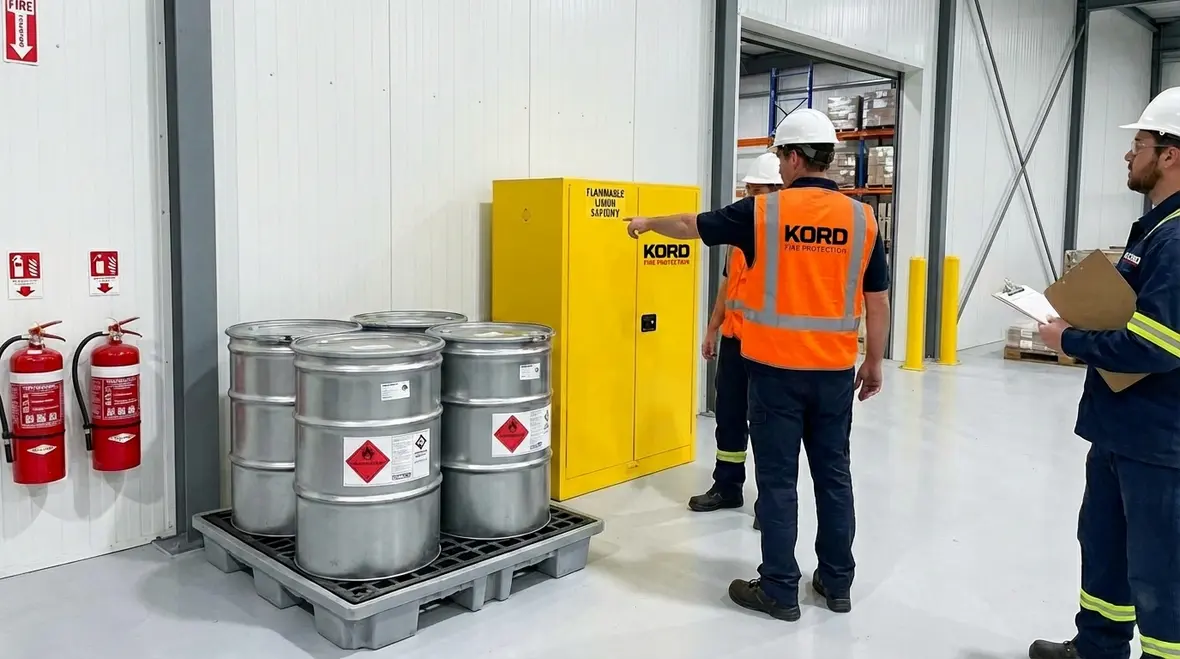
The NFPA 30 standard sets the rules for storing, handling, and using flammable and combustible liquids. Think gasoline, diesel, solvents, paints, alcohol based solutions, and a long list of industrial liquids that can ignite when conditions line up just right.
Facilities care because these liquids do not need much encouragement. A spark, static buildup, or overheated surface can trigger a chain reaction. Therefore, the code focuses on prevention. It defines how liquids are classified, how they must be stored, how much can be kept in one place, and what kind of fire protection systems must stand ready.
Kord Fire Protection technicians often explain it this way. The code is not trying to slow business down. It is trying to keep business open. Because after a serious fire, operations tend to pause. Sometimes permanently.
Moreover, insurance carriers and local authorities often reference NFPA standards. That means compliance is not just good practice. It is often required. When facility managers understand the intent behind the rules, they move from simply passing inspections to actively reducing risk. For a broader look at how multiple NFPA standards fit together, many safety managers also review Kord Fire’s overview of NFPA codes and guidelines for fire protection and life safety, which includes NFPA 30 alongside related standards like NFPA 77 and NFPA 2001.
Understanding Liquid Classification Without a Chemistry Degree
The code divides liquids into categories based on flash point and boiling point. Flash point is the lowest temperature at which a liquid gives off enough vapor to ignite. In plain terms, it answers the question, “How easily does this stuff catch fire?”
Flammable liquids have lower flash points. They ignite more easily. Combustible liquids have higher flash points. They still burn, but they need more heat to get started.
Within these groups, there are classes such as Class I, Class II, and Class III. Each class has specific storage and handling requirements. For example, a Class I liquid demands tighter controls than a higher flash point Class III liquid.
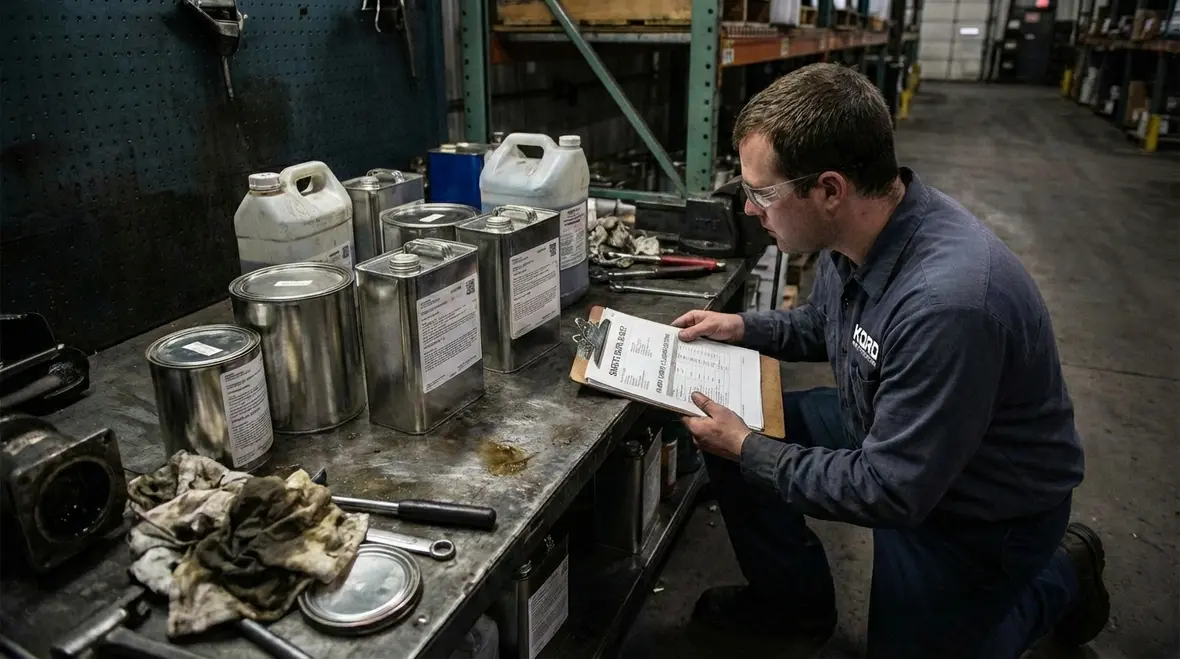
Kord technicians often walk facility teams through this step first. They review Safety Data Sheets, confirm classifications, and make sure containers are labeled correctly. Because if a facility misidentifies a liquid, every other safety measure can fall out of alignment. And no one wants to discover a mistake after the fire alarm sounds.
Additionally, proper classification guides decisions about ventilation, electrical equipment ratings, and fire suppression systems. In other words, it is the foundation. Get this wrong and the rest becomes guesswork.
How Should a Facility Store Flammable and Combustible Liquids Safely?
Storage is where many risks either shrink or grow. The code outlines maximum allowable quantities based on occupancy type, control areas, and whether approved storage cabinets or rooms are used.
Approved flammable liquid cabinets are designed to limit internal temperatures during a fire. They are not magic boxes, but they buy time. Time for sprinklers to activate. Time for occupants to evacuate. Time for emergency responders to act.
Furthermore, storage rooms may require fire rated construction, spill control, and mechanical ventilation. The goal is simple. If a container leaks or ignites, the impact stays contained.
Kord Fire Protection technicians often find common issues during inspections. Containers stored outside cabinets. Incompatible liquids placed side by side. Ventilation systems blocked by well meaning but misplaced shelving. Therefore, they not only point out deficiencies but also explain the reason behind each rule. When staff understand the “why,” compliance becomes habit rather than chore.
It may not feel cinematic to place a container inside a listed cabinet and close the doors. However, that small act can prevent a very dramatic headline later.
Linking Storage to Overall Fire Protection Strategy
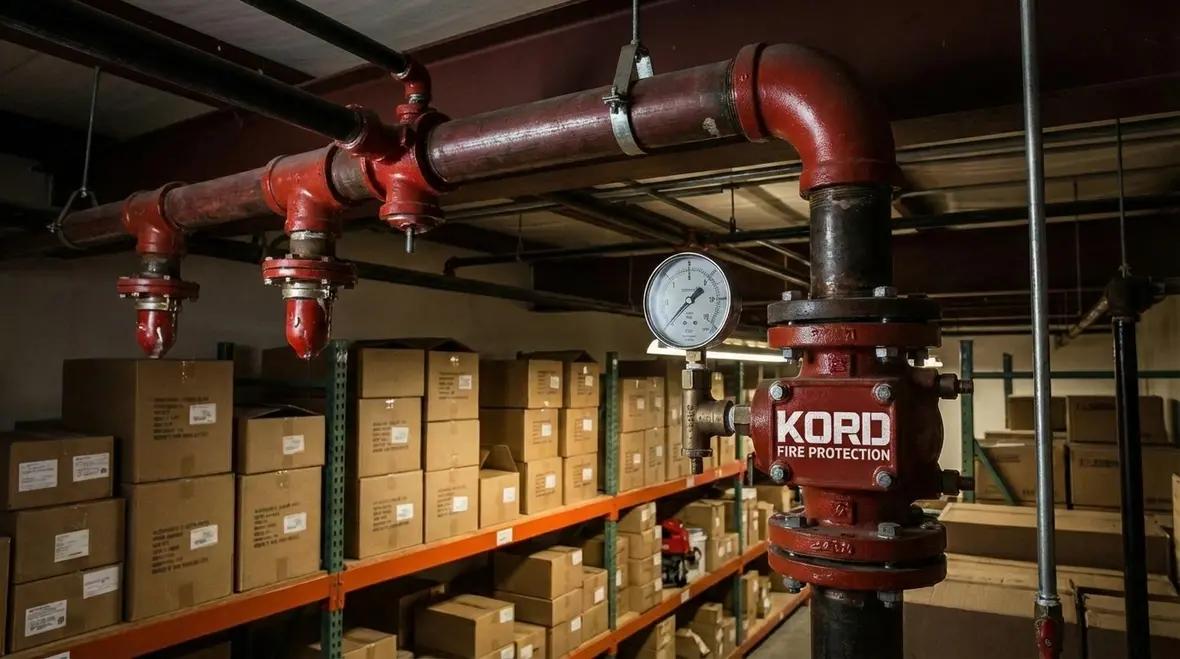
Safe storage does not exist in a vacuum. It ties directly into the facility’s wider fire protection strategy, including extinguishers, clean agent systems, and foam suppression where appropriate. For example, facilities with significant flammable liquid hazards may pair NFPA 30 guidance with NFPA 11 foam system design or clean agent systems compliant with NFPA 2001 when protecting sensitive equipment in adjacent spaces.
Designing Fire Protection Systems That Match the Hazard
Not all fires behave the same. A pile of cardboard burns differently than a pool of solvent. Liquid fires can spread quickly across surfaces, flow into drains, and produce intense heat.
Because of this, the code often works hand in hand with other standards that address sprinkler design and foam systems. Facilities storing significant volumes of flammable liquids may require specialized suppression systems. In some cases, foam water sprinkler systems help blanket the surface of a burning liquid and reduce vapor release.
Additionally, proper drainage and spill control play a role. If a burning liquid spreads under equipment or through doorways, suppression becomes far more difficult.
Kord technicians evaluate system design in context. They look at storage height, container type, and room layout. Then they confirm that sprinkler density, spacing, and water supply align with the hazard. It is a bit like tailoring a suit. Off the rack might look fine. Custom fit works better when the heat is on.
Regular inspection and testing also matter. Valves must remain open. Alarms must communicate. Pumps must start. Because even the best design fails if maintenance slips. As one technician likes to say, a silent fire pump is about as helpful as a superhero who forgot their cape.
Coordinating NFPA 30 with Related Foam and Clean Agent Standards
When flammable and combustible liquids drive the hazard profile, system designers often reference NFPA 11 for foam systems alongside NFPA 30. In high risk industrial settings, guidance from foam standards such as NFPA 11 and historical documents like NFPA 11A and NFPA 11C helps shape decisions on storage tank protection, diked areas, and transfer points. Clean agent system guidelines under NFPA 2001 can then complement this strategy in areas where residual water or foam discharge would be unacceptable.
Safe Handling Practices That Reduce Daily Risk
Storage addresses what happens when liquids sit still. Handling addresses what happens when people move them, pour them, or transfer them between containers.
The code emphasizes bonding and grounding during transfer operations. This prevents static electricity from building up and discharging as a spark. While static may seem harmless when it surprises someone in a sweater, it can ignite vapors in the right conditions.
Moreover, the use of approved safety cans, self closing valves, and flame arresters reduces ignition risk. Facilities must also control ignition sources. That means proper electrical classifications in hazardous locations and strict policies on open flames or hot work.
Kord Fire Protection technicians often conduct walkthroughs with maintenance and operations teams. They observe real tasks, not just written procedures. If they see a transfer process that could generate static or expose vapors, they recommend practical adjustments. Sometimes that means adding bonding cables. Sometimes it means rearranging workflow. Either way, the goal is simple. Keep sparks away from vapors.
Training also plays a key role. Staff who understand the hazards handle materials with greater care. And while no one expects employees to quote code sections from memory, they should know what to do and what to avoid.
Maximum Allowable Quantities Made Simple
One of the more detailed parts of the standard involves maximum allowable quantities. These limits control how much of each class of liquid a facility can store in a given area.
Although the tables can look dense, the concept is straightforward. The more hazardous the liquid, the tighter the limit. However, facilities can increase allowable amounts by using control areas, fire rated separations, and approved storage methods.
Below is a simplified comparison that Kord technicians often use during training sessions.
Liquid Class General Storage Approach
Class I liquids Smaller quantities per control area, use listed cabinets or dedicated rooms, strict ignition control
Class II liquids Moderate limits, approved containers, ventilation and spill control
Class III liquids Higher allowable amounts, still require proper containers and separation from ignition sources
This side by side view helps teams see patterns rather than memorize numbers. Additionally, it reinforces that design choices affect capacity. A properly constructed storage room with fire rated walls can legally and safely hold more than an open warehouse corner.
Therefore, planning expansions should always involve a code review. It is far easier to design for compliance at the start than to retrofit after an inspector raises an eyebrow.
Inspection, Documentation, and Working with Authorities
Compliance does not end after construction. Ongoing inspection ensures that conditions remain aligned with the code’s intent.
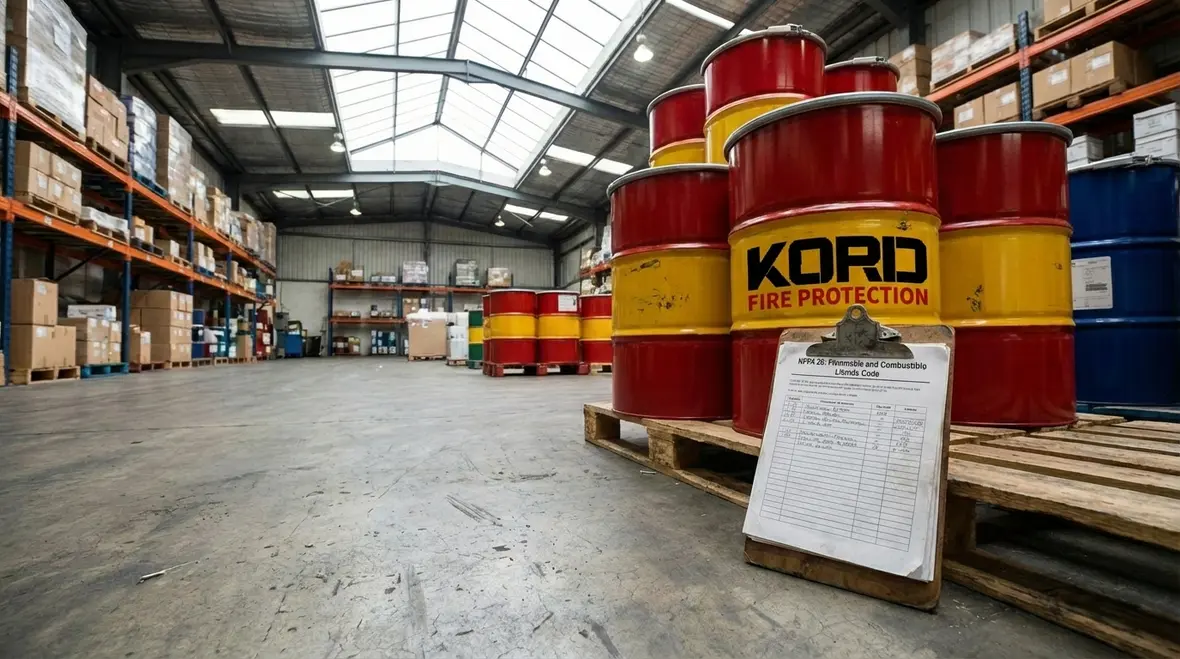
Facilities should maintain clear documentation of liquid inventories, Safety Data Sheets, inspection records for cabinets and suppression systems, and training logs. When authorities having jurisdiction conduct inspections, organized records demonstrate control and awareness.
Kord Fire Protection technicians often act as guides during this process. They perform internal assessments that mirror what an inspector might review. As a result, facilities can correct issues before they become citations.
Furthermore, technicians help interpret updates when new editions of the standard are adopted. Codes evolve because lessons are learned from real incidents. Staying current prevents unpleasant surprises.
In many ways, inspections should feel less like pop quizzes and more like routine checkups. When systems are maintained and staff are trained, the conversation shifts from “What went wrong?” to “Here is how we keep improving.”
How Facilities Can Build a Culture Around the NFPA 30 Flammable and Combustible Liquids Code
Policies and hardware form the backbone of compliance. Yet culture gives it life. A facility that treats safety as paperwork will always struggle. One that treats safety as shared responsibility moves with confidence.
Leadership sets the tone. When managers prioritize proper storage, invest in approved equipment, and support training, employees notice. Additionally, clear reporting channels encourage staff to speak up about leaks, damaged containers, or blocked cabinets.
Kord technicians often emphasize that the code is a tool. It outlines minimum requirements. However, strong facilities often exceed those minimums. They conduct periodic refresher training. They review incident reports from other industries. They ask, “What if?” before something happens.
And yes, sometimes that means pausing production to fix a minor issue. Yet compared to the cost of a fire, that pause feels brief. As any seasoned professional will admit, prevention rarely makes headlines. But it keeps names out of them.
Conclusion: Turn Requirements into Confidence
The rules within NFPA 30 exist to protect people, property, and progress. When facilities understand classifications, storage limits, handling practices, and system design, they shift from reactive to prepared. Kord Fire Protection technicians stand ready to translate complex requirements into clear action steps.
Now is the time to review storage areas, confirm system performance, and strengthen training. Because confidence in compliance is not luck. It is built, inspected, and maintained with purpose.
If your facility stores, mixes, or transfers flammable or combustible liquids, consider scheduling a dedicated NFPA code and life safety review. Kord Fire Protection’s team regularly helps safety managers connect NFPA 30 with related codes such as NFPA 10 for extinguishers, NFPA 11 for foam, and NFPA 2001 for clean agent systems so that your protection strategy is consistent from cabinet level to system level.
To start that process, explore Kord Fire’s NFPA codes and guidelines solutions page at NFPA fire inspection & code compliance services and request a consultation. Turning requirements into confidence is easier when you have a partner who lives in these standards every day.
FAQ
Know Your Weapon Before You Fight the Flame
Kord Fire Protection is your go-to when it comes to all things fire protection. For over 20 years, we’ve been serving Southern California with the quality service and equipment to keep your home or business safe at all times. Our competitive prices reflect our unwavering commitment to protecting what matters most in the event of a fire emergency. Give us a call, send an email, or use that form!

Join Our Newsletter!
Get the latest fire safety tips delivered straight to your inbox From our Newsletter.