Layered Fire Protection System for Flammable Liquids
Fire Protection System for Flammable Liquids: A Practical Layered Strategy
When a facility stores or processes gasoline, ethanol, solvents, or other volatile fuels, the margin for error becomes thin. A single spark can turn a productive day into a headline no one wants to read. That is why a properly engineered fire protection system for flammable liquids stands as a quiet guardian in the background. It does not boast. It does not blink. It simply waits, ready to act. Throughout this guide, Kord Fire Protection technicians explain how a layered approach reduces risk, protects assets, and most importantly, saves lives.
Because flammable liquid hazards behave differently than ordinary combustibles, they demand a different mindset. Water alone will not solve the problem. Hope is not a strategy. Instead, protection must be deliberate, engineered, and maintained with discipline.

Understanding the Risk Landscape of Flammable Liquids
Flammable liquids release vapors. Those vapors travel. And when they meet an ignition source, they ignite with speed and force. Unlike a wood fire that grows steadily, a liquid fuel fire can flash across a surface in seconds. Therefore, facilities must treat vapors as seriously as the liquid itself.
Kord Fire Protection technicians often explain it this way: “It is not the puddle you see that causes the problem. It is the invisible cloud above it.” That invisible cloud finds hot surfaces, static discharge, or faulty wiring. Consequently, risk management begins long before a flame appears.
In addition, many facilities underestimate how quickly a spill spreads. Liquid fuels flow into trenches, drains, and low areas. Without proper containment, fire can travel beyond the original ignition point. Thus, any serious fire protection plan must consider vapor control, spill management, and rapid suppression.
Moreover, regulatory bodies such as NFPA and OSHA set strict standards for storage, transfer, and suppression systems. Compliance is not optional. However, smart operators go beyond compliance. They build layers of defense that overlap and reinforce one another. For example, understanding NFPA 30 requirements for flammable and combustible liquids helps align storage and suppression decisions with real-world facility conditions, not just paperwork. This NFPA 30 flammable and combustible liquids guide offers a deeper dive into how classification and storage rules affect protection strategy.
What Makes a Layered Fire Protection Strategy Effective?
A layered strategy works because it assumes that no single safeguard is perfect. Instead of relying on one hero system, it combines prevention, detection, containment, and suppression. Think of it as a security team rather than a lone guard at the door.
First, prevention reduces the chance of ignition. Second, detection identifies a problem early. Third, containment limits spread. Finally, suppression systems extinguish the fire quickly and safely.
Kord Fire Protection technicians emphasize sequencing. For example, vapor detection sensors trigger alarms. Then, control systems shut down pumps. After that, suppression systems discharge foam or clean agents. Each layer activates in a coordinated chain of events. As a result, response time shrinks dramatically.
Furthermore, a layered design accounts for human factors. People make mistakes. Valves get left open. Procedures get skipped during busy shifts. Therefore, engineering controls must support operational discipline, not depend solely on it.

Core Components of a Fire Protection System for Flammable Liquids
An effective fire protection system for flammable liquids integrates several specialized components. While water sprinklers serve many buildings well, they require modification or supplementation when flammable liquids enter the equation.
Foam Suppression Systems
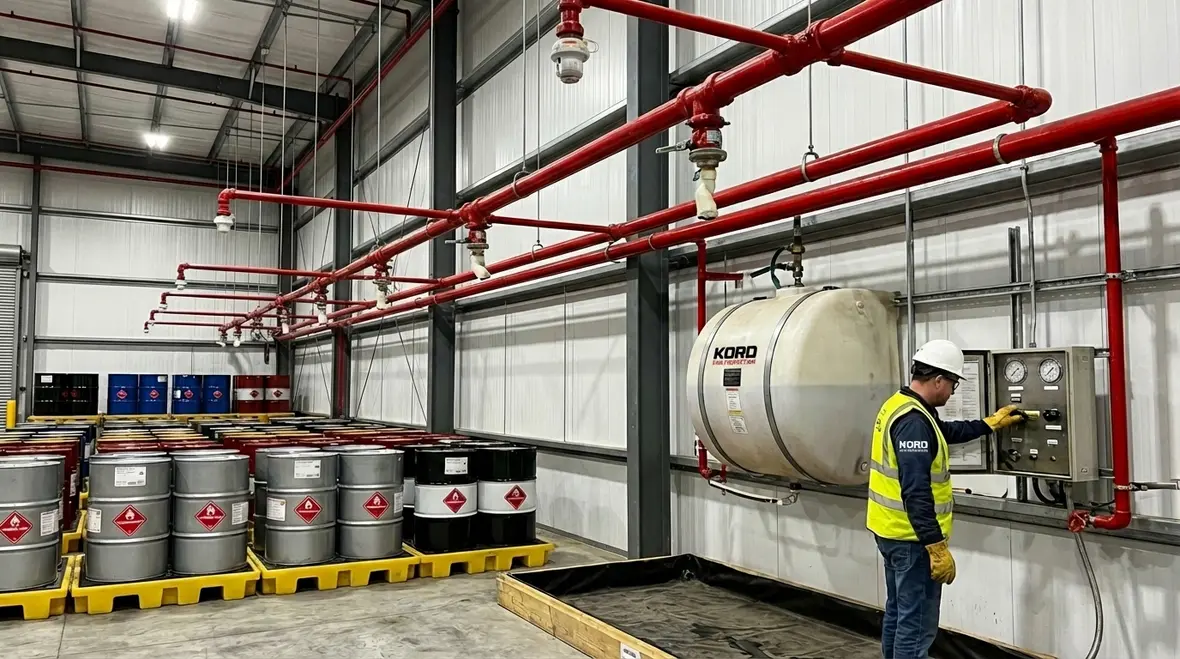
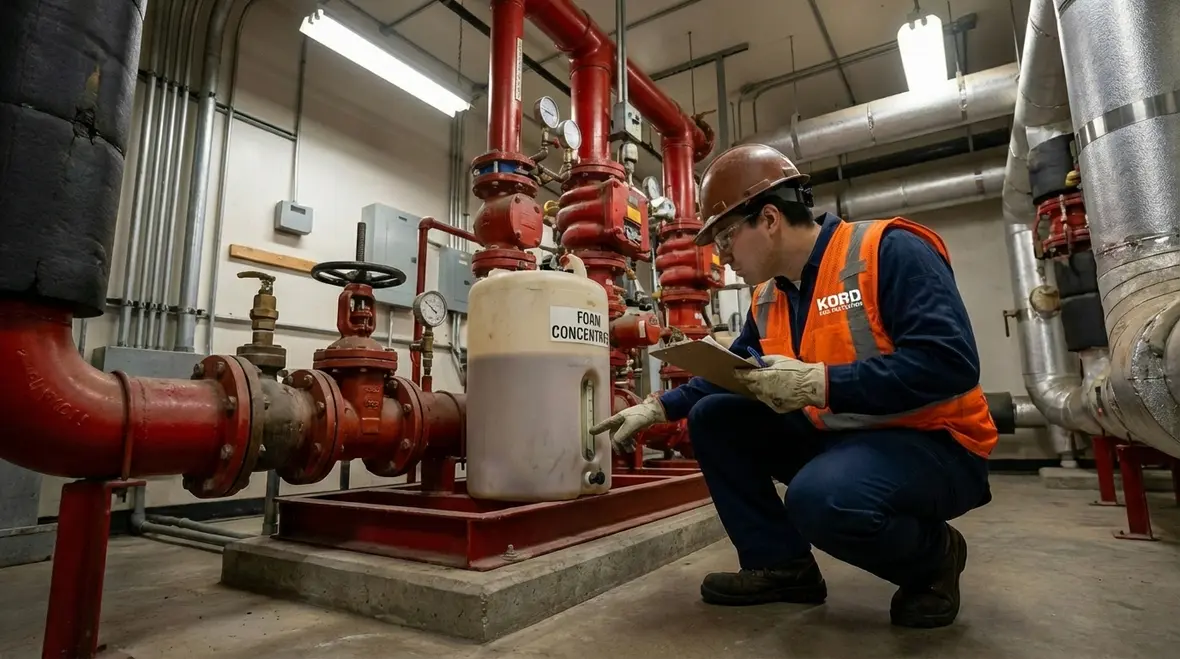
Foam forms a blanket over burning liquid. It cools the surface and separates fuel from oxygen. Consequently, it prevents re ignition. Facilities often use aqueous film forming foam or alcohol resistant foam, depending on the fuel type. Kord Fire Protection technicians carefully match foam concentrate to the specific hazard, because not all foams perform equally on all fuels. For a broader look at where foam systems fit among other options, review Kord Fire’s dedicated page on foam fire suppression systems.
Foam Water Sprinkler Systems
These systems combine water and foam concentrate, discharging through specially designed sprinklers. They provide area coverage for warehouses, drum storage rooms, and loading bays. Moreover, they activate automatically when heat triggers the sprinkler heads.
Deluge Systems
In high hazard zones, deluge systems release large volumes of water or foam solution simultaneously. Unlike standard sprinklers, all nozzles open at once when detection systems activate. Therefore, they control fast spreading fires effectively.
Explosion Venting and Suppression
Because vapor ignition can cause pressure spikes, explosion vent panels or suppression systems reduce structural damage. In enclosed processing areas, this layer proves critical.
Detection and Alarm Integration
Flame detectors, heat sensors, and vapor monitors provide early warning. When integrated with building management systems, they trigger shutdowns and notifications instantly. As a result, personnel evacuate faster and emergency responders receive accurate information.
Design Considerations That Separate Average from Exceptional
Designing protection for flammable liquid hazards requires more than placing sprinklers on a ceiling grid. It demands careful hazard analysis, hydraulic calculations, and layout planning.
Kord Fire Protection technicians begin with a site evaluation. They examine fuel types, storage quantities, container sizes, and transfer methods. Then, they assess ventilation patterns and drainage paths. Because vapors move with air currents, airflow modeling often informs detector placement.
Additionally, designers must consider spill containment. Dikes, curbs, and trench drains limit how far liquid can spread. Without containment, even the best suppression system fights a moving target.
Water supply also plays a major role. Foam systems require reliable pressure and volume. Therefore, engineers verify pump capacity, backup power, and water storage. After all, a suppression system without water is like a superhero without powers. Impressive uniform. No results.
Moreover, compatibility matters. Some flammable liquids mix with water. Others float. Consequently, system type and discharge density must align with chemical properties. Kord Fire Protection technicians often coordinate with chemical safety data sheets to ensure precision.
Maintenance and Inspection: The Quiet Discipline
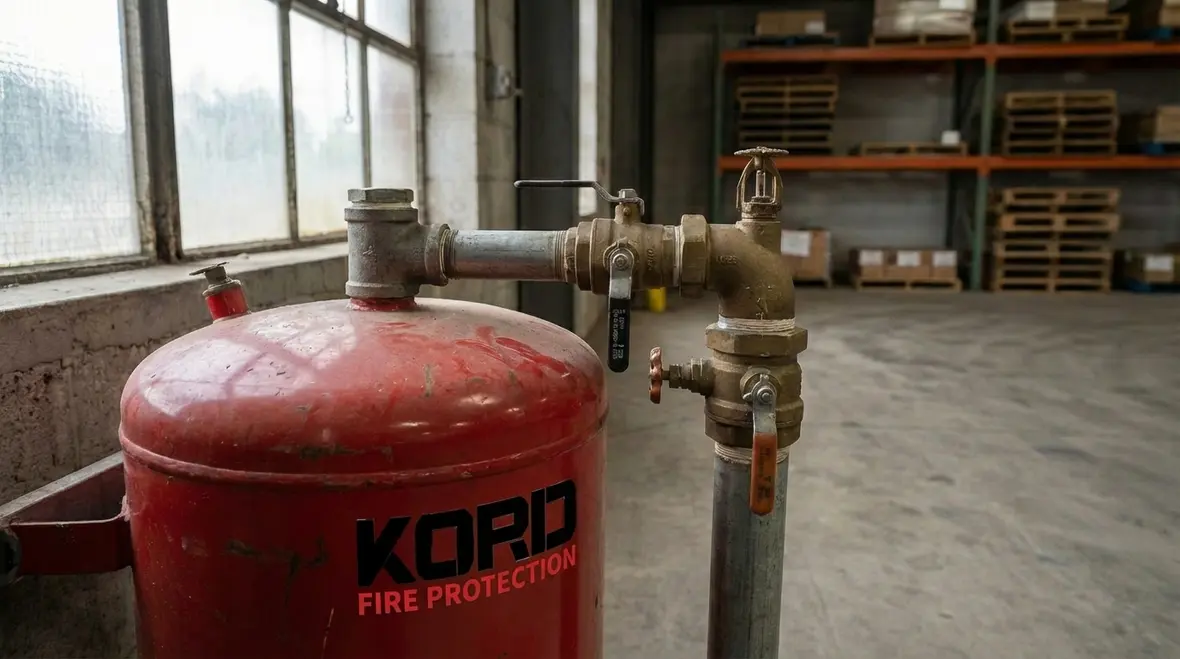
Even the most advanced system fails without maintenance. Valves get bumped. Foam concentrate degrades. Sensors drift out of calibration. Therefore, routine inspection protects the investment.
Technicians inspect foam tanks for proper concentrate levels and contamination. They test proportioning systems to verify correct mixing ratios. Additionally, they exercise control valves and confirm alarm signals reach monitoring stations.
Furthermore, documentation supports compliance and performance tracking. Inspection records reveal trends, such as recurring faults or pressure drops. Over time, this data guides proactive upgrades.
Kord Fire Protection technicians often remind facility managers that maintenance is not glamorous. No one throws a party for a well tested valve. However, when an incident occurs, that quiet discipline becomes the difference between a minor event and a catastrophic loss.
Common Mistakes Facilities Should Avoid
Some facilities treat flammable liquid hazards like ordinary storage. Unfortunately, that assumption invites trouble. A few recurring mistakes appear across industries.
Underestimating Storage Changes
As operations expand, storage quantities increase. However, suppression systems often remain unchanged. Consequently, protection levels fall below required thresholds.
Ignoring Ventilation Impact
Ventilation systems can disperse vapors or concentrate them. Without proper coordination, airflow may carry flammable mixtures toward ignition sources.
Delaying System Upgrades
Outdated detection technology responds slower than modern sensors. While budgets matter, delay increases exposure to risk.
Neglecting Training
Employees must understand alarm signals and evacuation routes. A system activates quickly, but people must respond just as fast. Otherwise, confusion wastes precious seconds.
Kord Fire Protection technicians often say that systems do not fail dramatically. They fail quietly, one overlooked detail at a time. Therefore, attention to detail remains non negotiable.
Side by Side: Prevention and Suppression Working Together
Prevention Measures
- Proper bonding and grounding during liquid transfer
- Classified electrical equipment in hazardous zones
- Spill control kits and secondary containment
- Strict hot work permitting procedures
- Routine housekeeping to eliminate fuel buildup
Suppression Measures
- Foam based sprinkler protection
- Deluge systems in process areas
- Portable foam extinguishers
- Integrated alarm and shutdown controls
- Emergency response coordination with local fire services
Together, these layers form a resilient defense. While prevention reduces the chance of ignition, suppression limits damage if ignition occurs. It is a balanced approach, grounded in realism rather than wishful thinking.
How Kord Fire Protection Technicians Approach Complex Facilities
Every facility tells a different story. Some store bulk fuel in tank farms. Others manage small containers in manufacturing lines. Therefore, a one size solution rarely works.
Kord Fire Protection technicians conduct detailed hazard assessments. They review process flow diagrams, inspect storage layouts, and interview operations staff. Because frontline employees understand daily challenges, their input often reveals hidden risks.
Next, technicians develop a tailored design. They align suppression density with hazard classification. They verify water supply reliability. They coordinate with electrical and mechanical teams to ensure seamless integration.
Finally, they oversee installation and testing. Acceptance testing confirms that alarms, pumps, and discharge devices operate in harmony. Only then does the system earn trust.
In a world full of quick fixes and flashy promises, this methodical approach may seem old fashioned. However, when dealing with flammable liquids, slow and steady often wins the race. Even Hollywood action heroes would agree that explosions belong on screen, not in storage rooms.
FAQ: Fire Protection for Flammable Liquid Hazards
Building Confidence Through Action
A well designed fire protection strategy does more than satisfy regulations. It protects people, property, and reputation. Moreover, it allows businesses to operate with confidence rather than fear. By investing in a layered approach and partnering with experienced professionals, facilities create resilience against one of the most volatile hazards in industry.
If a facility stores or handles flammable fuels, now is the time to review its safeguards. Speak with Kord Fire Protection technicians, evaluate current systems, and strengthen every layer of defense. Because when it comes to fire risk, preparation today prevents regret tomorrow. To explore system options in more detail, visit Kord Fire’s fire suppression services page, then reach out through the contact us form to schedule a consultation.
Know Your Weapon Before You Fight the Flame
Kord Fire Protection is your go-to when it comes to all things fire protection. For over 20 years, we’ve been serving Southern California with the quality service and equipment to keep your home or business safe at all times. Our competitive prices reflect our unwavering commitment to protecting what matters most in the event of a fire emergency. Give us a call, send an email, or use that form!

Join Our Newsletter!
Get the latest fire safety tips delivered straight to your inbox From our Newsletter.