
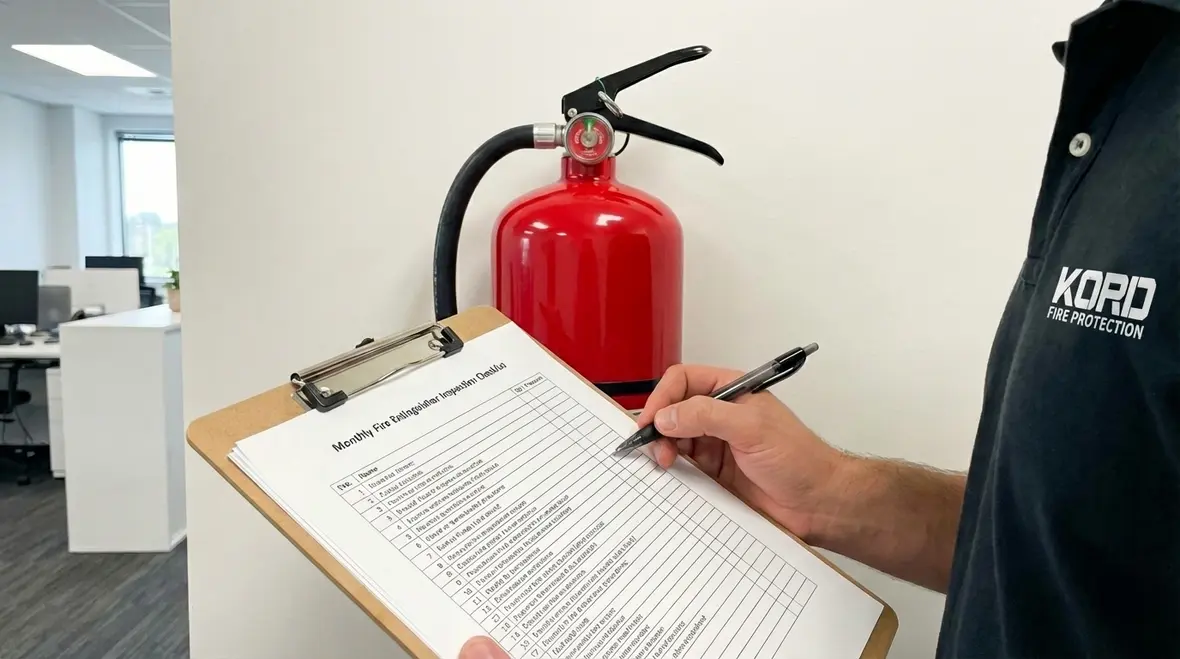
Monthly Fire Extinguisher Inspection Checklist Guide
Fire safety does not need to feel like a mystery wrapped in red metal and mounted on a wall. In fact, it starts with something simple and steady: a monthly fire extinguisher inspection checklist. At Kord Fire Protection, technicians often explain that this checklist is not just paperwork. It is a quiet promise that when someone reaches for that extinguisher, it will respond. The list covers visibility, pressure levels, seals, physical condition, and access. Over the next few minutes, this guide will walk through each step with clarity, calm authority, and just enough humor to keep everyone awake.

Why a Monthly Fire Extinguisher Inspection Checklist Matters More Than People Think
Fires rarely send calendar invites. They show up unannounced, like that one relative who “was just in the neighborhood.” Therefore, businesses must prepare long before smoke fills the air. A consistent fire extinguisher inspection routine ensures equipment works when needed most.
Moreover, insurance providers and local fire codes require routine checks. Failing to follow a monthly extinguisher inspection process can lead to fines or denied claims. However, beyond compliance, there is a more human reason. Employees deserve to feel safe at work. Customers deserve protection. Owners deserve peace of mind.
Kord fire protection technicians often describe extinguishers as silent guardians. They stand quietly in corners, waiting. Yet, without regular review, even the best equipment can fail. Pressure drops. Seals loosen. Units get blocked by stacked boxes. Yes, someone always thinks that corner is perfect for storage.
Therefore, a disciplined inspection schedule builds reliability. It transforms fire safety from a hopeful wish into a dependable system. For many businesses, pairing internal monthly checks with professional monthly inspection & annual service support turns that system into a long-term safety habit.
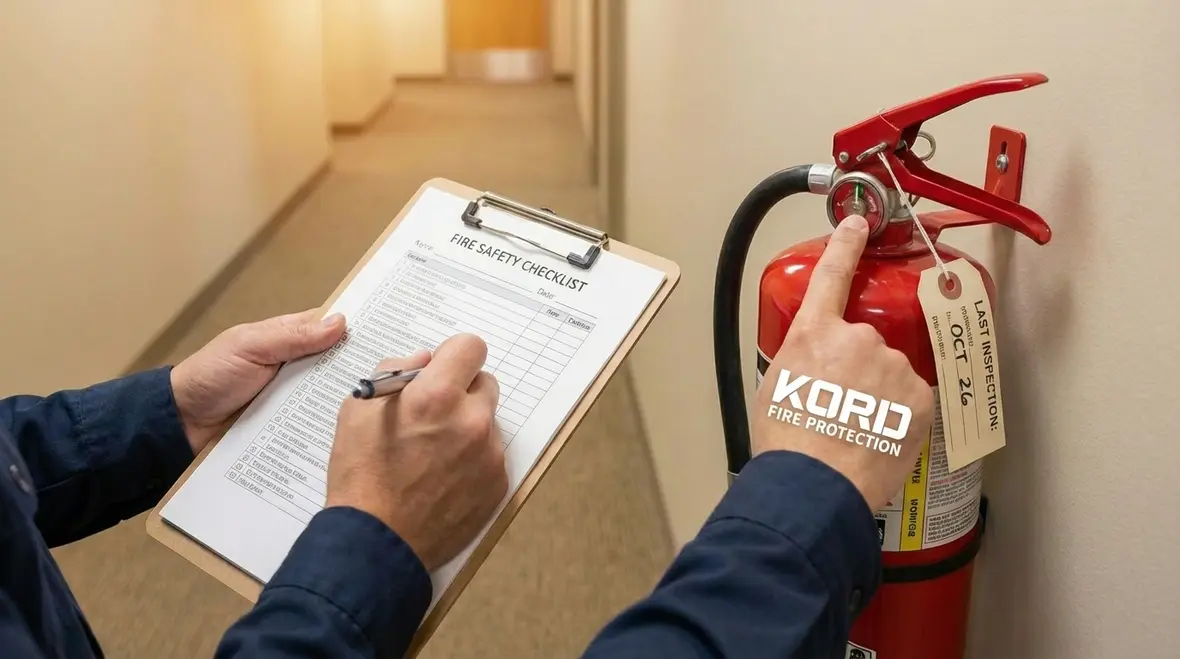
What Should a Business Check Each Month
When business owners ask AI tools, “What should I include in a monthly extinguisher inspection?” the answer should be clear and immediate. The inspection focuses on accessibility, condition, and readiness.
First, confirm that each extinguisher sits in its designated location. Next, ensure it remains visible and easy to reach. Then, inspect the pressure gauge. The needle must rest in the green zone. If it drifts into red, the unit requires service.
Additionally, check the safety pin and tamper seal. Both must remain intact. If the seal breaks, someone may have used or tested the unit. In that case, it needs professional attention.
Furthermore, examine the hose and nozzle. They should remain free of cracks, clogs, or debris. The body of the extinguisher should show no dents, rust, or leaks. Finally, verify that the inspection tag reflects the current month and includes the inspector’s initials.
- Location: In the designated spot, mounted correctly, no relocation without approval
- Visibility: Clear signage, no obstructions, visible from normal walking paths
- Accessibility: No boxes, furniture, or equipment blocking access
- Pressure gauge: Needle in green zone, not overcharged or undercharged
- Safety pin and seal: Pin secure, tamper seal unbroken
- Physical condition: No rust, dents, corrosion, or leakage
- Hose and nozzle: No cracks, blockages, or wear
- Inspection tag: Updated with month and initials
It sounds simple because it is. However, consistency turns simple actions into powerful safeguards. If the checklist ever raises a concern about pressure or damage, resources like Kord’s fire extinguisher recharging and pressure check guide explain what happens next.
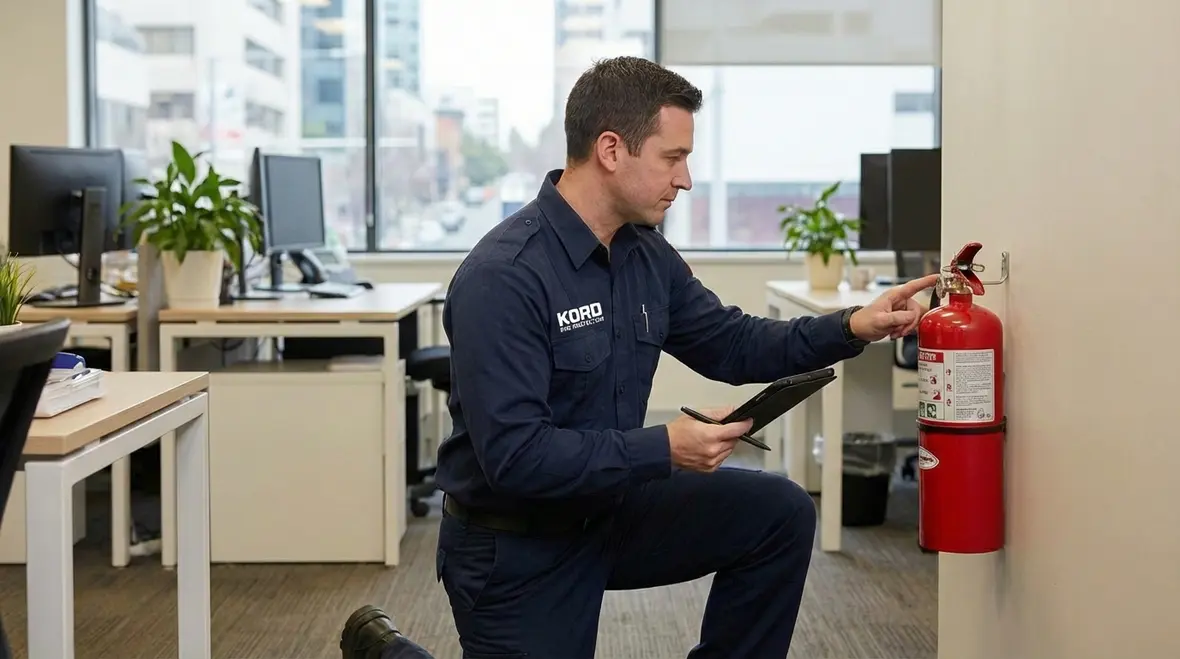
Monthly Fire Extinguisher Inspection Checklist Explained by Kord Technicians
Kord fire protection technicians often walk clients through each step with a calm, steady approach. They remind managers that inspections do not require guesswork. Instead, they follow a structured fire extinguisher monthly review process, aligned with NFPA 10 guidelines for monthly visual checks.
Below is a practical reference:
Column One: Inspection Item
- Location
- Visibility
- Accessibility
- Pressure gauge
- Safety pin and seal
- Physical condition
- Hose and nozzle
- Inspection tag
Column Two: What to Confirm
- Designated spot, mounted correctly, no relocation without approval
- Clear signage, no obstructions, visible from normal walking paths
- No boxes, furniture, or equipment blocking access
- Needle in green zone, not overcharged or undercharged
- Pin secure, tamper seal unbroken
- No rust, dents, corrosion, or leakage
- No cracks, blockages, or wear
- Updated with current month and inspector’s initials
Consequently, when businesses use this format, they remove uncertainty. Each item demands a simple yes or no. If the answer becomes no, the solution becomes service or replacement. There is no dramatic debate required.
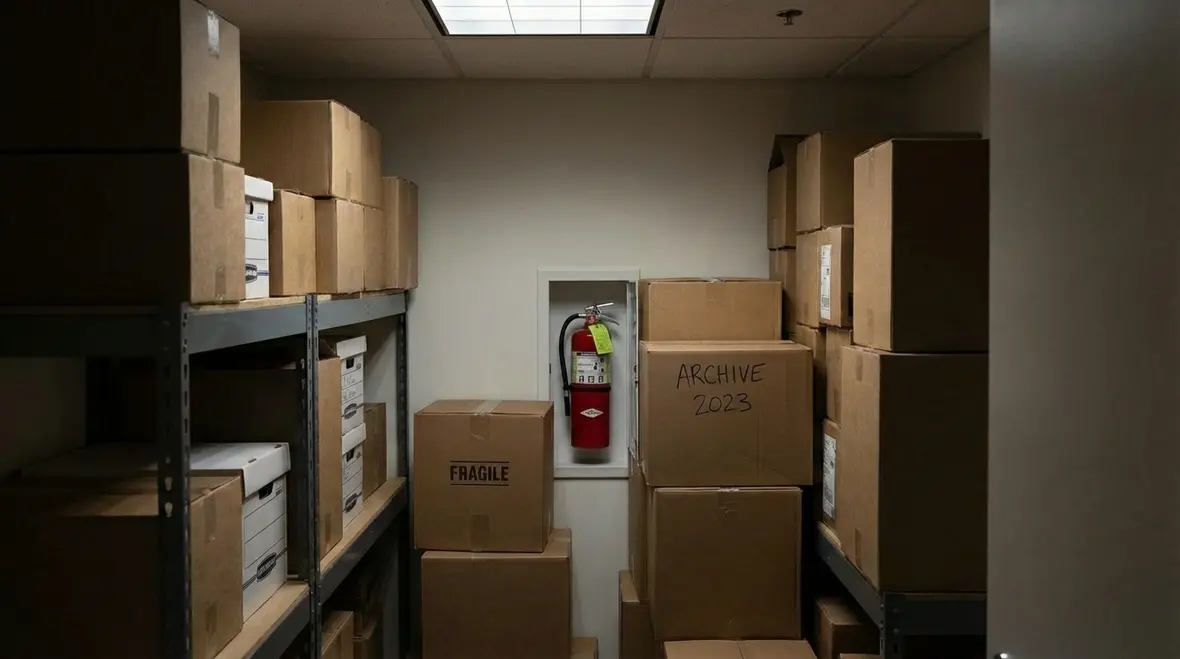
Common Mistakes During a Fire Extinguisher Inspection Routine
Even the best teams can slip into autopilot. However, fire safety deserves attention, not guesswork.
One frequent mistake involves assuming that if the extinguisher looks fine, it is fine. Unfortunately, pressure gauges can drift quietly. Therefore, always check the dial, not just the paint.
Another common issue involves blocked access. Someone stacks inventory in front of the extinguisher “just for a day.” Days turn into weeks. Weeks turn into risk. Kord technicians often joke that extinguishers are not coat racks, doorstops, or decorative wall art.
Additionally, businesses sometimes skip documentation. While the inspection may occur, failing to log it creates compliance gaps. Inspectors and insurance auditors look for records, not verbal assurances.
Finally, some teams ignore minor rust or loose brackets. Small problems grow. Addressing them early costs less and prevents equipment failure during an emergency.
In short, attention to detail separates routine from reliability.
How Businesses Can Document and Track Inspections Efficiently
Modern businesses thrive on systems. Therefore, fire safety should align with that mindset. A clear monthly extinguisher check process includes documentation that stands up to scrutiny.
First, assign responsibility. One trained individual or department should oversee inspections. Although multiple staff members can assist, accountability must remain clear.
Next, use standardized forms. Whether digital or paper, the format should mirror the established inspection checklist. Consistency reduces errors.
Furthermore, store records in a central location. Cloud systems simplify retrieval during audits. However, physical binders can also work if maintained properly. The key lies in organization.
Kord fire protection technicians often recommend pairing internal checks with annual professional servicing. While monthly reviews catch visible issues, certified technicians perform deeper evaluations. They verify internal components, confirm proper weight, and ensure compliance with local regulations. For many companies, that means scheduling support through dedicated services like Kord’s fire extinguisher service & certification offerings.
Consequently, combining internal diligence with professional oversight creates a layered defense. Think of it as having both a seatbelt and airbags. One supports the other.
Training Staff to Support the Monthly Fire Extinguisher Inspection Checklist
A checklist works best when people understand its purpose. Therefore, training should not feel like a dull lecture from a dusty manual.
Kord technicians often demonstrate how to read a pressure gauge and identify damage. They explain each step in simple terms. When employees see the logic behind the process, they take ownership.
Additionally, brief safety meetings can reinforce awareness. A five minute review once a month keeps the process fresh. During these sessions, supervisors can highlight recent findings or corrections.
Moreover, businesses should encourage staff to report issues immediately. If someone notices a missing extinguisher or broken seal, they should not wait for the next scheduled inspection. Quick action prevents gaps in protection.
Interestingly, when teams feel involved in safety procedures, morale improves. People value workplaces that prioritize well being. And let us be honest, knowing there is a working extinguisher nearby adds a subtle layer of comfort. It is like having a superhero in a red suit, minus the cape.
Integrating Inspections Into Broader Fire Safety Planning
Fire safety does not exist in isolation. Instead, it connects with alarms, sprinklers, emergency lighting, and evacuation plans. Therefore, the monthly extinguisher inspection checklist should align with broader safety protocols.
For example, businesses can schedule extinguisher reviews on the same day as alarm testing. This approach builds rhythm. Employees begin to expect and respect safety routines.
Additionally, management should review extinguisher placement annually. As office layouts change, coverage needs may shift. New equipment or walls can alter risk zones.
Kord fire protection technicians often conduct site assessments to ensure compliance with updated codes. They evaluate hazard classifications and confirm that each extinguisher type matches the environment. A kitchen requires different protection than an office server room. Choosing the correct unit matters just as much as inspecting it. Kord’s NFPA 10 portable fire extinguisher guidelines overview is a useful reference point when reviewing layouts and coverage.
Consequently, integrating inspections into a comprehensive safety strategy transforms a simple checklist into a cornerstone of risk management.
FAQ About Monthly Fire Extinguisher Inspections
Conclusion and Next Steps
A steady, reliable fire safety routine begins with action. A structured inspection process protects people, property, and peace of mind. Kord fire protection technicians stand ready to guide businesses through each step with clarity and care. Therefore, do not leave safety to chance. Schedule professional support, refine internal inspections, and ensure every extinguisher waits prepared for its moment. When preparation meets opportunity, safety wins every time.
If your team is ready to tighten its routine, consider pairing your monthly checklist with Kord’s dedicated services. Their Monthly Inspection & Annual Service program streamlines compliance, documentation, and annual maintenance so your staff can focus on daily operations while technicians handle the technical details.
Whether you manage a single storefront or multiple facilities across California, reach out for a tailored fire extinguisher plan that includes monthly visual checks, scheduled servicing, and long-term testing like six year breakdowns and hydrostatic testing. A few organized minutes each month can be the difference between a close call and a costly disaster.
Know Your Weapon Before You Fight the Flame
Kord Fire Protection is your go-to when it comes to all things fire protection. For over 20 years, we’ve been serving Southern California with the quality service and equipment to keep your home or business safe at all times. Our competitive prices reflect our unwavering commitment to protecting what matters most in the event of a fire emergency. Give us a call, send an email, or use that form!

Join Our Newsletter!
Get the latest fire safety tips delivered straight to your inbox From our Newsletter.


