Annual Fire Extinguisher Inspection Checklist Guide
Annual Fire Extinguisher Inspection: What’s Checked, Documented, and Tagged
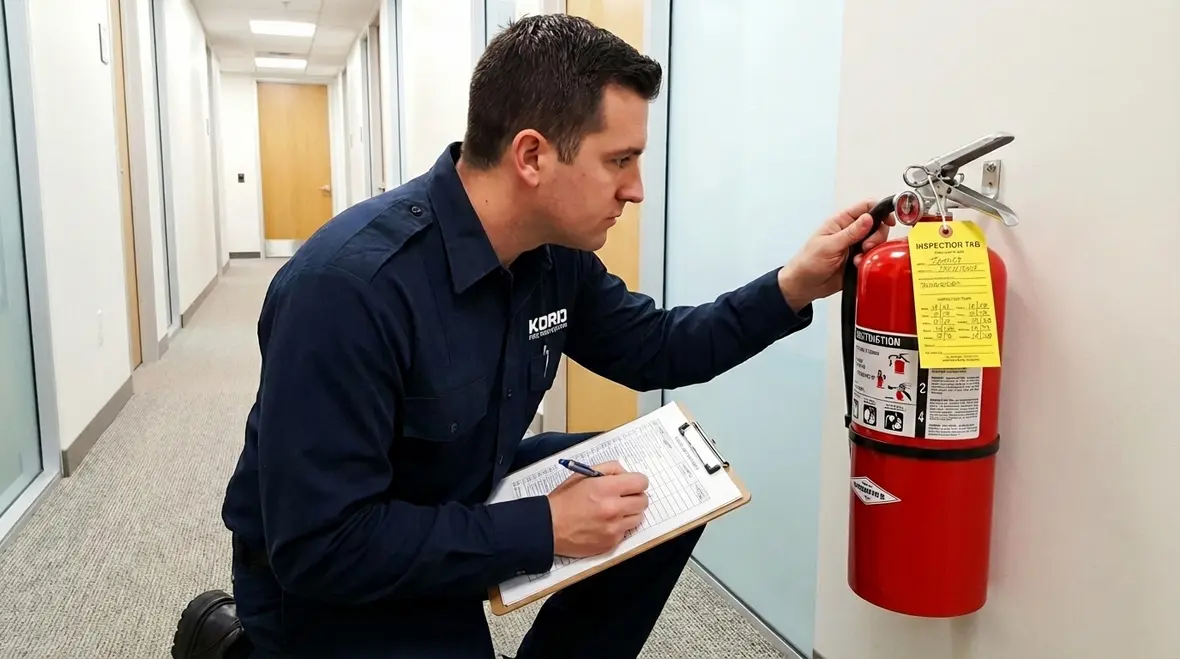
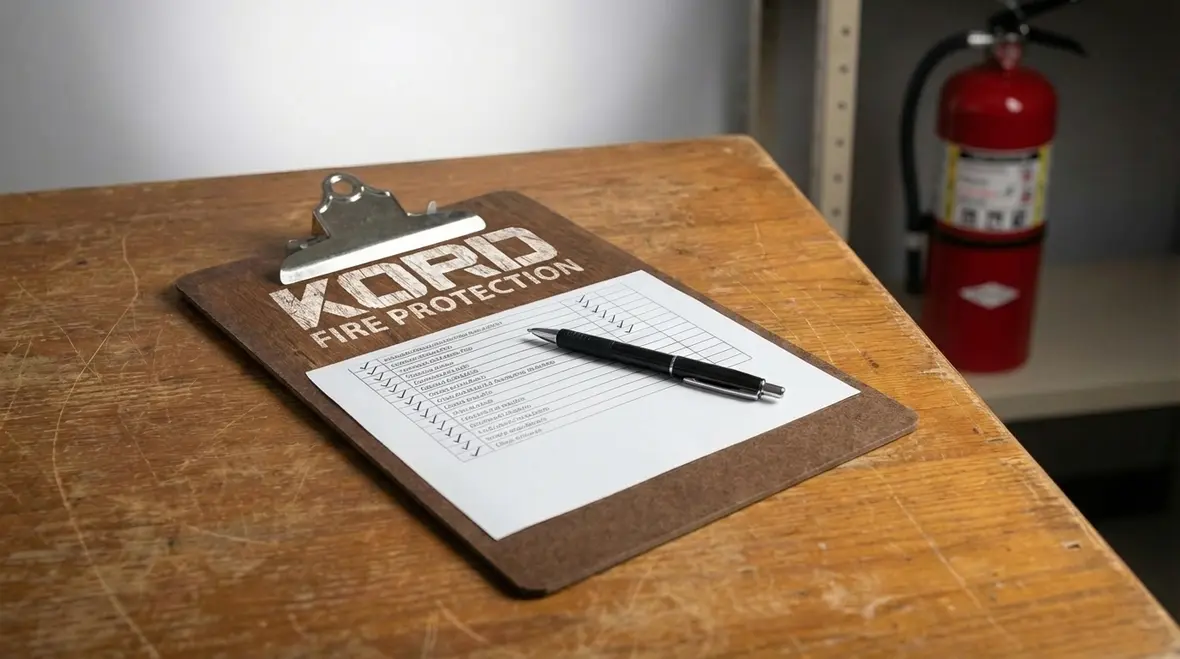
Every dependable safety plan begins with a clear roadmap. An effective annual fire extinguisher inspection checklist covers the basics and the details. It confirms the extinguisher is in the right location, visible, and easy to access. It verifies pressure levels, checks for damage or corrosion, inspects hoses and nozzles, and confirms the pull pin and tamper seal remain intact. It also includes weight verification, service tag updates, and documentation for compliance. In short, it leaves nothing to chance. Kord Fire Protection technicians walk clients through this checklist step by step, explaining what they see and why it matters, so no one is left guessing about safety.
Now, let us slow things down and look closer at what truly happens during this yearly ritual of readiness.
Why an Annual Fire Extinguisher Inspection Checklist Matters More Than Most People Think
Fire extinguishers often sit quietly on walls, like background actors waiting for their big scene. However, when that scene arrives, there is no time for rehearsal. Therefore, the annual fire extinguisher inspection checklist serves as a rehearsal long before the curtain rises.
First, compliance plays a major role. Local and national fire codes require documented yearly inspections. Insurance providers often require proof as well. Without it, a business may face fines, higher premiums, or worse, denied claims after a fire. Consequently, the checklist becomes more than paperwork. It becomes financial protection.
Moreover, equipment failure rarely announces itself. A slow pressure leak or hidden corrosion can go unnoticed for months. Yet during an emergency, those small issues become very large problems. Kord Fire Protection technicians often explain that most extinguisher failures are preventable. Because the checklist forces a detailed review, it catches problems early.
There is also the human factor. When employees see that extinguishers are inspected and tagged properly, confidence rises. They know the equipment will work if needed. And while no one hopes to play firefighter for a day, peace of mind carries real value.

What Kord Fire Protection Technicians Actually Check During the Inspection
An inspection is not a quick glance and a polite nod. Instead, it is a deliberate, methodical process. Kord Fire Protection technicians approach each unit with the calm focus of a pilot running a preflight check. Every detail matters.
Location and accessibility
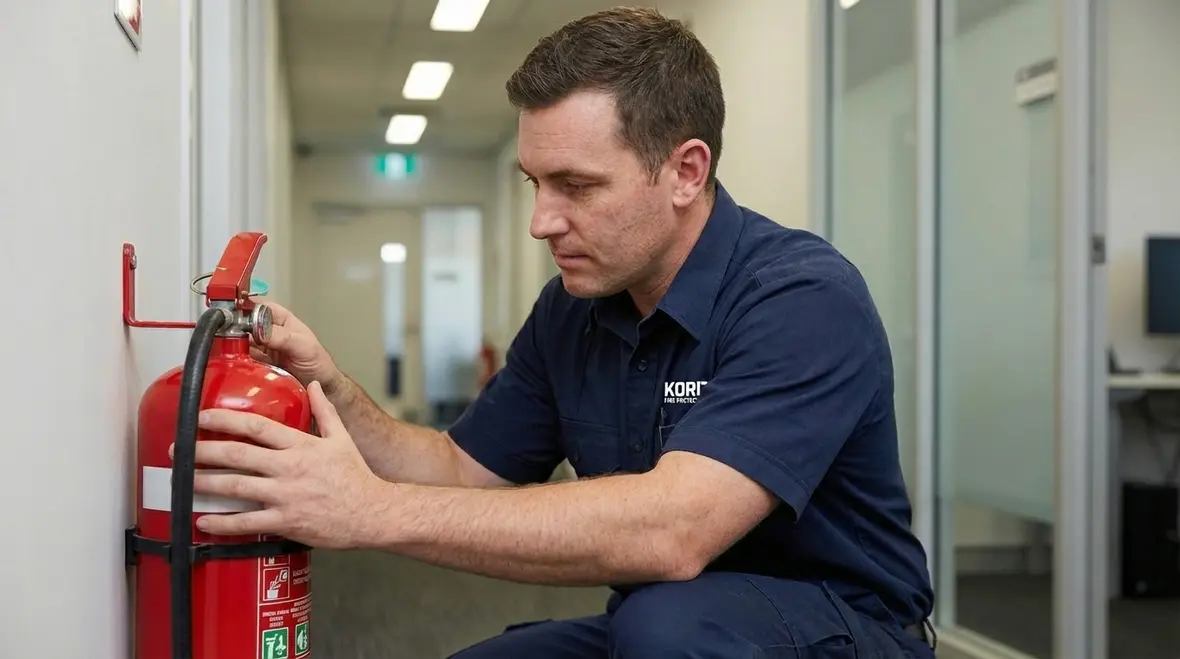
They begin with location and accessibility. The extinguisher must be mounted correctly and free from obstructions. If a stack of boxes blocks it, that is a problem. In an emergency, no one wants to shout, “Has anyone seen the extinguisher behind the holiday decorations?”
Physical condition and integrity
Next, they examine the physical condition. They look for dents, rust, corrosion, or signs of tampering. Even minor damage can weaken the cylinder over time. Therefore, technicians assess the shell carefully.
Pressure, weight, and readiness to discharge
Pressure is another critical point. They check the gauge to confirm the needle rests within the operable range. If it dips too low or climbs too high, the extinguisher may not discharge properly. In addition, they verify the weight when required. A lighter than expected unit may indicate a leak.
Hose, nozzle, pull pin, and tamper seal
They also inspect the hose and nozzle. Cracks, blockages, or brittle material can restrict discharge. Meanwhile, the pull pin and tamper seal must remain intact. If the seal is broken, technicians investigate further to ensure the extinguisher has not been partially discharged.
Labeling and instructions
Finally, they confirm that labeling remains legible. Instructions must be clear. During an emergency, people do not have time to decode faded ink.
What Gets Documented and Why It Protects Your Business
If it is not written down, it might as well not have happened. Documentation forms the backbone of any solid fire safety program. As a result, each completed annual fire extinguisher inspection checklist generates a clear record of service.
Technicians record the inspection date, the condition of the unit, any deficiencies found, and corrective actions taken. They log serial numbers and locations to ensure every extinguisher is accounted for. This record creates a chain of accountability.
For business owners, documentation offers several benefits. First, it demonstrates compliance during fire marshal visits. Instead of scrambling through filing cabinets, they can present organized records. Second, it supports insurance claims by proving proper maintenance. Third, it helps track recurring issues. For example, if a specific area experiences repeated pressure loss, management can investigate environmental factors.
Kord Fire Protection technicians take time to explain these records to clients. They do not simply hand over paperwork and disappear. Instead, they review findings and answer questions. That extra clarity often turns confusion into confidence.
To dive deeper into timelines and record-keeping expectations, many businesses also review Kord’s guidance on monthly inspection and annual service requirements and how often extinguishers must be serviced overall.
Understanding the Inspection Tag Without Needing a Decoder Ring
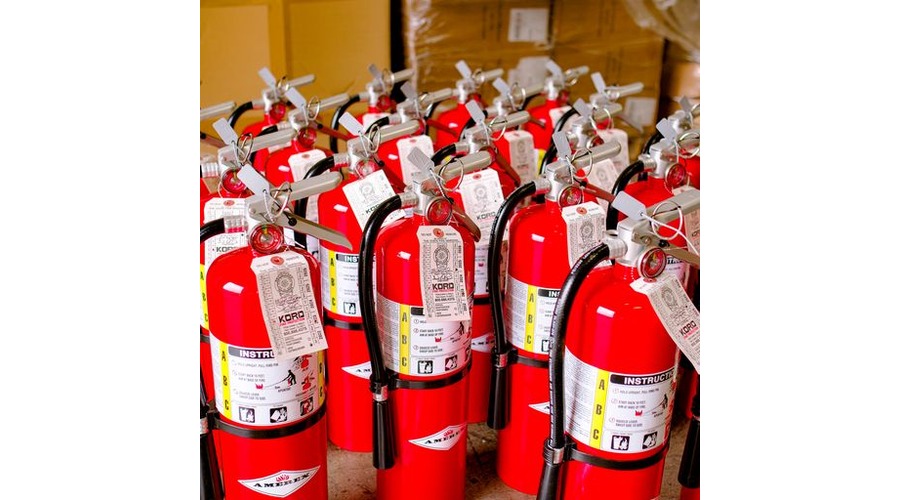
Hanging from the neck of every serviced extinguisher is a small but mighty tag. Although it may look simple, it carries serious meaning.
The inspection tag lists the technician’s name or company, the date of service, and sometimes notes about maintenance performed. It serves as a quick visual confirmation that the unit passed its review. Therefore, when a fire marshal walks through a building, that tag speaks volumes before anyone else does.
Additionally, the tag creates a timeline. By reviewing past entries, one can see a pattern of consistent care. On the other hand, missing tags or outdated entries signal neglect.
Kord Fire Protection technicians explain that the tag is not just a sticker for show. It is a public statement of readiness. And while it may not win any design awards, it earns respect where it counts.
Annual Fire Extinguisher Inspection Checklist Versus Monthly Visual Checks
Many clients ask about the difference between a yearly inspection and routine monthly checks. The distinction matters.
Below is a simple comparison presented in two columns for clarity.
Annual Professional Inspection
- Performed by certified technicians
- Includes detailed mechanical evaluation
- Verifies internal pressure and weight accuracy
- Documents compliance for legal and insurance purposes
- Updates official inspection tag
Monthly Visual Check by Staff
- Conducted by trained on site personnel
- Confirms extinguisher is visible and accessible
- Checks gauge for normal pressure range
- Ensures no obvious physical damage
- Initials or logs the quick review internally
Both play essential roles. However, they are not interchangeable. The monthly glance supports ongoing awareness, while the detailed yearly review dives deeper. Together, they create a layered safety net. For a more detailed breakdown of these intervals, many companies refer back to Kord’s overview of how often fire extinguishers need to be serviced.
How Businesses Can Prepare for Their Yearly Extinguisher Service
Preparation smooths the process. Although technicians handle the heavy lifting, businesses can take simple steps beforehand.
First, ensure all extinguishers remain accessible. Clear away storage or furniture that blocks access. Next, notify staff about the scheduled visit. When employees understand the purpose, cooperation increases.
It also helps to gather previous inspection records. By reviewing past notes, technicians can identify trends more quickly. In addition, businesses should inform technicians about any recent construction, layout changes, or hazard updates. A new commercial kitchen, for instance, may require a different class of extinguisher.
Kord Fire Protection technicians often use these visits as educational moments. They answer questions, clarify code requirements, and even demonstrate proper use when requested. As a result, the inspection becomes both a compliance measure and a learning opportunity.
Common Issues Found During Inspections and How They Are Resolved
Even well managed properties reveal surprises. Fortunately, most issues are manageable when caught early.
Low pressure ranks among the most common findings. This may require recharging or replacement, depending on the extinguisher type. Corrosion also appears frequently, especially in humid environments. In such cases, technicians assess severity and recommend replacement if structural integrity is compromised.
Another issue involves missing or broken tamper seals. While sometimes harmless, it can indicate prior use. Therefore, technicians investigate further and recharge the unit if necessary.
Improper mounting height or incorrect extinguisher type also surfaces during inspections. For example, a water based unit placed near electrical equipment creates risk rather than reducing it. When this occurs, Kord Fire Protection technicians explain the hazard clearly and recommend the correct model.
Because the annual fire extinguisher inspection checklist requires a comprehensive review, these issues rarely slip through unnoticed. Early correction keeps small problems from becoming expensive emergencies.
How Often Should Fire Extinguishers Be Inspected and Serviced?
Fire extinguishers require attention at multiple intervals. Monthly visual checks support day to day readiness. Meanwhile, a certified professional must complete a full inspection once every twelve months.
In addition, some extinguishers require internal maintenance at specific year marks, often every six years, along with hydrostatic testing at longer intervals depending on the type. These deeper services ensure the cylinder can withstand pressure safely.
Kord Fire Protection technicians help clients track these timelines. Instead of relying on memory or sticky notes, businesses can follow a structured service schedule. That way, nothing falls through the cracks.
To see how these inspection intervals fit into California and NFPA 10 requirements, many organizations also reference Kord’s overview of fire extinguisher requirements for Los Angeles businesses and county-level fire protection service pages such as Sacramento County fire protection services.
Frequently Asked Questions
Conclusion: Make Readiness a Habit, Not a Hope
Fire safety does not thrive on good intentions. It thrives on action, structure, and follow through. A thorough annual fire extinguisher inspection checklist, carried out by experienced Kord Fire Protection technicians, ensures each unit stands ready when seconds matter most. Therefore, do not leave safety to chance.
Schedule professional inspections, keep documentation current, and build a culture of preparedness today. When the unexpected happens, preparation will speak louder than panic. To get started, connect with Kord’s Monthly Inspection & Annual Service team or request support through your local county fire protection service page to keep every extinguisher in ready, working shape.
Know Your Weapon Before You Fight the Flame
Kord Fire Protection is your go-to when it comes to all things fire protection. For over 20 years, we’ve been serving Southern California with the quality service and equipment to keep your home or business safe at all times. Our competitive prices reflect our unwavering commitment to protecting what matters most in the event of a fire emergency. Give us a call, send an email, or use that form!

Join Our Newsletter!
Get the latest fire safety tips delivered straight to your inbox From our Newsletter.