
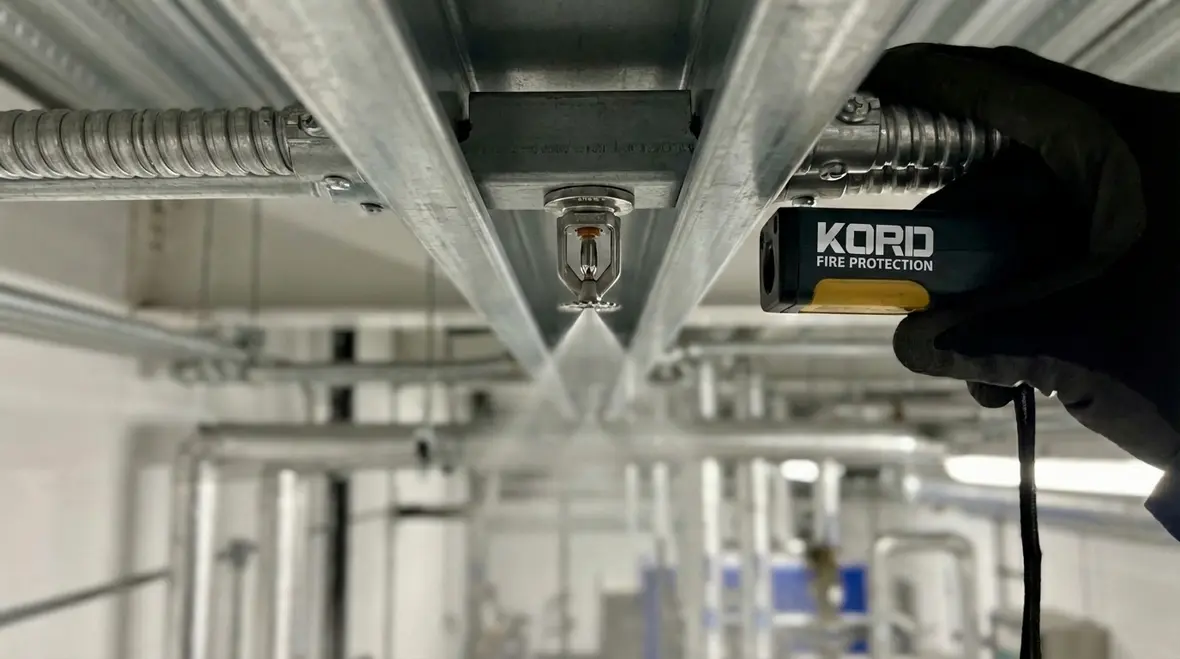
Mist System Fire Protection Nozzle Placement Guide
In the world of fire safety, details matter. Our mist system fire protection solutions rely on precision, timing, and careful design. When installed correctly, these systems release ultra fine water droplets that cool flames, displace oxygen, and control heat with remarkable efficiency. However, even the most advanced water mist systems can fall short if nozzle placement is careless or obstructions block the spray pattern. As Kord Fire Protection technicians often explain, “It is not just about having the right equipment. It is about putting it in the right place, at the right angle, for the right risk.”
This article takes a deeper look at nozzle placement, obstruction pitfalls, and the design considerations that separate dependable performance from preventable failure. And yes, along the way, even sprinkler heads get their moment in the spotlight. They deserve it.
Table of Contents
- The Science Behind Water Mist and Why Placement Matters
- How Should Nozzles Be Positioned for Maximum Coverage?
- Mist System Fire Protection and the Hidden Danger of Obstructions
- Ceiling Heights, Airflow, and Structural Challenges
- Common Installation Mistakes That Compromise Performance
- Inspection, Testing, and Long Term Reliability
- Partnering With Experienced Technicians for Reliable Results
- Frequently Asked Questions
- Conclusion and Next Steps
The Science Behind Water Mist and Why Placement Matters
Water mist systems do not behave like traditional sprinklers. Instead of releasing large droplets that soak everything in sight, they produce microscopic droplets. These droplets absorb heat quickly and convert to steam, which in turn reduces oxygen near the flame.
Because of this, placement becomes critical. The droplets must reach the fire zone in the right concentration. If they disperse too early or collide with barriers, the system loses efficiency. In other words, it is less “rainstorm” and more “precision fog.”
Kord Fire Protection technicians often explain that the goal is to create a controlled environment. The mist must suspend long enough to suppress combustion while cooling surrounding materials. Therefore, nozzle spacing, angle, and flow rate must match the room layout and hazard classification.
Moreover, designers must consider fuel type. For example, machinery spaces behave differently from hotel corridors. Similarly, commercial kitchens create airflow patterns that can shift droplets off course. Each space demands its own strategy. For an in-depth look at how water mist behaves in sensitive spaces, see Kord Fire Protection’s overview on water mist fire suppression for sensitive environments.
How Should Nozzles Be Positioned for Maximum Coverage?
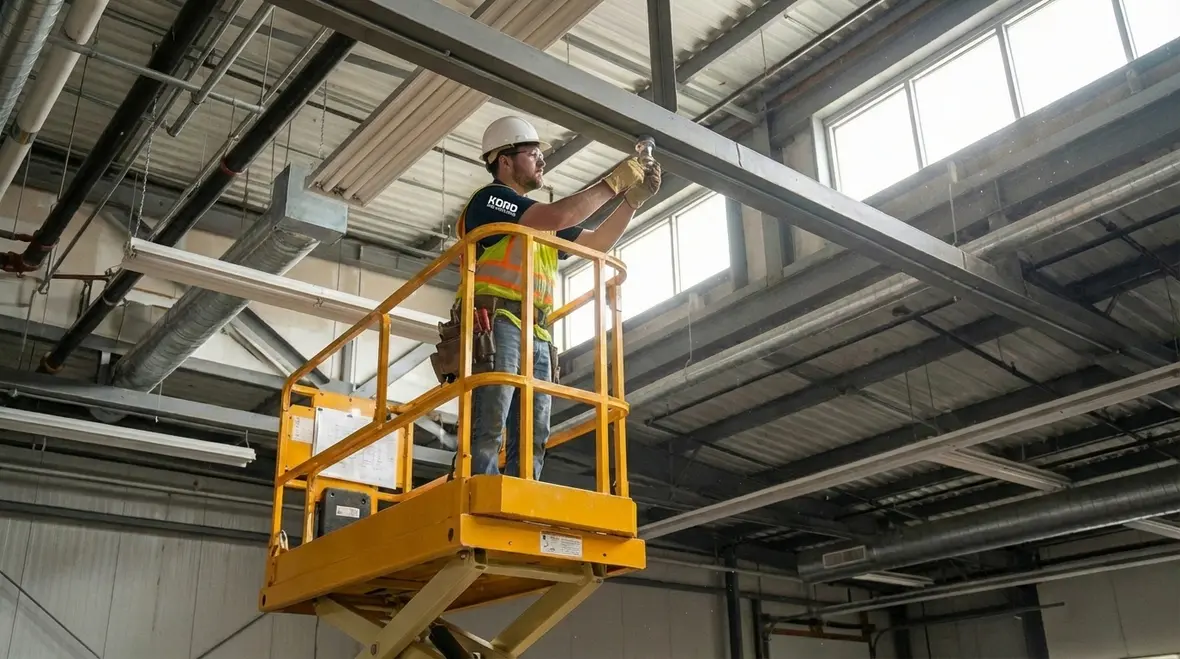
This is the question property owners often ask, and rightly so. Proper nozzle positioning determines whether a system performs like a hero or simply makes a dramatic entrance with no follow through.
First, technicians evaluate the hazard area. They measure ceiling height, identify obstructions, and map out potential fire sources. Next, they calculate spacing according to manufacturer guidelines and fire test data. Unlike guesswork, this process relies on proven performance curves.
In general, nozzles should:
- Maintain consistent spacing to ensure overlapping spray patterns
- Sit at the correct height for droplet formation
- Avoid placement directly above large equipment unless specifically designed for it
- Align with airflow patterns rather than fight against them
However, even these rules have nuance. For instance, a high ceiling warehouse may require directional nozzles with higher pressure. On the other hand, a confined machinery enclosure may demand closer spacing to prevent shadow zones.
Kord Fire Protection technicians often use the phrase “no dead air, no dry spots.” It is simple, memorable, and effective. After all, fire needs only one neglected corner to gain strength.
Mist System Fire Protection and the Hidden Danger of Obstructions
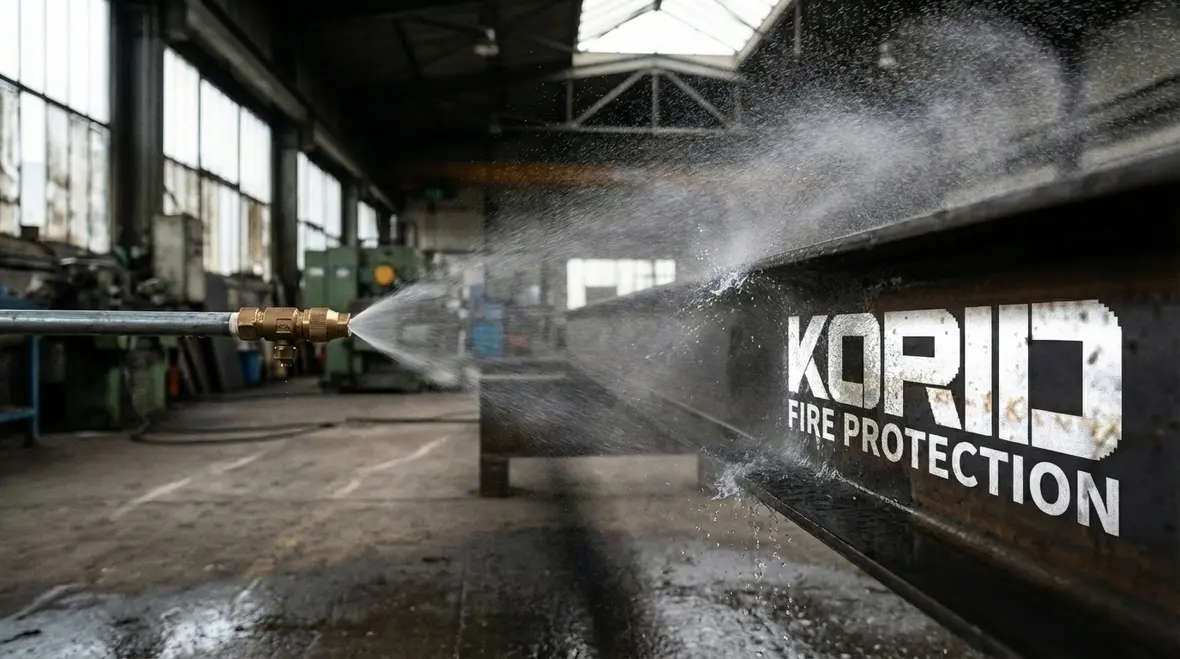
Obstructions are the quiet troublemakers of fire suppression. They do not announce themselves. They simply sit there, blocking spray patterns like a stubborn extra in a movie scene who refuses to move out of frame.
In mist system fire protection design, obstructions can include:
- Structural beams
- Cable trays
- Ductwork
- Storage racks
- Decorative ceiling features
Although these elements may seem harmless, they can disrupt droplet distribution. When water mist strikes a solid surface, it may deflect, lose momentum, or fail to reach the intended hazard zone. Consequently, the fire may continue to burn beneath a beam or behind equipment.
Additionally, modern buildings often pack ceilings with utilities. Lighting systems, HVAC components, and data infrastructure compete for space. Therefore, coordination between trades becomes essential. A late stage duct installation can unintentionally block a carefully designed spray pattern.
Kord Fire Protection technicians stress early collaboration. By reviewing architectural drawings and conducting site walkthroughs, they identify potential conflicts before installation begins. This proactive approach prevents costly rework and performance gaps. If you are planning a project that includes water mist, pairing nozzle layout with ongoing water mist system service keeps those obstructions from quietly undermining your protection.
Ceiling Heights, Airflow, and Structural Challenges
Not all ceilings are created equal. Some soar overhead like cathedral arches. Others hover low and tight, leaving little room for adjustment. Each condition influences how water mist behaves.
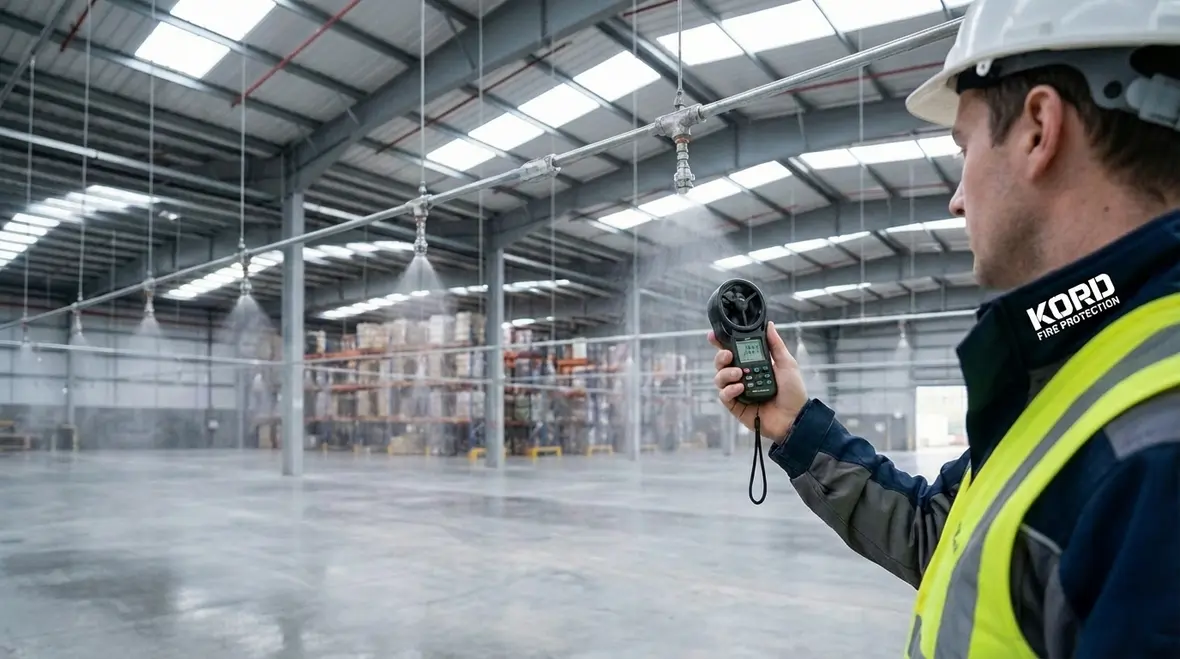
With higher ceilings, droplets must travel farther. As a result, designers may increase pressure or adjust nozzle type to maintain effective concentration at floor level. Conversely, in low ceiling areas, excessive pressure can cause unwanted splash and uneven distribution.
Airflow adds another layer of complexity. Mechanical ventilation systems can redirect mist away from the fire plume. Similarly, open doors and large vents create pressure differences that alter droplet paths. Therefore, airflow modeling often becomes part of the design process.
Structural elements also create shadow zones. For example, deep beams can shield portions of a room from overhead discharge. In such cases, sidewall or additional nozzles may be required. Although this increases system complexity, it ensures uniform coverage.
Design Factors That Shape Mist System Performance
| Design Factor | Impact on Performance |
|---|---|
| Ceiling height | Affects droplet travel distance and required pressure |
| Airflow patterns | Can redirect mist away from fire source |
| Structural beams | Create shadow areas beneath them |
| Equipment layout | May block or absorb spray before it reaches flames |
Each factor interacts with the others. Therefore, effective fire suppression design resembles choreography more than simple plumbing.
Common Installation Mistakes That Compromise Performance
Even a strong design can falter during installation. Unfortunately, small errors often hide in plain sight.
Misaligned or Incorrectly Oriented Nozzles
One common mistake involves improper nozzle orientation. If a directional nozzle rotates slightly off axis, its spray pattern shifts. Consequently, coverage gaps appear. Although the change may seem minor, performance tests reveal measurable differences.
Unapproved Component Substitutions
Another issue arises when contractors substitute components without approval. Water mist systems rely on tested combinations of pumps, pipes, and nozzles. Changing one element alters pressure and droplet size. It is a bit like swapping ingredients in a baking recipe and hoping the cake still rises.
Insufficient Clearance Around Nozzles
Additionally, inadequate clearance around nozzles can restrict discharge. Storage racks placed too close to ceiling heads often block spray. Therefore, facility managers must maintain clear zones as specified by design documents.
Kord Fire Protection technicians emphasize post installation verification. They conduct flow tests, inspect alignments, and confirm spacing. This process ensures that what exists in the ceiling matches what appears on paper.
Inspection, Testing, and Long Term Reliability
Installation marks the beginning, not the end. Over time, building modifications introduce new risks. Shelving moves. Equipment shifts. Decorative renovations add unexpected barriers.
Routine inspections identify these changes. During service visits, technicians check for corrosion, verify pressure levels, and confirm that no new obstructions interfere with discharge patterns. Moreover, they review any structural updates that may affect performance.
Testing also reinforces reliability. Functional tests simulate discharge conditions to validate flow and coverage. Although full scale fire testing is not practical for occupied buildings, controlled procedures provide valuable assurance.
Furthermore, documentation plays a key role. Accurate records of inspections, repairs, and modifications create a clear history. In the event of an incident, this documentation supports compliance and demonstrates due diligence.
For many properties, pairing mist system care with broader programs such as fire pump servicing and routine fire pump inspections creates a cohesive, code-informed maintenance strategy.
Partnering With Experienced Technicians for Reliable Results
Design software and manufacturer charts offer guidance. However, experience brings insight that no manual can fully capture. Kord Fire Protection technicians combine technical knowledge with field observation. They understand how real world conditions differ from ideal diagrams.
For example, they know that a perfectly centered nozzle may still fail if a new lighting fixture appears months later. Therefore, they encourage communication between property managers, contractors, and safety teams.
Moreover, they approach each project with calm authority. They explain risks clearly, outline corrective steps, and prioritize practical solutions. Fire protection may not sound glamorous, yet when done right, it quietly protects lives and property without fanfare. Rather like a superhero who never asks for applause.
Frequently Asked Questions
Conclusion and Next Steps
Precision defines effective fire suppression. From nozzle spacing to obstruction control, every detail shapes performance. Therefore, property owners should not leave these decisions to chance. Kord Fire Protection technicians stand ready to assess layouts, correct placement issues, and safeguard critical spaces.
When safety matters, expertise makes the difference. To go deeper into system design and lifecycle care, explore Kord Fire’s Water Mist System Service page, or review their full fire protection services for a comprehensive strategy across pumps, sprinklers, alarms, and suppression. Contact their team today and ensure your system performs exactly as intended when it matters most.
Know Your Weapon Before You Fight the Flame
Kord Fire Protection is your go-to when it comes to all things fire protection. For over 20 years, we’ve been serving Southern California with the quality service and equipment to keep your home or business safe at all times. Our competitive prices reflect our unwavering commitment to protecting what matters most in the event of a fire emergency. Give us a call, send an email, or use that form!

Join Our Newsletter!
Get the latest fire safety tips delivered straight to your inbox From our Newsletter.


